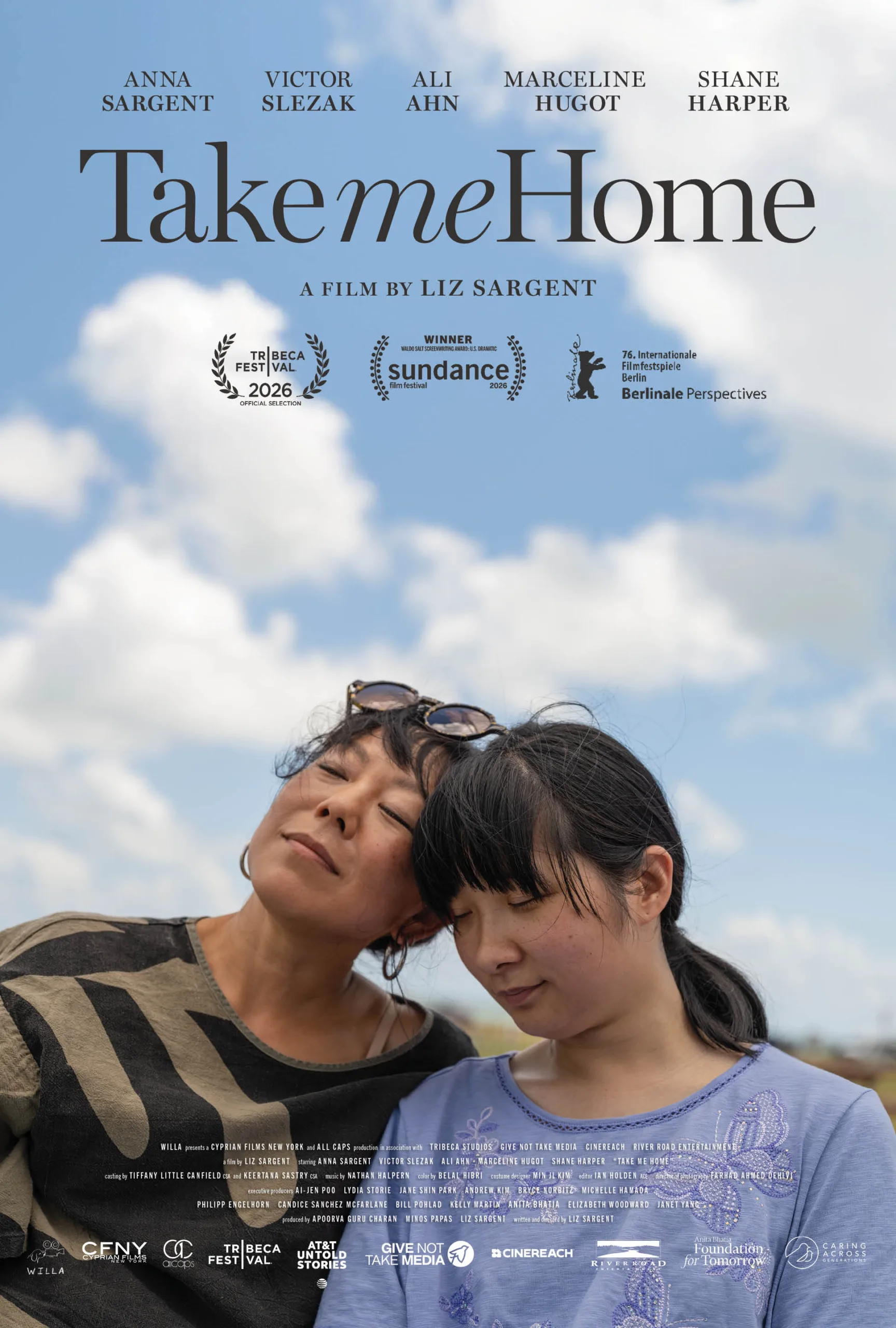

True to its title, which can be read as a command, plea, or something in between, “Take Me Home” focuses on homecomings: coming home to our bodies, our imperfect communities and found families, to the places we thought we had grown out of, and the spaces that, despite our resistance, we still need in our lives to be whole. It is a tapestry that highlights the pains, angst, and realities of caring for those who are aging, who have disabilities, and who overall experience a loss of autonomy. Brutally patient and triumphant in its love for its characters, it captures reality with painstaking clarity while reimagining a better world.
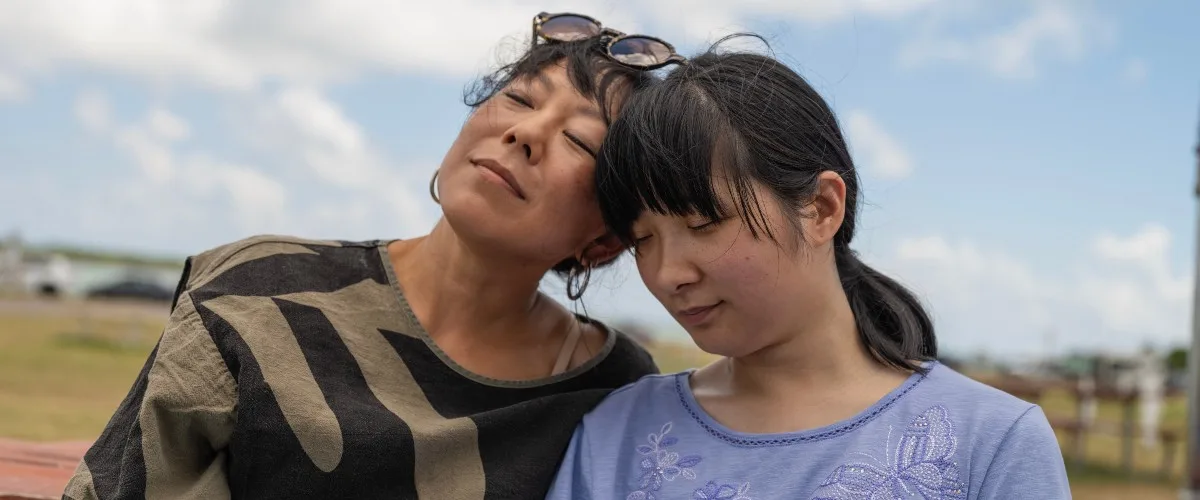
This film is deeply personal for Sargent, who expands on her acclaimed 2023 Sundance short to portray a family oscillating between crisis and calm. Sargent’s real-life sister, Anna Sargent, plays a character of the same name: an adult with cognitive disabilities who lives with her adoptive parents, Bob (Victor Slezak) and Joan (Marceline Hugot), in suburban Florida. Their dynamic is breezy, if not without its challenges. One moment, they watch TV together, playfully bickering over who gets to change the channel; the next, Bob berates Anna, who, in her single-minded fixation on finding her water bottle, clumsily puts herself in front of his car as he backs out. The role of caregiver and the one being cared for is interchangeable, as Anna’s cognitive struggles are at times matched by Bob’s and Joan’s decline in mental health.
An unexpected tragedy brings Anna’s Brooklyn-based sister, Emily (Ali Ahn), into frame, with the film shifting into a story of sibling reconnection for a brief moment, but it is Sargent’s unhurried, lackadaisical approach to these propulsive developments where she flexes her greatest skills as a director and controller of tone. We cannot help but delight in witnessing Anna’s quotidian rhythms, the ways she and her parents, in their mutual need, meet in the middle to care for each other in the best way they know how.
Many scenes revolve around Anna and the family going to the grocery store, which becomes an arena where the family shows its strengths and vulnerabilities. In one moment, Bob removes popsicles that Anna had sneakily placed in the grocery store conveyor belt. “I need those,” Anna protests softly. “That’s life,” Bob replies. The look that Sargent gives to her on-screen father, a precocious pout that shows she’s wise beyond her years in spite of her childish cravings, is indicative of how “Take Me Home” thrives in these quiet moments. There is a fullness to life, one of joy and struggle, that characterizes these people’s stories.
As personal and localized as Sargent’s film is, she is also fully aware that this family’s struggles are amplified by a healthcare system that confounds more than it helps. She lays bare the healthcare system’s inequalities, showing that for people like Anna, the issue isn’t just a lack of care, but a barrier to even getting it. The system is so overworked that people lack the calm to speak with someone like Anna, who is competent but can also be overwhelmed and might need things repeated several times.
You also get a sense of true collaboration radiating from this film: Sargent has a clear vision for where she wants the story to go, but she also doesn’t pull the director’s big-sister card to mold Anna’s performance in a way that isn’t true to her agency. Indeed, the film bravely and stubbornly treats Anna’s perspective as its north star, the foundation from which the film’s visual and sonic landscape builds.
For example, she and her cinematographer, Farhad Ahmed Dehlvi, ensure the cinematography extends Anna’s perspective rather than opposing it. Many scenes are shot with a handheld camera, but it is too reductive to say that this evokes the sentiment of documentary; they want us to see the world through Anna’s eyes, with the camera sometimes hyperfixating on a specific image, evoking Anna’s own focus, and at other times opting for expansive wide shots that overwhelm with their scale.
Also worth noting are the film’s religious undertones and how the family’s faith adds another complicated layer to their response to hardship. In one particular scene, we see Bob praying for the food; Anna’s head is bowed, eyes firmly closed, hands fiercely clasped, while Emily leans back, arms folded and eyes open.
This calm moment says so much about the characters: Anna, filled with a kind of childlike faith built on the comforting straitjacket of sacrament, while Emily, more grown up in the world, has more reasons to doubt the power of prayer and the divine. There is no explicit talk of religion beyond sequences like these, but it is a testament to Sargent’s storytelling that these everyday events can vibrate with such existential drama.
Sargent’s command of form intentionally loosens as the film drifts towards its surreal conclusion. Not every swing works, and you feel the film’s loss of affection for the tangible as it becomes slippery and undefined. Even that critique, though, can be excused when considering how the opening, disarming frames of “Take Me Home” exist to shatter the preconceived notions we hold of people with disabilities.
Life has no straightforward endings, and films that dare to nestle their drama in the michegoss of normality should reflect that unpredictability in form and story. It is one of the many ways “Take Me Home” continues to surprise to its very final moments, blossoming into a film of rare, unvarnished beauty.