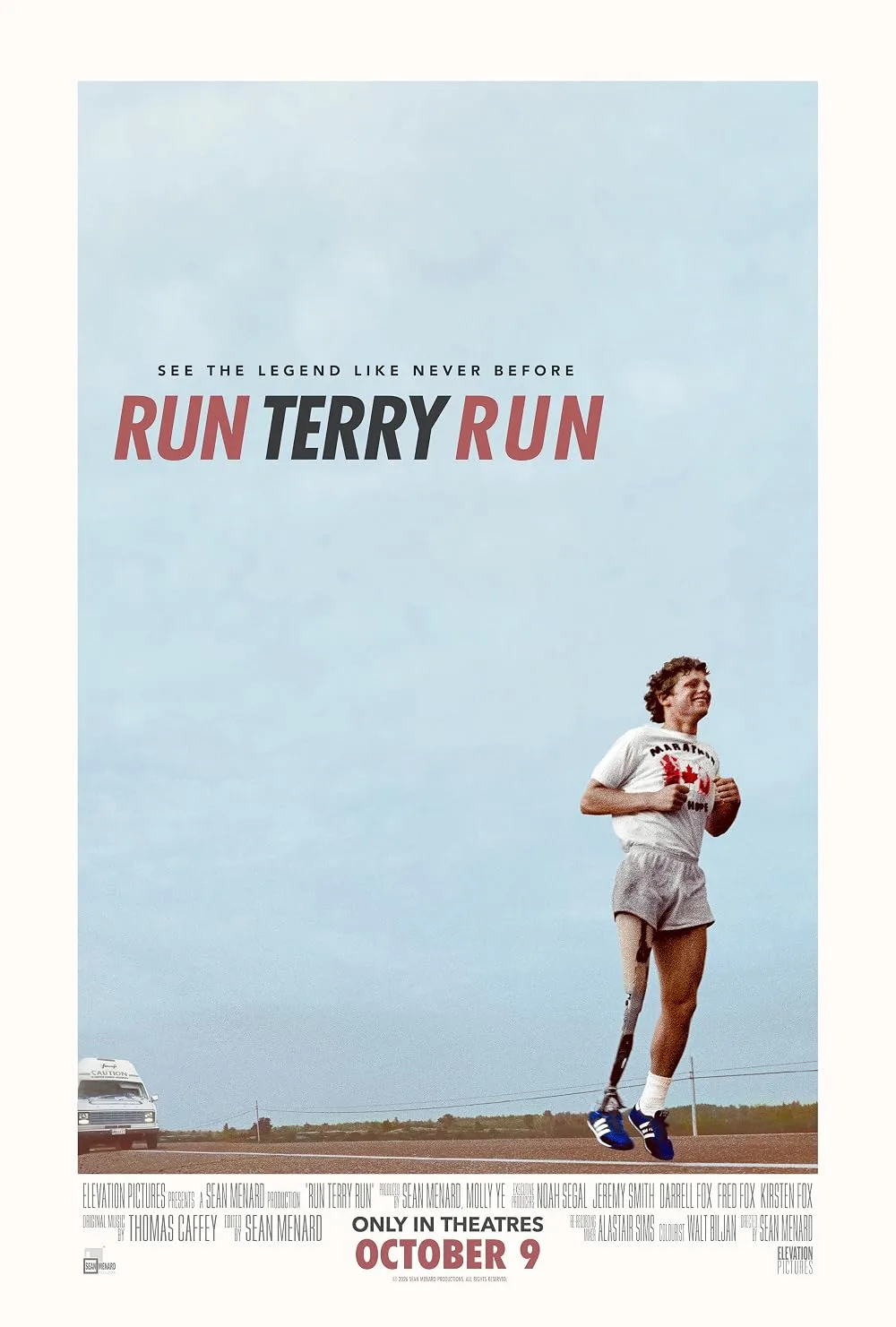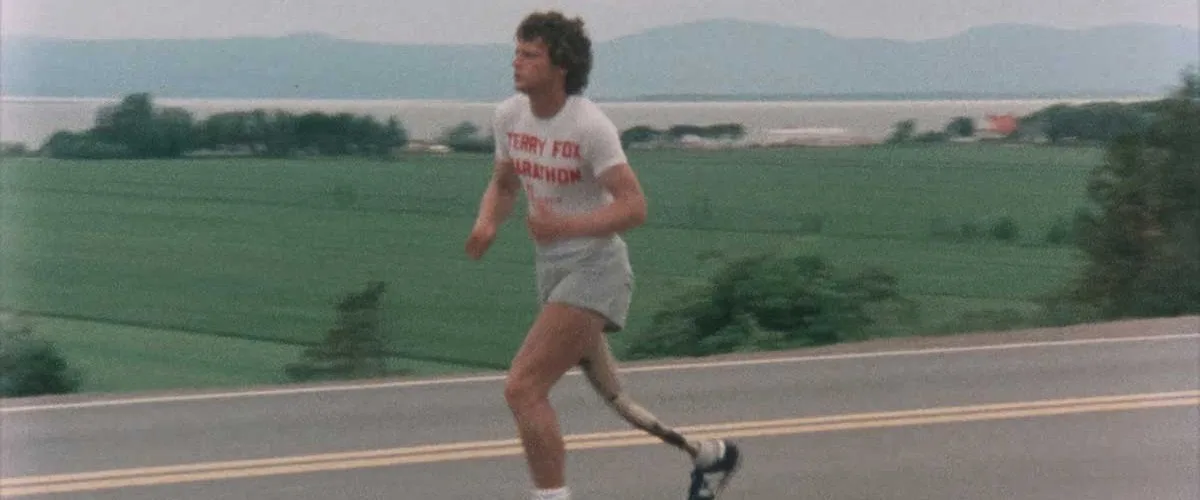
Director Sean Menard’s “Run Terry Run” should be studied for how it properly builds a documentary around its archival footage. The film’s subject is Canadian athlete Terry Fox, whose leg was amputated due to cancer. On April 12, 1980, he embarked on an east-to-west run across Canada, dubbed the “Marathon of Hope,” and ran for 143 days. The marathon raised over $24 million for cancer awareness and research.
Menard’s film offers a behind-the-scenes look at Terry’s journey, featuring previously unseen footage shot by filmmaker John Simpson. The videos and photos were only recently discovered in the 2020s, and it is a treasure trove of not only the marathon itself (which is cinematic in its own right) but also more reasons to fall in love with the perspicacity of a man who ran to his own convictions without waiting for a starting gun from the world.
A lesser film might have used the inspirational true story as an excuse to be bland visually, but Menard, who also edited the film, ensures the craft builds on the story we see unfold. Take a scene where we hear a voiceover from Leslie Scrivener, a reporter assigned early in her career to cover Terry’s run. Scrivener described how, as she reports on his journey, she’d get comments from her newsroom saying, “No one reads this … it’s boring. It’s not news, you know. It’ll only be news when he stops running.”
Menard overlays her retelling of these comments over footage of Terry warming up and getting ready to run. It is a powerful visual rebuttal to Scrivener’s colleagues’ comments: we hear that there is no story, but we see someone who has spent a lifetime being looked down upon and who will now push forward to have his story heard. These moments of visual contrast make “Run Terry Run” not only special but excitingly surprising: you never know how Menard will blend archival footage and audio, and the times he leans into what the footage shows are as interesting as the times he breaks convention.
Menard trusts the footage that Simpson had assembled here speaks volumes on its own, and even if you might have found yourself inspired by Terry, there is nothing quite like seeing Simpson’s footage unfold in real time, which can feel like an audit of nature’s virulent impulses as it does to Terry’s resilience. As a voiceover from Scrivener notes, the winds in Canada go from West to East, which means Terry’s run from the East to West puts him in confrontation with the winds themselves. That, coupled with the fact that his plan was to run twenty-six miles a day through areas ravaged by maritime storms, only highlights the feat Terry pulled off.
In Simpson’s footage and Menard’s sequencing, we see a man whose frame is tiny compared to the elements around him, but whose outsized determination more than makes up for any deficiency. The footage, which oscillates in occasional quality, perspective, and lighting, is delightful in its idiosyncrasies; at its best, it feels like a collage of home video footage, stitched together with invitational reverence for anyone watching to get to know Terry.
Terry never let the story stop with him, though. He rightfully deserves encomium for what he accomplished, but you never get the sense that he rested on his laurels even for a moment. He saw himself as part of a larger story, and any inconvenience, pain, and setback he experienced seemed framed to him as a cross he was willing to carry, if only it meant the next amputee, next person affected by cancer, could run farther and more smoothly than he could.
Tom Caffey’s score, while triumphant and deployed sparingly, is the only element of the film that weighs the project down. It is not unnecessarily bombastic and, at many moments, a beautiful sheen over the film, but it feels like it distracts rather than amplifies the story we see. We neither need to be reminded that we should be sad and upset about what we’re seeing from Terry nor be goaded into quick ecstasy when we see his success; Menard’s and Simpson’s work tells us all we need to know already.
A resurgence of filmmakers is diving into a wealth of archival footage and lovingly sculpting it to highlight stories that might otherwise be overlooked. As archives, both physical and digital, risk being erased forever, films like “Run Terry Run” are not just important but essential, reframing memory as an act of resistance to the relentless barrage of (often falsified and incomplete) information that makes up our doomscrolling sessions. What we see on-screen reminds us of the importance of bearing witness, yes. But it also reminds us that once we shape our world to our liking, we stop asking it any more questions.
Terry never stopped racing, but he also never stopped questioning the cruel logic of a world that saw people as an anomaly and inconvenience. He’s someone who was done waiting for a seat at the table or for the world to make a new chair to accommodate him. He left the party altogether, taking off for horizons unknown yet edenic. The question remains: are we going to stay sitting at broken tables or put on our shoes and run?
This review was filed from the Toronto International Film Festival. It will be released in select theaters on October 9, 2026.