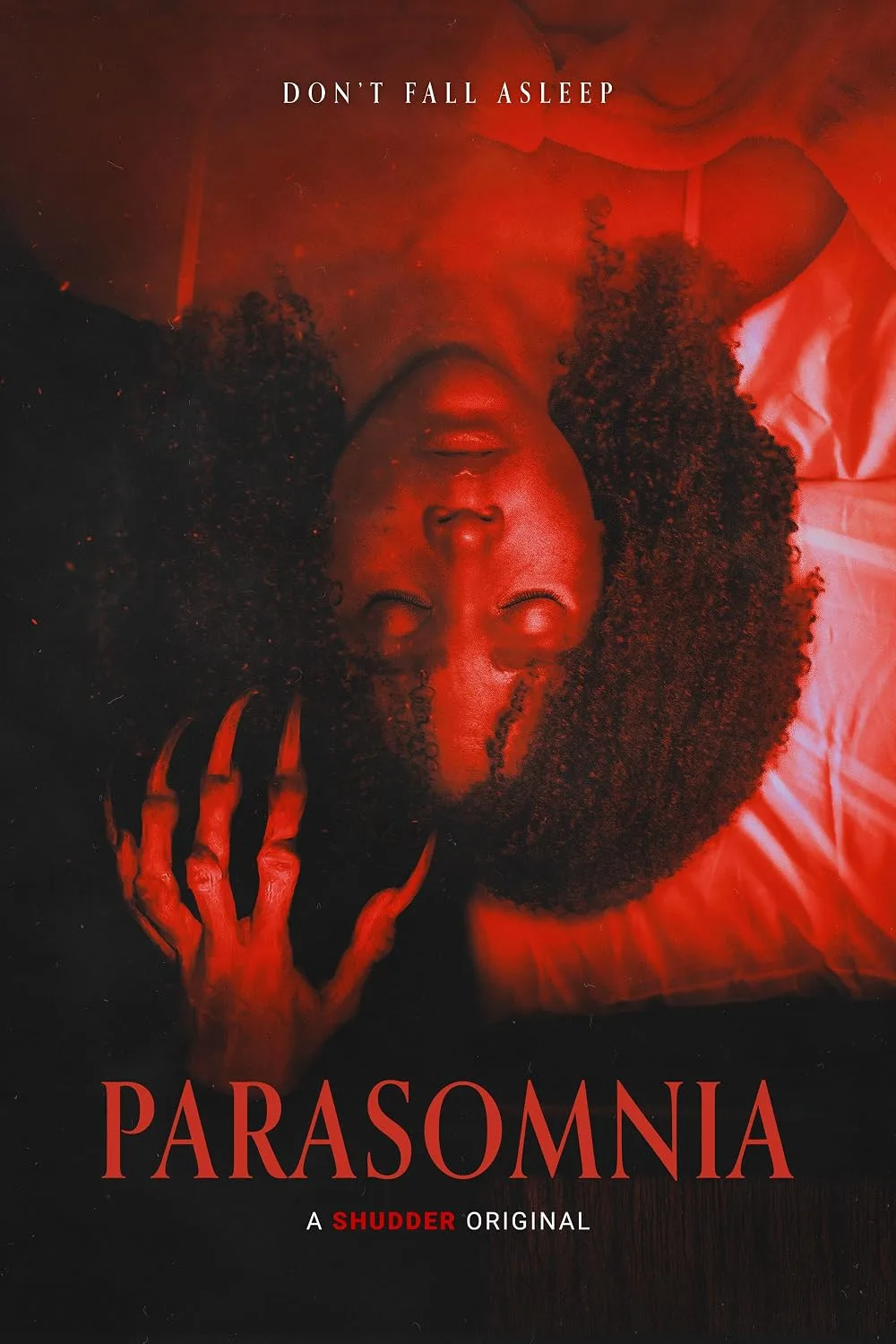

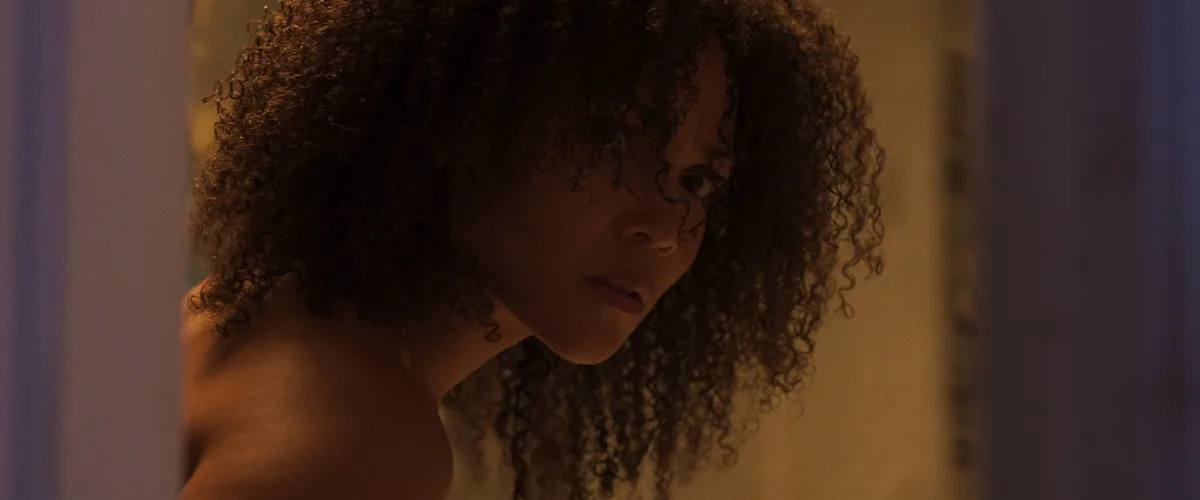
Movies require trust. In a mutual contract between the viewer and the filmmaker, the former enters into the work accepting the filmmaker’s expertise with sound, image, and story. The latter trusts the audience to follow along and engage openly with the work. “Parasomnia,” the witchy Shudder release horror film from writer/director James Ross II, expects the viewer to keep up their end of the bargain but lacks the resolve to do the same. Ross’ film is a lifeless ball of shameless cliches and inert jumpscares struggling to earn your attention.
Even the opening premise isn’t particularly interesting. On her 15th birthday, we find Riley (Jasmine Mathews) intensely expelling a wheezing sound as she sleeps. She lives in a group home with several teens, including David (played as a young man by Amon Quick), who awakens early to eat cereal. Seemingly from these sounds, Riley and David’s guardian, an older woman, becomes possessed and not only kills their friends but also gouges and eats their eyeballs.
Flash forward a few years later, and Riley is an adult, dating Cam (RJ Brown). She lives in her parents’ former home, a kind of antebellum structure, even though when she was a child her father murdered her mother and then died by suicide in that very same abode. Nevertheless, it’s her birthday again, and a grown-up David (Stephen Barrington) and his girlfriend have arrived to celebrate her birthday. What consequences followed after the group home incident, whether there was an investigation or not, why the home is still in Riley’s name, and what attention has been paid to Riley and David’s past trauma aren’t mentioned.
Instead, Ross wants to winkingly unfold a story despite lacking the expertise to tease it out. He does literal Chekhov’s gun close-ups to a rifle on a wall rack, deploys overwrought flashbacks to constantly remind viewers of what came before, and also, mindnumbingly, doesn’t know how to withhold information in the frame. Instead, in the many flashbacks he doles out, he makes it clear that these incidents always happen on Riley’s birthday only for Riley to later blurt out: “I think it’s a pattern.”
It’s one of the many examples of lazy writing in the film. Why use the dialogue to confirm what the visual language has already screamed at us? Because Ross doesn’t trust us to put the details together even when they’re glued to our faces. That kind of overt storytelling, vis-à-vis shoveling information in our eyes, undercuts the film’s intended grim mood by making the aesthetic world-building feel perfunctory.
An aloof Ross pushes ahead. He makes it quite clear that Riley has put a few precautions in place since the murder spree happened under her watch. Everyone needs to go to sleep before her, and she refuses to cry about anything from the past. She thinks these regulations will keep her from having night terrors, dreams that often see her in a maze of rooms in a weathered white home whose walls have messages painted in blood. In these nightmare sequences, the camera becomes a handheld POV, mirroring a found-footage aesthetic, with a flashlight providing sight and Riley’s heaving breathing giving these scenes sound. Ross and his cinematographers, Mark Doering-Powell and Christopher Lee Fatt, don’t give these dream sequences any flair we haven’t already seen for decades. They’re limply shot and boringly edited, fashioning ineffectual jump scares that barely rise to the level of a hop.
Ross tries to add further thematic elements like vodou and witchcraft, but they’re merely horror conventions that are stapled onto the back of this thin premise rather than components the film feels are worth exploring or tweaking. Because that approach is so bland and unoriginal, there isn’t a propulsive energy to push the supposed frights or these mysterious characters forward. While I’d like to say these actors make a valiant effort, Brown, who plays Cam, doesn’t have the ‘play it close to your vest’ shiftiness required for the role. Everything he does is telegraphed. Mathews only finds slightly greater success. Neither actor can make “Parasomnia” a film worth losing sleep over.