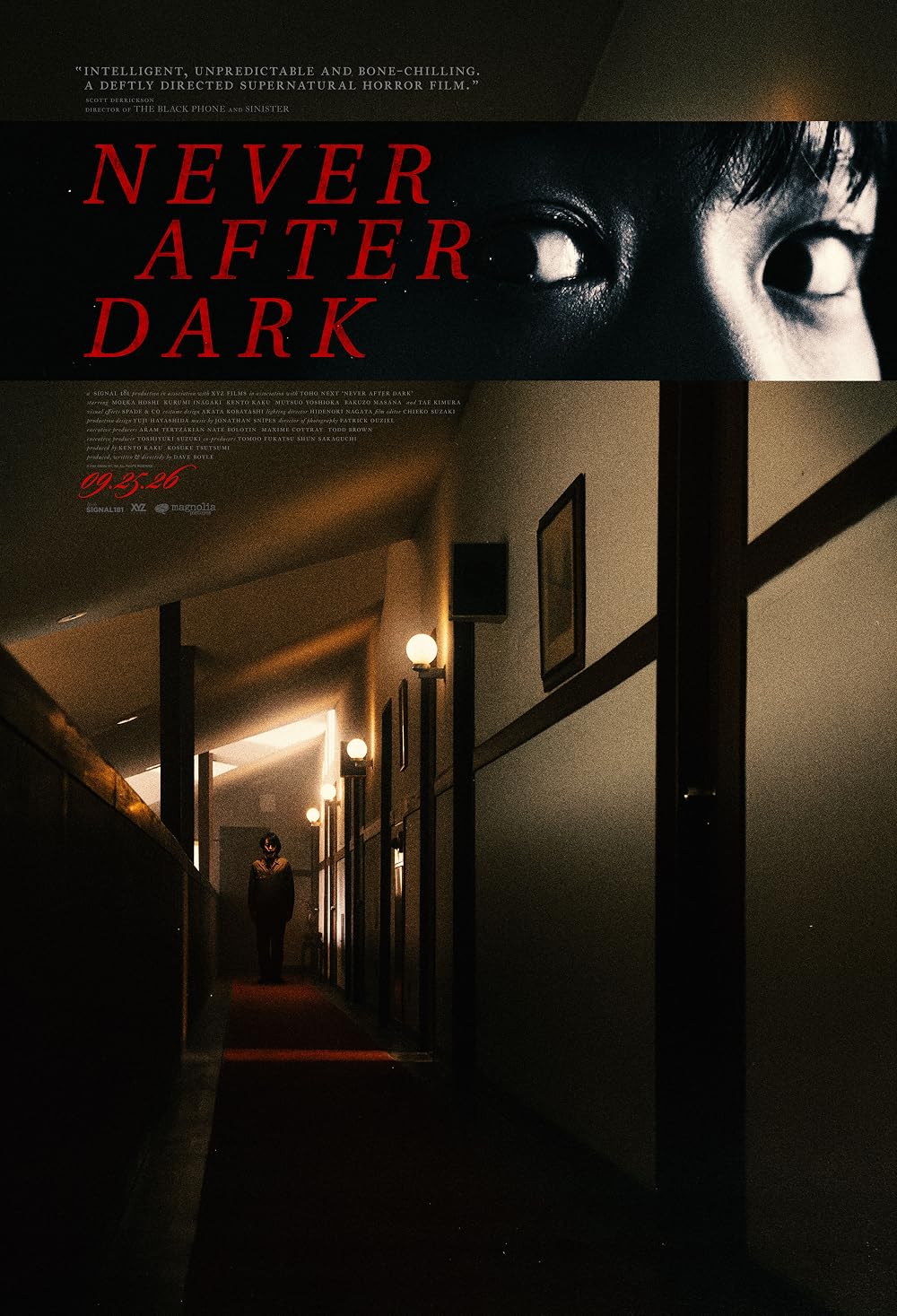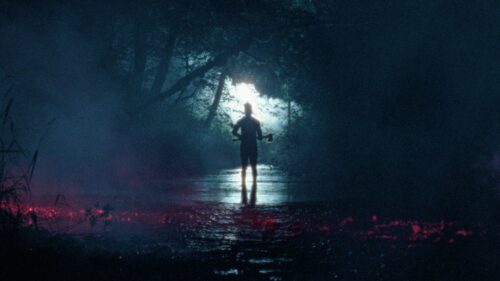

Many, though not all, of the best genre movies remind us that our routines can be just as personal as any well-worn formula. In “Never Before Dark,” a spare Japanese haunted house thriller, attentive viewers may find meaning in the seeming effortlessness with which protagonists fall in and out of familiar poses and gestures. Maybe you’ll catch a bad case of deja vu, too. Or maybe not.
In “Never Before Dark,” an anxious homeowner, Teiko (Tae Kimura), hires a canny exorcist, Airi (Moeka Hoshi), to banish a violent ghost (Mutsui Yoshioka) from her home. Airi doesn’t think much of this particular assignment, so she ignores a couple of warnings from her little sister Miku (Kurumi Inagaki), who plays Airi’s suppressed conscience. But while the rituals and rules that govern Airi’s business may not mean as much to her, they’re tested anyway once she discovers that, in this case, she probably should have listened to her sister.
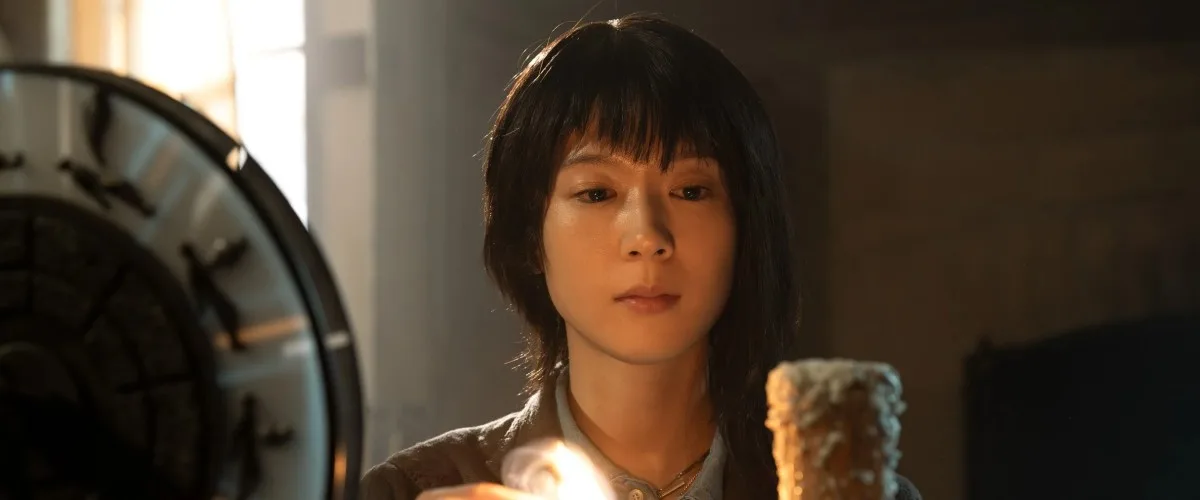
The film has fun, well-timed twists and character-driven moments along the way, though the latter often comes through reaction shots of Moeka’s expressive face, as well as a slippery, deceptively staid early line of expository dialogue. Thankfully, writer/director Dave Boyle (“Man From Reno”) seems to know exactly what he likes about this type of story and doesn’t seem overly interested in holding viewers’ hands to establish why this particular yarn matters beyond its horror movie trappings.
“Never After Dark” isn’t simply a well-polished exercise. It’s also a welcome reminder that a genuinely savvy genre filmmaker knows that, while formulas can make us prematurely jaded, working a well-worn routine can be meaningful and satisfying, too.
Airi’s story begins by re-establishing some crowd-pleasing power dynamics among the movie’s four (or five) main principals. For starters, Teiko’s eager to accommodate Airi, who asks her patron to stay away from her secluded house long enough for Airi to exorcise it. That request understandably bothers Teiko’s adult son Gunji (Kento Kaku), an outspoken skeptic who worries that Airi’s taking advantage of his impressionable mother.
Airi tries to allay both Gunji and his mom’s fears by explaining how she works, but her spiel sounds so pat—She’s got to pierce the veil between the living and the dead, but there’s nothing special to see here, ok?—that you might imagine that she’s sleepwalking through the motions. Miku says otherwise, but Boyle makes you want to believe Airi when she repeatedly dismisses her kid sibling.
Airi’s confident and more than comfortable on her own. She answers late-night phone calls and flips on the house record player with the same ease that she practices her signature supernatural ritual, which involves a mirror, a pair of scissors, and a candle. Airi sees the cliched signs of a haunting soon after she settles in, but she remains mostly unfazed.
In this lulling, moody light, viewers might overlook a key exchange between Airi and Gunji, when she explains to him and his mother what a ghost is. It’s simple, Airi says: “If you die clinging to worldly things, you can’t move on.” Airi has her own reasons for wanting to move on, but she’s already sublimated that need into her work. Unfortunately, the ghost she’s hired to get rid of has a similar MO, only he’s found a way to defy both Airi and our own understanding of what a revenant is and how they work.
This is a roundabout way of saying that “Never After Dark” might leave viewers in a strange place, only after pulling a decent-sized rug out from under you partway through the movie. Because ghost stories, like home invasion thrillers and time travel movies, rely on familiar routines, the film uses that truth to build up and then abruptly pull away from conventional territory. It’s not a radical departure from what you know, but it might leave you flummoxed if you expect Airi’s confrontation with Mutsui’s grisly antagonist to check off more boxes than it needs to.
You might still be frustrated if you’ve come to define a good horror movie by how many shorthand-entrenched boxes it checks off, like a trauma-driven heroine’s narrative, for example. Boyle and his collaborators take a few jarring creative shortcuts and by-passes, but pull off most of what they attempt. That makes it much easier to appreciate “Never After Dark” for what it is, rather than what you might expect it to be.