Given that he’s embodied some pretty nasty villains in his time—including the brutal Roman emperor Caligula and the futuristic ultra-violence-addicted “droog” Alex DeLarge in “A Clockwork Orange”—Malcolm McDowell is, at heart, a comic actor. Even in his first film, “if…”, directed by Lindsay Anderson and depicting a British public school rebellion that made “Zero for Conduct” look like a spitball fight, his machine-gun-toting Mick Travis had a cartoon-like energy. His later career let him exercise a gentler comic sensibility, as when he played a time-traveling H.G. Wells in the thriller “Time After Time.” In that film, he marvels at fast-food French fries (“pommes frites!”) with lovely understatement.
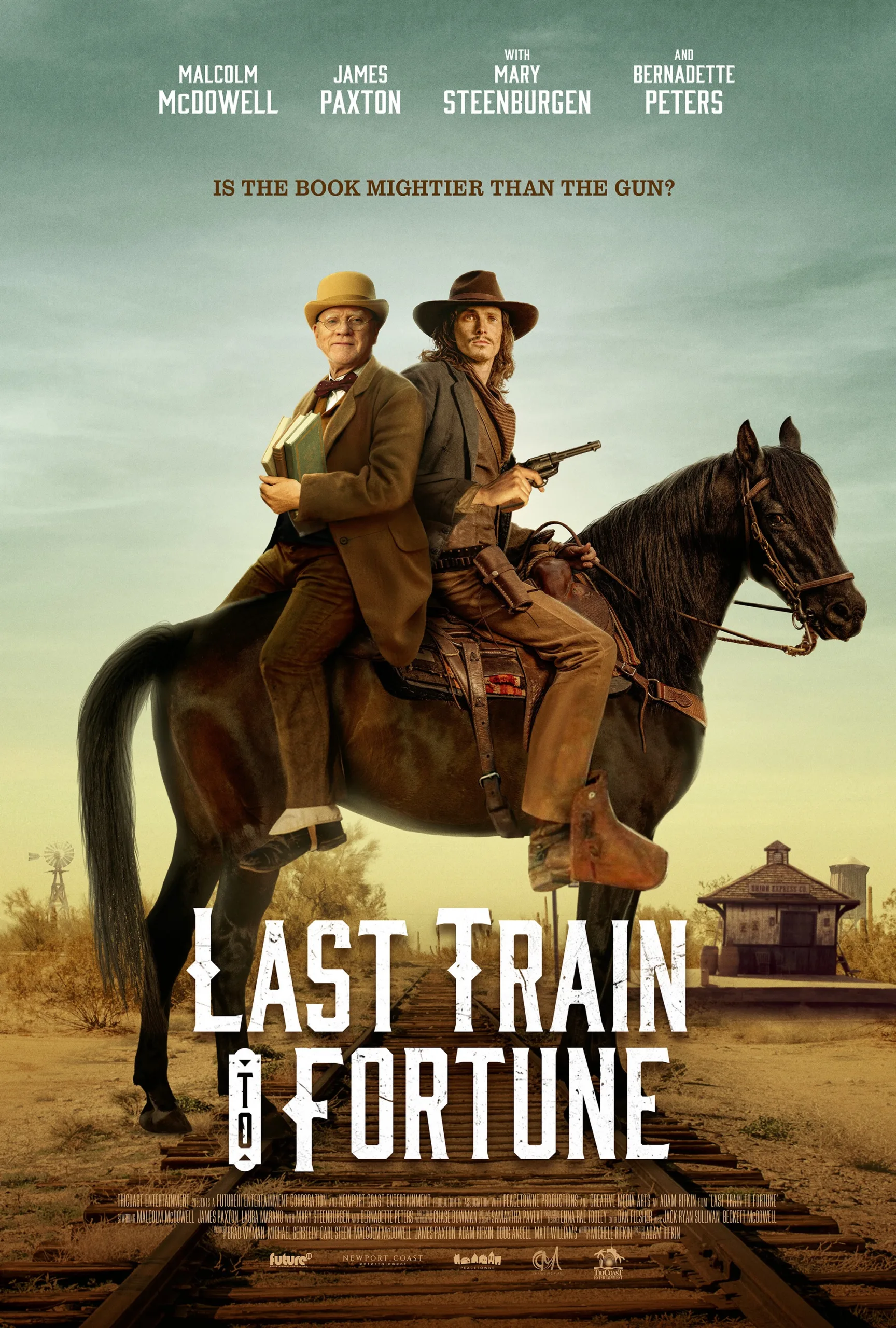
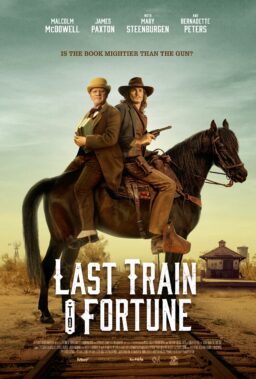
One is reminded of McDowell’s Wells early in the movie, as he looks at his pocket watch while sitting on a suitcase, stranded in a 19th-century train station in an arid West whose landscapes look a little like Sergio Leone’s. But his character has not even a tenth of Wells’ equanimity. McDowell is a mildly pompous schoolteacher who goes by the name of Cecil Caldicock Peachtree the Third.
So he introduces himself to his opposite number, a gunman on horseback named Jedidiah Dooley, played by James Paxton, the son of the late great Bill. Dooley would just as soon kill Cecil as anything else, or so he’d like Cecil to believe. But Jed isn’t quite as murderous as he’d like to appear, and Cecil can actually talk him into giving him a ride to Fortune, where he’ll reward Jed with his first month’s stipend. So this odd couple takes to the hills, the plains, the endless dust.
Adam Rifkin directs the picture from a script by his wife Michelle, and, interestingly enough, it was slated to be directed by Lindsay Anderson way back in the day, right before he died in 1994. By that date, the Rifkins had made a definite mark on cinema with the likes of 1990’s “The Invisible Maniac” and the immortal sanitation-man-grows-a-third-arm piece “The Dark Backward” in 1991, with Michelle working on the acting side. It’s possible that, had Anderson lived to make the picture, it might have been less of an overt pastiche. But as it happens, the picture works rather well in its ultimate form.
This is largely thanks to its two principal performers, whose interplay induces multiple chortles. As in their first evening together, sitting by the campfire, where Cecil gives a heartfelt speech about the joys of teaching, met by Jed’s loud snore. Cecil’s good cheer persists as they hit a town not called Fortune, but Lobo. “Jolly nice day to you, sir,” Cecil says to a passing cowman; “I don’t know what’s so jolly nice about it, flannel mouth,” the grizzled fellow replies.
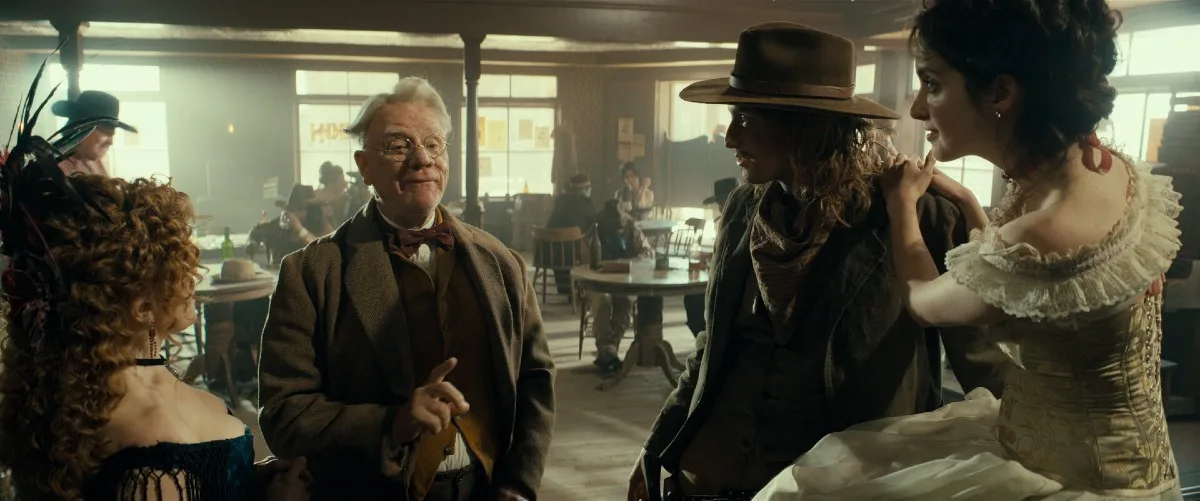
He is further discouraged when he witnesses Jed lose the aforementioned pocket watch in a poker game. Bernadette Peters, still buxom and feisty, is introduced executing a replay of a famous gag from Mel Brooks’ “Blazing Saddles,” and soon after, Disney veteran Laura Marano hops on the saloon bar to divert Jed. High spirits at the saloon—both metaphorical and literal, as the visit christens Cecil as a whiskey drinker, with calamitous results—land Jed in jail. Things get even more raucous when the pair are waylaid by a couple of desperados, one named Snake, who have some business with Jed and don’t mind burning Cecil’s suitcase library.
Back to Peters and Marano: As welcome as they are, it’s even better to see McDowell’s ex-wife and once-frequent costar Mary Steenburgen turn up late in the picture as, well, Cecil’s sub, so to speak. Her reaction when a highly disheveled, dust-covered, and partially bloodied Cecil opens the schoolroom door, takes off his hat, and says, “Greetings, Madame,” is priceless. As is Jed’s final appearance, when he shows himself not entirely resistant to pedagogy.