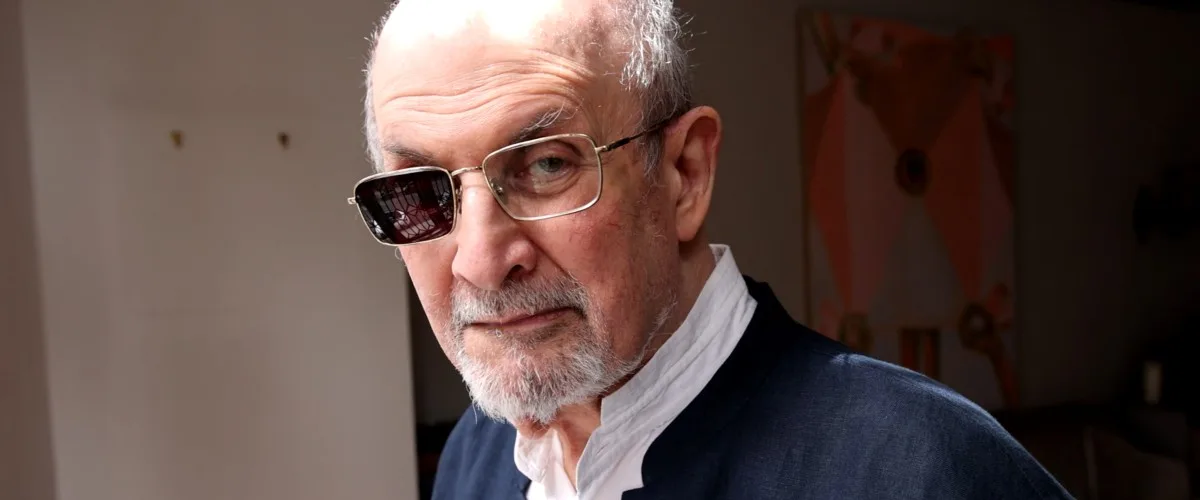
In 1988, Indian-British author Salman Rushdie published “The Satanic Verses,” a novel that inspired outrage amongst Muslims throughout the world for what they felt was blasphemy against Islam, culminating a year later when Iran’s Ayatollah Khomeini declared a fatwa on the author that was backed by Iranian officials offering a $6 million bounty to the person who killed him.
As a result, Rushdie spent the next several years living under constant guard and in virtual seclusion, but as time passed, he became determined to reclaim his life and no longer live under fear of this threat, eventually shedding the omnipresent security detail, moving to New York, and appearing at any number of high-profile events. In fact, on August 12, 2022, he showed up at New York’s Chautauqua Institution to give a public talk about the United States and its role as a safe haven for writers around the world who faced exile or worse for what they had said or written.
He never got the chance to deliver that lecture because only a few moments after taking the stage, he was attacked by a member of the audience who ambushed him with a knife, stabbing him several times in the abdomen, neck, and right eye before being subdued. While he survived the attack, he would lose the use of the eye and a hand and would need to undergo a long period of recovery and rehabilitation.
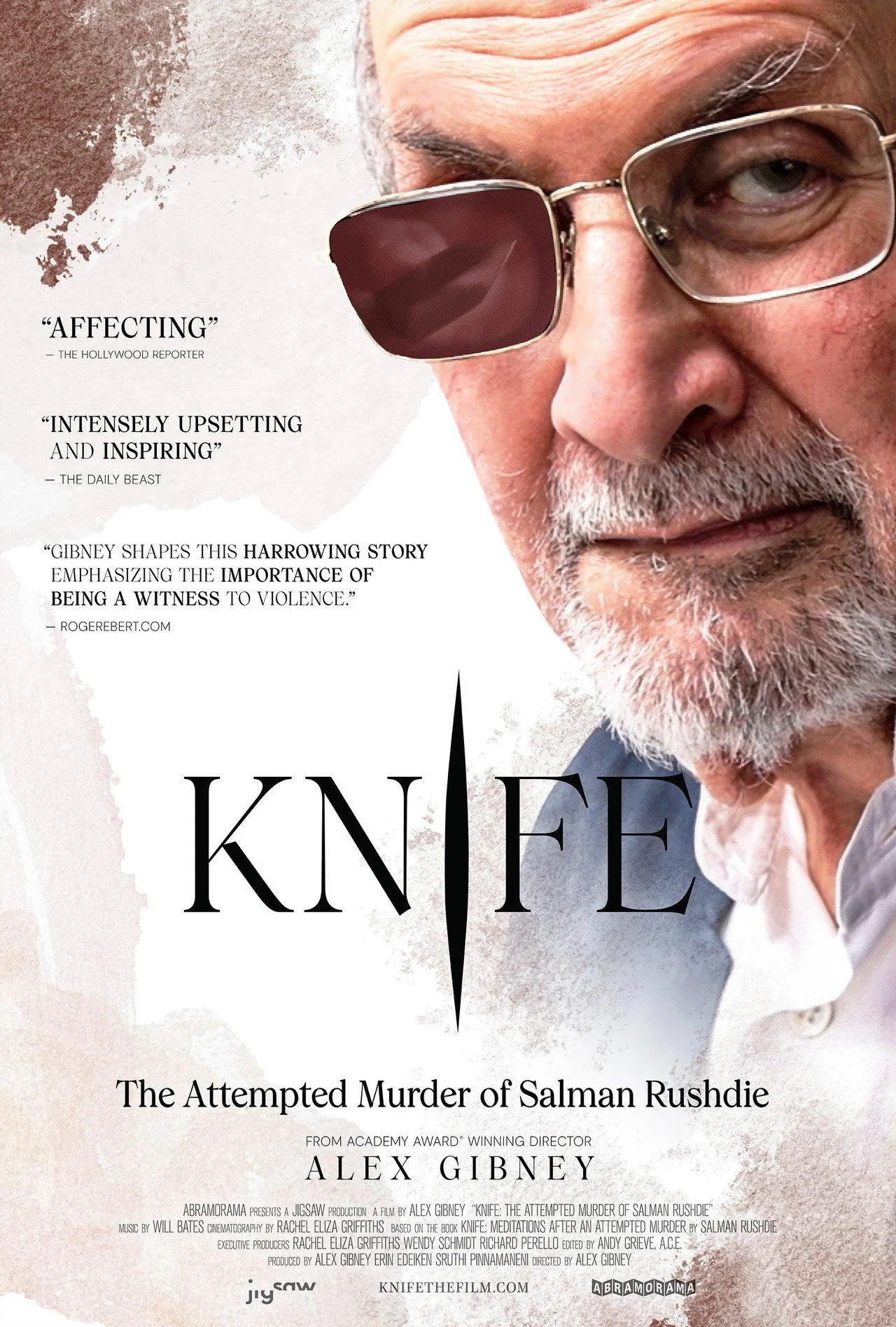
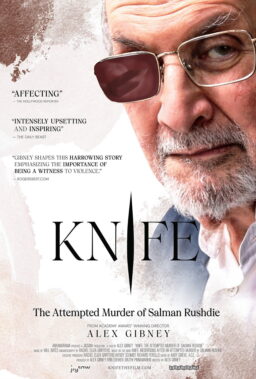
Early on in the recovery process, Rushdie and his wife, writer/photographer Rachel Eliza Griffiths, elected to chronicle that process, first in the 2024 memoir “Knife: Meditations After An Attempted Murder” and now in the new documentary “Knife: The Attempted Murder of Salman Rushdie,” in which filmmaker Alex Gibney, using painfully intimate footage shot by Griffiths in the hospital, offers viewers both a look at Rushdie’s recovery process and a recounting of the events that led up to that violent confrontation.
The film opens with a stylized version of the attack, one that stresses the combination of confusion and frenzied action that Rushdie experienced at the hands of his would-be killer, whom he will only refer to as “The A.” From there, it shifts to his hospital room, where Griffiths presents his injuries in grisly detail, from the staples that are literally holding his neck together to his damaged eye. Although both Rushdie and Griffiths try to put the best face possible on the recovery and rehabilitation process, it is long and difficult, and one wrenching moment comes when Griffiths turns the camera on herself to voice her sadness and frustration over what has happened. As you can imagine, these scenes are grimly unsparing and often difficult to watch but are quietly powerful without descending into self-exploitation.
Intertwined with the scenes of recuperation and recovery is a second thread that recounts Rushdie’s story and the fatwa against him. There are scenes depicting the genuine sense of violent outrage the book inspired—including riots in the streets in England and the murder of its Japanese translator. Even if you are old enough to remember seeing these images on the news back in the day, the sheer ferocity of the response is still stunning to witness. (We even get a glimpse of a bizarre Iranian exploitation film in which Rushdie is presented as an Israeli agent charged with killing Muslims.) Although Iran more or less rescinded the fatwa in 1998, the anger did not die down, and modern-day technology such as YouTube videos continued to stoke it to the point where Rushdie’s life was almost taken by someone who wasn’t even born when the turmoil over the book first began.
What’s even more fascinating than watching Rushdie recover is seeing him process the past and present as he tries to come to terms with them. He has no regrets or remorse about “The Satanic Verses” or his decision to reestablish a public life for himself, but he does have a certain curiosity about the person who tried to kill him. Why did he choose a knife, a method that required a greater degree of intimacy between victim and attacker, as opposed to a gun? Did he think he would actually escape to freedom?
Rushdie does not visit his jailed assailant, of course, but he uses his literary gifts to create imagined jailhouse conversations between the two that let him control the narrative as he explores it. It all culminates in a powerful finale in which a now-recovered Rushdie revisits the Chautauqua Institution auditorium, and it his here that Gibney deploys the actual footage of the attack in all its gory and unsparing detail. While it is very difficult to watch, it is a moment that both the film and Rushdie have earned—a final reckoning with the past before moving on to a hopeful future.
The only time that “Knife: The Attempted Murder of Salman Rushdie” missteps is during the occasional moments in which Gibney inserts clips from classic films, ranging from Max Von Sydow playing chess with Death in “The Seventh Seal” to “Jason and the Argonauts” as a way of visually underscoring Rushdie’s words and thoughts—this is a gambit that just feels a little lazy and doesn’t really add anything of note to the proceedings.
This is a simple but strong document about the importance of art as a way to comment on the world, the artist’s resilience in the face of the controversies their work might inspire, and the determination not to let violence be the answer to everything. These may seem like obvious concepts, but as this film clearly shows, we need constant reminders.