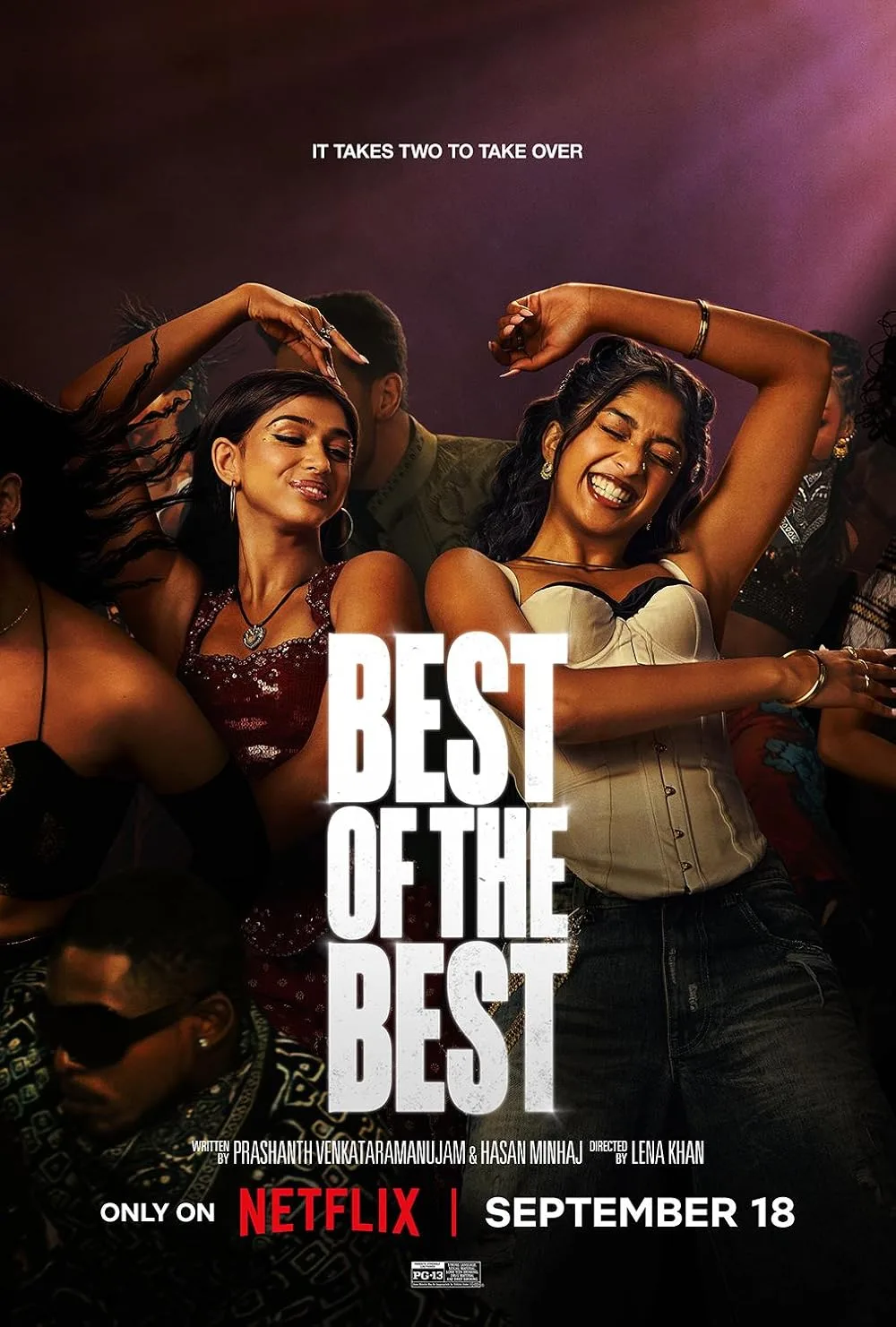
In a recent interview on “The Drew Barrymore Show,” “Best of the Best” executive producer and co-writer Hasan Minhaj revealed the basis of the project: his own “painfully true memories” of attending UC-Santa Cruz and “lurking” at collegiate Bollywood dance competitions, hoping for the chance to interact with Beena Patel, his then-crush, who also happened to be the head of the South Asian Students’ Association. The couple did eventually date and marry, and while the efforts worked out well for Minhaj’s personal life, they are, in and of themselves, insufficient to make a winning film, especially one about two young women, but written by two men.
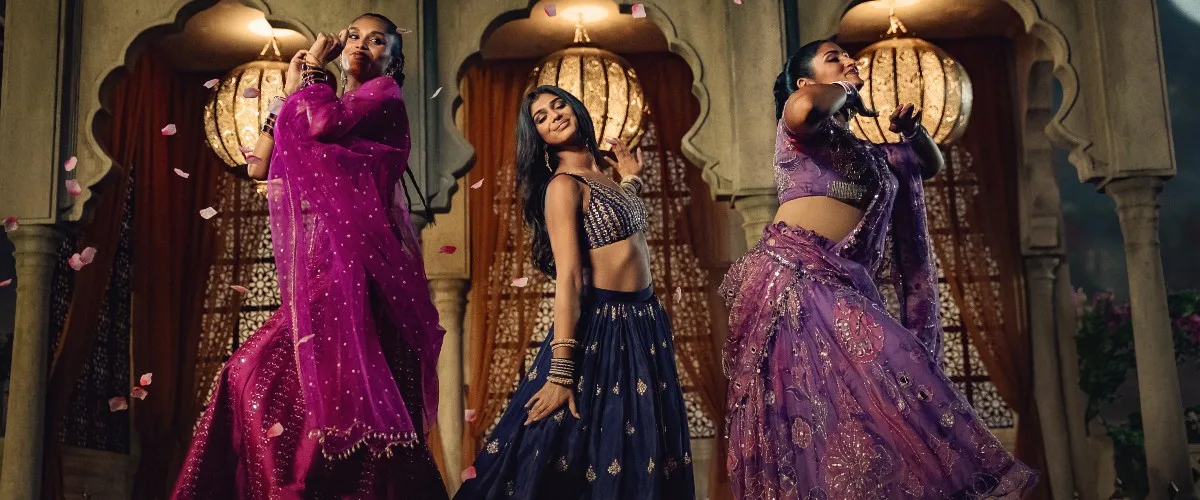
Maya (Maitreyi Ramakrishnan) and Anjali (Priyanka Kedia) are lifelong best friends, dancers, and freshmen at UCLA. After their final high school dance performance goes viral and goes awry, neither is terribly interested in joining Agni, the campus’s Bollywood dance team—until watching the team perform awakens something very different in both of them. Anjali is drawn to heartthrob team captain Ronak (Ankur Rathee), while Maya immediately visualizes choreography in which she could feature. Director Lena Khan builds lovely visual references here to Hindi cinema dream sequences: both girls drift off into their own fantasies, one a moonlit romance on a roof, Anjali and Ronak dressed as if en route to a wedding, while Maya dances up a storm in hers in front of a row of mirrors à la Fred Astaire in “Puttin’ on the Ritz.”
Seeking redemption for her former humiliation, Maya tries out for the team and convinces Anjali to join her. They make the team no problem, in another great sequence set to the preposterously catchy “Ghungroo” (from the preposterous film “War”). Once the dance team decides to change the vote for female lead in an upcoming national championship from Maya to Anjali—a change Maya witnesses but doesn’t mention to Anjali—a rift begins to form between them. The differences between the girls (Anjali’s beauty and agreeable nature, Maya’s outspokenness and academic ease) only exacerbate the chasm in the friendship, which eventually threatens the future of the dance team.
At times, the story structure reminded this writer of a Disney Channel film. While there is nothing technically wrong with that (Millennials swear by their fond memories of “Cheetah Girls” and “Cadet Kelly”), the film still needs room for artistic risk. Indeed, there are multiple moments in the film’s first act that make interesting choices: one is a startling scene of violence, as Anjali’s mother slaps her as she moves her daughter into the college dorm, and the other is a training montage sequence that feels like a oner but isn’t, yet balances visual interest with humor. But the risk-taking stops there. When Maya is dressed down for laughing at the idea to structure the team’s performance around the Bollywood wedding, every beat unfolds like the cerulean sweater bit from “The Devil Wears Prada.” Surely filmmaking about a collegiate art form can do more than just be the brown dance version of “Pitch Perfect.”
For a film primarily about dancing, the editing undercuts the choreography at every turn. The same problem that plagues much modern Hindi cinema also infects “Best of the Best”: edits litter the frame so often you can’t properly appreciate the choreography. Constantly cutting between wide angles and close-ups keeps the viewer from building a clear sense of the performance’s storytelling and rhythm, which are major features of Bollywood dance. (This is especially disappointing as the cast’s dancing skills are undeniable, and frankly electric, especially Ramakrishnan and Kedia.) The editing is fine, but it should have given more thought to making the dance sequences as visually harmonious as possible.
Story structure and editing also interrupt what ought to have been the film’s crown jewel: a new song by Oscar-winning Indian film composer A.R. Rahman. “Aamaasee” certainly sounds like it’s a banger, but the writers insist on an act of god to break up the film’s climactic performance, which means the song is briefly truncated and restarted later. What should be naturally seamless is halted in favor of an improvised dance that, while lovely, makes the overall performance feel even more abrupt.
More troubling, however, is how the film depicts Maya and Anjali’s decisions compared with those of the male characters. When Ronak wrongs the girls, inadvertently creating the divide between them, his eventual apology is comprised of a two-second close-up of a text message; when Arjun (Chaneil Kular), Maya’s love interest, misinterprets a video of Maya and Ronak at a party and storms off, refusing to listen to Maya’s explanation, she apologizes to him and even sends him a present when she has done nothing wrong. Arjun sends her an apology text too! When it’s finally time to encourage Maya to rejoin the team, it’s a fellow male team member who comes and sets her straight. Outside the two leads, there is little to no self-reflection or accountability, and the bar for the male characters’ forgiveness is very low, while making amends with your dearest girlfriend from childhood seems nigh impossible.
Cultural specificity is hard to find. It’s not as though I didn’t enjoy many aspects of the film: Nico Greetham steals every scene he’s in as Agni’s token white guy who knows more about South Asian culture than his brown teammates, and “Best of the Best” operates, to a large degree, solely off Ramakrishnan’s megawatt charm. I wanted more, though. Consider the poor reception for “Spa Weekend”—a movie about women written by men—versus the acclaim for “Polite Society,” a movie about brown sisters, written and directed by Nida Manzoor (“We Are Lady Parts”). I am glad “Best of the Best” exists, but stories about brown women should be written by them too.