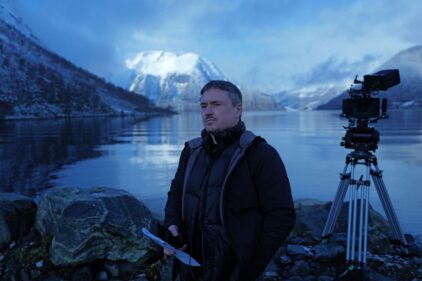
Danish auteur Nicolas Winding Refn shared with audiences at the Cannes premiere of his new film “Her Private Hell” that a near-death experience inspired his return from the streaming desert to the world of making movies.
Born in Copenhagen, Denmark, and partly raised in New York City, filmmaking is in Refn’s blood. The son of filmmaker Anders Refn (whose decades’ long career includes editing half a dozen films by fellow Dane Lars von Trier) and cinematographer Vibeke Winding, Refn broke out in the mid-’90s with his “Pusher” trilogy starring Mads Mikkelsen, broke into the English-speaking film world with the 2008 black comedy biopic “Bronson” starring Tom Hardy and the 2009 adventure flick “Valhalla Rising,” and solidified his place in the pantheon on modern cinema with his Cannes Best Director-winning cult film “Drive” starring Ryan Gosling, Carey Mulligan, Oscar Isaac, and Albert Brooks.
Although Refn has spent the last decade working in streaming television with the Netflix supernatural noir-thriller series “Copenhagen Cowboy” and the Prime crime drama miniseries “Too Old to Die Young,” his latest film “Her Private Hell” is more aligned with his last two feature films–2013’s “Only God Forgives” and 2016’s “The Neon Demon“—both of which can be viewed as dark fairytales exploring hidden emotions and taboo subject matter like incest and cannibalism.
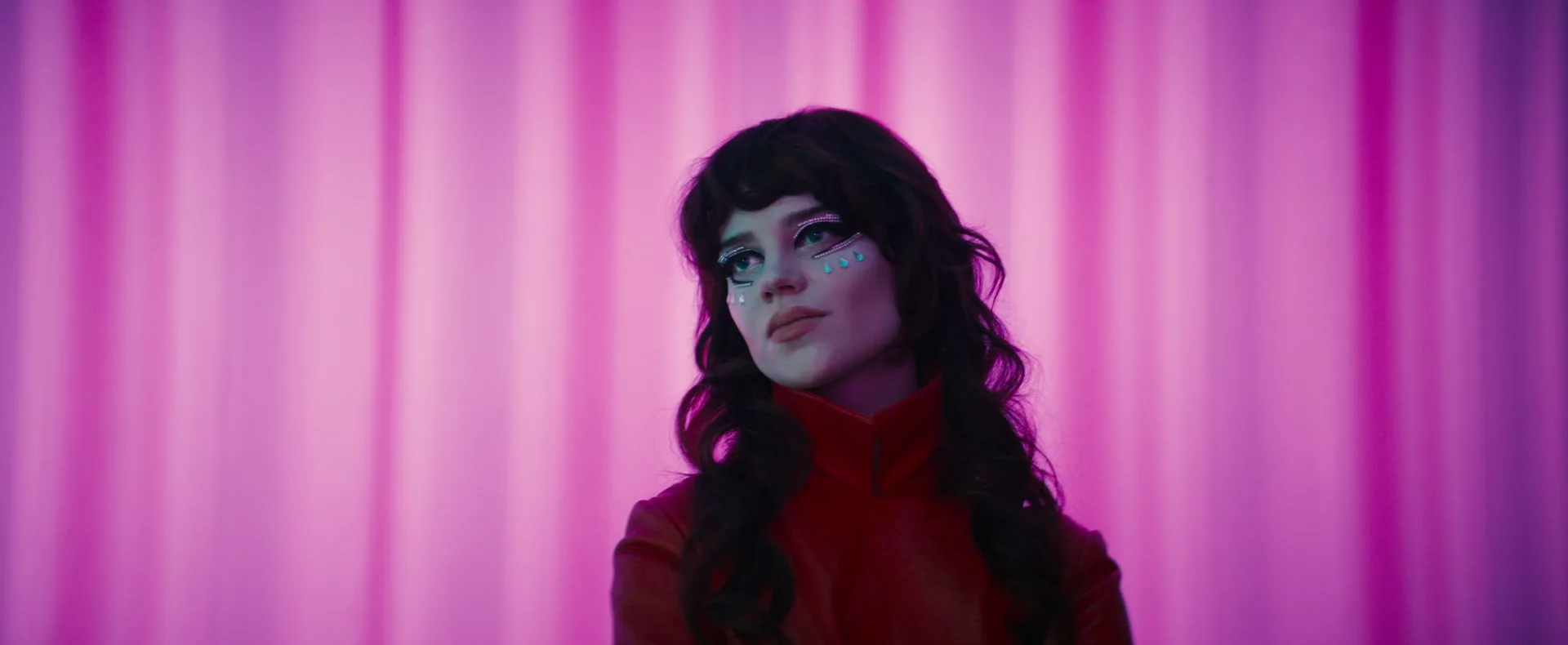
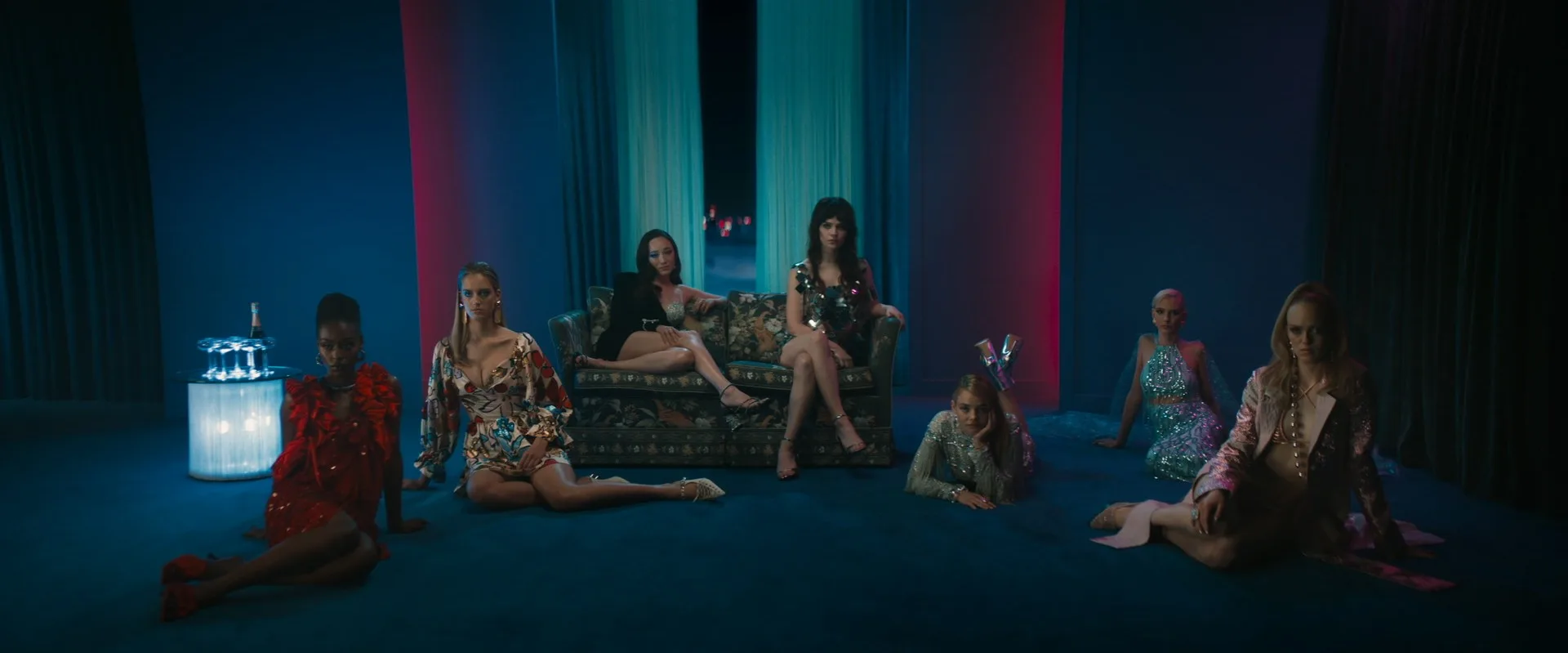
With high-key bisexual lighting and Giallo-style gore, “Her Private Hell” stars Sophie Thatcher as an actress named Elle whose lothario of a father, the impossibly named Johnny Thunders (Dougray Scott), has financially backed a film for her to star in based on a popular comic series called Candy Floss. Also starring in the film within the film are Elle’s ex-best friend (and likely one-time lover) Dominique (Havana Rose Liu), who is also her new stepmother, and a vapid influencer named Hunter (Kristine Froseth).
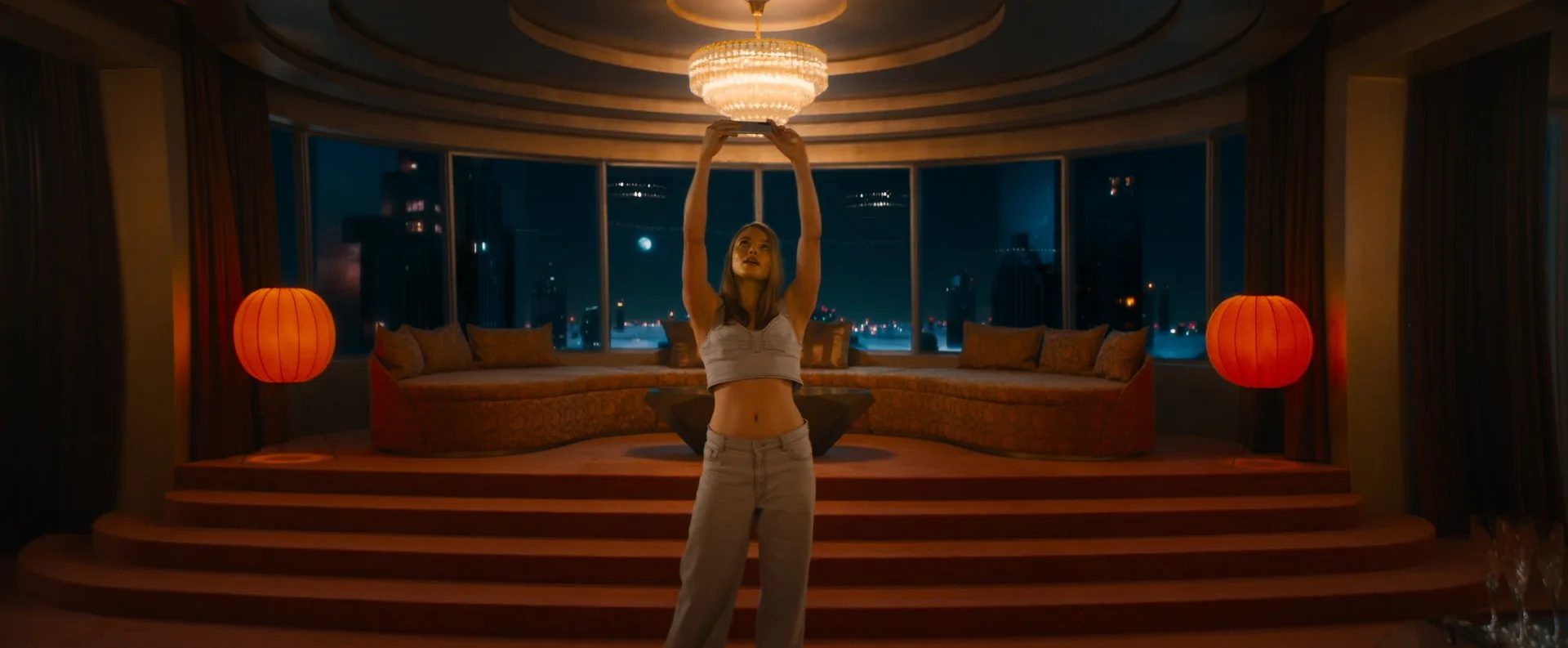
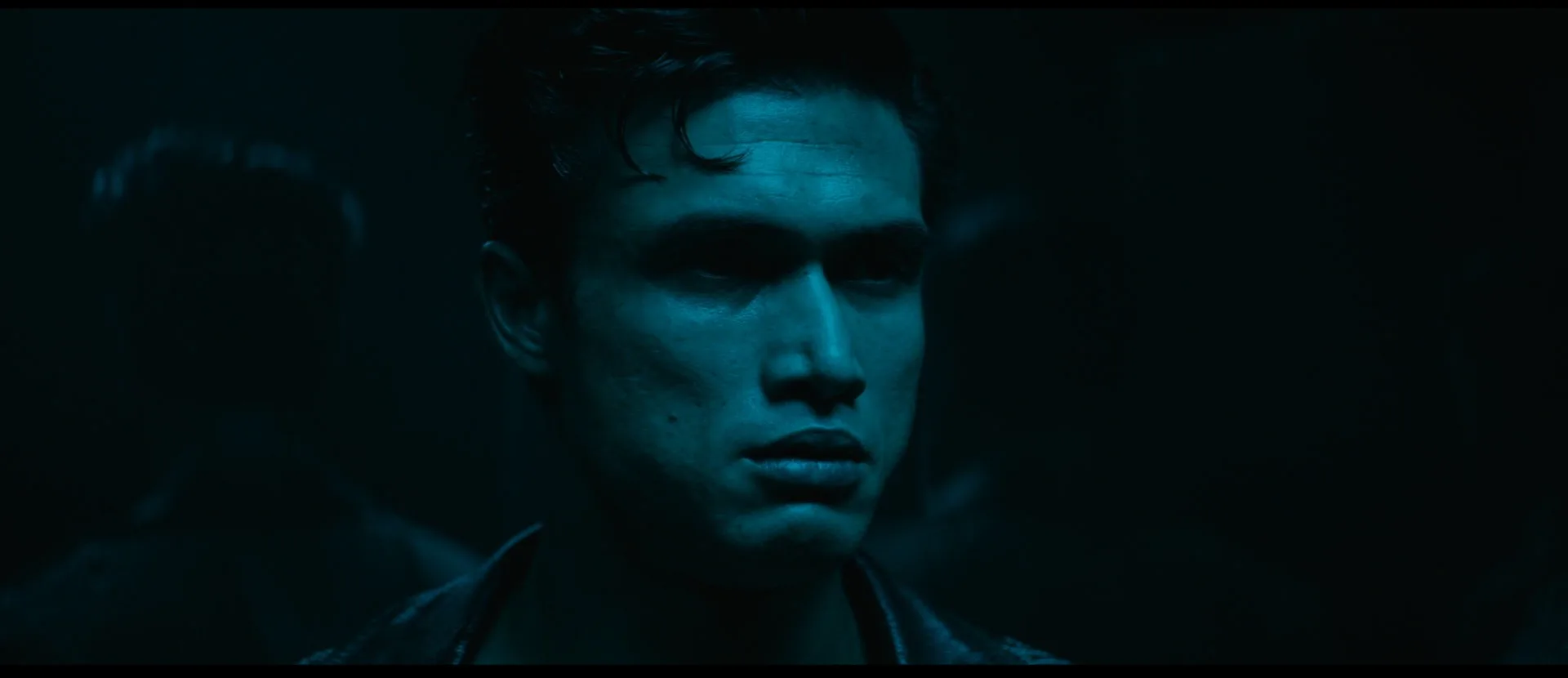
In between film shoots, the women find themselves trapped in the liminal space of their lux, neon-lit hotel waiting out a mythical fog, which has brought with it a vicious serial killer named the Leatherman and a mysterious soldier named Private K (Charles Melton), whose young daughter was a victim of the killer. Jealousy, fear, and desire swell in the unrelenting haze as the score by long-time Brian De Palma and Dario Argento collaborator Pino Donaggio wraps everything into an operatic bow of love, hate, death, and resurrection.
Before the film’s world premiere at the Cannes Film Festival back in May, Refn spoke with RogerEbert.com about the film’s daddy issues, “Riverdale,” silent film, comic books, and the intoxicating structure of fairytales.
You’ve said that you decided you wanted to go back to movies because you died and then came back. Could you talk about that experience of realizing that’s what you wanted to do again? Did you see something?
No, no, no. Not that cinematic. I died, and I was dead for 25 minutes, and in the process up to that experience, you go through a lot of emotional turmoil. But in the end I realized I’d been given a gift. How many people get a chance of starting over again?
Yeah, I almost died at 14, so that’s why I was interested.
So you know the feeling a little bit.
Yeah.
It provides a perspective, especially on time. What time means. So when I came back, I realized I only had half the time left that I had already spent. I only had, you know, x amount of years left … good years. And so I thought, “Okay, well, the good news is that I’ve been rejuvenated.” My mind had forgotten everything I’d made, meaning that all the experiences I’d had prior to that kind of vanished. So I can start over again, because I had run out of ideas.
Second, I realized that art is, again, like always, an important part of our existence. So I wanted to make movies, because I believe in the collective experience. It means that I wanted to make something that was, first of all, shown in a cinema, because cinema is a collective where people of all sexes, lives, and statuses meet on equal terms. There’s no first class; there’s no economy class; it’s just central. It’s totally democratic, accessible, and cheap enough for everyone to afford. That is where people should experience creativity. And then it can feed out in all these other formats afterward, which is great. I love it, I love it, I love it, but that means that cinema is my calling again, so I have to go back and make movies.
There are so many different classic films mixed in here. I got a little film noir, got some giallo, and felt some campy ‘60s sci-fi, like “The Green Slime” or “Barbarella.” There’s like little tidbits of all these things.
And “Planet of the Vampires.”
Since you’re clearly someone who watches a lot of films, when you’re writing, do you think in imagery? Do you think in emotions? How does that all mix in your brain and then come back out as your own stuff?
Well, because I’m dyslexic, I’m used to being dependent on the image, so it always starts with what I like to see. Thank God I’m not a writer because that would be really bad. I start with what I would like to see.
I am also dyslexic, and I feel like I also start with imagery when I write.
I think it’s because that’s our strength. It becomes our go-to place. Other people, especially if you’re a master of the written word, approach it from a different perspective, and it can be from a character narrative, or you create a character that you then jump off from. But to me, I start with what is the canvas, what would I like to see.
Charles Melton’s character could have fallen out of a silent film. It’s almost completely his body, his emotions. How did you go about developing that with him?
Well, I’d seen him in “Riverdale,” and I thought he was very good. I had this superhero character called Private K that he was going to play, and it was all going to be in his expressions, his gestures, his movement. It becomes like pantomime, because you can convey a lot of emotions without words. We’re so dependent on words today, because everything is about information secondhand. So I thought it could be interesting to have, again, a character that does not talk. It seems to be something I’m fascinated by.
Yeah, Driver from “Drive” doesn’t say much. I think that’s universal. That’s why silent film was so popular when it began, because you didn’t need to know anything other than what the human face can express.
It just showed you everything. I think it’s interesting that you say that, because last week my daughter Lizzielou suddenly came home from school and was asking about Joan of Arc and said she wanted to watch the movies because they’re making a new one or something. I said, “Wait, hold on, kid, if you’re going to watch anything, you’ve got to watch the original, the Carl Theodor Dreyer one [“The Passion of Joan of Arc”] from the 1920s.” So, we watched it together, and she cried because that performance [by Renée Jeanne Falconetti] is the greatest performance ever.
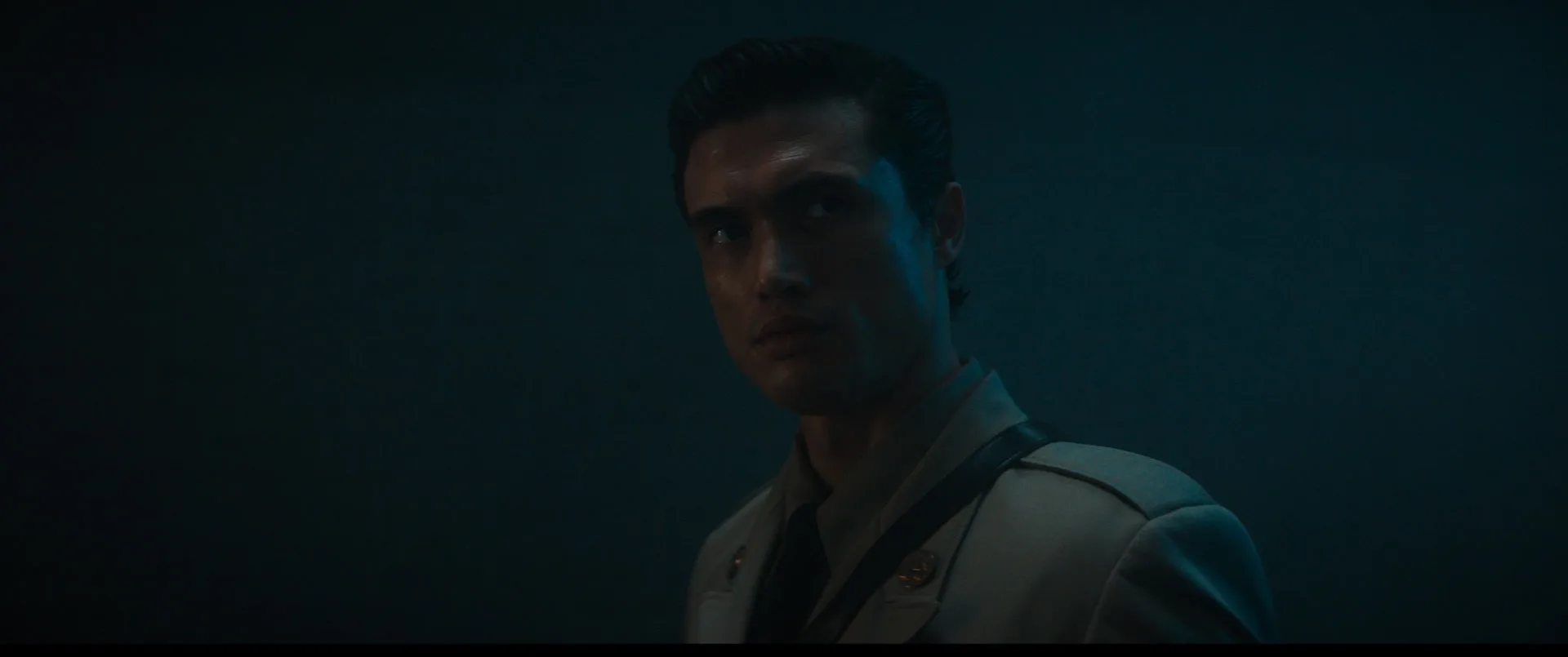
Similarly, all of the characters in this film, in particular, are emoting from the face. You really hold on to their facial expressions. There’s a scene towards the end where Sophie Thatcher goes through at least ten emotions with her eyes. I don’t know that a lot of directors these days trust the human face, so I appreciate when a film does.
It’s the most effective and inexpensive commodity.
This film felt a bit like Red Riding Hood, and I know you’ve talked about the influence of fairytales on your previous few films. Obviously, the Leatherman is a folktale in this film. I wondered if you could talk a bit about incorporating folktales and fairytales into your cinematic storytelling.
I started my career being very obsessed with capturing authenticity and making everything as real as possible, and their environments as real, and their emotions as real, and everything had to be really real, and I would shoot in chronological order to make it real. But then I realized at the end of the day that I was never going to make reality, because reality doesn’t work like that. So I decided to make unreality my canvas, and because I’m connected to Hans Christian Andersen, I felt like maybe fairytales are my language.
That’s something we share in common, he and I. The thing about a fairytale is that it transcends genre, it transcends narrative, it transcends culture, it transcends sex, it transcends years, it’s ageless, and suddenly it has an endless amount of possibilities. It’s childish, yet it’s very advanced. It’s sophisticated. It’s psychology. It’s culture. It’s social infrastructure. Everything is tied up in that one word, fairytales, and I just find it so intoxicating. So, ever since then, everything I have made is a fairytale.
You hear fairytale, and you think they are for children, but really, folktales are the oldest form of entertainment for everybody. I love that your films are really rooted in what is something everybody can feel.
Everybody can understand it. Everyone can relate to it. It’s not a cultural difference. There’s not a barrier of intellect or knowledge.
I wanted to ask you about the Candy Floss comics. Can you talk a bit about developing the comics and their connection between Private K holding an issue and Elle appearing in an adaptation of one?
Unfortunately, I don’t have the ability to draw. I wish I could be an illustrator. I grew up collecting comics, and I’ve always liked the medium very much, the visual medium of comics, whether it’s European or American. I very much still buy a lot of European comics. It just felt like an object that I remember from my childhood. Because I didn’t learn to read until I was thirteen, I could only buy them to look at them. Comics became my kind of go-to place, because I certainly couldn’t read books; I could only read images. So, I stuck with that idea. I thought in the movie the Candy Floss world is a pop culture world; it’s a chewing gum world. I thought the comic book represented that.
When “Neon Demon” came out, you talked a lot about how you were inspired by what it would be like to be a beautiful woman, and this one is very much about female friendship, female coming of age, about being a daughter and being a father of a daughter. I wonder if you could talk a bit about whether you were working through some feelings as a father of a daughter? It almost felt like this is your “Eraserhead,” you know how David Lynch made that film to work through his feelings about becoming a dad. I could be projecting, but it felt–
No, no. It’s not off. I had two stories in the beginning. Two ideas to be precise. I had the idea of the Elle character, Sophie Thatcher, and I had the idea of Private K, but they were in DNA very opposite ideas. They were hard to connect together. So the third idea, which is the monster, created a triangle between them. Then the theme of Private K was very specific, because he was me in that sense that when you are going to die, you have to make peace with certain things. I made peace with my wife; we’d been together for thirty years. My eldest was old enough to exist without me. But my youngest wasn’t. And I had to come back for her. So, like Orpheus, if I could go to Hell, I would bring her back. That was my gasoline to stay alive, to come back. So, once that cemented itself in Private K’s DNA, then the father narrative began to infuse everything else and the father construction.
So then I had something that was beginning to make sense, and it had a mirrored image of “Only God Forgives,” which is about a son-and-mother relationship in all its complexity, set in the world of fairytales. Then, I had this idea about Elle’s father marrying her lover and her lover taking her father away from her. Then this idea about Elle fantasizing an alter ego, who is a father who will go to Hell to bring back his daughter, because her father’s always leaving her, not trying to find her. Suddenly, everything began to make sense on an overall infrastructure, and then it was about how to translate it all into the film.
I think the way the film is edited is so beautiful, where you’re really not sure: is it the film, is it the film in the film, is it her dream? It doesn’t actually matter because you’re just feeling it. Then the heightened Sirkian score that wraps it up so perfectly. Can you talk about what inspired it?
I shoot in order, and I play a lot of music on set for the actors for the mood and for myself to figure out what we are searching for here. So, when I was done shooting, I realized that I wanted to make an opera, because it was shot very operatically. So, I said, “Well, who’s around and who do I like?” And there was only one, because I’ve been using his music for many years, like all the way back as a kind of source music for ideas when I am writing or shooting: Pino Donaggio. He agreed, “I want to make an opera.” He said he always wanted to make an opera, and his score is what tied the entire film together. His score took everything and made sure that there was a bloodline that ran from A to Z.