

Roger Ebert
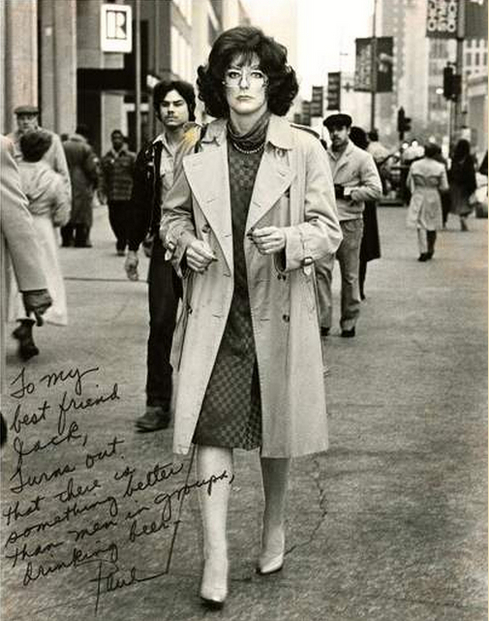
“Sheep, Galloway, Sheep!” Paul Galloway, a beloved legend
We will never hear the Sheep Story again. Nor will we enjoy his presence in a room, which was an invitation to good cheer. Paul Galloway, the most incomparable raconteur I ever met in a newsroom, is dead. Everyone who knew him will know what a silence that creates.
I loved the guy. I introduced him to his wife, Maggie. I couldn’t see enough of them. It will be impossible to share with you the joy of his company, but I am going to try. Let others write the formal obituaries. All I know is, Paul died at about 3:30 p.m. Monday, at their “winter home” in Tulsa, Okla. There’s a Winter Home Story. With Paul, there was a story about everything. He was somewhere in his 70s. When you get to be our age, “somewhere” is close enough.

“Speed 3”–Winner of my 1999 contest
No favorable review I’ve ever written has inspired more disbelief than my three stars for “Speed 2.” Even its star, Sandra Bullock, started mentioning in interviews her disgust with herself for agreeing to star in it. It’s frequently cited as an example of what a lousy critic I am. (Note well: Siskel also gave it thumbs up.) All the same, I’m grateful to movies that show me what I haven’t seen before, and “Speed 2” had a cruise ship plowing right up the main street of a Caribbean village.

Gabby Giffords made me cry. America? And you?
I sense the debate over gun control is entering into a new phase and the gun lobby is losing. After Obama’s second victory, the wind changed. Republicans are suffering uncertainty, and many of them grow restless. We have absorbed years of mass murders, random violence and accidental shootings. If the nation is no longer is no able to absorb those deaths, then Congress will act first against multiple-shot magazines for guns intended for in war.
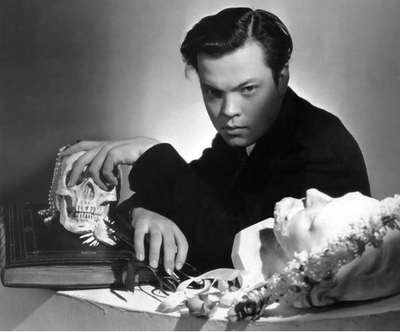
Orson Welles young, old, drunk, sober, and plenty pissed off about frozen peas
Booked into the Auditorium Theater in Chicago in the 1930s, Orson Welles was confronted by a snowstorm of historic proportions. Most of his audience couldn’t make it to the theater.
“Good evening, ladies and gentlemen,” he said. “My name is Orson Welles. I am an actor. I am a writer. I am a producer. I am a director. I am a magician. I appear onstage and on the radio. Why are there so many of me and so few of you?”
Weaker at the broken places
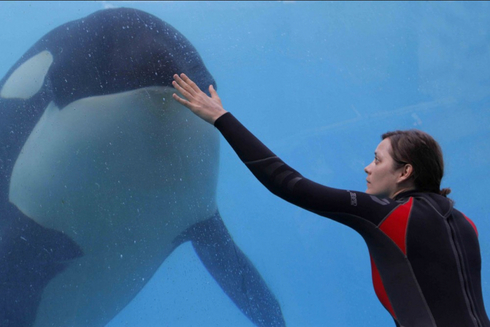
They are two people accustomed to ruling their physical domains with muscle, sex and beauty. They don’t ask themselves a lot of questions about what could stand some improvement in their inner lives. They will rely the powers given them. Ali is powerfully-built and roughly handsome. He dreams of becoming a champion of mixed martial arts fighting. At present he is a nightclub bouncer, firmly exercising control over the hopefuls swimming out of the night. Stéphanie is a trainer at a seaquarium, using body language and dead fish to command a tank filled with whales to rise up from the water. They live near Cannes, celebrated for launching more successful people up a red carpet.
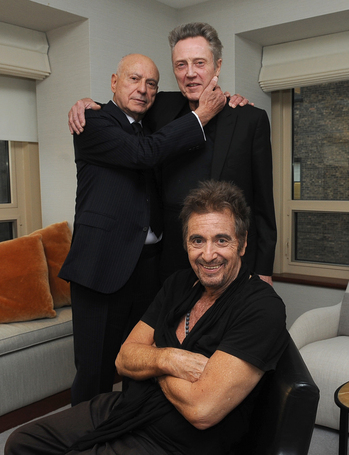
Pacino, Walken and Arkin: Three stand up guys in a one-act play in an empty noir city at night
• As told to Roger Ebert
Al Pacino, Christopher Walken and Alan Arkin walk into a hotel room, and that sounds like the set-up for a joke. It’s more like a long-delayed punchline. These guys have been stars for more than 40 years, but until “Stand Up Guys,” they’ve all three never been in a movie together. Arkin and Pacino were in “Glengarry Glen Ross” together, and Walken and Pacino were both in “Gigli,” but that’s as far as it goes.
I mention they go way back.
“Yes, absolutely,” Walken says. “I’ve known Al for decades, from New York and from, you know…”
“He didn’t know I was an actor,” Pacino says, “until we did this movie. He’d just see me around the street a lot.”
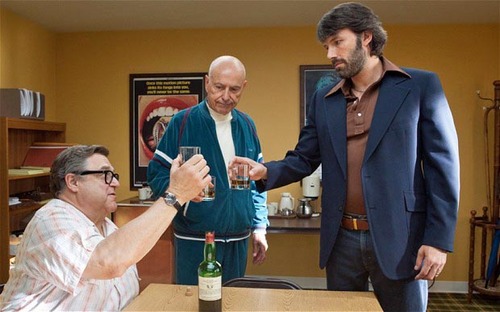
Ebert’s Top Movies of 2012
A funny thing happened on the way to the Oscars. Not to the Oscars. To me. I sustained a hairline fracture of my left hip. I didn’t fall. I didn’t break it. It just sort of… happened to itself. Most of the time, it causes me no pain at all. But my left leg won’t bear any weight, nor can I walk on it. This pain is off the charts. It has nothing to do with cancer. It’s plain bad luck.
The good news is that I’ve seen the films of one of the best recent years in cinema. I wrote more than 300 reviews in 2012 — a record — and it was unusually difficult to leave out many of the quote-unquote “best” films in 11th place.
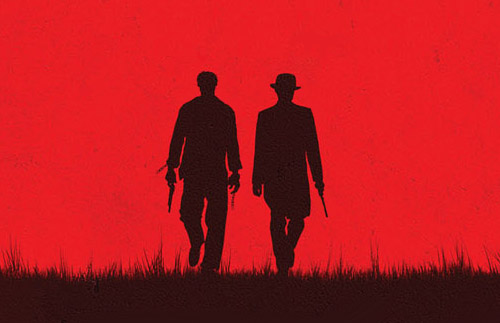
Faster, Quentin! Thrill! Thrill!
Rating: Four stars
Consider now the curious character of Dr. King Schultz. He is an itinerant dentist who works from his little wagon, traveling the backroads of the pre-Civil War South. As Quentin Tarantino’s “Django Unchained” opens, we see a line of shackled slaves being led through what I must describe as a deep, dark forest, because those are the kinds of forests we meet in fairy tales. Out of this deepness and darkness, Schultz (Christoph Waltz) appears, his lantern swinging from his wagon, which has a bobbling tooth on its roof.
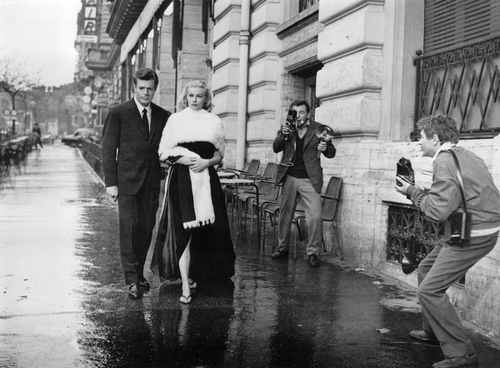
The death of a young paparazzo
Night on a highway somewhere. A hat and a shoe. In its very simplicity the photograph signals it has some hidden significance.
The caption explains that the two objects on Sepulveda Blvd. in Los Angeles are at the spot where a young man named Chris Guerra was struck by a SUV and killed at about 6 p.m. New Year’s Day while trying to cross the four-lane highway.
