The bookie for the Palme d’Or

May 22, 2009–Austrian Michael Haneke’s “The White Ribbon” is shot in black-and-white and set in an Austrian village in the two years leading up to the outbreak of World War I. A series of increasingly disturbing happenings over a period of months disrupts the otherwise uneventful flow of isolated rural life. These include a planned accident that nearly kills the village doctor, the torture of a child by unknown assailants, and the burning of a barn.

At first it could be assumed that this is a mystery and that Haneke’s intention is to gradually reveal the perpetrators of the increasingly bizarre and cruel acts. Instead he seems to be moving into Dreyer territory, unfolding the story of repression and escalating evil in beautifully precise but rigid compositions that echo the sternness of the social mores and moral precepts of his characters.

Large families headed by unbending fathers are at the center of this film, and there are many children. The actions of certain children arouse suspicion, but then nearly everyone in the film arouses suspicion, as this is no ordinary mystery. In the end, the disturbing chronicle circles around to the beginning to find a meaning. The film’s narrator began the story by saying that the events he was about to unfold may shed some light on later happenings. Haneke leaves it to his audience to decide what is meant by this, but it isn’t too much of a stretch of the imagination to think that these are the youngsters who grew up to wear brown shirts and swastikas.
December 14, 2012

Apocalypse von Trier; Miike in 3-D

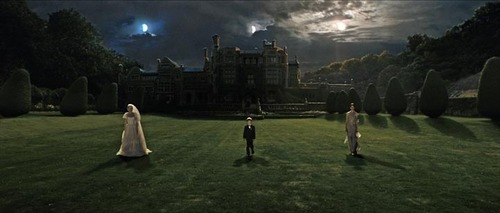
Another much-anticipated film by one of the big names in this year’s Cannes competition premiered this morning — “Melancholia” by Lars von Trier. It’s no secret that this apocalyptic science fiction drama ends with the destruction of the earth, since that is revealed in the first few minutes of the film. The character played by Charlotte Gainsbourg, neatly summarizes von Trier’s dark pessimism with the line, “The earth is evil; we don’t need to mourn for it.” What is rather amazing is that a film about the destruction of all life (and von Trier posits that we are alone in the universe) could be so turgid.

That said, I think I rather prefer von Trier’s wacko view of the cosmos in “Melancholia” to Terrence Malick’s in “The Tree of Life.” With the ingredients von Trier had to work with, it’s surprising that he didn’t make a better film. Following the various forms of desecration and transgression that are the hallmarks of “Antichrist,” it’s as if he felt the need to top himself with an even more outrageous concept, but forgot to figure out what the outrageous part would be.

“Melancholia” examines the relationship of two sisters, Justine (Kirsten Dunst) and Claire (Charlotte Gainsbourg) in the final days before the planet named Melancholia is due to collide with the earth. The story falls into two parts. The first is named for Justine, who is blonde, conventionally pretty, and mentally unstable. The second is named for Claire, who is Justine’s opposite in every way, not only in her lean, dark-haired appearance, but in her down-to-earth competence in managing the stuff of life.

December 14, 2012

Four screenings, from blues to bliss

Walking down a narrow side street from my hotel to the Palais at 7:55 am every morning involves running a gauntlet of persistent petitioners, who appeal to those rushing to the 8:30 am press screenings for spare admission tickets. Press get in by showing their badges, but those whose accreditation is only through the film market sign up online for tickets, which they sometimes don’t need. Spare tickets must float around frequently enough to justify cinephiles of all ages honing their approach techniques, from aggressive and confrontational to polite and needy. Some hold little handmade signs with the name of the day’s film, and close in no matter how fast you walk or how diligently you avoid eye contact.

Left: Im Sang-soo’s remake of “The Housemaid.”

December 14, 2012

Viruses biological and psychological

The sounds of Cannes usually begin for me before daylight, when I’m awakened around 5:00 am by the noise of the big motorized awning of the bistro that’s directly under my window being rolled down for the day. That’s quickly followed by the watery roaring of the street-cleaning machine as it drives up and down the little plaza where the bistro sets up its outdoor tables and chairs. Then, comes the metallic scrape of dozens of chairs being dragged into place. Finally, some natural sounds: birds, including the big screeching gulls that fly inland from the waterfront a few blocks away. The alarm goes off and it’s time to start another festival day by arriving at the Palais at 8:00 am to get a seat for the 8:30 am press screening.

“Lawless” by John Hillcoat, the first of four American films in the year’s competition, premiered this morning. Set in Franklin, Virginia, in 1931, this is a Prohibition-era tale of a real family, the Bonderants, who became local legends as notorious moonshiners. Legend is the operative word here, as this is a highly romanticized story of three macho brothers and their apparent talent for besting the law, the competition, or death, as the case may be. This is film in which the good guys can be beaten to a pulp and be OK the next day, or take a shotgun blast to the gut from fore to aft but still get up and walk.

The cast is easy on the eyes: Tom Hardy as the eldest brother Forrest, who, as reputation has it, cannot be killed; Jason Clarke as Howard, the fearless middle brother who’s batshit crazy when he’s been consuming the product; and Shia Lebeouf as the youngest brother Jack, an aspiring lady’s man who still has a lot to learn about the family business. Love interests include Jessica Chastain as a former fan-dancer from Chicago who shows up at the Bonderant enclave seeking the quiet life (!), and Mia Wasikowska as the sheltered daughter of a fundamentalist preacher.

December 14, 2012

Love under stormy skies

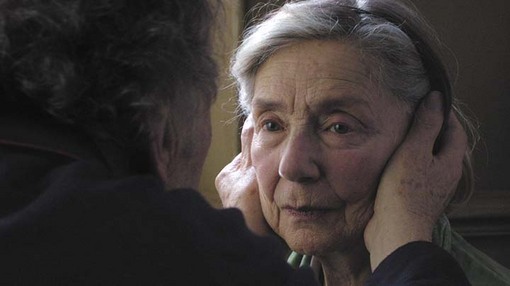
Sunday dawned with a dark and threatening sky and a chill in the air, continuing the dreary weather trend of the past two days. It’s a day of heavy-hitters here at Cannes, with two greatly anticipated films by major directors premiering in competition: “Amour” (“Love”) by Austrian Michael Haneke in the morning; and “Like Someone in Love” by Iranian Abbas Kiarostami in the evening. Is the weather an omen or just weather? We’ll see.

Neither of today’s competition films was made in the director’s home country. Haneke made “Amour” in France with French stars, but then he has more frequently worked in France in recent years. Kiarostami made his previous feature “Certified Copy” in Italy with an international cast, but “Like Someone in Love” was made in Japan with a French producer, a first for the globe-trotting director.

Michael Haneke has made his reputation on a uniquely transgressive form of cinema. Films, including “The White Ribbon,” “The Piano Teacher,” and “Funny Games,” cross boundaries and break taboos, all the while drawing the audience into complicity with moral compromises and sometimes vile acts. “Amour” represents a new and more gentle and affecting take on that artistic strategy.

In “Amour,” veteran French stars Jean-Louis Trintignant (“A Man and a Woman,” “My Night with Maud”) and Emmanuelle Riva (“Hiroshima Mon Amour”) play Georges and Anne, a married couple in their 80s. They are retired music teachers who live in a lovely high-ceilinged apartment, and their comfortable lives are steeped in music and the arts. Their adult daughter Eva (Isabelle Huppert), also a musician, has a busy life of touring with her British husband.

December 14, 2012

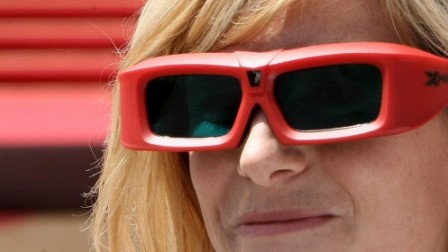
5/14: Swanky 3-D goggles for the chic cineaste

The programming director of the Gene Siskel Film Center in Chicago is blogging from Cannes for us.

Thursday, May 14–You can’t beat the weather here in Cannes. After the cold rain and dark skies in Frankfurt, where I changed planes yesterday, the perfect, summery temperatures and extravagant displays of flowers makes this town seem even more like a Mediterranean paradise than usual.

The festival kicked off to the world Wednesday night with the first red-carpet walk by the jury, and the Pixar folks with their 3-D animated feature “Up”, but for most of us in film-industry jobs, the

festival is already well underway with press screenings, market screenings, and press conferences.

December 14, 2012

“Midnight in Paris” but Cannes has just begun

Arriving in Cannes by bus from the Nice airport provides a thumbnail tour of the town, from the more seedy homes on the outskirts to the swanky hotels on the waterfront. The palms lining the Croisette, the festival’s de facto main drag, may be the ubiquitous symbol of city, but a few blocks away the plane trees, cypresses, and the prolific climbing roses of Provence are a more common sight. Walk a short distance from the Festival Palais and there are conspicuously un-chic restaurants where local cops congregate for dinner in the back room and retired couples hang out for a smoke and an evening beer, more often than not, with a fluffy mutt under the table.

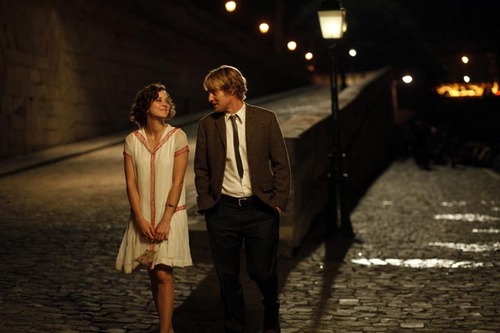
In a way, my first reminders yesterday of everyday life in everyday France were a bracing counterpoint to this morning’s press screening of Woody Allen’s romantic fantasy “Midnight in Paris.” The festival’s opening night film is a colorful valentine to Paris, indulging and gorgeously illustrating the director’s every memory and cherished illusion of the city. I’ve never been a big Woody Allen fan, but “Midnight in Paris” is loads of fun.

The film opens with a morning-to-night sequence of views of the city’s most iconic sights: Montmartre and the Moulin Rouge, the Seine, the Arc de Triomphe and the Champs-Elysees, the narrow streets of the Left Bank, and the Eiffel Tower. That opening alone is a tourist board’s dream. At the press conference later, a journalist asked Allen, who mentioned that he thought of the title long before he had a story, whether these postcard-worthy views were his own impressions of Paris, or were meant to represent the point of view of his characters. Perhaps the French questioner was hoping for the latter, but Allen replied, “I learned about Paris the way all Americans do–from the movies. I wanted to show the city emotionally, not realistically, but through my eyes.

December 14, 2012

“The buffet of the universe.”

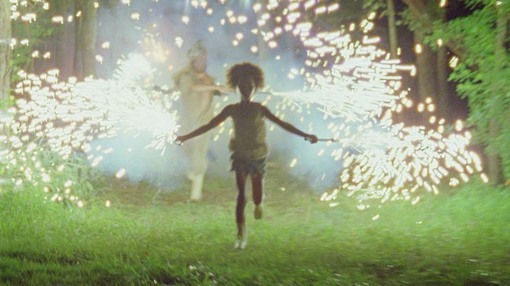
Every day at the Cannes festival opens up the possibility of surprises, upsets, or major revelations. As Peter O’Toole in “Lawrence of Arabia” said, “Nothing is written.” Film history is made here all the time, and I think some history was made today with the international debut of the American independent film “Beasts of the Southern Wild,” by Benh Zeitlin, screening in the “A Certain Regard” section of the festival.. A first feature, it competes for the Camera d’Or. The world premiere was at Sundance back in January (where it won the Grand Jury Prize), but the high profile Cannes exposure will surely bring the film and its young star the worldwide attention it deserves.

“Beasts of the Southern Wild” is set in a wild coastal swamp on the Gulf coast, in a watery area referred to as “the Bathtub,” where the towers and smokestacks of chemical plants and refineries spread across the distant horizon. It’s a post-Katrina allegory that adopts many of the real-life images and circumstances of that disaster to create a purely mythic fable full of visceral visions, primal emotions, and haunting reminders of the inescapable cycle of birth, life, death, and decay.

At the center of the film is Hushpuppy, a feisty, unafraid six-year-old who lives with her sickly and often unstable dad in an isolated wilderness squatters’ community where they live off the land by trapping and fishing. Their home, such as it is, is the wreck of a small ramshackle trailer; their boat is the bed of an old pickup truck floating over 55-gallon drums. That mankind lives within nature’s unforgiving food chain is a daily reality for these two. As Hushpuppy’s teacher Miss Bathsheba reminds her handful of students, “Everything that lives is meat. I’m meat; y’all’s asses is meat; all part of the buffet of the universe.”

December 14, 2012

“There’s a fungus between my toes that speaks to me.”

by Barbara Scharres

Cannes has become hot and uncomfortably muggy in a way that has me thinking longingly of the blankets and socks of earlier in the week. As the festival closes in on the final days, I’m hoping for some big excitement on the screen.

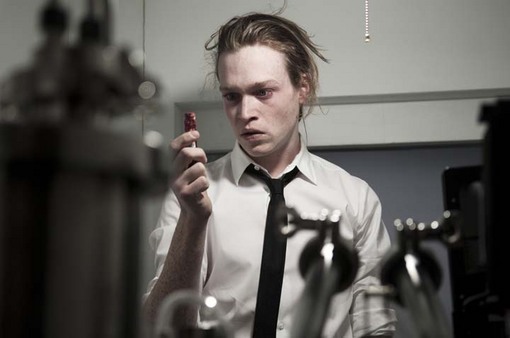
When the stiff, futuristic Brandon Cronenberg film “Antiviral” played a few days ago, it gave me cause to look forward even more to today’s premiere of “Cosmopolis” by his father David Cronenberg, anticipating that the contrast between generations would also point up the difference between a wannabe and a seasoned master. Boy, was I wrong. I’m sorry to say that they’re both among the worst films I’ve seen here this year. I’ve never been this disappointed in a David Cronenberg film.

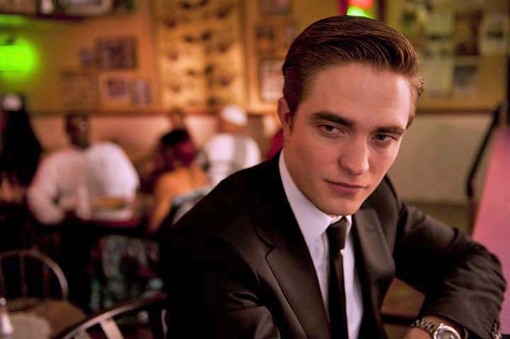
“Cosmopolis” opens with a shot of a row of white stretch limos parked on a city street. The interior of one of them will become a primary location in this film, functioning as the office away from the office for mega-millionaire money manager Eric Packer (Robert Pattinson), an arrogant and powerful 28-year-old. Seemingly inspired by the Occupy movement in the U. S., the story is set in New York in the near future (although what we see of the urban landscape never looks like anything but Toronto; even the CN Tower is seen in the background). The president of the United States is due at any moment, a situation tying up the streets with blockades and large-scale protests.

December 14, 2012

Of popes and poissons and Kim Ki-duk

It’s Friday the 13th in Cannes, and that has got to mean something good. An overcast sky threatening rain means that there couldn’t be a more perfect day to stay inside and watch movies.

The morning began with the 8:30 am press screening of Nanni Moretti’s “We Have a Pope.” Hmm…a comedy/drama about the Vatican by a self-professed Italian atheist? Moretti is known primarily for his wry, intellectual, and largely autobiographical approach to comedy in films including “My Diary” and “April, ” but also for serious drama in films including his 2001 Palme d’Or winner “The Son’s Room.” Subjects he has often lampooned include leftist politics, psychoanalysis, water-polo, and the cinema itself.

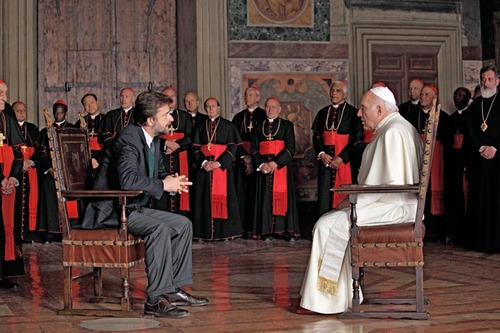
In “We Have a Pope,” the funeral of a dead pope has just taken place and the College of Cardinals is convening to elect the new pontiff from among their number. Moretti goes to great lengths to represent this ritual gathering with great accuracy, but injecting an escalating number of comic moments as the film traverses from the ceremonial pomp of its opening scenes to take on a lighter tone.

As if the voting for a pope were an elementary school spelling test, the prelates cross out names on their ballots, look to heaven for guidance, and even cheat, some slyly spying on what a neighbor seated to the left or right is writing. After a few rounds of voting, the winner is revealed to be a candidate who was not even in the running, a stunned Cardinal Melville (surely Moretti’s tip of the hat to iconic French director Jean-Pierre Melville), played by veteran French star Michel Piccoli.

December 14, 2012

Robbers and strippers, battles and burlesque

The volcano gods were in a snit on Monday, and I arrived in Cannes on Tuesday six hours later than planned, following some frustrating encounters with ticket agents in Frankfurt Airport. Chicago Tribune critic Michael Phillips was on my flight from Chicago, having had his entire original reservation canceled due to drifting volcano ash. I heard delay stories everywhere, and figured I got off easy.

After fast dash to the Palais des Festivals five minutes before the office that issues accreditation badges closed, I picked up my press badge and film market badge. The Cannes skies were dark and threatening, with fog hanging over the distant mountains. I hoped that this wasn’t a sign of weather gloom to come.

December 14, 2012

Cannes 2011: All eyes forward

As the opening night of the Cannes International Film Festival approaches, a host of Riviera amenities and services hope to lure my business via solicitous e-mails. Would Madame perhaps like to hire a helicopter for the journey from the Nice airport to the Festival Palais? Rent a limousine with a multilingual driver? Charter a yacht or rent a fully staffed villa with swimming pool (photos handily attached)?

Me, I’m just in the market to rent a no-frills mobile phone with a European SIM card, and I’ll be taking an inter-city bus from the airport, but you get the picture. The sparkling goodies of this playground of millionaires are dangled before the thousands of accredited journalists, theater programmers, film buyers, and filmmakers soon to be heading for the legendary festival. Most of us will be pinching the Euros until they scream, but nonetheless enjoying the nonstop spectacle provided by those who get to ride around in helicopters.

The festival opens the night of Wednesday, May 11 with Woody Allen’s “Midnight in Paris.” “Monsieur Woodee,” as the French are wont to call him, made his first visit ever to Cannes in 2002, when his “Hollywood Endings” opened the festival. Although the film was disappointingly lackluster, it certainly made no difference to his French fans, who hailed him like an emperor. I watched Allen on that occasion from a seat among the hyper-excited audience, marveling at his frail stature, almost inaudible voice, and the shrinking body language that made him seem an incongruous god of cinema.

December 14, 2012

La Palme d’Or et la Palme d’ Whiskers

May 22, 2009–One of the trade papers on Thursday was touting the French film “A Prophet” by Jacques Audiard, which received excellent reviews early in the festival, as a hot contender for the Palme d’Or. Rumors of this sort seldom mean anything here, but to me this was one of those scratch-my-head moments. “The Prophet” is a well-crafted, well-acted prison movie, but I feel like of seen variations on this story and its predictable trajectory too many times in too many other movies.

Malik, a young, vulnerable Arab-French man arrives at prison to serve a six-year sentence and is immediately targeted by the ruthless Corsican gang that controls virtually everything in the establishment, including who lives and who dies. Forced under threat of death to do the gang’s dirty work, including a murder, he waits and learns to better his oppressors at their own game.

Tahar Rahim, star of “Un prophète”

As good and mainstream as this film is, there were few variations on the expected details: the body searches and humiliations of prisoners; the cruel intimidation of the weak by the strong; and Malikís inevitable rise to power as a force within the prison and as a drug lord on the outside. I guess I always hope that films in competition will be extraordinary in some way, and “A Prophet” just didn’t seem to have that quality.

December 14, 2012

A precious American girl, a Japanese love doll, Iranian rockers, and a Korean vampire

May 15, 2009–The most gutsy, powerful film I’ve seen here so far is without doubt “Precious” by African-American director Lee Daniels. “Precious” already had its world premiere at Sundance in February, where it was greatly acclaimed by audiences and critics alike. If the comments I’ve heard today are any indication, it promises to be an even bigger success in Cannes.

Based on the novel Push, by Sapphire, “Precious” is the story of a Harlem teenager who is severely abused by her mother, habitually raped and twice impregnated by her father, and treated like garbage by just about everyone in her life. The one thing Precious’s abusers don’t succeed in killing is her imagination, and for instance, while being raped, in her mind’s eye she sees herself making a grand entrance at a film premiere. The pictures in her photo album talk to her, and this large, awkward girl looks in the mirror and sees a beauty queen with cascading blonde hair. This is not a preachy film, but one that grabs you from beginning to end as Precious comes back from the edge of desolation to discover the immovable force of her own willpower.

After seeing “Precious” last night at an invitational press screening, this afternoon I attended the press roundtable interview event with director Lee Daniels, screenwriter Damien Paul, and actors Gabourey Sidibe, Mariah Carrey, Lenny Kravitz, and Paula Patton. It was held at the outdoor restaurant Beach VitaminWater, which I can’t say without laughing. Typical of these events, a lavish lunch is served, and the talent is brought in.

December 14, 2012

Sitting on the Croisette, watching the auteurs go by…

It’s another day for umbrellas and rain slickers, not to mention sweaters. The Riviera is just not delivering the usual idyllic sunshine and warm Mediterranean breezes this year. The film market stands that border the beach in little cabanas have their doors closed for protection from the wet, and their inviting tables and deck chairs on the sand are vacant and dripping.

The first film in competition this morning, “You Ain’t Seen Nothin’ Yet” by Alain Resnais, didn’t deliver either, and I can only hope that the title is prophetic, and that the revered 90-year-old director (“Hiroshima Mon Amour,” “Last Year at Marienbad”) has some future masterpieces in store for us yet.

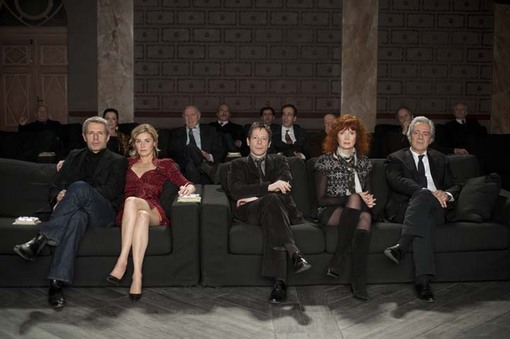
For “You Ain’t Seen Nothin’ Yet,” Resnais assembled a large cast of famous French actors with whom he’s worked over the years, including Sabine Azema, Anne Cosigny, Mathieu Amalric, Michel Piccoli and Lambert Wilson. This distinguished cast was supplemented by the young stage actors of the fledgling theater company Colombe. The visual techniques and acting style of the stage are pertinent to the look of “You Ain’t Seen Nothin’ Yet.” In the film’s press book, Resnais says, “In my films, I’m constantly looking for a theater-style language and musical dialogue that invites the actors to get away from the realism of everyday life and move closer to a more offbeat performance.”

December 14, 2012

Hanging it up: Rock stars, Nazis,stunt drivers and the Palm de Whiskers

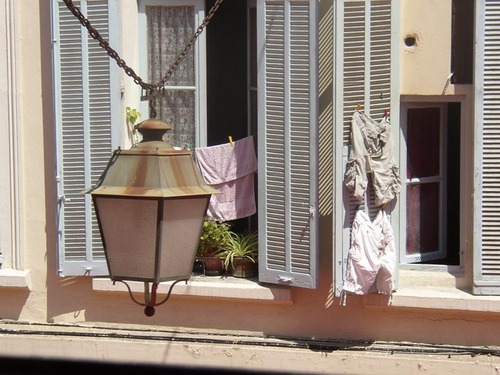
The 64th Festival de Cannes is winding down, and the signs are everywhere. The hand-laundry of festival-goers hangs from the shutters of the windows opposite my hotel (somebody is running out of clean clothes). The streets seem emptier in the early morning, and the area around the press mailboxes in the Palais is starting to have a vacant feeling.

Just five minutes before Sean Penn’s scheduled arrival at the press conference to discuss Paolo Sorrentino’s competition film “This Must Be the Place,” the room still had dozens of empty seats. The number of photographers gathered expectantly in front of Penn’s place at the table onstage was only a meager 23, unlike the mob for Brad Pitt just a few days earlier. It only meant that many journalists have already gone home or were playing hooky today.

Accompanied by the director and producers of “This Must Be the Place,” and Irish actress Eve Hewson, Penn strolled in looking pleased with himself. He’s deeply tanned and nonchalantly chewing gum, his hands stuffed in the front pockets of his jeans. He credits director Sorrentino with “a magic hand” in shaping his performance as an eccentric American rock star living in retirement in Ireland. About the film, Sorrentino said, “The idea of the story came from a Nazi criminal. I wanted to write a story about a 50-year-old rock star who remains a child, and have these two confront each other.

December 14, 2012

If it’s springtime, it must be Cannes

In just a week the French Riviera will come alive with the hoopla of the 65th Cannes International Film Festival, running this year from May 16 through 27. Despite the international proliferation of film festivals, like it or not, Cannes remains the biggest, most hyped, glitziest and most diverse event the world of film has to offer, the envy of every other festival.

As if the world at large also trembled at the import of the approaching festivities, previous Cannes festivals have been prefaced by volcanic eruptions, hurricane-force storms, national strikes, and bomb threats. What can we expect this year, when the festival officially becomes a senior citizen? Don’t look for any rocking chairs along the Croisette, for one thing. Judging by the lineup of major directors represented in the Competition and other official sections, it’s more likely that major revelations will be rocking the Palais. And if it’s like other years, we can expect the festival will manage to rock a headline-grabbing major controversy or two as well.

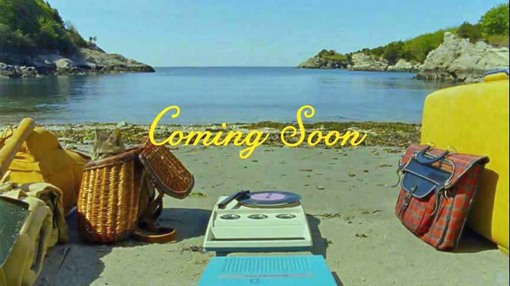
For the fourth year in a row, Cannes will open with an American production, Wes Anderson’s “Moonrise Kingdom,” guaranteeing that name stars including Bruce Willis, Bill Murray, Edward Norton, Frances McDormand, and Tilda Swinton will be gracing the red carpet on Wednesday, May 16 for a glamorous kick-off. Judging by the trailer available online, the real stars may be the large cast of kids in a comedy/drama that looks to be strong on surreal wackiness.

Even a quick glance at the list of films in competition yields an eye-popping number of famous names, including David Cronenberg (Canada), Michael Haneke (Austria), Abbas Kiarostami (Iran), Ken Loach (UK), Cristian Mungiu (Romania), Alain Resnais France), Carlos Reygadas (Mexico), Walter Salles (Brazil), and many more. This competition could be a veritable Olympics of the cinema gods…or not, as sometimes happen, because even world-class filmmakers and certified masters can disappoint.

December 14, 2012

Gangsters, renegades and rebels

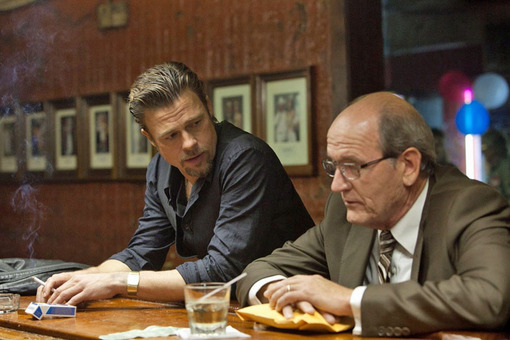
Today looks to be a day of renegades and gangsters from the start, with “Killing Them Softly” by Andrew Dominik, the second American film to premier in competition, first thing in the morning. The all-male cast is headlined by Brad Pitt, who also starred in the director’s Oscar-nominated “The Assassination of Jesse James by the Coward Robert Ford. ” This is a talky tough-guy movie that is heavy on long interchanges among thugs with odd accents and/or speech impediments. Talking like a tough guy means modifying every noun with the f-word (and I wonder what the grand total would be for this film).

“Killing Them Softly” is set in New Orleans, although pains are taken to avoid any distinctly identifying landmarks. The grey, wet, boarded-up desolation of the landscape could only be the post-Katrina lower 9th Ward, and I found the film’s fleeting glimpses of that more electrifying than the introduction of Frankie (Scoot McNairy) and Russell (Ben Mendelsohn), a pair of lowlifes setting up a robbery with Squirrel (Vincent Curatola).

The two bumblers manage, just barely, to pull off the robbery of a high-stakes poker game, which makes it only a matter of time before they’re marked men. It also makes Markie (Ray Liotta), the pudgy mid-level gangster who was running the game a suspect. Whatever higher authority these thugs answer to calls in its enforcer Jackie Cogan (Brad Pitt) to sort it out.

The first and only woman, who is also the first and only black person in the story, makes her appearance one hour into the film. She’s a prostitute who’s treated like garbage in her approximately two minutes on the screen. This is not only a man’s world, it’s a white man’s world.

December 14, 2012

Raunchy comedy, brutal sex, bloody violence

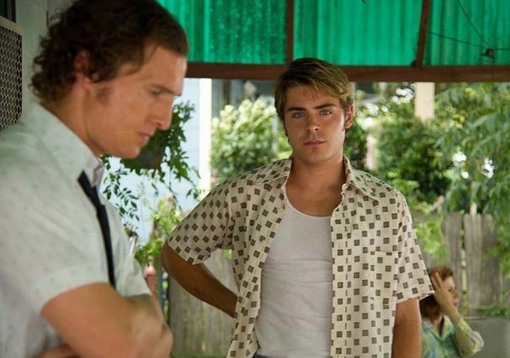
Big stars were out to shine this morning in Cannes, when “The Paperboy” by Lee Daniels premiered in competition, with a cast that includes Matthew McConaughey, Zac Efron, Nicole Kidman, David Oyelowo, John Cusack, and Grammy Award-winning R&B singer Macy Gray. Daniels had a massive hit with his previous film “Precious,” which premiered here in 2009 and went on to earn six Oscar nominations with two wins, and countless other awards worldwide.

A director with that kind of success in his recent past has got to have a lot of hopes and fears riding on his next film. Daniels certainly had star power in his corner on “The Paperboy,” but the film got a mixed reaction this morning in the Palais, and I’m not sure it’s headed for a repeat of the acclaim that “Precious” experienced.

“The Paperboy” is adapted by Pete Dexter and Daniels from Dexter’s novel of the same title. The film reportedly takes a few deviations from the source novel (which I haven’t read) to result in pretty much a whole new story. There are many shifts of tone, making the film simultaneously a comedy, a mystery/thriller, and a Southern gothic potboiler. It’s amusing and frustrating; hilarious and tense; awkward in its construction yet featuring bursts of gripping acting.

December 14, 2012

Shadows on the screen: The angel and the devil

There’s a slide that appears on the big screen in the Debussy Theatre while audiences file in for screenings for the A Certain Regard section of the festival. Two figures in profile, one of them with horns on his head, are shown in silhouette against a light background. It’s actually a photo of this year’s Cannes jury president Tim Burton with Batman, but I continue to see it as an angel and a devil.

December 14, 2012
subscribe icon

The best movie reviews, in your inbox