Hitler on Leno

Of this I do not tire. Go ahead and click. You know what you’re about to see — but the subtitles are exceptionally humorous.


Of this I do not tire. Go ahead and click. You know what you’re about to see — but the subtitles are exceptionally humorous.

“When an individual enters the presence of others, they commonly seek to acquire information about him already possessed. They will be interested in his general socio-economic status, his conception of self, his attitude toward them, his competence, his trustworthiness, etc. Although some of this information seems to be sought almost as an end in itself, there are usually quite practical reasons for acquiring it. Information about the individual helps to define the situation, enabling others to know in advance what he will expect from them and what they may expect from him. Informed in these ways, the others will know how best to act in order to call forth a desired response from him.”
— from “The Presentation of Self in Everyday Life” by Erving Goffman (1959)
Relationship status:
Interested in:
— Facebook (2004)
The actual Mark Zuckerberg is said to have taken fencing when he was at Harvard. That’s what the movie Mark Zuckerberg is doing in the opening scene of David Fincher’s “The Social Network” — only he’s doing it with words and attitude, over a beer at the Thirsty Scholar, with his soon-to-be-ex-girlfriend. The verbal thrusts and parries, feints and ripostes, zip by at 4x fast-forward. It’s like a compressed version of an Aaron Sorkin screwball comedy dialog scene, written as self-parody. Only not quite. The speed and affectlessness is part of Mark’s code, and part of his character’s DNA.
Once you adjust to its breakneck tempo, the scene becomes a fascinating back-and-forth about communication in code, and the infinite ways it can misfire. “The Social Network” is about a lot of things — notably the American social and economic system, built on class privilege, money, networking, sex, entrepreneurialism, self-presentation/self-promotion; and the age-old patterns of friendship, misunderstanding and betrayal between collaborators in any creative or business enterprise — all of them forms of code, understood by insiders and incomprehensible to outsiders. Mark has a valuable insider’s understanding of computer code, but is an outsider when it comes to most of these other areas. And yet he has an acute analytical intelligence that allows him to deconstruct these codes and notice elements that others who are closer to them might take for granted.
From Jeff Levin, Rochester, NY:
I’ve never seen an opening tighter or more ingeniously structured than the one for Philip Kaufman’s “Quills.” It’s an opening that flips from dreamy to nightmarish and completely changes the nature of what you think you’re initially observing, all the while quickly and efficiently familiarizing viewers with the persona of the of the protagonist.
That protagonist would be a one Marquis De Sade, brilliantly played in the movie by Geoffrey Rush in an Oscar-nominated role. Starting with a black screen, you hear him announce that he has a “naughty��? tale to tell, one “guaranteed to stimulate the senses.��? He then begins by announcing that the tale is about an aristocrat named Mademoiselle Renare, as soft music begins to play and the visage of a dreamy looking young woman appears on the screen. You then see an erotic expression come over her face as the Marquis describes how her sexual proclivities “ran the gamut from winsome to bestial.��?
But suddenly, you see a man’s hand come into the picture … then two hands … then the man himself, a brute wearing a hooded mask. The Marquis continues, “Until one day … Mademoiselle found herself at the mercy of a man every bit as perverse as she. A man whose skill at the art of pain exceeded ever her own.��? The man then begins tying her hands as she pleads for mercy. Looking up at a window, she suddenly notices a figure looking down at the proceedings and it’s … the Marquis himself. It’s at this point that you realize that you’re not seeing a story acted out — you’re seeing what inspired it in the first place: mass executions during the French Revolution.

I’ve been trying to imagine a conversation about a movie that would include the argument: “Well, you only point that out because you liked the movie.” Or, “You wouldn’t have noticed that if you didn’t already like the movie.” In response to all the stuff I wrote last year about the many moments of brilliance in “No Country for Old Men,” I don’t recall anybody saying, “Well, you wouldn’t have liked that if you didn’t like the movie.”
But that’s more or less what some are saying to me about “The Dark Knight”: “You didn’t like that because you didn’t like the movie.” I can understand where some of it is coming from: People feel defensive when they’ve enjoyed something and somebody else criticizes it; maybe they don’t want to examine that experience closely — although that has always been the purpose of this blog. The closer the better. I didn’t expect to win friends and influence people by attempting to get specific about why I found “The Dark Knight” a lightweight entertainment, but also a letdown. It may seem like I’m just trying to justify my dislike; you might otherwise think I’m trying to discover the source(s) of my dissatisfaction. I don’t think that’s dishonest, or a waste of time, but if you do, please feel free to skip to a post in another category!
I also put people on the defensive by “going negative” prematurely, which added injury to insult. Maybe I let that silly “Love TDK — or else!” threat get lodged in the back of my brain and it’s been subconsciously gnawing away at me for the last month, I don’t know.
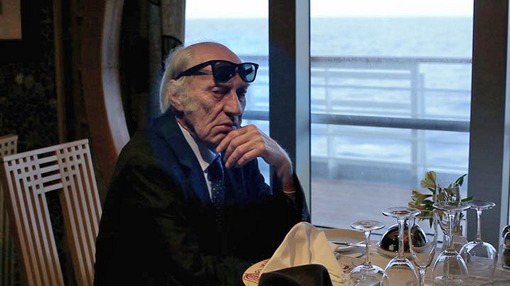
A Jean-Luc Godard movie is required to bewilder, astonish, bore and infuriate its film festival audience — especially the critical contingent. That’s why it’s there. JLG’s “Film Socialisme,” which may or may not be his last directorial effort, premiered at Cannes to a cacophony of criticism, rapturous and contemptuous. Some of it has also been exceptionally entertaining — almost as much fun to read as the reviews for “Transformers: Revenge of the Fallen” last summer. In the case of Godard, however, the critical debates take on a nearly religious dimension as believers and debunkers argue over whether there’s meaning to be found in the sacred text or whether it’s all just an inconsequential, obfuscatory fraud.
This is the first of two posts about the movie “Precious Based on the Novel Push by Sapphire.” In this one, I talk about the impressions I got from the movie’s press coverage, advertising, reviews and word-of-mouth, and why they put me off the film. In the second part I’ll write about my response to the movie when I finally, reluctantly, went to see it… (Part II: “Precious Based on the Movie Female Trouble by John Waters”)
I put it off as long as I could. For months I tried not to read about it, but I knew it had won a bunch of awards at Sundance back in January, 2009, when it was called “Push.” That, in itself, is enough to make me want to avoid it. The Sundance Film Festival is notorious for hailing a certain type of dilettantish formula movie — the feel-bad/feel-good story of degradation and redemption, set in a colorful, semi-exotic subculture — and the picture eventually known as “Precious Based on the Novel Push by Sapphire” sure seemed to fit the profile. There’s nothing I hate more than a voyeuristic lesson-movie that goes slumming and then presents itself as an inspirational triumph of the spirit. By the time Oprah (Winfrey, that is — promoter of bogus New Age twaddle like “The Secret”) and Tyler Perry (maker of amateurish chitlin’ circuit teleplays) signed on, with great fanfare, as “presenters” I was beginning to think (as I used to tell my newspaper editors about movies I was fairly or unfairly predisposed to despise) that nobody had enough money to pay me to see this thing.
This Sierra Mist commercial featuring Kathy Griffin (“It’s Pat,” “Pulp Fiction,” “My Life on the D-List”) and Michael Ian Black (“Ed,” “The Baxter,” “Stella”) ran on Thursday night’s edition of “The Daily Show,” which featured a brilliant report about the foiled British bomb plot involving the use of liquid explosives aboard airliners. Correspondent John Oliver on the sudden ban on carrying liquids aboard passenger jets: “I’m afraid these terrorists have struck at what we in the West hold most dear: our beverages. They resent our wide array of fluid refreshment options. We live in the most easily quenched part of the world and they hate that…. Unfortunately, the men arrested were British citizens, which means the form of government here in Britian must not be democracy, for as you know, democracy is the only known antidote to extremism… It means regime change, Jon. America must topple the British government.”
The premise of the ad is that airport security guard Griffin detains Black and pretends her wand is beeping when she passes it over his bottle of Sierra Mist. Don’t expect to see this spot in heavy rotation much longer….
Let us give thanks for Matt Zoller Seitz, who cooked up this luscious banquet — entitled “Feast” — for our delectation in this season of gustatory revelry. It is available on the Moving Image Source site in two flavors — straight up and annotated. Matt writes:
Writer-director Paul Schrader has said that sex and violence are the vicarious pleasures that drive the vast majority of commercial films, and he’s right. But food is arguably just as alluring, and in its way, its appearance on screens — and when it does appear, it’s often as lovingly lit and framed as a reclining nude — might be even more revelatory and pleasurable, because its appeal isn’t solely based on unattainable fantasy. It’s not bloody likely that any of us will ever be able to bed a movie star or save the universe from evil. But if we study and practice the culinary arts (or are lucky enough to know somebody who’s already an expert) we can experience delights that are as astounding as any mouth-watering scenario that food-obsessed filmmakers can devise. Every plate of food that appears onscreen is a dream that could come true.
View image: The cubicle jungle. From “Office Space.”
Just published at MSN Movies (which reportedly recently passed Yahoo! as the highest-trafficked movie site on the web — even more than IMDb!): my survey of ten movies about the tortures and triplicate-tribulations of having a job (or not), called “Wither While You Work,” from “Modern Times” to “Time Out” to “The Office” (BBC). Please check it out and let me know what you think — especially if you’ve ever been accused of suffering “a bad case of the Mondays.” Here’s the intro, to give you a taste:
“When I find myself in a position like this, I ask myself: ‘What would General Motors do?’ And then I do the opposite.”
— Johnny Case (Cary Grant) in “Holiday” (1938)
On my right calf is a tattoo of a UPC code that expresses far more concisely and profoundly than language how I feel about doing a job just for the paycheck. It’s the bar code from Nirvana’s “Nevermind” album — you know, the one with the naked baby boy swimming after the dollar bill on a fishhook. It’s my little private joke — and constant reminder — about feelings of depersonalization I felt at old jobs. And if you’ve ever been employed at a place that made you feel like a shrink-wrapped product, or like you were just treading water until the next paycheck (and who hasn’t?) … well then, you know what it’s like.
Movies and television usually deal with work in generic ways: The characters have jobs, and we sometimes even accompany them to work, but we rarely get a feeling for what it’s like to actually do their jobs. That’s why Kevin Smith’s “Clerks” (and now its sequel, “Clerks II”) connects with many people who have spent (or spend) so much time in tedious drudgery at low-level jobs where they are forced to interact with extremely unpleasant people — either the unwashed public or nut-bag co-workers.
NEW! Version 1.1. Now with easier-to-read captions!
Everything I know about economics I learned from the movies. (Collected knowledge after the jump.) So when times get tough, I consult Preston Sturges. Here, I have condensed the financial wisdom of a lifetime into less than five minutes — all of it distilled from 1937’s “Easy Living,” written by Sturges, directed by Mitchell Leisen, and starring Jean Arthur, Edward Arnold, Ray Milland, Mary Nash, Franklin Pangborn, Luis Alberni and Andrew Tombes, among many others.
Sturges himself puts in an appearance to explain the key principle behind all successful investment strategies.
And in his movie, there’s a happy ending.
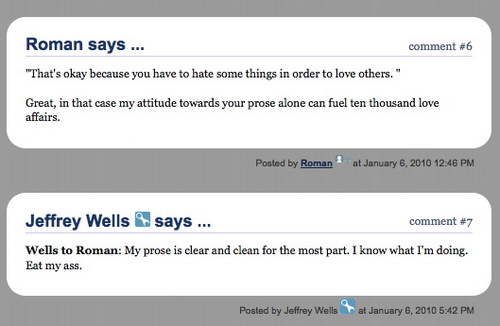
I’m trying to decide which phrase is funniest: “for the most part” or “I know what I’m doing.”
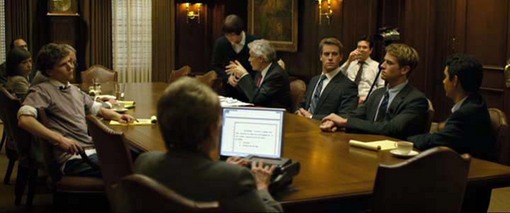
Take a look at all that’s going on in the image above. Who is talking? What are the relationships between the characters? How much is packed into this one frame?
Since it came out last fall, I’d almost forgotten what an exhilarating information-overload experience David Fincher’s “The Social Network” is. Cut and composed and performed with breathless, jittery speed, it’s a movie that consists of virtually nothing but conversations in rooms (the attempted, missed, short-circuited, coded connections that struck me when I first saw it). It’s action-packed — enough to give you whiplash, watching all the elements interacting within the 2.40:1 widescreen frame — even though there are no “action sequences” (car chases, shootouts, fist fights, acrobatic stunts, etc.); the filmmaking is charged with energy without falling back on today’s routinely frenetic, handheld run-and-gun/snatch-and-grab camerawork (the camera is generally mounted on a tripod; when it moves, it’s on a crane or a dolly — often for establishing shots or a shift in perspective that brings a new element into the frame). Smart, quick, efficient.
The crunchy guitar riff starts over the Columbia Pictures logo and then the crowd noise comes up, the music drops down, and before the logo fades to black and the first image appears, we hear Mark (Jesse Eisenberg) speaking the movie’s opening line — a question that’s also a challenge: “Did you know there are more people with genius IQs living in China than there are people of any kind living in the United States?” What follows is a blisteringly fast-paced screwball comedy exchange (“His Girl Friday” through a 64-bit dual-core processor) between Mark and his girlfriend (not for very much longer ) Erica in which nearly every line is a misunderstanding (intentional or unintentional), a sarcastic jab, a leap of logic, a block, an interruption, a feint, an abrupt shift in the angle of attack, a diversion, a retreat, a refinement, a recapitulation (I’m sure there are many fencing terms that apply to the various conversational strategies employed here)…
Here you go: An episode from the original “Star Trek” TV series (“Space Seed,” 1967) directed in the flashy, shaky-cam style of the 2009 movie!
(tip: Ali Arikan)
… and, on the other hand, there’s this:
One person’s public relations screw-up is another’s inspiration. This mash-up (on YouTube and iFilm) is the most inspired thing to come out of Mel’s sordid episode.
(tip: David Poland, a mensch among men)
View image De Niro in “Casino.” Las Vegas is a Hollywood movie.
From my piece on Sin City in the Movies at MSN Movies:
The world has other gambling meccas — Monte Carlo, Atlantic City, Reno — but none as storied or mythologized as Las Vegas, an American dream-zone strategically located in the arid wasteland between Hoover Dam and Hollywood. The neon oasis is a concrete mirage: The closer you get, the more real the place becomes, but when you reach out to grab it, it slips through your fingers anyway. A surreal amalgamation of landmarks historical and imagined (Egypt, New York, Camelot), it rises out of shimmering heat and dust, a dazzling C.B. DeMille monument to profligate waste and the proposition that anything can be purchased or accomplished for a price.
Vegas is a Hollywood movie made corporeal, a surreal experience built on sand, powered by electricity, riches and promises of desires fulfilled. The electricity comes from the dam, the money comes from the odds that always favor the house, the desires come from the human heart (as well as a bit lower and to the right). But how sinful can sin be in a place called Sin City, where everything sinful in the outside world is overtly or tacitly permitted?
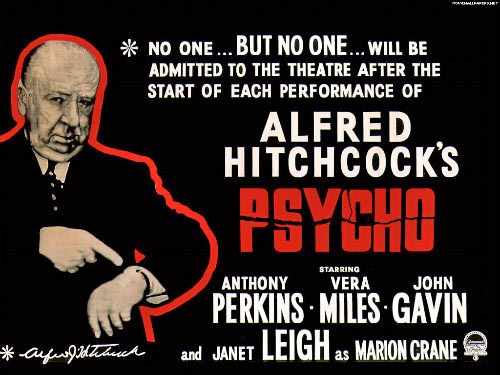
I grew up in a time (the 1960s and 1970s) when commercial, technological and artistic conventions accustomed us to listening to music on LPs and watching movies in theaters. For the most part, we listened to one side of an album at a time (eventually, CDs — although more easily programmable — would play 70+ minutes of uninterrupted music, which changed song-sequencing priorities). And we saw movies from start to finish. I’m too young to remember the original ad campaign for Alfred Hitchcock’s “Psycho” in 1960, but later on (when I got my hands on some original lobby cards — those were the 11″x14″ images displayed with the posters at the entrances or in the lobbies of theaters) I noticed it was built around the apparently novel pitch that audiences had to see the movie from the start.
Now, if, like me, you were in college (or university, as they say back East) when Alvy Singer (Woody Allen) in “Annie Hall” announced that he had to see a picture “exactly from the start to the finish,” and you thought that made perfect sense, it seemed bizarre to imagine a time when people had to be encouraged to show up before the feature started: “No one… BUT NO ONE… will be admitted to the theatre after the start of each performance…” (It turns out Paramount had done something similar with Hitchcock’s “Vertigo” just two years earlier: “It’s a Hitchcock thriller… You should see it from the beginning!”) As the proprietor of the Opening Shot Project, which emphasizes the importance of the first shot in setting up and framing certain films, the idea that somebody would watch a movie without having seen the beginning is incomprehensible to me. Why cheat yourself of the joys of discovery and development? Or just knowing what’s going on in the story?
“It goes on and on and on and on…”
It was 1991 and we were talking about “Barton Fink”:
Joel Coen: … I also don’t think it’s as difficult as some people think it is. I mean, some people come out going, ‘I don’t get it.’ And I don’t quite know what they’re trying to ‘get,’ what they’re struggling for.
Ethan Coen: It’s a weird story, but it’s a fairly straightforward story that I think can be enjoyed on its own terms… ‘Barton Fink’ does end up telling you what’s going on to the extent that it’s important to know — you know what I mean? What isn’t crystal clear isn’t intended to become crystal clear, and it’s fine to leave it at that.
Joel Coen: But we have had the reaction where people leave the movie sort of uncomfortable and befuddled because of that. Although that wasn’t our intention to do that. I was going to say that maybe our telling of the story wasn’t as clear as it should have been, but I don’t think that’s true. In terms of understanding the story, it comes across.
The question is: Where would it get you if something that’s a little bit ambiguous in the movie is made clear? It doesn’t get you anywhere.
Where would it get you? That’s what I was thinking about after the “Sopranos” finale last night, and I remembered this conversation. What if Barton had opened the box? What then? I’ve mentioned the ways “The Sopranos” has paid tribute to the Coens’ “Miller’s Crossing” (particularly in “Pine Barrens,” the whacking of Adriana, the lawyer named Mink), right down to the ambiguous (and perfect) ending. Which is also in the spirit of “Barton Fink.” I can’t imagine anything more true to the show, or more dramatically satisfying, than what happened Sunday night. (I’m also reminded of those who were desperate to know, once and for all, if Julia Sweeney’s Pat character on “SNL” was a man or a woman — when it was perfectly obvious that the whole conception of the character was that there was no answer to that question. The question is the character. That’s not only the joke, it’s the punchline.)
What if you could open this? Then what?
So, for those who wanted to “know what happened” in Episode 86 of “The Sopranos” (and apparently there are lots of them — evidently casual “fans” of the show who haven’t been paying any attention to what it’s about for eight years), I have to ask: What did you want? If any or all of the things you expected happened, then where would that get you?
Series creator David Chase obviously knew that if he provided one or more of the usual denouements, it would color everything that came before. So, Tony gets his comeuppance, by getting whacked, or losing family members, or going to jail, or going into the Witness Protection Program like that schmuck Henry Hill in “GoodFellas.” Aha! That’s what this has all been leading up to! What could be more anti-climactic than any of those trite outcomes? You’ve seen them all before in other movies, anyway. To me, they would have spoiled “The Sopranos” by arbitrarily assigning it a hackneyed and finite “moral lesson” end-point.
“The Sopranos” has always been founded on the proposition that human nature, character arcs (Christopher: “Where is my arc?!?!”) and narrative structures are roughly the shape of… I don’t know, onion rings. People have breakthroughs, illuminations (Tony: “I get it!”), vow to change their ways, think they have changed… and then fall back into their old ways. Because that, fundamentally, is who they are.
AJ winds up being the same spoiled brat he was in Season One. Meadow continues to be the mildly rebellious princess (and she’s the only one in the house who seems to unambiguously acknowledge and even accept what Tony does for a living — hence her not-so-subtle dig at her father about why she wants to become a lawyer), but within bounds that will still win parental approval. Christopher straightens out, and then relapses. Carmella leaves Tony on principle, and then succumbs to the same old pattern of denial and expensive kickbacks that formed the basis of her marriage from the beginning. Dr. Melfi convinces herself that she’s helping Tony, and then dumps him in an unprofessional huff when publicly exposed, simply because she got “caught,” as if she were one of his mistresses. Tony the sympathetic sociopath learns to blame everything on his mother as his latest way to avoid reforming or taking any responsibility for his own behavior… Will the circle be unbroken? No way.
Remember Charles Foster Kane. Thompson, the reporter (William Alland), gives his eloquent speech: “Mr. Kane was a man who got everything he wanted and then lost it. Maybe Rosebud was something he couldn’t get, or something he lost. Anyway, it wouldn’t have explained anything… I don’t think any word can explain a man’s life. No, I guess Rosebud is just a… piece in a jigsaw puzzle… a missing piece.” And then, in the final seconds, we discover what “Rosebud” is, even if nobody in the movie ever does. And where does that get you? The real ending of “Citizen Kane” is Thompson’s speech. The revelation of “Rosebud” is great showmanship, the final piece of the jigsaw puzzle, all right, but it doesn’t really explain anything we didn’t already know.
So, I ask you again: Whaddaya want?
www.neomyz.com/poll
Create your own web poll in less than 3 minutes,
and gain valuable feedback from your site visitors.
Your browser does not seem to support JavaScript,
the poll will not be displayed.
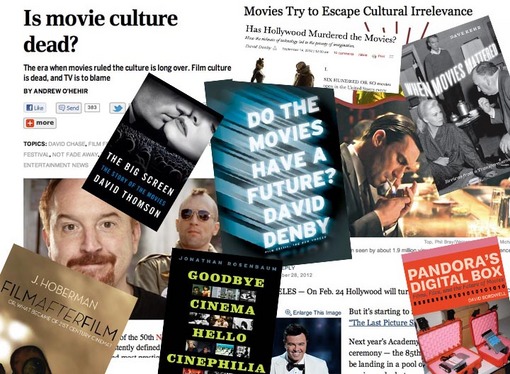
Oh my. Here we go again with all the deathiness. Movie criticism keeps dying deader and deader. Film itself has keeled over and given up the ghost. Cinema ist kaput, and at the end of last month “movie culture” was pronounced almost as deceased as John Cleese’s parrot. Ex-parrot, I mean. Then the movie “Looper” came out, posing questions like: “What if you could go back in time? Would you kill cinema?” Or something like that.
People, this dying has gotta stop.
But I just had to look,
Having read the book…
— John Lennon
Really, I just wanted to point out that a glowing blue naked guy is the hero of one of the most anticipated mainstream movies in years. Did you know that? Seriously, though, I do have a dilemma: “Watchmen” opens March 6. I read the compiled comic book series by Alan Moore and Dave Gibbons back in the early 1990s, I think — just around the time Terry Gilliam was attached to make the movie version. Here’s the poser: Having read the book so long ago I’ve forgotten it, should I read it again before seeing the movie?
“Watchmen” is something many fans know practically by heart. I know one who attended an early screening of the movie and said it was one of the best adaptations he’d ever seen. An already notorious Nerd World post by “Simpsons” executive producer Matt Selman (“My Own Private Watchmen”) broke the review embargo by proclaiming that he didn’t consider himself “press” and wasn’t actually reviewing the movie, but couldn’t control the 14-year-old still living inside him: “Someone took the most special personal thing of my adolescence and put it on a movie screen.”
Ever since David Thomson’s “A Biographical Dictionary of Film” was published in 1975, browsers have said that they love to hate Thomson’s contrarian arguments — against John Ford or Frank Capra, Coppola or Kubrick, for example.¹ Fans and critics can cite favorite passages of resonant beauty, mystifyingly vague and dismissive summary judgements, and entire entries in which the man appears to have gone off his rocker. And that’s the fun of it.
To be fair, Thomson broke faith with (or has been suffering a crisis of faith in) American movies at least far back as “Overexposures: The Crisis in American Filmmaking” (1981), and he’s been writing about his crisis ever since. To put it in a sentence that could serve as the ending of one of his entries: I am willing to believe that he loves (or once loved) movies even if he doesn’t like them very much. (Wait — how does he conclude the Katharine Hepburn piece? “She loved movies, while disapproving of them.”)
When I encountered the first edition of this book, the year I entered college, I immediately fell in love with it because it was not a standard reference. It was personal, cranky, eloquent, pretentious, pithy, petty, ambitious… It was, as I think Thomson himself suggested in the foreword to the first or second edition (this is the fifth), more accurately titled “An Autobiographical Dictionary of Film.” Many times over the years I have implored my employers or partners to license digital rights to Thomson’s book so that it could augment and be integrated with other movie databases and references (at Cinemania, FilmPix, Reel.com, RogerEbert.com)… but we’ve never done it. What, they would ask, is the “value-add”? (Really. Some people used to talk that way.) As a reference, its coverage is too spotty (Ephraim Katz’s Film Encyclopedia is much more comprehensive but also has loads of incomplete filmographies), as criticism it’s wildly idiosyncratic (nothing wrong with that) and as biography it’s whimsically selective and uneven, leaving as many holes as it fills.
