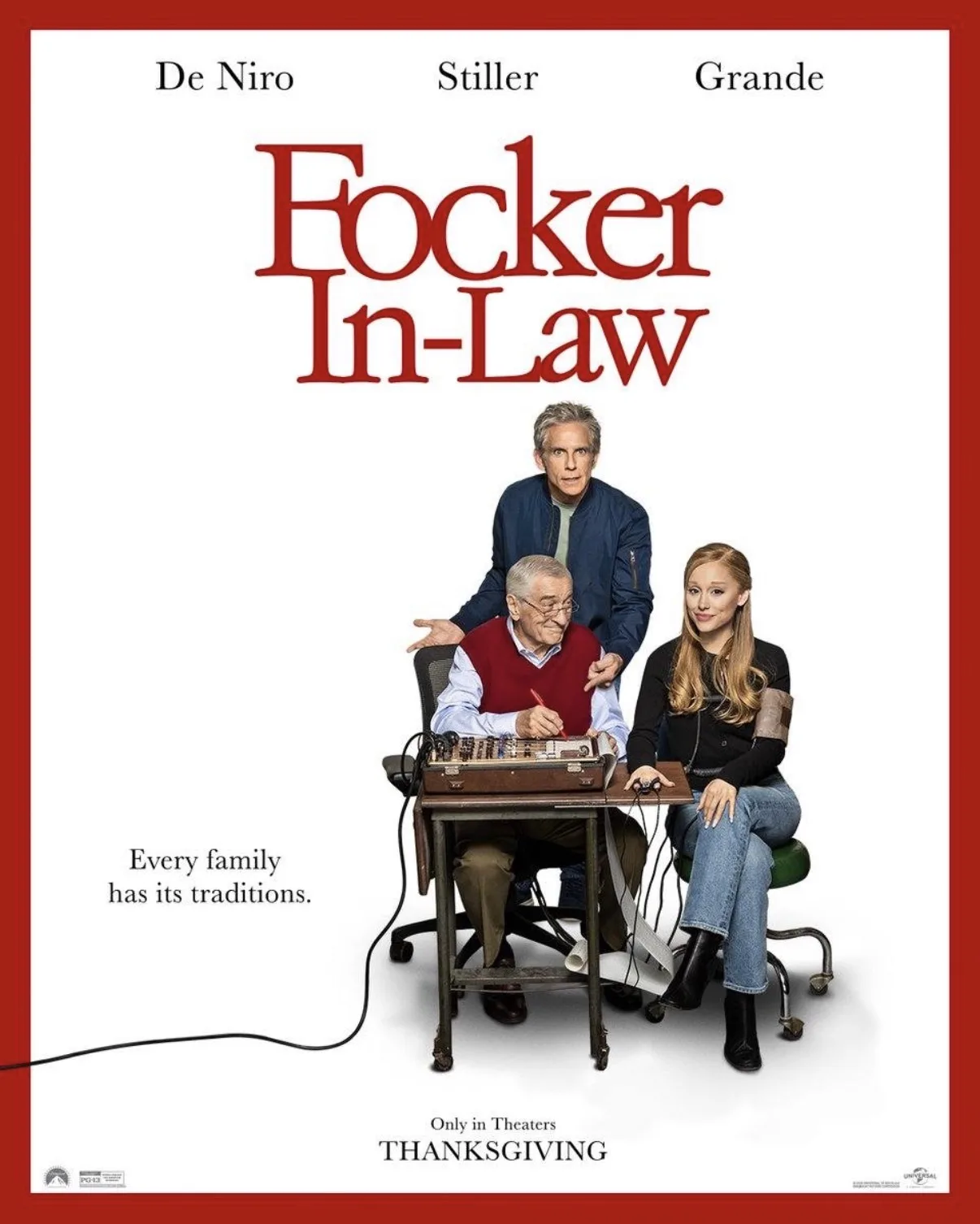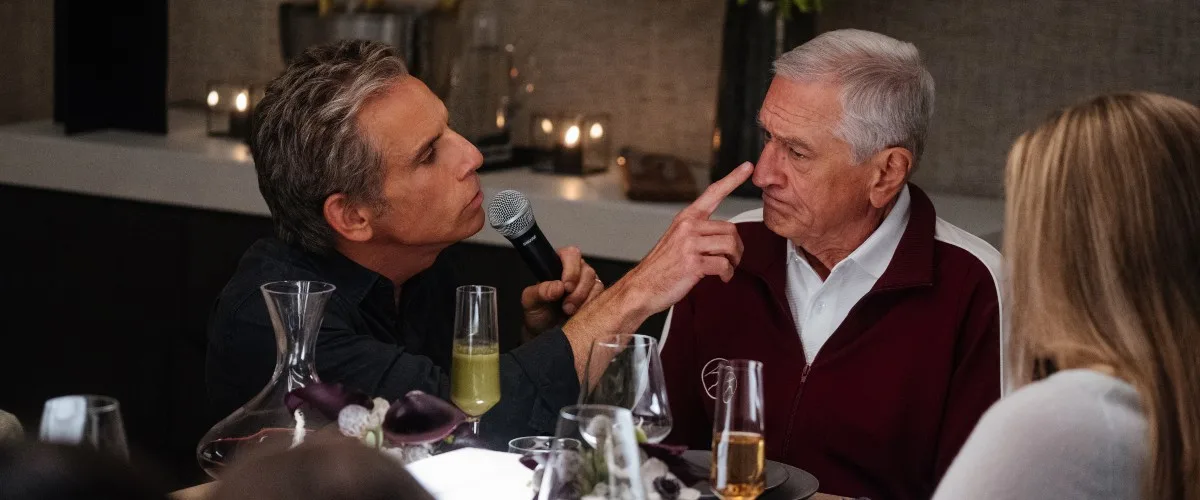
It is through his most psychotic characters that Robert De Niro first showed the considerable comedic chops he nonchalantly flexes throughout “Focker In-Law,” the sixteen-years-later follow-up to 2010’s “Little Fockers.” De Niro’s character is Jack Byrnes, a former CIA guy who’s more an ICBM parent than a helicopter parent. The character is amusing in part because he’s so tightly wound in his disapproval of his son-in-law, Greg Focker, played by Ben Stiller.
De Niro’s long pauses as Jack, where you wonder just how he’s going to explode if he indeed does explode, can bring to mind Travis Bickle in “Taxi Driver.” His smirks in the “Focker” films, where he seems to be enjoying a rather sinister private joke, bring to mind the anarchic Johnny Boy of “Mean Streets.” The potentially short fuse he brings to Byrnes also recalls his bounty hunter in 1988’s “Midnight Run.”
In “Focker In-Law,” Greg’s two kids with Teri Polo’s Pam, Jack’s daughter and the apple of his eye, are the candid Samantha, played with apt directness by Beanie Feldstein, and the somewhat more demure Henry, played by Skyler Gisondo, who recently made a strong impression in the much more serious “Primetime.” Henry has a new girlfriend, Olivia, a former FBI hostage negotiator, and she is, of course, played by, um, Ariana Grande-Butera. This actually works. Bear with me.
The last Focker fest, “Little Fockers,” was packed with old-school stars including Dustin Hoffman and Barbra Streisand. This is the first in the series to be directed by John Hamburg, who wrote all the films in the franchise. Here he scales things down but also refreshes it, and the new broom that sweeps clean and provides fresh laughs and interesting new tensions is Grande. The film’s opening scene sees Stiller’s Greg, seated in coach on a plane, trying to sneak into a lavatory in the first-class cabin and being scolded by every strict flight attendant played by comic virtuoso Cole Escola (the author and original star of the hysterical “other than that, how did you like the play Mrs. Lincoln” stage comedy “Oh Mary!”).
This clash segues into an unpleasant encounter with passenger Olivia, an exchange so convolutedly awkward that it ends with Greg stashing the woman’s birth control pills into his back pocket. Olivia tries to relax her antipathy towards Greg when she discovers that she’s the father of her beloved Henry. But with Jack’s help, she soon realizes Greg is more or less a stooge, and begins treating him accordingly.
One is reminded of that Bugs Bunny cartoon in which the rascally rabbit tortures Elmer Fudd a good deal and, during a pause in the action, strokes his chin and asks himself, “What else can I do to this guy?” When Greg tries to impress Jack by proffering a couple of rib-eyes, Jack informs Focker that he’s converted to a vegan diet, and Olivia whips up a virtuoso, colorful group of non-carnivorous plates. A bicycle race sponsored by hipster-rich-guy neighbor Kevin turns into a knock-down, drag-out attempt to make Greg eat dirt. And so on. Stiller often has to act as the straight man—an annoying one, as he just doesn’t let up on trying to best Jack. But every now and then, he taps into his inner Bob Hope, particularly when Greg is being sneakily craven.
For all that, this is a De Niro show. I know the guy acts in movies as often as most of us brew coffee in the morning, but I don’t see him phoning it in here. True, the mugging he does features faces we’re all familiar with, but his comic timing remains remarkably sharp and gets the job done, with some laughs quite cleverly time-delayed. Grande too is very clever in strategically revealing the tigress that lurks behind her baby-doll eyes. As the founder of this website reminded his fellow critics, when you laughed at a movie, you’ve got to tell your readers that you laughed. Readers, I did.