How does a child survive the shock and trauma if they witness an unspeakable act of violence they don’t even have the vocabulary for? In Beth de Araújo’s mature, haunting, and uncompromisingly sober “Josephine,” there are no easy answers. Only the well-meaning (and sometimes miscalculated) efforts of a group of grown-ups, trying to hold a kid’s hand through a harrowing incident bound to leave long-term scars. It’s a deeply humanist, wisdom-filled drama, one that dares to acknowledge the bone-chilling reality of everyday monsters that dwell casually in broad daylight.
Played by the breathtaking newcomer Mason Reeves in a startlingly observant performance, Josephine learns this the hard way. One early morning, while exercising with her fitness-minded father, Damien (Channing Tatum), in Golden Gate Park, Josephine speeds past him despite his constant warnings and watches from behind a tree as a man attacks a female jogger.
In step with her raw and honest narrative approach throughout, Araújo doesn’t conceal the details of the violent attack when the assailant (Philip Ettinger) sexually assaults the woman (Syra McCarthy), running away once Damien arrives at the scene, chases him down, and promptly calls the cops. Here and for much of the movie, Araújo delicately honors Josephine’s perspective: the flickering lights of the cop car, the trembly posture of the woman who just wants to go home, her dad spitting on the rapist once the cops eventually capture him… She silently takes it all in, fully aware of the situation’s cruel gravity, but unaware of the crime’s meaning.
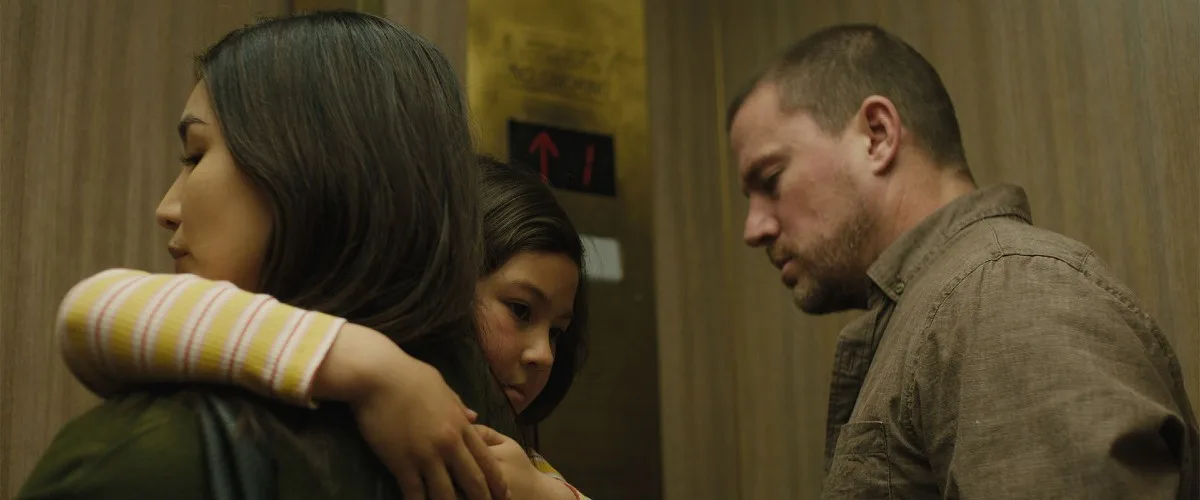
At home, Damien and Josephine’s lovingly articulate, dancer mom Claire (Gemma Chan) both try their hardest to help Josephine put the whole ordeal behind her, with Araújo purposely not showing us the breadth of the parents’ private conversations to keep us aligned with Josephine’s turbulent perspective. Except, little Jo can’t erase the attacker’s face from her memory. Araújo’s camera is sometimes circular and searching like a lighthouse, rotating around the room to establish Josephine’s environment and emotional world with a 360-degree eye.
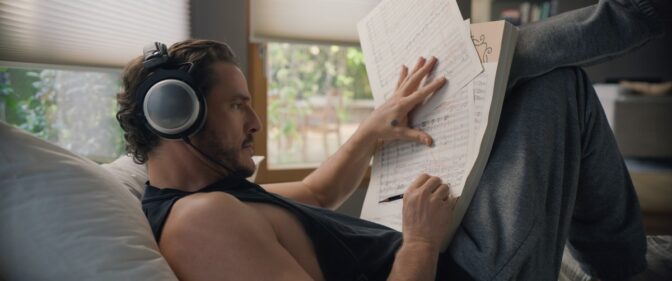
Prepare to gasp loudly when that searching eye lands on Ettinger’s criminal sitting quietly in Josephine’s room, staring into space like he’s always been a ghost in that space. He is, of course, just a figment of Jo’s imagination, but feels real in flesh and blood to her, like a twisted imaginary friend she isn’t sure whether she wants to humanize a bit in order to make the monster she witnessed a little less scary, and a little more tolerable. When Michael Angelo Covino’s prosecutor, Francisco, enters the picture and requests Josephine’s collaboration as the only crime-scene witness, Claire and Damien have no choice but to navigate Josephine’s confusion with more attentiveness and urgency.
Tatum and Chan both exceptionally portray the dilemma these young parents, who aren’t necessarily on the same page about a plan of action, face. Where Damien believes you shouldn’t let bullies go unchallenged (and therefore supports Josephine testifying in court), Claire emphasizes the importance of not forcing or pushing her little girl.
While they are both right in their own ways, they don’t fully see the crushing dent the incident leaves in Jo’s sense of safety until she starts acting up at home and in school in ways that puzzle her parents. Through Araújo’s clear-eyed, sometimes understatedly dreamy lens, we see through Josephine’s eyes and understand that no house move or innocent distraction can miraculously restore the order lost in her universe.
Still, guided by a perceptive performance well beyond Reeves’ young years, Josephine tries, despite the growing tensions with her parents, who are now expecting a little boy to join their family. Of course, gender and anything that has to do with sex are triggering concepts for Josephine, the turmoil of which Araújo trails with the beats of a superbly calibrated, slow-burning thriller. Elsewhere, Araújo leans into the mother-daughter dynamic between Claire and Josephine, elegantly articulating past wounds that Claire has carried in her heart and consciousness her whole life. We understand that she also has been subjected to and survived grotesque male behavior, or even an attack, as it’s heavily suggested. (After all, she is a woman, and #MeToo became an urgent cultural conversation and turning point for a reason.)
Among the most sophisticated decisions Araújo makes is leaving the ending and the result of the court proceedings somewhat ambiguous. In that, “Josephine” isn’t about how or whether we punish monsters, but how we can survive a world where they exist and can be anywhere, while keeping our dignity, clarity of purpose, and sense of self-worth intact. Exploring that alone is a stunning act of kindness and generosity.