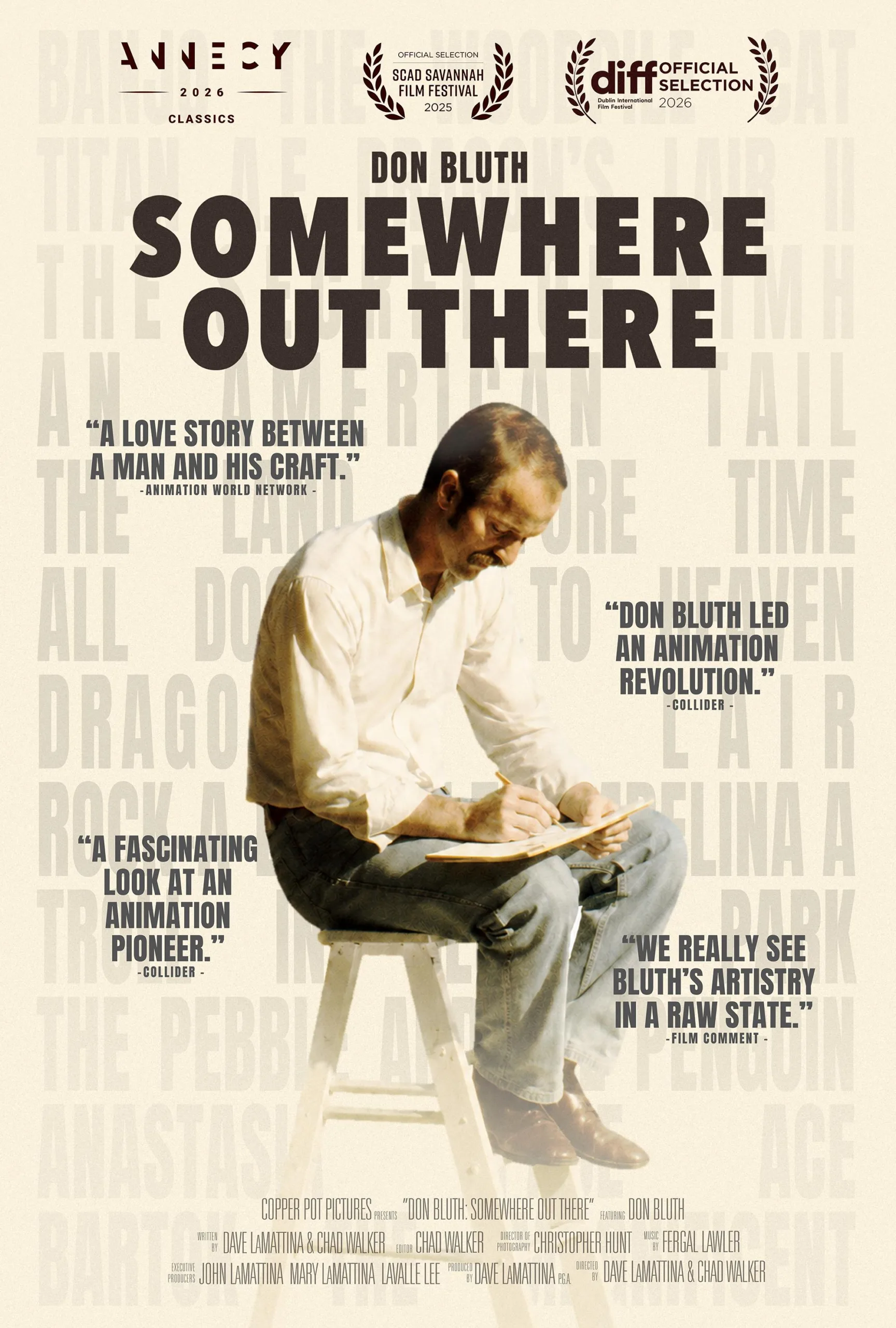
In an age where animation is still largely thought of as a frothy children’s medium, one monopolized for decades by The Walt Disney Company, it’s easy to forget that some of the best animated films can also make you cry. For a lot of elder millennials, that honor might just belong to the films of animation titan Don Bluth, who challenged Disney’s hegemony over hand-drawn feature films in the 1980s and 1990s with a series of ambitious, richly textured works. “The Secret of NIMH” spoke to our need to overcome our fears and face danger; “An American Tail” distilled the struggles of immigrant life in bittersweet fashion; “The Land Before Time” taught us how to handle the specter of death.
But as quickly as Bluth’s star rose, so did it fall, the victim of animation economics, the vagaries of the motion picture industry, and pure dumb bad timing. “Don Bluth: Somewhere Out There,” the latest doc from “I Am Big Bird: The Carroll Spinney Story” filmmakers Dave LaMattina and Chad Walker, charts the ups and downs of Bluth’s career and his various battles with Disney over control of the animation space. And along the way, paints a picture of an animation idealist whose hopes for the medium got mixed up in his own ego, which could at least be partially credited for his, and Don Bluth Entertainment’s, downfall.
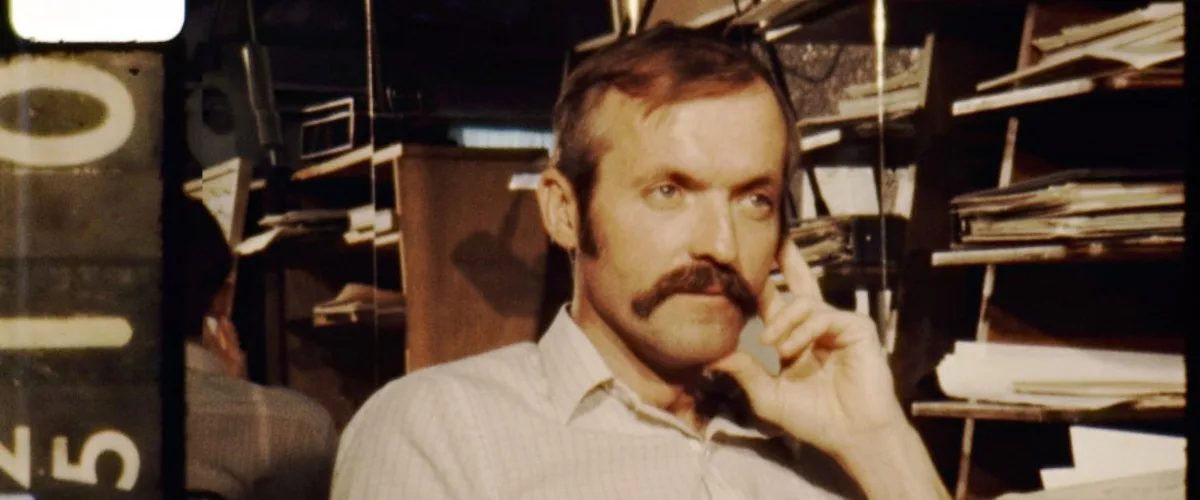
“Is being an artist ever a burden for you?” one of the filmmakers asks Bluth in the film’s opening minutes, which largely overlays a series of interviews conducted in 2023-2025 (Bluth now in his late eighties) with an expertly layered montage of archival footage. Bluth, largely seen in archival interviews with his signature mustache and thin, authoritative figure (he almost looks like a young Stacy Keach), explains his love for Powell & Pressburger’s enchanting classic “The Red Shoes,” in which the main character “is driven by the dance, by the art,” even if it leads to her death. This is the general thesis of “Somewhere Out There,” which shifts back and forth in time from Bluth’s departure from Disney to form his own company, back to his childhood, then forward through his mad struggles to bring his intricately drawn imagination to life.
It’s refreshing to see Bluth, both past and present, reflect on these works, and how their successes (or failures) contributed to his broader artistic project to advance the medium of animation. “The Secret of NIMH” was the studio’s first big push to compete with Disney after Don left the company, an ornate, psychologically complex piece of animated fantasy. “We’re not trying to be the next Walt Disney,” he protests. “But I want to serve the same art.” “NIMH” was a modest success, and received raves from none other than this site’s namesake, who appears frequently alongside Gene Siskel in clips from “At the Movies” to reflect popular opinion about both Bluth’s films and Disney’s.
But Bluth still had trouble keeping his studio afloat; it’s only really through the smash success of hit video game “Dragon’s Lair” that Bluth was able to find financial success. And even then, he eventually has to move his studio to Ireland to run more cheaply (by using his films as a training ground for the budding Irish animators working there). “Somewhere Out There” is as much a chronicle of Bluth’s artistic ambition and ego as it is a primer on the economics of filmmaking and animation—the scale of it, how much money and effort it takes, and the clashing creative voices that can either produce magic or bring an entire studio tumbling down.
As Bluth’s films continue to compete with Disney (and eventually start to lose, thanks to the budding Disney Renaissance of the late ’80s and the CG revolution of the mid-’90s), “Somewhere Out There” lets Bluth reckon with the stubbornness and lack of compromise that made his films both one-of-a-kind and deeply unprofitable. While his collaborations with Steven Spielberg on “The Land Before Time” and “An American Tail” (which Steve produced) produced great art, they fell out over Spielberg’s insistence on making sequels for less money. From there, a series of bombs—”Rock-A-Doodle,” “Thumbelina”—reveal his desperation to cut corners by rushing out scripts his brilliant style couldn’t really serve.
For all the clear-eyed explication of Bluth’s ambition, overextension, and struggles with failure, it’s easy to feel like “Somewhere Out There” leaves a lot of the man on the table. Apart from a brief early interlude delving into his childhood (which featured an abusive father and a doting mother) and his youth as a Mormon missionary, we learn little about Bluth the man as opposed to Bluth the animator. There’s also a 28-year time jump right after “Anastasia” that feels ripe for exploration as Bluth eases his way out of the animation space (No real estate is offered to “Titan A.E.,” instead acting as if the prior, successful film is his last real bow), which feels a bit jarring.
But even if “Somewhere Out There” is more about Bluth as an artist than as a man, maybe that’s okay. Maybe those two selves are inextricable. Maybe learning about one tells us about the other. And maybe a broader picture of Bluth, a maverick who challenged Disney in the days before Pixar and Illumination and DreamWorks would do so far more consistently, gives us a glimpse of an important chapter in the history of animation. Late in the film, he asks himself, “How do I do what I do when no one wants to see it anymore?” Perhaps his legacy can be found in his pioneering, ahead-of-his-time works, films that let their animated mice and grieving dinosaurs tackle complicated ideas while also showing us images and movements we’d never seen before, and never will again.