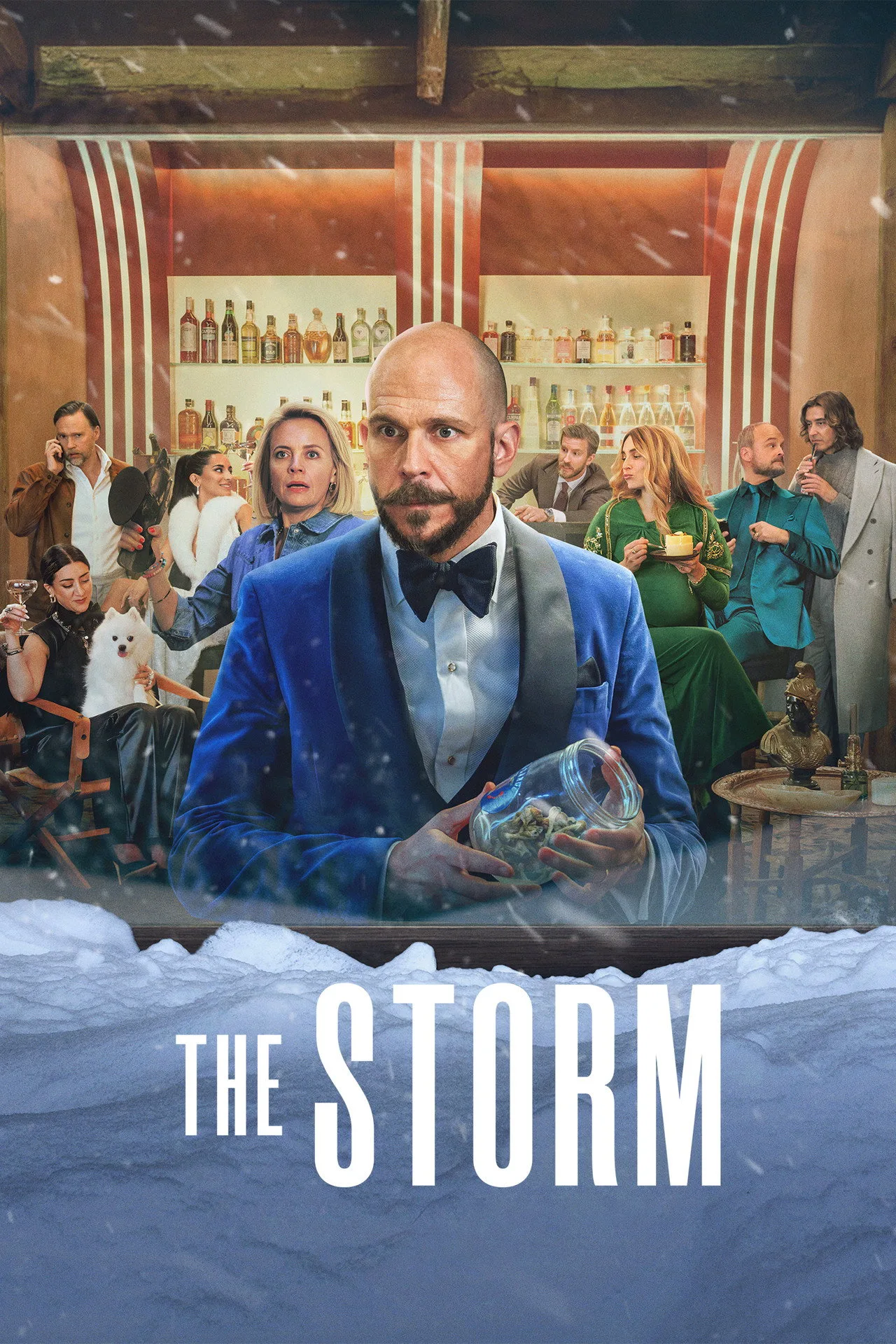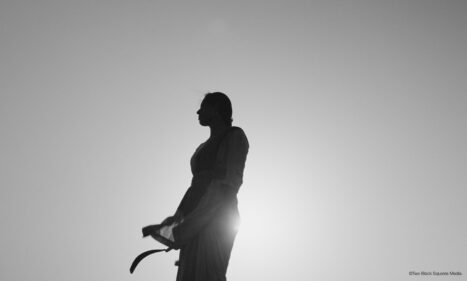

Swooping through the snowy mountains, the camera zooms in on a man trudging along, underdressed for the occasion, holding a sword. This snippet of the ending sets the film up as a somewhat mysterious thriller, but it’s really just a birthday party gone wrong. The details of this decision also allude to a violent nature, which is ultimately undercut by the comedy and absurdism of it all.
“The Storm” is segmented into 5 stages of its titular event, which takes place over one evening. It begins at a nearby hotel, where the gang gets ready to gather in the Swedish mountains for a dear friend’s birthday. Filip (Gustaf Skarsgård) is turning 45, and he and his wife, Caroline (Aliette Opheim), invite the group to their new farm-like estate. As the couple prepares for their arrival, the “staff” supporting the evening are evidently underqualified, as their youthful, inattentive nature suggests. Everyone’s anxieties about the evening are on full display. As each individual’s insecurity is revealed, the audience doesn’t necessarily know these characters beyond surface-level details; instead, the story centers on the development of their interpersonal dynamics and histories.
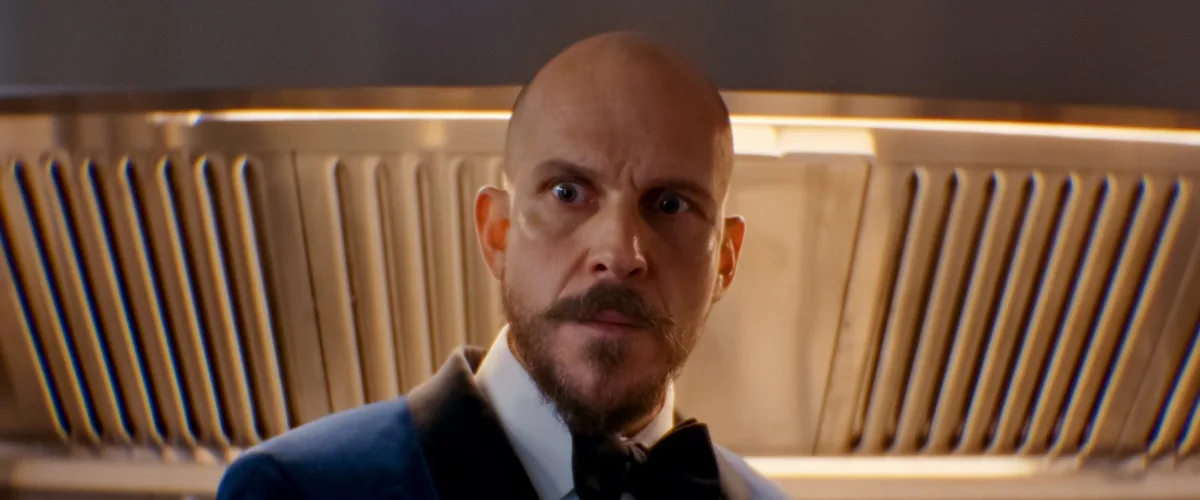
Little context about each character emerges from their interactions. Like the storm brewing outside, the friends’ conflicting energies escalate quickly. As at many parties, the drama is heightened by the accidental consumption of special party favors. Distorted audio and a blurred perimeter signal their inebriation, offering glimpses into the emptiness behind their eyes. In Part V, Filip’s narration tries to squeeze in philosophical life lessons. His voiceover bookends the film, but the song choices that open and close the story overpower his words. Still, Filip is the steady force throughout the mess. Despite trying to celebrate his birthday, he helps others solve their problems, providing the hospitable experience he and Caroline are seeking to invest in. His blue velvet suit jacket reflects his calm, soft nature, and the other characters’ costuming subtly shapes how they’re perceived.
Writer-director Josephine Bornebusch leans into the stereotypical tropes of a snowed-in style movie where a group of disgruntled, drifted friends are forced into close proximity. However, she tries to challenge these archetypes, like the young, gold-digging 2nd wife and her self-righteous CEO husband. Although the commentary lands as a bit flat, it’s where Bornebush–who also plays the role of Kina, a worry-ridden mother who wants to get back to her son no matter the danger the trek poses–inserts the butt of most jokes. Excessive masculinity and ego lead to an embarrassing unraveling; the hunger for more investment money consumes the real reason for gathering; the party’s plus-ones bond as a semblance of a subplot.
“The Storm” breezes by its most existential moments. The lack of likable characters creates a reality-television-like parasocial energy for the audience to latch onto. The cameras are often staged around the mansion to give an omniscient perspective, but they don’t resemble Big Brother. As each scene is chopped into too many quick cuts, creating whiplash amid simultaneous conversations, it contributes to the film’s overall success in developing the production’s physical interiority. Like a game of Clue, each room contains its own secrets, and what comes to light depends on the players in the space. Self-serving attitudes blanket everyone’s motivations, but Bornsebusch is intentional about the ways she reveals how your oldest, closest friends will always know you best.