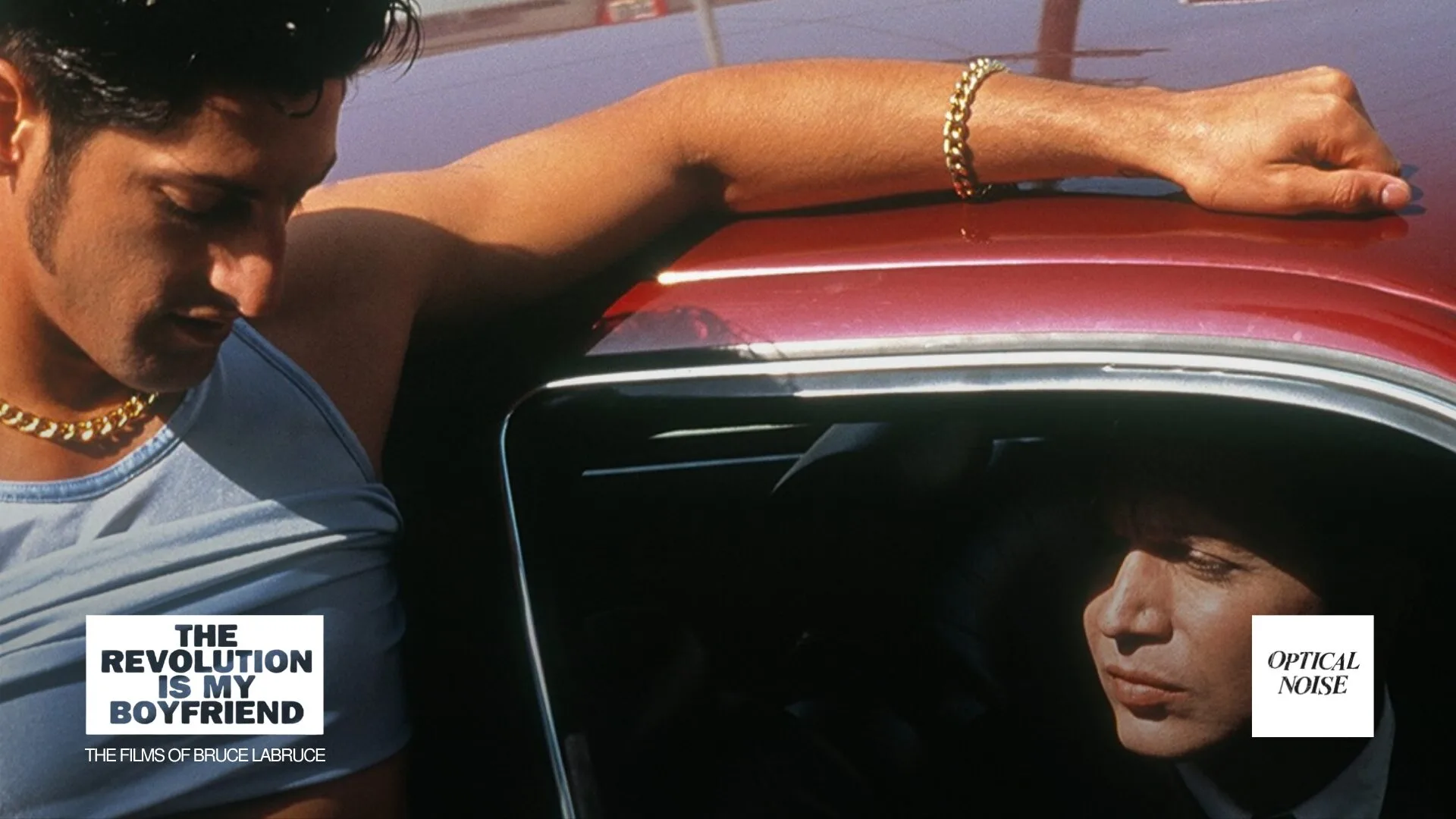
If you like your arthouse pornography with a heaping ladle of leftist agitprop (or “agitporn,” as he’d call it), Bruce LaBruce is a name that should be on your lips. As our very own Scout Tafoya once put it, Bruce is “one of the most fearless filmmakers alive,” a man who’s spent the last thirty years making more than a dozen motion pictures both in and out of the adult filmmaking scene, pushing boundaries and wearing his politics (and his libido) on his sleeve along the way. And in Chicago, I was delighted to sample a goodly portion of them along with dozens of the city’s most discerning perverts at Lincoln Park’s Facets Chicago, formerly Facets Cinematheque, for a weekend-long retrospective called “The Revolution Is My Boyfriend: The Films of Bruce LaBruce.“
Curated by Optical Noise cofounder Raphael Jose Martinez, the retrospective was the result of five years of hard work, negotiation, and a lot of scheduling and rescheduling. For years at Facets, Martinez has delighted in building “discomfort, context, and conversation” with his Optical Noise screening series, which delights in the transgressive and out-of-the-way. This series feels like his Holy Grail of sorts, as Bruce himself came down from his native home of Canada to Chicago for three Q&As (and a host of other screenings and conversations around the city) over three days, with ten of his films screening at Facets.
I was lucky enough to attend the plurality of the festival, seeing many of Bruce’s movies for what would, for me, be the first time. I’d heard of Bruce’s many cinematic provocations—he started out in gay pornography on both sides of the camera, and helped build the queercore movement in Canada via the J.D.s zine he co-created with G.B. Jones; his politics are unabashedly leftist, anarchist, anti-colonial, and punk, and you’ll see that in ways both subtle and uproariously unsubtle in his films.
But apart from his incredible “Saint-Narcisse” in 2021 and his adorable gay zombie flick “Otto, or Up With Dead People,” so much of his work was new to me. And I’d be watching it with an audience comprised largely of fellow Chicago punks and queers; I saw sweater-clad theater gays sat next to feathered-haired polyamorous queerdos sporting combat boots and cut-off shirts. In the lobby sat tables hosted by a local leather and fetish group, and a collective of butch dyke pornographers selling their latest physical porn zine. The tattoo-to-person ratio would blow the mind of the average cinemagoer.
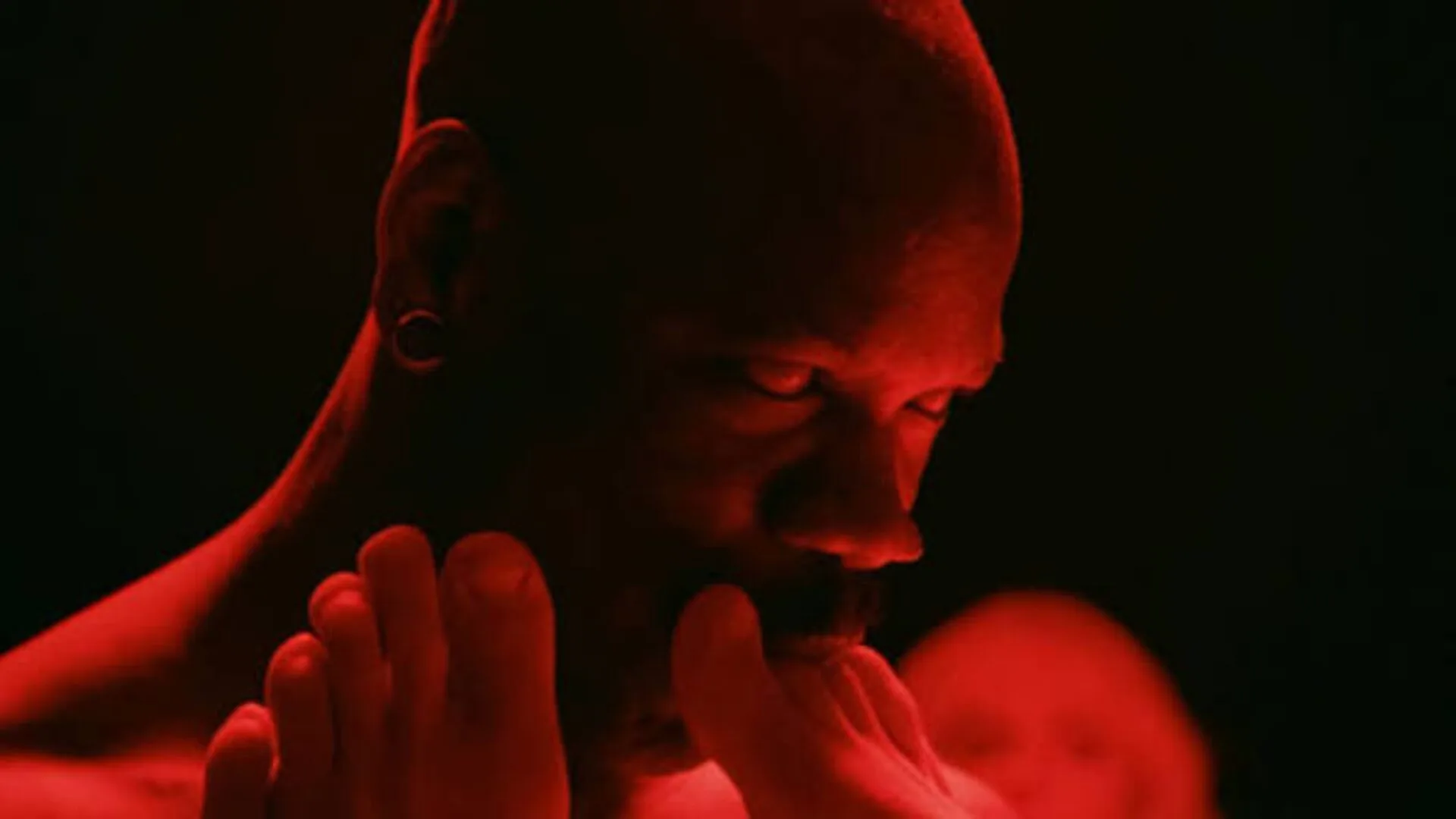
They chose their audience well: To watch a Bruce LaBruce movie, let alone multiple in the same day, is to expose yourself to so many other people’s exposures. No taboo is left untouched, from incest to group sex to fisting to force-femming. In Bruce’s first feature, “No Skin Off My Ass,” a hairdresser (LaBruce) falls in love with a skinhead (Klaus von Brücker, LaBruce’s partner at the time); we see everything from unsimulated sex to an improvised nipple piercing with a safety pin. 2024’s “The Visitor” explores all manner of kinks in up-close detail, from incest within an entire family to suspension play to race play. Even his most “palatable” and sexless movie, 2013’s “Gerontophilia,” uses the auspices of indie rom-com cinema to explore a young man’s granddaddy fetish with an old queen (Walter Borden) he meets at a nursing home.
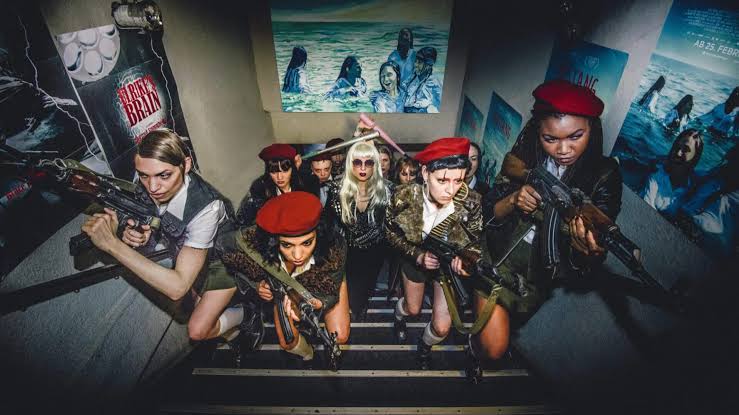
And don’t get me started on “Hustler White,” LaBruce’s incredible (and funny; all of his films are funny!) exploration of LA’s gay hustler scene in the early 1990s, which offers Black gangbangs right alongside mummy fetishes and a scene where a one-legged gigolo makes… creative use of his stump. “Otto” features a zombie going balls-deep in a wound he created in his latest victim. Boundaries are pushed, even for we experienced degenerates; I won’t lie and say I didn’t look away from the screen at certain points, most notably a scene in 2018’s “The Misandrists” in which a male revolutionary is given compulsory gender-reassignment surgery, complete with graphic real vaginoplasty footage.
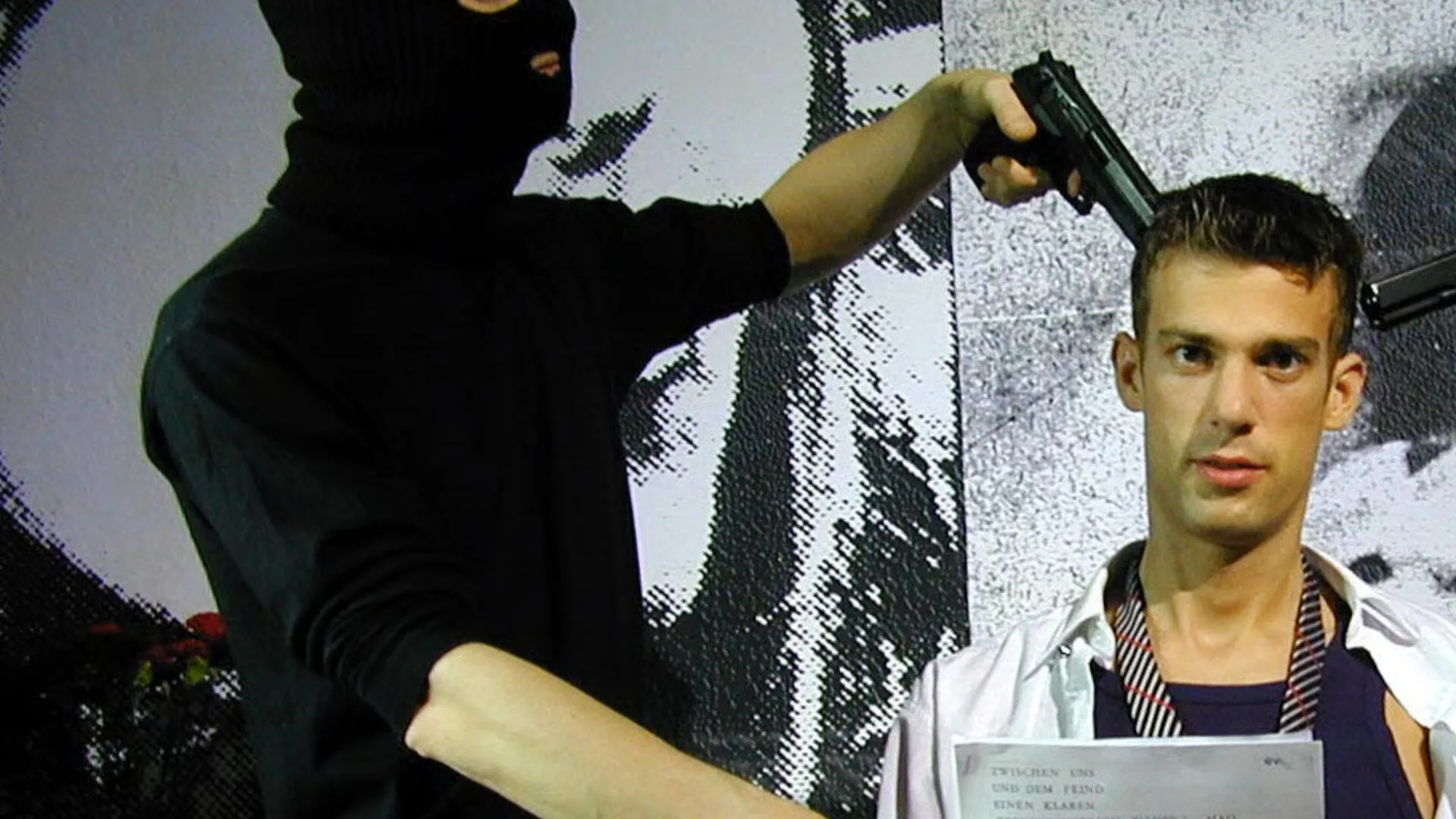
His prodding is not just penile, but political; nary will you see a Bruce LaBruce film that doesn’t position such sexual liberation as part of a broader liberatory politic that seeks to free everyone from the prisons of heteronormativity, capitalism, and patriarchy. As his career has progressed, those messages have pushed further to the forefront, right down to works like “The Raspberry Reich” and “The Visitor” flashing text like “Make (Revolutionary) Love Not (Imperialist) War” subliminally over scenes of people getting railed. Multiple films talk about the Baader-Meinhof Group, and his 2004 opus “The Raspberry Reich” takes direct inspiration from them in its group of horny revolutionaries. His editing style is frenetic, almost schizophrenic, with “Enter the Void”-like strobing effects that take on the rhythms of hypno porn before that was popular. It feels like indoctrination, in the best and most liberating way.
But suffused through each of Bruce’s movies, one after the other after the other, amid all the exposed cocks and unabashed cumshots and deliberate vulgarity, there’s an underlying sweetness and care for his characters that sets him apart from the average pornographer. There are no villains in Bruce LaBruce movies, only temporarily unturned allies in the fight against unjust systems. He has empathy for every character, even (or especially) as they make choices that render them selfish, or unlikable, or short-sighted. “Hustler White,” my favorite of his, is maybe the sweetest of his pictures, treating the work of hustlers like central figure Montgomery Ward (real-life sex worker Tony Ward) with all the romance of a Preston Sturges picture. The happiest endings—and I mean that in all the ways that entails—often include most of our onscreen characters having coupled, or throupled, or otherwise sat in a big old orgiastic pile of revolutionary love. These are not just bodies to be gazed at or lusted after, but people, whose sex and identities and flesh are intertwined with their selfhood and politics.
LaBruce may believe in all of these punk aesthetics and shouted political subtexts, but he also understands the comedy and absurdity beneath such bohemian certitude. “Raspberry Reich”‘s Gudrun (frequent LaBruce collaborator Susanne Sachsse, who also joined him on Saturday) is a hilariously controlling madwoman, humiliating her numerous male subservients in ways both radical and raucous, right down to insisting that they all have sex with each other, despite some of them being straight. This is the kind of film that will film someone jerking off for about fifteen minutes in front of a wall mural of Che Guevara (a move that, LaBruce told us in the Q&A, led to a million-dollar lawsuit from Alberto Korda, who shot that famous photo).
And all the while, it’s easy to see why cinephiles love his work: Not only is it stylistically daring, especially considering the budgets and resources he’s had to work with (both in Canada’s indie scene and in Germany, where he’s produced many of his most recent works), it’s also steeped in homages to classic cinema. “No Skin Off My Ass” is such an ode to Robert Altman’s “That Cold Day in the Park” that it simply lifts footage of the opening sequence for its own. His followup, the slept-on “Super 8 1/2,” is his self-reflexive response to that film’s cult success, and the expectations that came from being a gay pornographer suddenly thrust into the limelight in ways that blew up his relationships. “The Misandrists” feels like a play on “The Beguiled” (specifically Sofia Coppola’s version), and “The Visitor” is an overt take on Pasolini’s “Teorema,” where a stranger arrives at the home of a bourgeois family to destroy them through seduction. There are films where you’ll hear Fellini and Cahiers du cinema name-dropped within minutes of an unsimulated cumshot, often from Bruce himself.
In a world where queer rights are actively under attack from the current administration, and what queer culture is allowed to exist feeling neatly confined to homonormative models that fit cleanly into consumer capitalism, watching a Bruce LaBruce film feels like a splash of water to the face. Or, well, any number of other fluids, if you’re one of his stars. And walking out of that three-day experience, finding community with arthouse punks celebrating (and mingling with) one of that movement’s central figures, is one I’ll never forget.