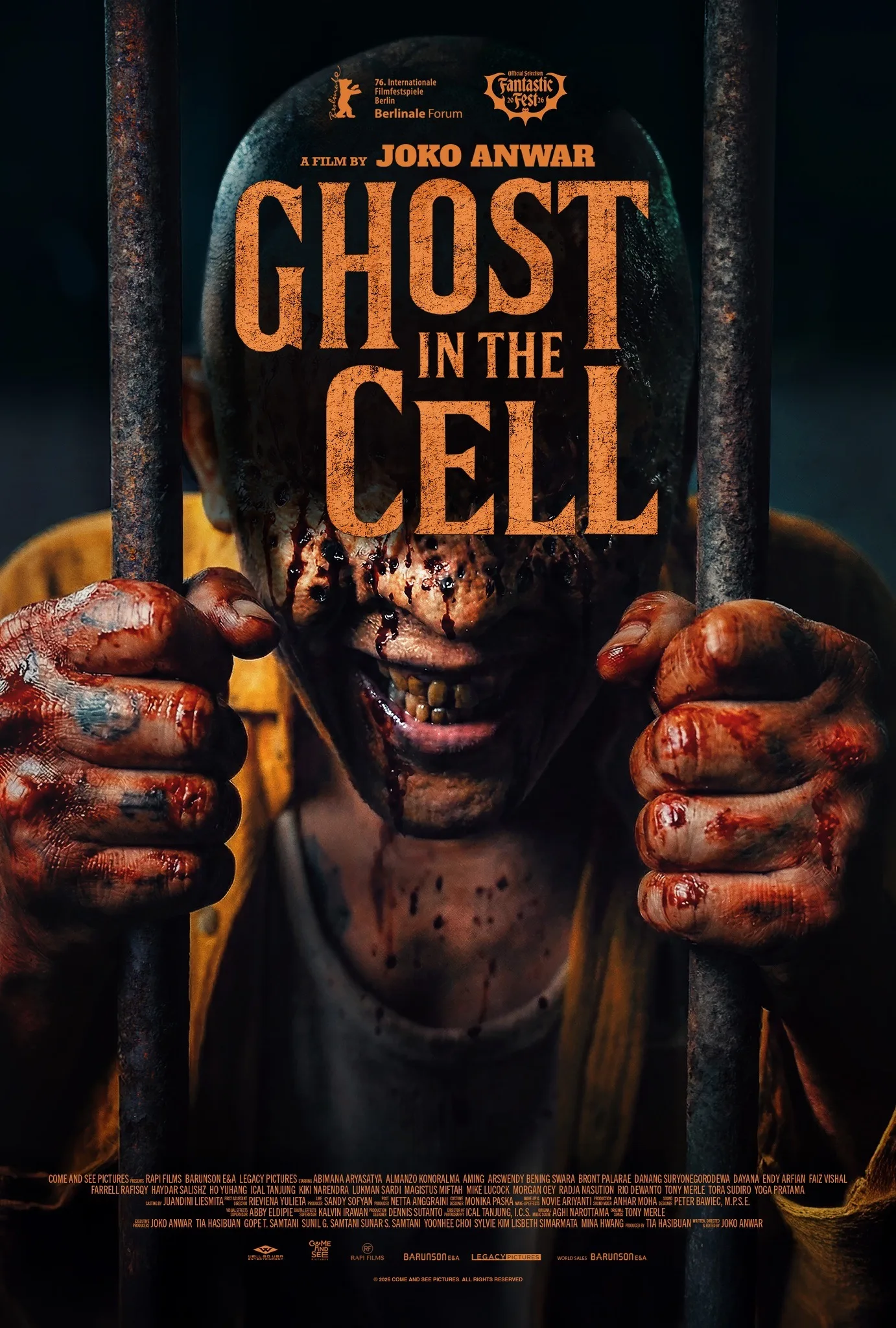
The prison drama is a tried-and-true B-movie foundation for several reasons. It can keep budgets low by allowing for limited sets, small casts, and immediately heightened stakes for viewers. Indonesian filmmaker Joko Anwar takes many of the tropes of the prison drama, including the meek new guy, corrupt warden, and rival factions, and then filters them through his insanely violent vision of a world where the pane between the human and the supernatural is thin. The result is a movie that feels like “The Shawshank Redemption” meets “Hellraiser.” Imagine if Andy Dufresne met a Cenobite, and you’d have some idea what to expect in this clever flick that somehow also works in “Raid”-esque action, sharp humor, and even dancing. It’s very early at Fantastic Fest, but “Ghost in the Cell” is easily one of the early standouts, and it drops in theaters for everyone in just a couple weeks.
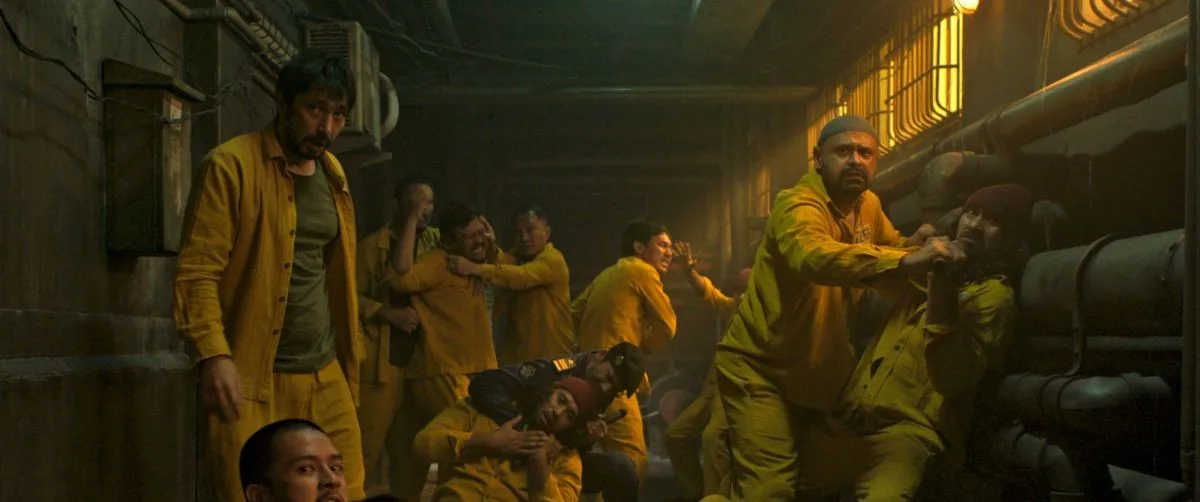
“Ghost in the Cell” opens with a journalist named Dimas (Endy Arfian), who rubs his grumpy boss the wrong way. Before you know it, the editor who just yelled at Dimas has been turned into strips of flesh and intestine on his office ceiling fan. Clearly, Dimas couldn’t have done a slaying that would have turned Jack the Ripper’s stomach, but he gets thrown behind bars anyway because no one else was in the office that night. Dimas is kinda the film’s Andy, straight down to a scene in which the aggressive inmates taunt and tease him as he takes the long walk from the bus to his new home.
Dimas is thrown in a cell with a man named Tokek (Aming Sugandhi), one who more resembles a creature, and one who threatens to rape and murder him night one but gets too drunk to do so. It’s a sign to some of the other inmates that someone wants this journalist dead. Why? What does he know? And what does it mean when the violent cellmate in turned into human art, his body flayed in the shower and displayed in an unforgettable tableau that Hannibal the Cannibal would have admired?
It turns out that Dimas has brought a malevolent presence into the prison, one that feeds off anger. It actually manifests as a physical doppelganger of its victim, a double that’s able to rip apart the human one like someone playing with papier mâché. Dimas forms an alliance of survivors in the prison, led by an excellent Abimana Aryasatra as Anggoro, who is the classic prison drama archetype of the decent man stuck behind bars because he keeps butting heads with the guards. Anggoro assembles similarly morally righteous men who work together to figure what’s happening. What does this presence want? And what are the rules of its kills?
For reasons explained by little more than convenience, one of Anggoro’s allies can suddenly see the auras of his fellow men after bumping his head. He finds the pattern: A red aura, indicating anger, leads to the disemboweling. Hysterically, “Ghost in the Cell” becomes a prison movie about finding a semblance of peace. To survive, people are forced to do something to calm their auras, including praying and even dancing. There are several incredible action-horror set pieces in “Ghost in the Cell” interrupted by awkward choreography to try to calm an aura before someone turns into a blood balloon. It’s an ingenious intertwining of genre and theme: Find some inner peace or your anger will literally tear you apart.
None of this works without Anwar’s undeniable confidence behind the camera. Most impressively, his single setting never gets dull, as he swoops his camera through this sweaty, dirty place in a way that makes it feel dangerous and claustrophobic but never visually flat. Anwar keeps things moving with such fluidity, even if a couple of repeated beats in the final act hold it back from being even leaner and tighter.
Unlike a lot of gore-heavy directors, Anwar also proves himself strong at directing performance. Aryasatra is particularly great, overcoming the cliché of the nice convict—he even gets a scene where his kids visit him and makes it work emotionally—and turning this guy into a real leader. He’s the kind of figure who is mostly just trying to get through each awful day, but he’s also willing to fight corruption and evil where he sees it. His crew is filled with memorable faces, including a truly fun supporting character who hides his intelligence because smart guys get killed.
There’s just so much to chew on in “Ghost in the Cell.” The extreme tableaus of human body parts might be too much for some viewers, but anyone who can tolerate that kind of gore will be rewarded with a movie that’s never quite what you think it’s going to be next. It has such sights to show you.
This review was filed from the Fantastic Fest premiere. It opens on October 2, 2026.