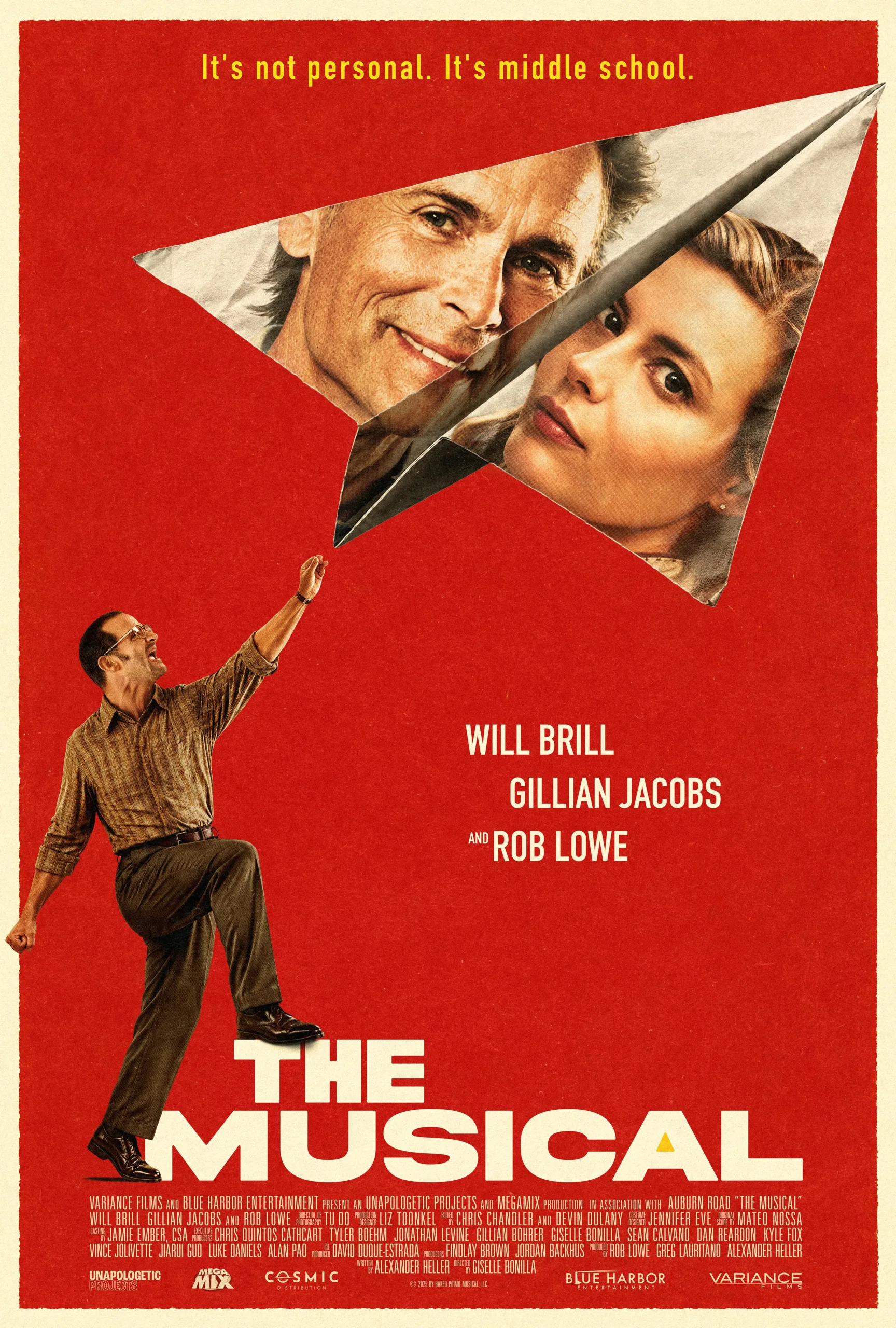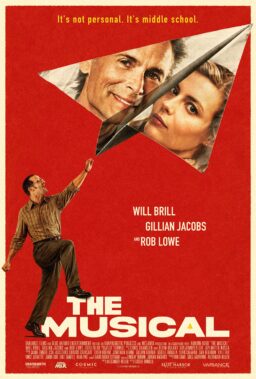

“The Musical” is a film with only one real joke: what if a spiteful theater teacher wrote and directed a musical in which children reenact the events surrounding 9/11? On its face, this sounds like a phenomenal concept for a comedy feature, with plenty of potential to dissect fragile men and the chaos they cause. But Giselle Bonilla’s feature debut simply doesn’t have anything worth saying. It is neither funny nor provocative, so what, if anything, is left?
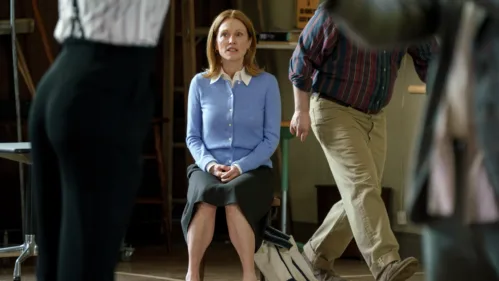
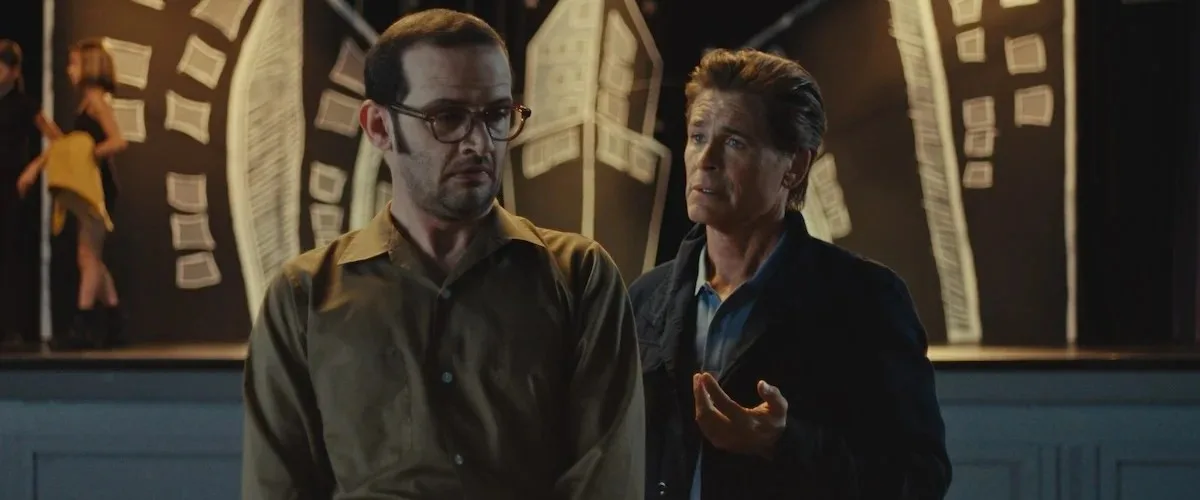
Taking its sweet time introducing the notion of a 9/11 musical, “The Musical” forces the audience into Doug’s (Will Brill) worldview, as he spends the first twenty minutes of the film languishing after his girlfriend, Abigail (Gillian Jacobs), puts them on a “break.” Once he discovers she is actually seeking a full break-up and is now dating Principal Brady (Rob Lowe), a man whose entire existence he deeply despises, Doug shifts from putting on a school production of “West Side Story” to something that will ruin the principal’s glowing reputation.
The remaining hour of “The Musical” is, plainly, a descent into madness, though one without any verve. Even though Bonilla’s film boasts a short runtime—a blessed eighty-three minutes—much of it awkwardly lumbers toward the inevitable climactic performance/reveal of the titular event. By the time it arrives there, you’re delighted to be witnessing the show being put on, in part because there are actual jokes built into it and because it’s the first time you get to actually appreciate how goofy and committed these children can be when dressed up like various political figures of the early 2000s.
But, even at this climactic moment, Bonilla shies away from committing to the bit, instead relying on mediocre montage as she has throughout the film whenever it gets too close to delivering anything. Everything about the film’s direction seems to hedge its bets, shying away from any formal or narrative conceit it casually introduces. Take Bonilla’s sole aesthetic flourish in having Brill deliver a noir-ish voiceover of self-delusion, accompanied by moody fades and a Bernard Herrmann-mimicking score: it’s a running bit that exists to emphasize what a self-centered piece of shit Doug is, but these brief moments of style don’t elevate just how otherwise lifeless the film looks.
Brill, as a performer, excels the deeper he gets into Jokerification and being sort of a parody of an incel, but the issue is he’s barely given anything to work with. Much of the problem lies in Alexander Heller’s script, which seems desperate to comment on the contemporary arts and teaching landscape—complete with embarrassingly dated jokes about “woke”—while also seemingly longing to condemn its protagonist. If it is designed as the latter, foregrounding a critique of incel culture by way of Doug’s crusade to take down his ex-lover’s new boyfriend, it simply isn’t mean enough, nor does it have anything fresh to add to a tiresome conversation about toxic masculinity that we’ve been suffering through for the past decade.
But then what of the film’s contempt for “woke” and “cancel culture”? It’s the definition of a “both sides” picture, complete with having someone joking that teaching Harry Potter was impossible because “the left thought it was anti-trans [and] the right thought it was anti-Christian.” It’s hard not to roll your eyes at the screen whenever the film tries to joke about how the students themselves weaponize identity, for instance, like one child noting it’s problematic to cast a white girl as Maria instead of her. Watching an actor like Lowe deliver line after line about how great his school is because of its progressive ideas grows grating quickly, not because his own political stances make this kind of role ironic, but because it seems to hold more contempt for everyone in the school than the unhinged man at its core.
Say what you will about how Trey Parker and Matt Stone’s “South Park” has declined into empty provocation over the years, but at least the duo knew how to commit to their bits and write a real musical in service of their comedy. (Lest we forget their treasure “Bigger, Longer, and Uncut” or even the riotous “Everyone Has AIDS” from “Team America: World Police”). But beyond not being able to feature any original music in a film about a fake musical, “The Musical” also doesn’t feature any real jokes beyond the precious few surrounding the musical itself (like a child wearing fake wings running into the Twin Towers).
Compare it to any other post-9/11 comedy about a rogue teacher putting on a show that shouldn’t be put on: “School of Rock” has mountains of charisma in both its lead and child actors, “Hamlet 2” has catchy original songs and endless physical comedy, and even the recent “Run Amok” (the other of two Sundance features this year about staging a problematic musical) had a compelling emotional throughline. “The Musical” has none of that. Bonilla and Heller’s film is nothing more than amusing concepts done poorly, but at least the curtain call comes quickly.