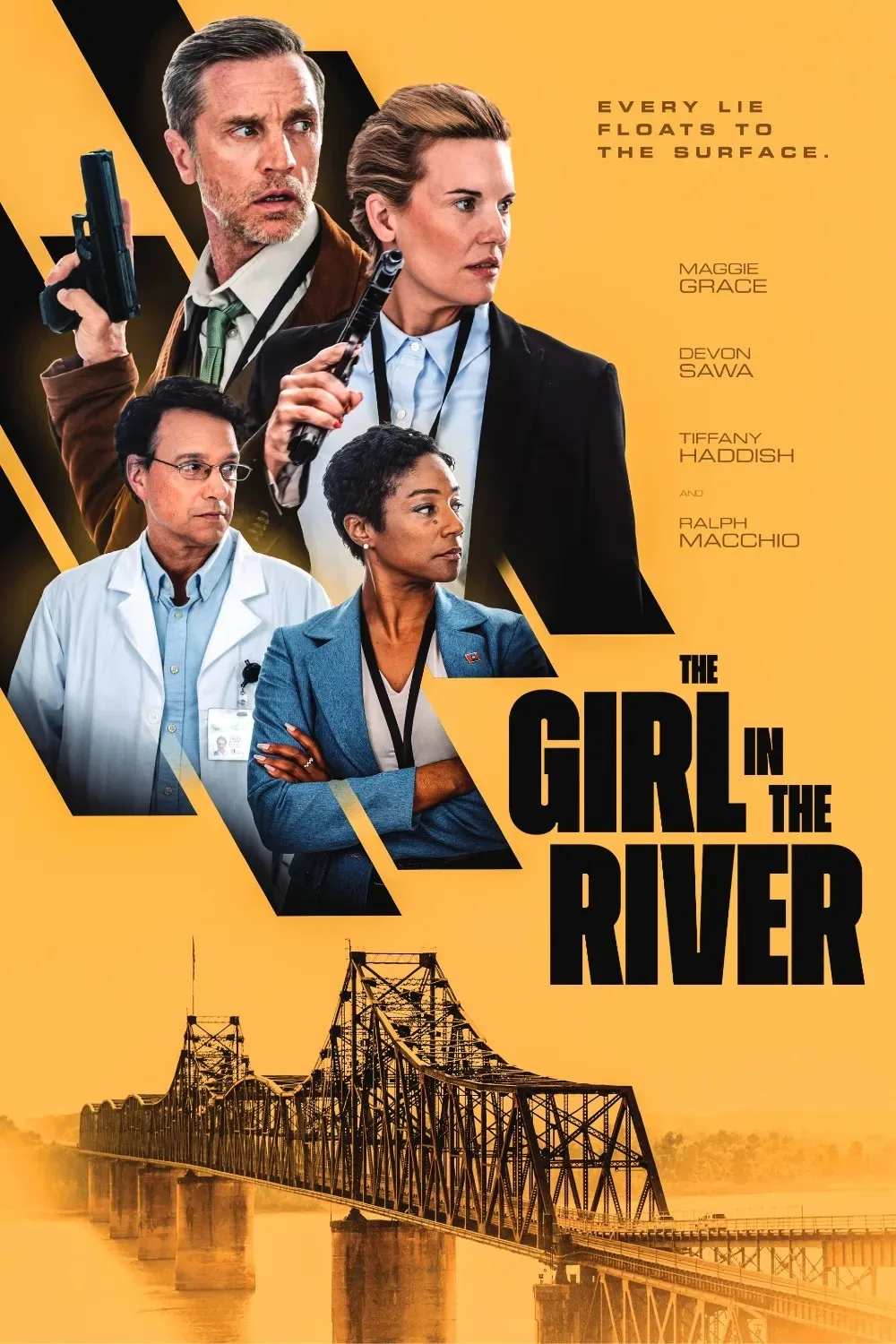

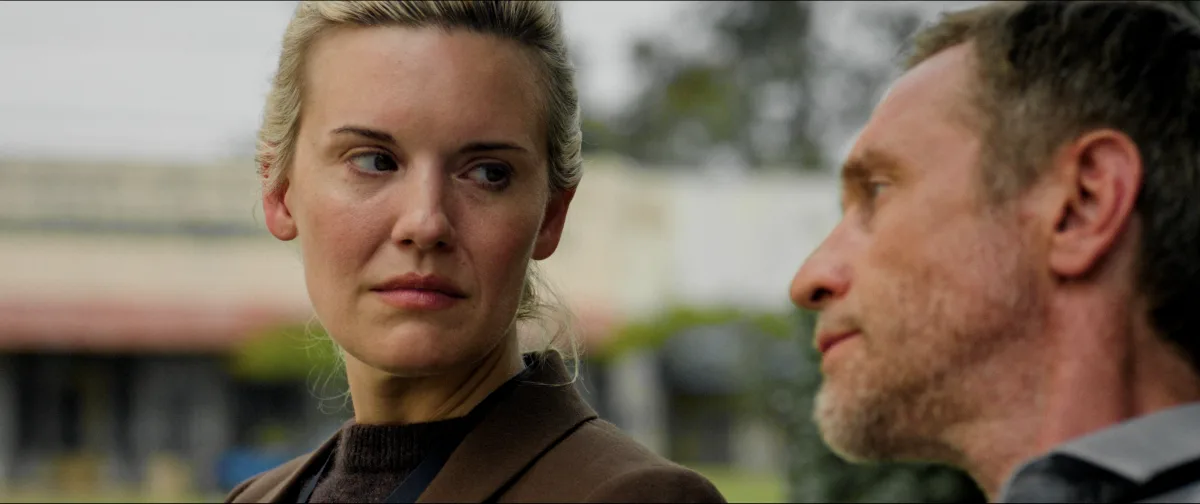
It’s rare to see a film that’s so consistently misguided and abrasive that it makes you gasp, but that’s the story of “The Girl in the River,” a thriller without thrills, a movie without a trace of an identity of its own. It’s trite at this point to say that a movie looks or sounds like it was made by A.I. But that feeling is really hard to shake with this offering from writer/director Brando Benetton, from its leaden dialogue to its predictable resolution to its insane final credits that frame clinical psychologist Amelia Pembrock (Maggie Grace) as the next Clarice Starling or Holden Ford.
This is a film that wants us to believe Pembrock’s investigative acumen is so strong that she changed the form of criminal profiling after 90 or so minutes of sleepwalking through a case she gets mostly wrong. It’s only one aspect of the project that leaves you scratching your head. It’s never a great sign when the biggest mystery in a thriller isn’t who did it, but how the production went so wrong.
“The Girl in the River” opens with a scene that introduces Pembrock as the top of her class via a conversation with her superior, Erica Graysmith, played by a wildly miscast Tiffany Haddish. Seeing a talented comedienne flex her dramatic chops can give a film a rewarding energy, but Benetton and Haddish never make this character genuine, largely because they give her nothing but clichés to spout. The dialogue is so shallow that, from nearly the first scene, it reads like parody.
Graysmith (maybe a nod to Robert, the most famous author on the Zodiac Killer?) says ridiculous things like “You’re scared of what’s waiting for you on the other side” and “You’re not ready to confront what real evil looks like.” The scene continues to baffle as Grace looks more exhausted than scared. It’s a remarkable tone setter for the film to follow, since almost all of it will come out of a “thriller playbook” more than anything that sounds human.
Only Devon Sawa escapes the crushing mundanity of this film, adding a bit of depth to Alan Kramer, a seasoned (which, in thriller clichés, means traumatized and alcoholic) investigator who partners with Pembrock on the case that gives the movie its title. In the kind of small Mississippi town in which everybody knows each other—although the kind of rural realism that could have given the piece any dirt under its fingernails is an opportunity not taken—twin sisters of a wealthy family go missing. One is found in the river, her teeth mutilated and chicken skin under her fingernails.
The latter leads Pembrock to the steadfast belief that the killer/kidnappers are the local butcher, in what passes for breathtaking investigative skills. As she tracks that lead, Kramer encourages her to explore other options, while Ralph Macchio lurks on the fringe as the medical examiner helping with the case.
One of the scenes in “The Girl in the River” that best summarizes this film’s deep problems comes midway when Grace meets with an investigative journalist, who does more to push the investigation in the right direction than anyone else, including the next Columbo at the center of the piece. Benetton’s script is regularly at war with itself, giving constant lip service to a profile of a great detective, but then giving her almost no great detecting. It doesn’t help that Grace can’t add any weight or personality to this non-character; Sawa makes out significantly better, finding the film’s scant slivers of truth in his character’s world-weary demeanor. But even he basically stumbles into the final twist of the killer/kidnapper instead of any sort of intellectual gamesmanship.
So much of “The Girl in the River” plays more like parody than thriller. The best of the movie’s many mixed metaphors comes when Sawa is forced to say, “You can’t always judge a book by its cover because sooner or later it will bite you in the ass.” I’d rather watch the movie about the ass-biting book.