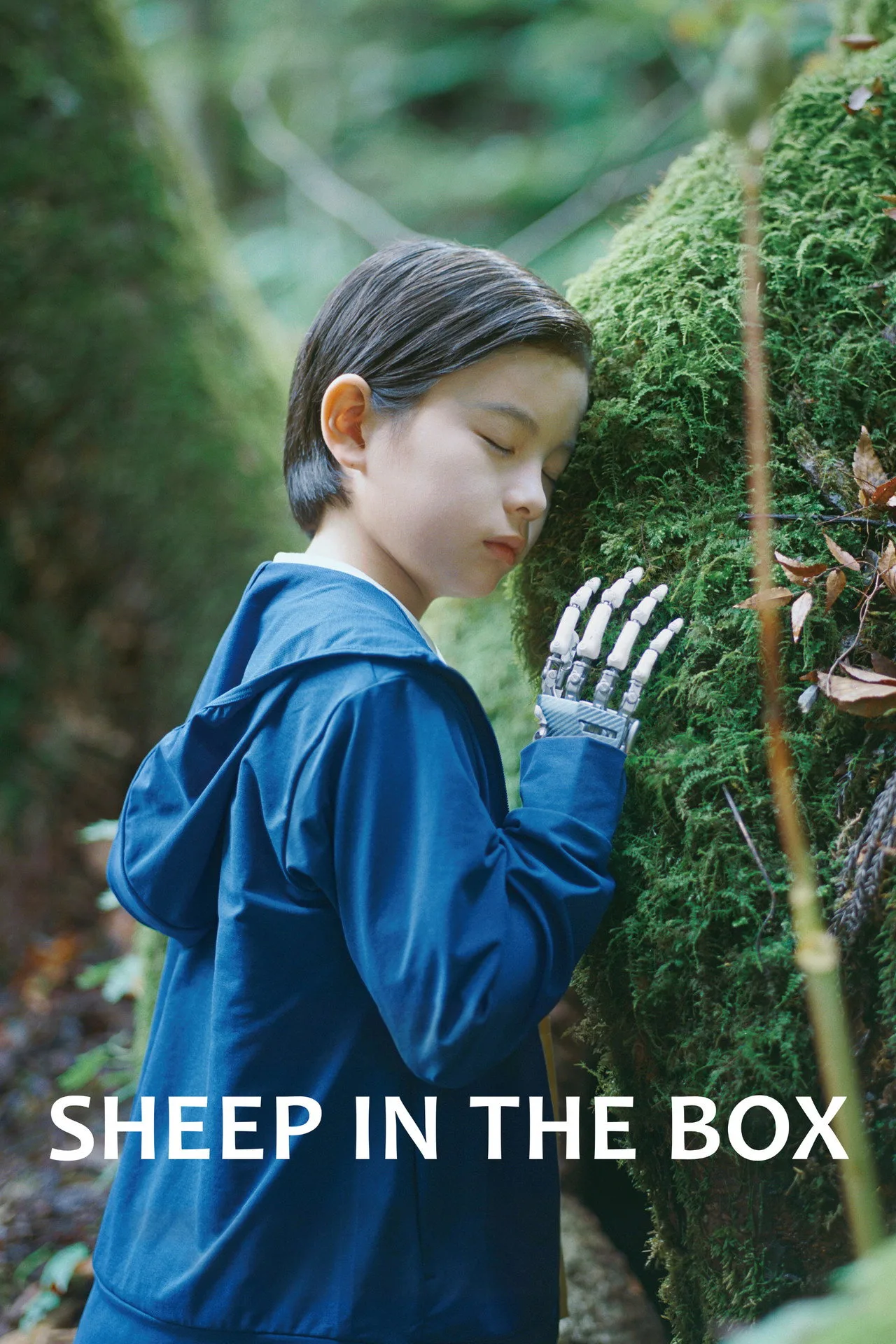
There’s more to the wistful Japanese science-fiction drama “Sheep in the Box” than its serene and pseudo-ambivalent conclusion would have you think. A clunker of an ending does, admittedly, stand out, and also likely makes this thorny, but only superficially complicated, story about two grieving parents and their artificially intelligent (AI) robot son more interesting to retrospectively mull over than to actually watch.
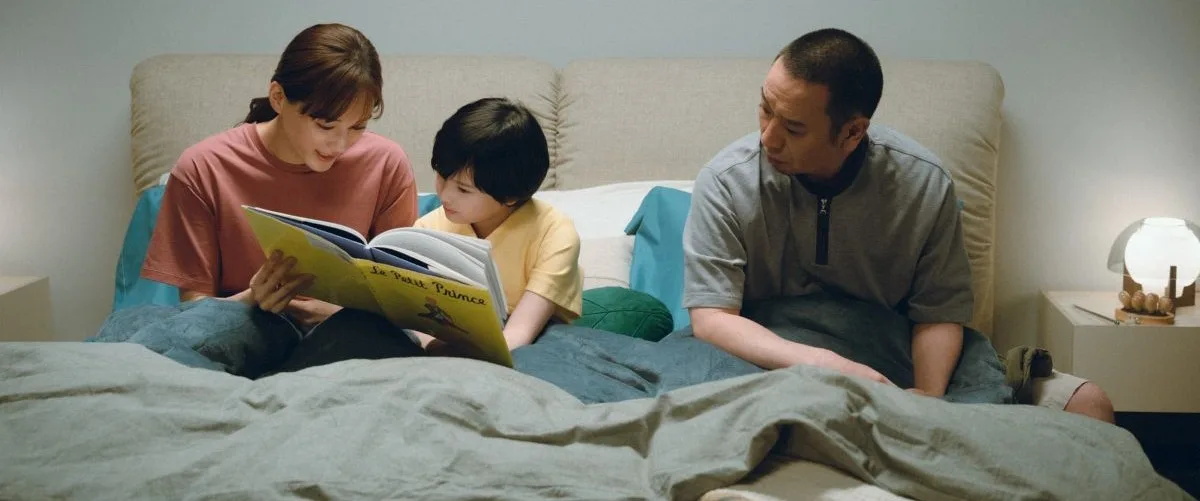
Finding more pleasure in looking back than forwards is maybe fitting though, given the intended ambiguity of writer/director Hirokazu Kore-eda’s fantasy portrait of a married couple, Kensuke (Daigo Yamamoto) and his wife Otone (Haruka Ayase), who don’t know what to think about their new robot child Kakeru (Rimu Kuwaki), modeled after their dead son of the same name. In time, Kensuke’s attitude softens while Otone’s understanding also develops a greater sensitivity to the new, independent life that they only sort of created.
Father and mother are obviously responsible for bringing their kid back from the dead, with some help from an experimental AI-based tech company. But eventually, Kakeru (the robot) needs special accommodation, as is obliquely hinted at in the movie’s title, a reference to Antoine de Saint-Exupéry’s beloved children’s book The Little Prince. Too bad it’s hard to take Otone seriously when, in a later scene, she explains her evolved understanding of the title’s symbolically overburdened lamb.
“Sheep in the Box” can be a frustrating watch for a number of reasons. For starters, you might find the plot’s dramatic twists to be less compelling than its incidental details. Kore-eda’s movie also doesn’t really work in the same emotional register as either Steven Spielberg’s “A.I. Artificial Intelligence” or Ian McEwan’s Machines Like Me, both of which Kore-eda acknowledges having seen and read. Instead, Kore-eda invites us to join his two human co-leads in their gently free-flowing stream of consciousness.
In that sense, Kore-eda puts a heavy burden of expectation on the movie’s ending. It’s the ultimate proof of whether or not you’re patient enough to follow Kensuke and Otone as they take a big leap of faith. Most viewers won’t be open-minded enough to nod along with Kore-eda’s melancholy characters, if only because his movie’s more compelling as a character study than as an adult fairy tale.
It’s also pretty hard to appreciate the wispy questions posed by Kakeru without inevitably thinking about how Kore-eda represents AI technology as a mysterious extension of our already fraught parent/child dynamics. In interviews, Kore-eda’s said that he hoped to depict a range of feelings about AI technology. But without giving too much away, the ending of “Sheep in the Box” presents us with a relatively uncomplicated view of Kakeru and his capacity for intelligence and growth. The ending’s a cop-out, is what I’m trying to say, and maybe even an abdication of responsibility from a filmmaker who seems to know better.
That said, it would also be foolish to reduce such an intriguing and emotionally involving movie to its disappointing finale. All three main cast members deliver sensitive and compelling performances, which is probably unsurprising given Kore-eda’s well-earned reputation as an actors’ director. There’s also a number of scenes that are small and well-observed enough to be emotionally disarming, like when Kensuke smiles in awe as the new Kakeru imitates the original Kakeru son and recites all of the stations on a nearby train line.
It would also be too easy to dismiss “Sheep in the Box” for not ultimately going where many of us wish it would, at least as far as uniting Kore-eda’s techno-speculation with his typically keen depiction of grief and domestic relationships. And to be fair, both Kensuke and Otone acknowledge that Kakeru’s only simulating the sort of behavior that makes them want to believe he’s their dead son.
Like real AI art, Kakeru is a diligently rendered copy designed to mirror and therefore flatter his users. Kensuke and Otone both see that, but still choose to follow their hearts towards accepting Kakeru—the new kid, not the dead one—for what he is and what he might become. That’s also why, in hindsight, the movie’s ending seems like such a big, if not quite ostentatious, swing. Kore-eda leaves us to wonder if we can imagine a future that’s built on acceptance and respect for techno-human relationships that are still in their infancy, according to this naive fable.
Some viewers will find that line of thought hard to take given much of what we already know about AI technology and its current use value. Others will hopefully at least understand why “Sheep in the Box” lands where it does. Kore-eda’s animating curiosity makes his latest feature more compelling than not, but you’ll still have to make your own leap of faith in order to accept the movie’s limited terms and conditions.