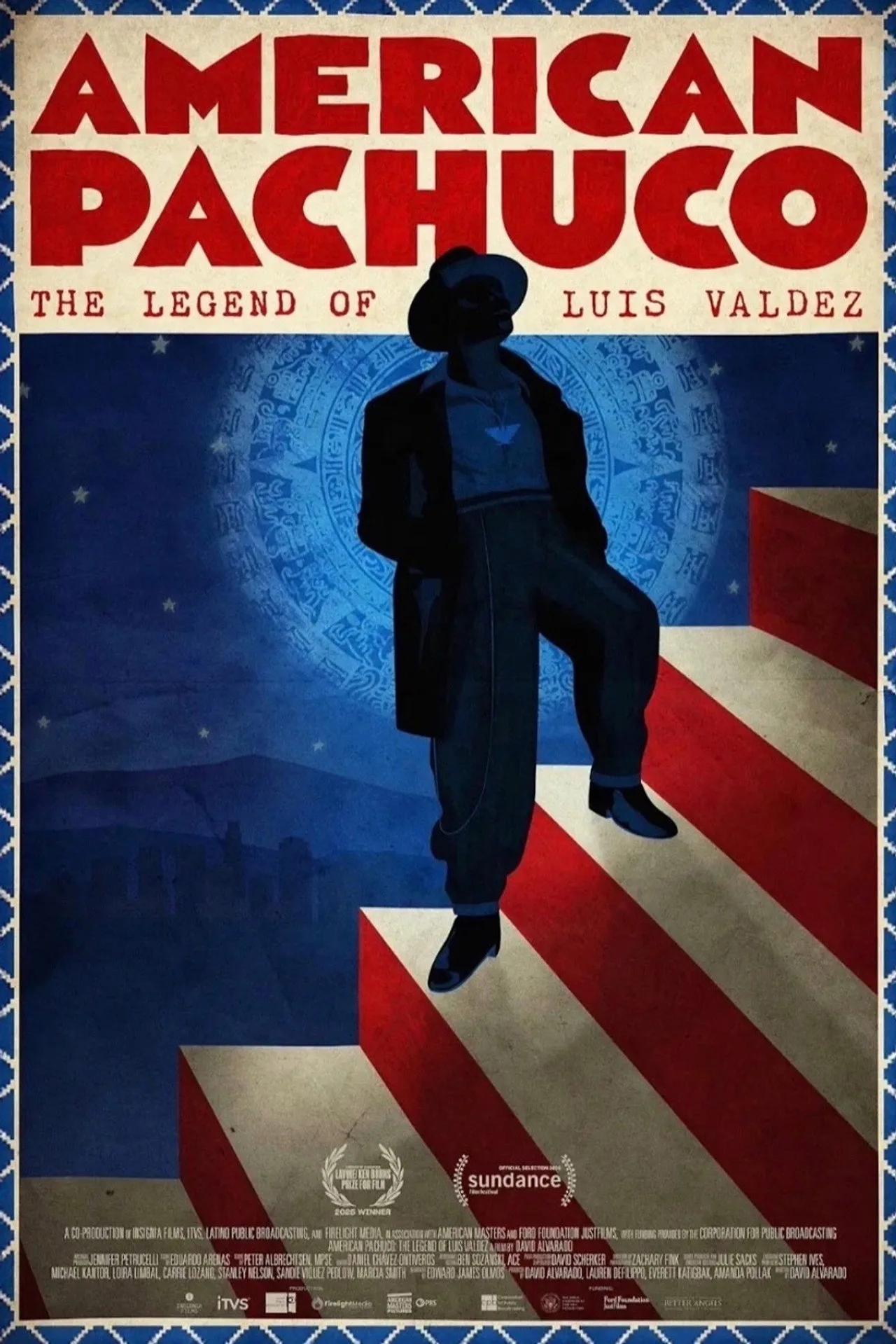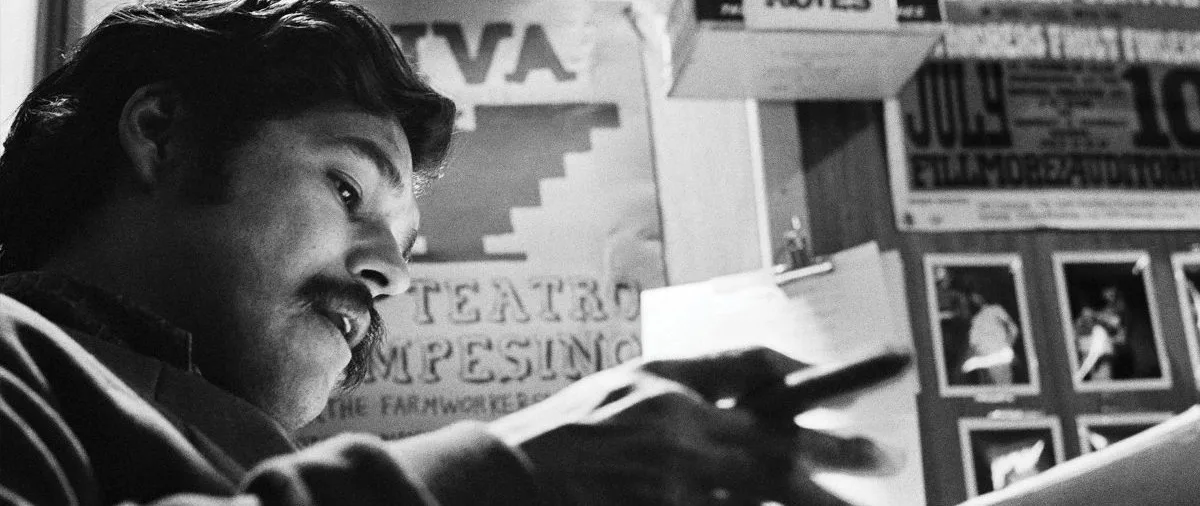
It’s fitting that “American Pachuco: The Legend of Luis Valdez” begins its theatrical run in theaters mostly around Southern California. After all, it is the story of a California-born-and-bred playwright/filmmaker who, when he wasn’t getting inspiration from the people and his surroundings, was also making some of the region his stage.
That person is Luis Valdez, the cigar-chomping, baritone-voiced “Shakespeare of Chicano theater” and “social arsonist” that writer/director David Alvarado spends a good 92 minutes lionizing in this doc. The son of migrant workers—dude was out there picking vegetables with the parents when he was six—a missed opportunity appearing in a school play gave him the bug to perform.
As the ‘60s became a time of war protests and migrant worker strikes, Valdez used his talents for satirical, absurdist theatrics by staging agitprop theater pieces. He was the resident workers’ theater director in Cesar Chavez’s crew during the Delano grape strike, rousing people into joining the picket line until Chavez ultimately put a kibosh on it. (With the movie also hinting at his recent sexual abuse allegations, Chavez does not come outta this looking rosy.) After that, he formed his own theater company, putting on socially-conscious productions for college kids.
As the eighty-something, silver-haired (and silver-stached) Valdez explains in the doc, it was hard being a revolutionary whose only weapon was his ability to write funny, thought-provoking stuff. Living as a broke creative made him continuously at odds with his older brother Frank, an Air Force engineer (“a missile-making Mexican,” Valdez says at one point) who ventured out for a more suburban (read: White) lifestyle.
Alvarado (and Valdez) lays out how the brothers’ strained relationship—the conformist vs. the radical—was inspirational fuel for his two biggest successes. Valdez made it to the main stage with Zoot Suit, his 1978 musical salute to those stylish street cats of yesteryear—pachucos, as they were called—who were hunted and stripped down by Whites in the early ‘40s. Even though the story didn’t break through with mainstream audiences on Broadway and the big screen (Valdez also directed the 1981 movie adaptation), zoot-suit-wearing Chicanos in the audience couldn’t get enough of it. (“It was our ‘Rocky Horror Picture Show,’ man,” a castmate says.) “Zoot” star Edward James Olmos also narrates the film, doing a lot of vocal scenery-chewing as he recreates his pachuco protagonist.
And, of course, there’s “La Bamba,” the 1987 biopic on Chicano rock-and-roller Ritchie Valens, aka one of the three stars aboard that plane The Day the Music Died, that became a sensation. (For those who weren’t around back then, that Los Lobos cover was played a lot.) Alvarado tees “Bamba” up as “Pachuco”’s triumphant climax, with writer-director Valdez helming a major-studio motion picture that becomes a hit with moviegoers and pop listeners, proving that Chicano voices can be powerful—and profitable. He mostly breezes through this part of Valdez’s story, even throwing up a brief video collage of all the actors (including Andy Garcia and Billy Zane) who auditioned for Valens before Lou Diamond Phillips showed up.
Then again, Alvarado wants to give viewers a short-but-substantial salute to Valdez, assembling archival footage and interviews with friends, family, past & present collaborators, and other famous Latin folk (even Linda Ronstadt is in here!) about the work he’s done giving Chicano people a voice. As much as this doc bitterly reminds you how Chicano/Latino voices in popular, mainstream culture were just as underappreciated and extinguishable then as they are now, “American Pachuco” is still a pleasant exercise in long-overdue flowers-giving.