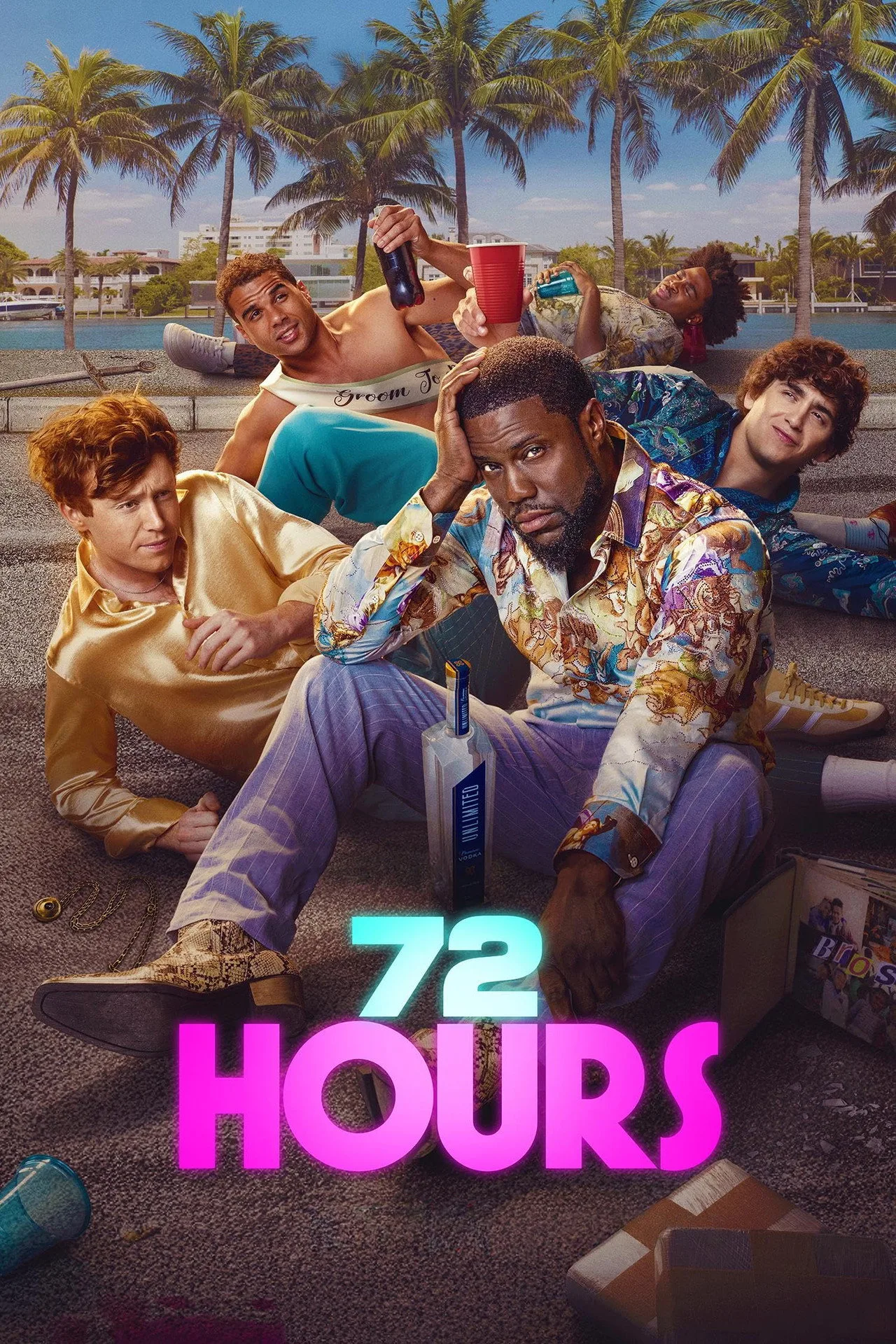
“72 Hours” is a borderline raunchy comedy. The Kevin Hart vehicle, directed by Tim Story for Netflix, harnesses the kind of slapstick material that would’ve comfortably sat in the middle of a multiplex marquee–though with far less narrative economy. Hart stars as Joe Nixon, a career-obsessed 40-year-old marketing executive whose accidental inclusion on a Gen-Z text chat plunges him into gangland perils and generational divides, revealing the cracks in his own romantic life.
In some sense, the plot mechanics are merely an excuse to perform toilet bowl gags (there are more dick jokes here than you can count). And yet, there’s some unquestionable charm to seeing Hart’s well-worn comedic impulses collide with a script whose references appear to be just as dated. It’s as though the film itself is a keen commentary on Hart’s own anxieties–in the last decade, he’s transitioned from being a bankable box office star into a personality that now exists solely on streaming platforms, which only ask him to rehash his overused jokes about his height, immaturity, and masculinity. “72 Hours,” in that sense, isn’t merely a race-against-time type of movie mashed with “The Hangover.” It’s a surprisingly existentialist work.
At the outset, Joe’s pristine life is murkier than you’d expect. His girlfriend Jennifer (a supremely talented Teyana Taylor stuck in a thankless role) wants him to finally settle down and propose to her rather than treating his career as more important than her. Conversely, while many at Joe’s company think he’s a lock for the opening Chief Creative Officer position, his boss isn’t quite as transfixed by Joe’s prowess. After a few horrendous, out-of-touch campaigns, he believes Joe’s lost his touch with the younger generation. If Joe wants the CCO job, he must build a hip campaign that’ll show their potential client, Unlimited Vodka, that they can appeal to a new demographic.
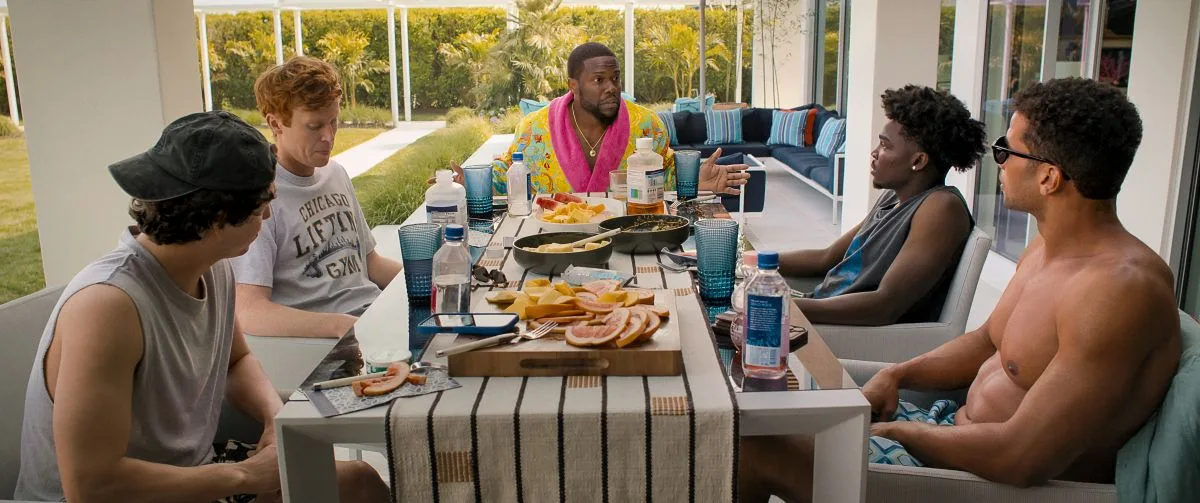
Thankfully, he’s mistakenly added to a bachelor group chat that includes the foul-mouthed Nick (Marcello Hernández), the love-sick Hunter (Ben Marshall), the dimwitted second banana Freshman (Kam Patterson), and the upstanding groom Mason (Mason Gooding). The friend group invites Joe out to Miami for their weekend party, giving him, unbeknownst to them, the chance to use them as market research.
Joe buys them a high-roller Airbnb whose actual tenant is a Miami drug lord. He also brings them a suitcase filled with vodka and offers to bankroll all of their drinking, drug taking, and partying. But the more he tries to connect with them, the less he understands them. All of his jokes and references, which are all of Hart’s own quips and callbacks, land with a thud. One could bemoan Hart for retreading past laughs to significantly worse results. But considering the way these young men react to him, it’s clear the movie is in on the joke too.
Nevertheless, these astute meta-textual observations are often bogged down by the need to pad out the 105-minute runtime. Because during Joe and co’s weekend, they become unsuspectingly plunged into a confrontation with a nefarious bachelorette party and also become the target of a major cocaine dealer, Jaze (Michael Mando). The latter, after a coked-up Joe assumes the alter-ego Ricardo Montana, which involves Hart brandishing a thick Al Pacino Scarface accent, mistakes Joe as a rival underworld boss. Along the way, cameos by Mike Epps as an overzealous cop and Katt Williams as himself add both slapstick humor and further the generational divide between the cast’s luminaries and the younger actors. Williams, for instance, makes a dated Will Smith joke, causing one to wonder if the film is aware of the two kinds of comedies that are fighting against each other within its overblown script.
Such a meta-textual thread would be stronger if the Gen-Z characters didn’t make references that more align with Millennials, like a “Eat Pray Love” quip delivered by Hunter. Or if the film actually delved into the hopes, concerns, and anxieties associated with that generation. Instead, this film is actually about Hart’s own standing as a mentor and as a perplexed star rather than about them. Hence why the comedy, from Joe’s garish fashion decisions to his misplaced sense of fun, is propelled, albeit with some shockingly shoddy editing, by Hart’s star persona. His personal wrestling, in what’s a mid-life crisis movie—a topic he covered to slightly better effect in “Fatherhood”—consequently inspires enough hijinks and intrigue to keep one engaged. Because maybe an “old” dog can’t learn new tricks, but he can at least learn to make fun of the star he isn’t anymore.