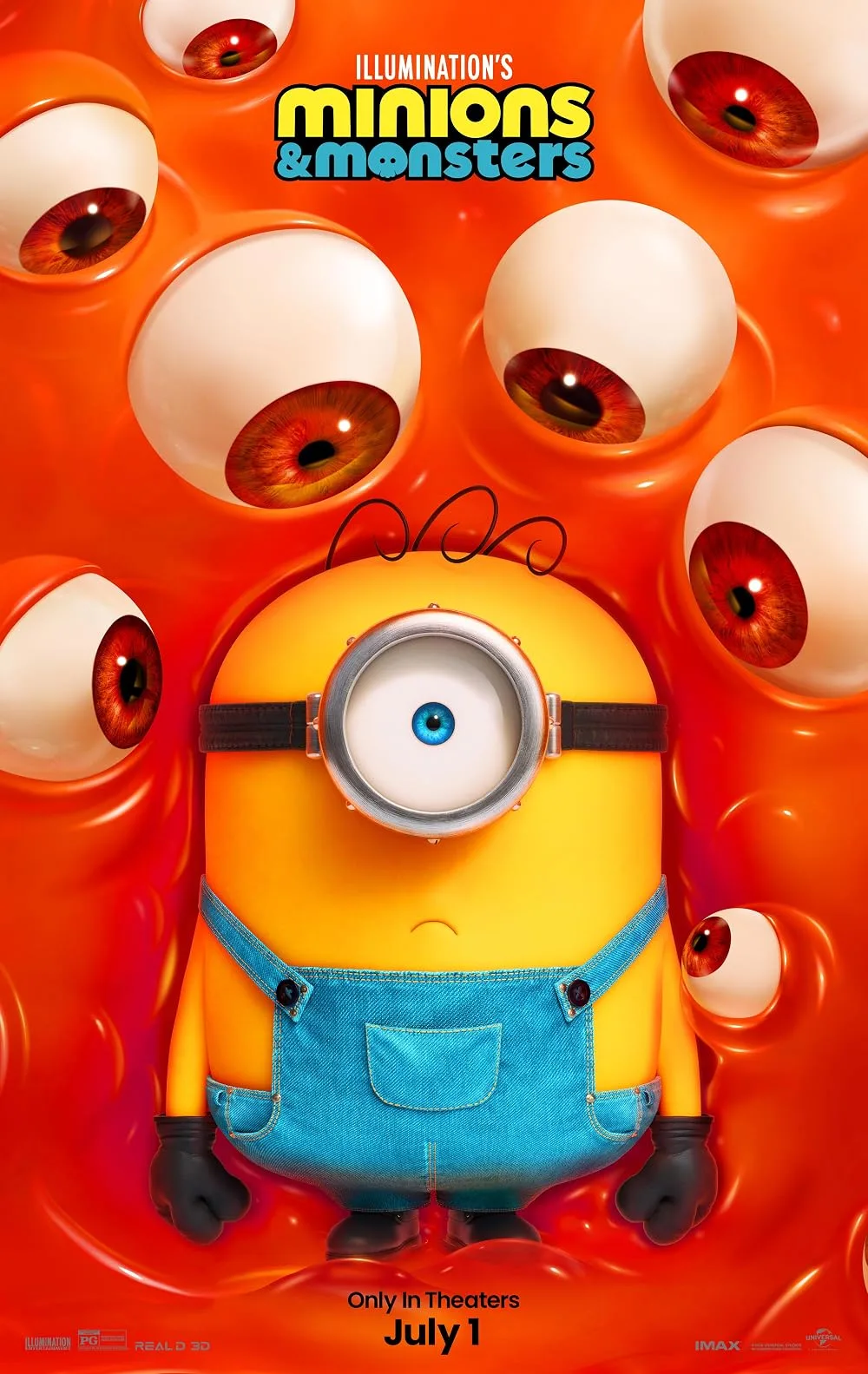

Why do we love (or hate) the Minions? Simply put, they’re everywhere: Illumination Studios’ mascots have existed in the public consciousness for 16 years at this point, across six (now seven) feature films, plastered on every piece of merchandise Universal Studios can muster and, for a while there, flooding our Facebook feeds with droll memes your problematic aunt would plaster all over her page. Their ubiquity, and their stupidity, might aggravate those seeking higher entertainment than a group of babbling, pill-shaped henchmen who blow raspberries and hit each other with hammers. But there’s a bigger, more elemental reason these little guys have endured and profited (to the tune of nearly $6 billion over the previous six films), spinning off from their breakout status in the “Despicable Me” films to an honest-to-goodness phenomenon in their own right: they’re but the latest iteration of slapstick comedy stars that hearken back to the earliest days of the art form.
That conceit is literalized to delightful effect in the latest (and somehow most miraculous) of the “Minions” films, “Minions & Monsters,” a frenetic, fuzzy, practically amorous love letter to Old Hollywood that, a few narrative branches aside, is maybe the most invigorating any of these films has ever felt.
Beginning with a rewind of the Universal logo from its 4k UHD present all the way back to its silent-era past (and an Illumination Studios logo that evokes the “rubber hose” animation style of Fleischer Studios), “Minions & Monsters” firmly establishes its cinematic bona fides with a diverting, if arguably redundant, framing device set in a Universal Studios museum, where a tour guide (voiced by Allison Janney) ushers a group of kids through the history of cinema. (We even get a cute George Lucas joke.) There, resting against the beach-ball globe Charles Chaplin bounced around as Hitler in “The Great Dictator,” she regales the story of how Minions haven’t just been around since prehistory—they were here for the dawn of cinema.
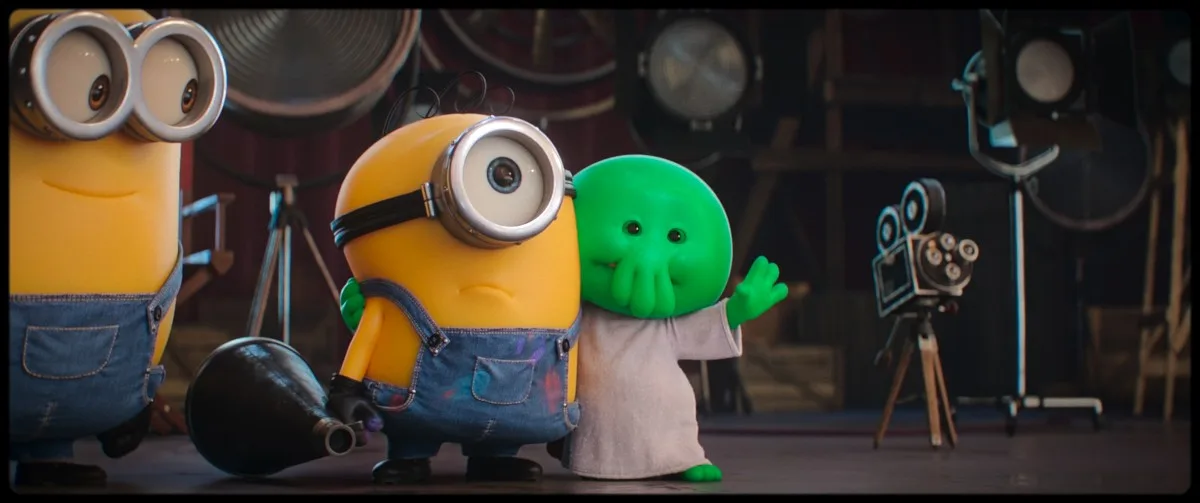
Two of them, in particular: James and Henry (both voiced by co-creator and director Pierre Coffin, as he does all the Minions), who are your classic double act, with James the creative dreamer and Henry the supportive best friend. (They’re also snuggly outcasts in ways that imply a sweeter, queerer connection than mere minion-hood.) Along for the ride is Ed, a Deaf minion who also joins them for their exploits but feels like a third wheel compared to James and Henry’s adorable bond. Like the tribes of the other “Minions” movies, they’re just trying to fulfill their genetic mission to find the ultimate villain to serve; unfortunately, they keep getting their prospective masters killed in all manner of Gru-some but family-friendly ways (including, shockingly, a full-on beheading). It’s usually the fault of James’ daydreaming, which irritates de facto Minion leader Dick.
But when their search takes them to California, and their antics entertainingly disrupt the shoot of a high-riding Western, they find themselves the latest talk of Tinseltown care of an excitable director (Christoph Waltz) and the money-grubbing twin brother studio heads (both voiced by Jeff Bridges) who, much like any given Universal executive, likely look at these little guys and see dollar signs. This sequence is a treasure trove of classic movie references, including sending the Minions through the iconic gears in “Modern Times,” and run-ins with Harold Lloyd and Buster Keaton; cinephile dads will do the Leo point at the screen more than a few times. It’s a genuine triumph, not just in its construction as a kid’s movie comedy sequence but also as a distillation of all the cinematic pioneers who paved the way for something like the Minions to exist, let alone succeed.
From there, Coffin (who takes on solo directing duties for the first time this series) takes advantage of the creative freedom he must surely have been given to escort the Minions through their rise and fall as Hollywood’s “it” boys of the silent era, filling each minute of the film’s first half with mile-a-minute gags that riff on the charm of the dawn of cinema and the Gilded Age that surrounded it. We even get homages to other rags-to-riches-to-rags stories about this era of Hollywood, from “Singin’ in the Rain” to Damien Chazelle’s divisive but underrated “Babylon.” (Banana-bylon?) But when the age of talkies arises, and the Minions can’t quite thrive in that transition (cue side-splitting Minionese takes on everything from “The Maltese Falcon” to, Gru help me, “Citizen Kane”), James resorts to one last-ditch effort to get back in Hollywood’s good graces: making a big, splashy monster movie. And, with the help of a spell book kept from an old wizard they tried henching for years back, James summons one: an obsequious little Cthulu named Goomi (Trey Parker). While he doesn’t quite fit the bill for movie villainy, he knows just where to find the big, bad beasties James is looking for.
Granted, it’s in this plot shift that “Minions & Monsters” loses a bit of steam, as James and Henry’s starry-eyed collaboration with the duplicitous Goomi intercuts with Dick et al.’s continued search for a new master, which puts them in the thrall of a hapless alien robot named Dort (Jesse Eisenberg), whose grand plans to invade the planet are stymied both by his modest accommodations (he lives in a flop house with a roommate) and his newfound infatuation with a suffragette (Zoey Deutch) whose rosy cheeks might just get him to up and join the women’s rights movement. While each of these branches carries its own occasional delights (Eisenberg, in particular, channels his signature neurotic bluster nicely into a ‘bot that clearly resembles Gort from “The Day the Earth Stood Still”), they aren’t nearly as compelling as the Old Hollywood sendups of the first half. By the time Goomi et al. summon a massive orange goo monster to wreak havoc on Tinseltown, it’s hard not to feel the spectacle get away from itself.
But when all the smoke clears, Coffin manages to right the ship and pull “Minions & Monsters” back to the creative impulses its first half so celebrated: the drive to make art and the collective desire to watch and enjoy it together. In an age where it feels like no one remembers or cares about the history of the medium they enjoy (and anxiety that young ones are pulling away from movies older than when they were born), it’s heartening to feel like “Minions & Monsters” might just expose kids to the cinematic forebears that made their beloved Minions possible. And, in so doing, made the snappiest, most cohesive, and entertaining entry in this series to date.
“Minions & Monsters” feels like Coffin interrogating the Minions’ place in the annals of film history, stripped of the pernicious needle drops of previous entries and the stifling presence of Gru, who always felt like a millstone around the Minions’ necks. He argues, and here successfully, that the Minions aren’t a scourge of the universal loss of attention span and cultural sophistication. Rather, these little guys are simply the purest and latest distillation of the very impulses that have made cinema one of mankind’s most enduring art forms: characters in motion, working hard to entertain, distract, and provide a communal experience for those who enjoy them.