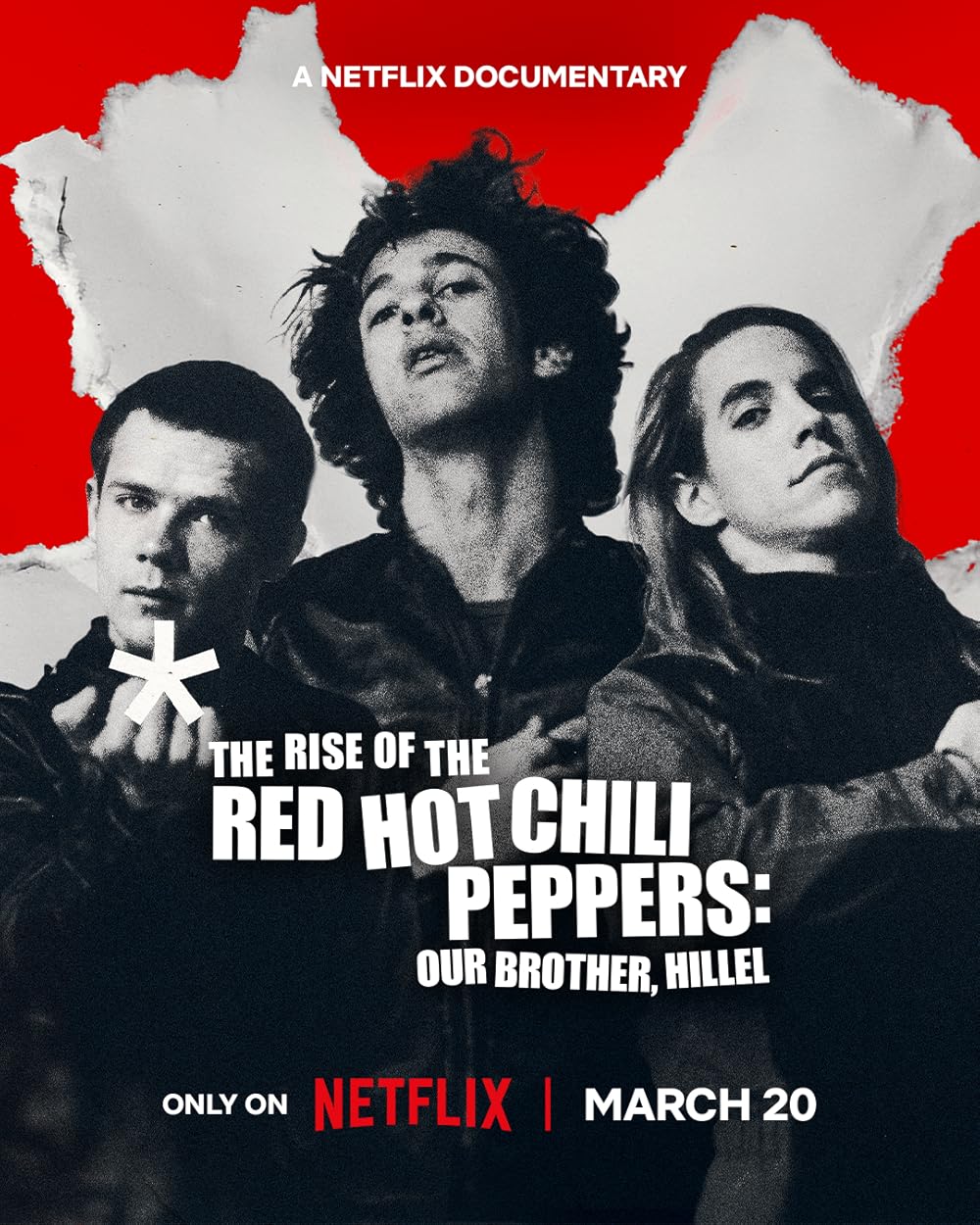
How does a band hold the artistic influence of one of its founding members in its soul as it becomes one of the biggest groups in the world? This is the question at the core of “The Rise of the Red Hot Chili Peppers: Our Brother, Hillel,” a movie about the formative years of the ‘80s L.A. band that merged punk, funk, and hip-hop into something that felt entirely new.
I can vividly remember hearing Freaky Styley for the first time at a summer camp in the ‘80s and being just blown away. It didn’t sound like anything else I knew existed at the time. Those early albums hummed with a playful, slightly dangerous energy, and a lot of that passion came from founding guitarist Hillel Slovak, who died of a drug overdose just as RHCP was becoming known worldwide in 1988. Ben Feldman’s Netflix documentary chronicles the early days of the band through archival footage, Slovak’s journals, and interviews with members Anthony Kiedis, Flea, and Jack Irons, but its most interesting material goes back to that question up top: What do the Red Hot Chili Peppers owe to Hillel Slovak over four decades into their existence? Kiedis and Flea would unequivocally tell you they owe him everything.
The opening interview segments of “The Rise of RHCP” set up the teenage years of Kiedis, Michael Balzary (aka Flea), and Slovak at Fairfax High School in Los Angeles. They formed a tight friendship based on rebellion and art, loving to do comedy sketches inspired by The Three Stooges as much as play music. Slovak was a part of rock band called Anthym that even played at the high school, and that’s what drew Kiedis and Balzary to him. Even in the early footage, one can see that Slovak was different: It feels like the music is coming through his soul, not just notes on a guitar.
But Slovak was in another band, and Kiedis didn’t have a musical background at all. Slovak was in a group called What Is This with Irons and lead singer Alain Johannes (both give enlightening interviews in the film about these early days). When their bassist left, they tapped Flea to join the group, even though he had never played the instrument. It’s remarkable to think that one of the best rock bassists of all time wouldn’t be that without someone suggesting he give it a shot back in his teenage years. Meanwhile, Kiedis was discovering hip-hop through Grandmaster Flash, enraptured by the idea of merging the rock of something like Anthym with that rap sound. With the encouragement of an L.A. fashion icon named Gary Allen, who suggested to Slovak and Flea that they give Kiedis a shot (and even kinda gave the latter his new moniker), The Red Hot Chili Peppers were born. Allen gave them the name.
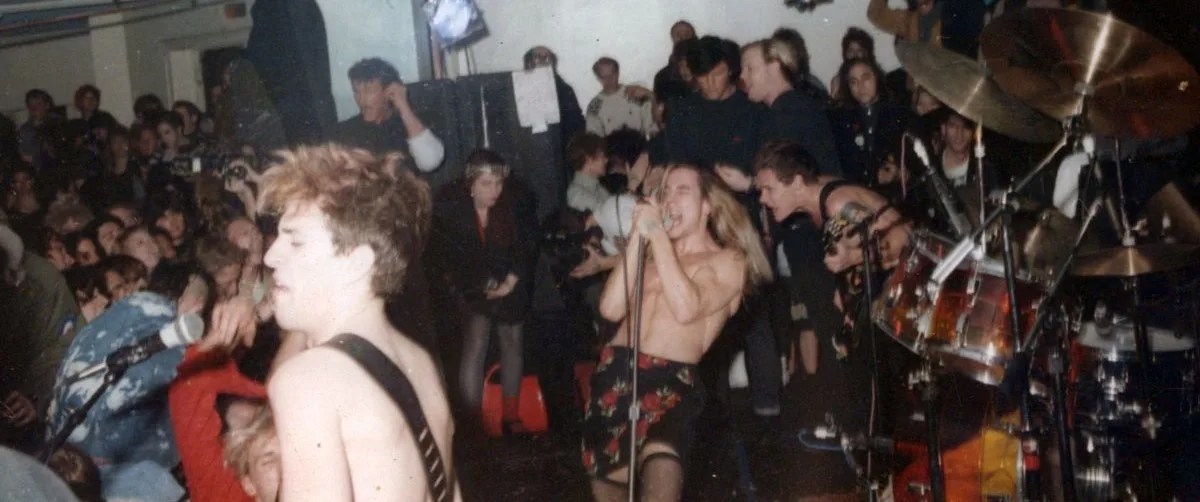
From here, “The Rise of the Red Hot Chili Peppers” becomes a relatively generic music bio-doc. We get the ups and downs of early fame in ‘80s Los Angeles. What’s most remarkable about these sequences isn’t the chronological recounting of events; it’s the footage that reveals the lightning in a bottle caught from basically the instant Kiedis, Flea, Slovak, and Irons hit the stage. Early demos and live recordings pulse with the kind of energy that made RHCP an underground hit in the ‘80s. Of course, as the fame came, so did the increased drug use, some band in-fighting, and questions about the direction of the band. Other players from this era, including Freaky Styley producer George Clinton offer insight into why RHCP stood out.
Of course, it all comes back to Slovak. Kiedis and Flea openly talk about the incredible impact this confident, poetic young man had on their lives. He comes off as one of those guys who didn’t just see the talent in his friends, he knew how to nurture it. His death is still so emotionally raw for Kiedis and Flea that they get emotional talking about him. Flea is particularly eloquent and vulnerable in a way that feels brave.
As a film, Feldman makes a few questionable choices. I will never be fully comfortable with “digitally reconstructed” voiceover, which is what they do to have Slovak read his own journals. And, as harsh as this may be to say, Feldman should have gotten to Slovak’s death earlier, allowing more time for how this group picked up the pieces and continued his legacy to be the focus. John Frusciante, one of the best guitarists of his era, has some fascinating interviews about the challenge of replacing Slovak, first feeling like he had to match Flea’s on-stage energy before realizing he had to channel Slovak’s creativity through his own. That material is what it feels like “The Rise of Red Hot Chili Peppers” breaks free most impressively from the standard rock doc, but it comes later than it should.
Like most music docs, “The Rise of the Red Hot Chili Peppers, Our Brother Hillel” will work best for fans of its subject. While I don’t listen to them much now, it did bring me back to those ‘80s days when it felt like something new was happening when I heard them for the first time. They opened doors for me to groups like Parliament Funkadelic and Bad Brains, pushing a kid inundated with ‘80s pop into new lanes of musical appreciation. Thanks, Hillel.
This review was filed from the world premiere at the SXSW Film Festival. It premieres on Netflix on March 20, 2026.