The New York subway system is a perfect location for a scene, sequence, or whole movie, whether the scene is a meet-cute or a meet-your-maker. Everything about it is cinematic: the filthy platforms; the busking musicians; the long and winding pedestrian tunnels; the clackety-clack of wheels in motion; the screech of brakes; the Jenga-like density of commuters packed into a train car at rush hour.
Film Forum’s “NYC in Transit” series celebrates the New York subway with a series that starts today, July 28, and currently has no end date; perhaps, like the A train, the system’s longest rail line, it will run and run until there’s no track left. The co-sponsor, appropriately, is the New York Transit Museum, which is headquartered in a decommissioned, Depression-era subway stop in downtown Brooklyn. It’s a great way to spend an afternoon if you live in the region, and fun to visit online if you don’t.
Program highlights through September 1 are listed below, with a few thoughts on each.
July 28, 6:45 p.m. “Speedy” and “In the Footsteps of Speedy”
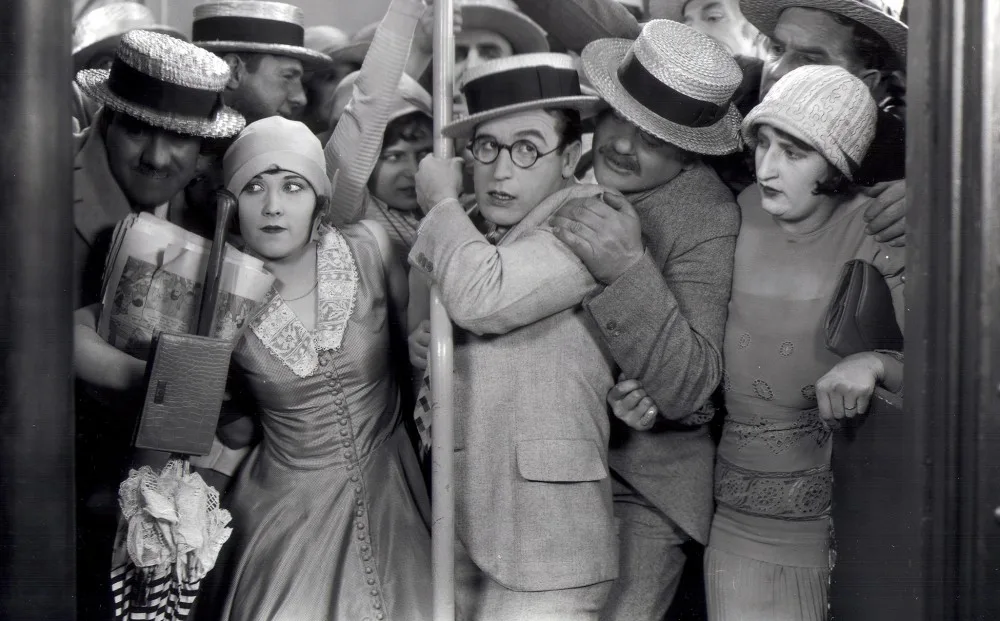
In “Speedy,” silent slapstick master Harold Lloyd (“Safety Last”) co-stars with New York circa 1928. Screened on 35mm film, “Speedy” includes one of the earliest known “packed into a subway car like sardines” sight gags, but there’s actually just one full scene set in the subway proper. But footage of long-gone elevated trains and horse-drawn streetcars and a brief guest appearance by Babe Ruth compensate. Shown with live musical accompaniment by Steve Sterner, and followed by Film Forum programmer Bruce Goldstein’s short documentary “In the Footsteps of Speedy,” which revisits key filming locations, some of which are within walking distance of the theater.
August 4, 6:45 p.m. “The Naked City”
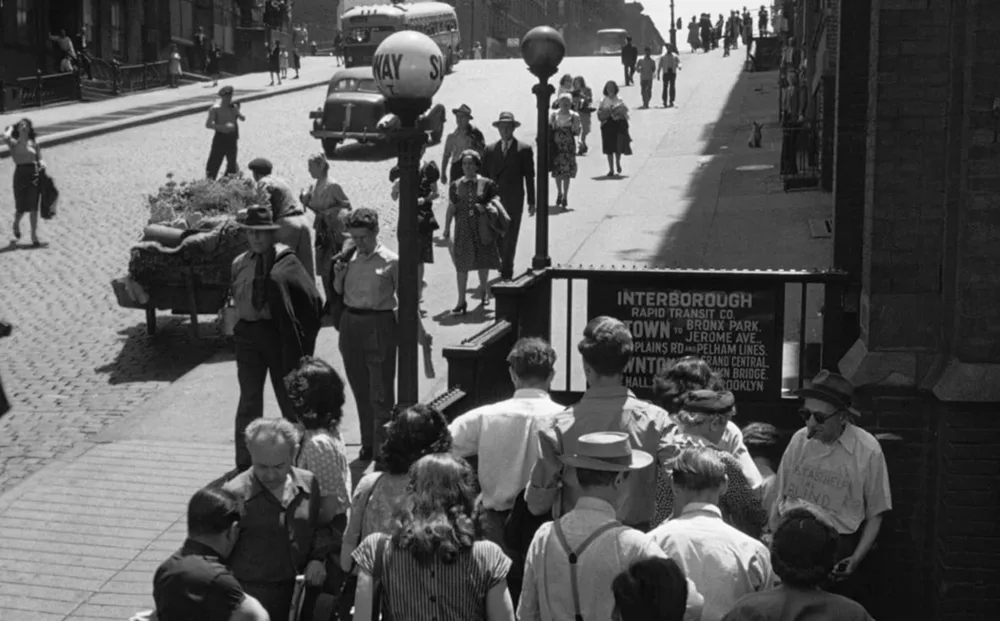
Shot in 107 locations all over the city, including the former city morgue, the Essex Street market, and the Williamsburg Bridge, director Jules Dassin’s murder mystery follows an NYPD police detective and the head of his department as they attempt to identify and capture whoever murdered a model on 83rd St. in Manhattan. Screenwriter and producer Mark Hellinger, a former newspaper reporter, narrates in the manner of a hardboiled hero on an old fashioned radio drama. It’s probably too much information– at times, the meandering, fact-packed voice-over makes “The Naked City” feel more like a fictionalized sociological study than a procedural — but that might not be a dealbreaker for viewers attending this series, which is mainly about being able to study the subway in all of its forms as it became what we see today.
August 11, 7:20 p.m. “The French Connection.”
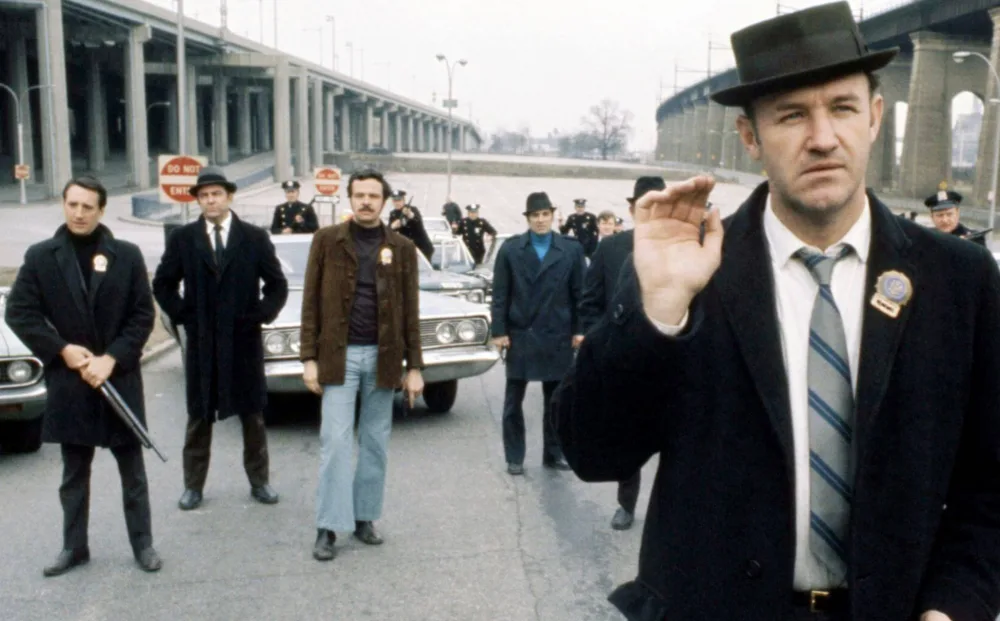
Screened on 35mm film. This movie about an obsessive New York City narcotics detective and his partner turning the city upside-down to arrest a French heroin trafficker is what academics call “a rich text.” As both a box office hit and a multiple Oscar winner, it was a springboard that turned a lot of still-developing talents into very big deals—especially director William Friedkin, who went straight onto even more successful “The Exorcist” after this, a one-two punch of iconic films that kept him employable for the rest of his life; screenwriter Ernest Tidyman, who also adapted 1971’s “Shaft” from his own novel; star Gene Hackman, an A-list supporting player and ascendant leading man who had never been asked to carry major Hollywood feature before; and Roy Scheider, aces as Hackman’s partner, who quickly became a leading man himself, and starred in multiple classic films (including “Jaws,” “All That Jazz,” and Friedkin’s “Sorcerer”).
“The French Connection” is also a political lightning rod for arguments about law enforcement and police brutality that are still raging today. The Supreme Court case Miranda vs. Arizona—the one that spurred the still-mandatory recitation of a suspect’s rights upon arrest—had just been decided five years earlier, sparking backlash among reactionaries and their elected representatives who felt that that the political establishment had gone soft on crime and put criminals’ constitutional rights above the rights of citizens not to be victimized. (This was a major factor in Richard Nixon’s 1968 election as president.) Hackman’s Popeye Doyle doesn’t care about any of that. He’s openly racist, physically and verbally abusive, and violates laws and procedures whenever he deems it necessary, which is often.
But in the end–as well as in life; this story is loosely based on a real drug bust that yielded the largest narcotics seizure in NYPD history–the righteous cop gets his man, though at terrible cost to society. (Also released this year: “Dirty Harry,” wherein the villain is basically the Zodiac killer and the hero is way more handsome and likable than Doyle.) Friedkin, ever the opportunistic showman, leaves us unclear about where he stands on any of this, pouring all of his energy into the confrontations, the centerpiece of which is the now legendary chase scene with Doyle driving like a maniac to overtake Frog One in the elevated train above.
Tuesday, August 18, 8:10pm. “The Taking of Pelham One, Two, Three”
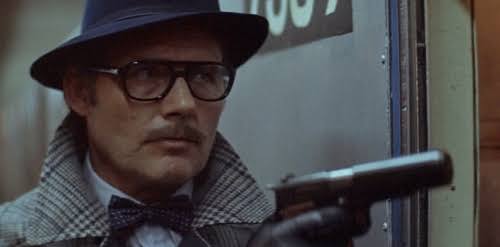
In this 1974 thriller, Walter Matthau’s Transit Authority cop Lt. Zachary Garber does battle—mainly verbal, via radio—with Mr. Blue (Robert Shaw), the coldblooded leader of a gang of four (Hector Elizondo, Martin Balsam, Earl Hindman) all identified by colors, who has seized control of a subway train and is willing to murder hostages if his demands aren’t met. (Yes, Quentin Tarantino took the “colors as aliases” device for “Reservoir Dogs.”)
Few New York films, even some all-time classics, have atmosphere as thick as this one. Viewers are lucky it’s not in Smell-o-Vision. “Pelham” was shot mainly in existing locations (including subway tunnels) during the city’s financial low point, when it was two or three catastrophes away from turning into Detroit. As a result, on top of the thriller theatrics, which are executed with wit, laser-sharp focus, and minimal fuss, it doubles as a snapshot of major city that had been neglected until it began literally as well as figuratively falling apart, with only a handful of dogged public servants (such as Garber) keeping things patched together. Although the movie was decently remade by Tony Scott in the aughts with Denzel Washington as Garber and John Travolta as Mr. Blue, nothing beats the original, especially when you see it with a crowd.
August 25, 6pm “Tracking Shots: Films from the New York City Transit Museum Archives.”
The Transit Museum curates a program of short informational and documentary movies showing the evolution of the subway—and, paradoxically, the consistency of its image outside New York as a death trap full of muggers, sex offenders, gang members, huge rats, and other perils. (One of the films promises that “The New York Subway System is the Safest in the World,” copyright 1922.) If you see one program in the series, make it this, because you can’t see the material anywhere else.
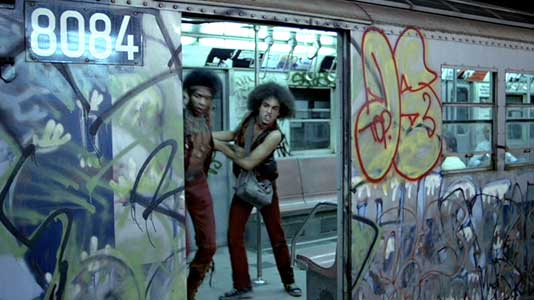
Sept. 1, 9 pm. “The Warriors”
Fifty–plus years after its original theatrical run, director Walter Hill’s blend of Greek tragedy and urban exploitation — about a street gang trying to find its way home after a city-wide meeting of gangs that turns out to be a pretext for an assasination and power-grab—is still electrifying, and arguably feels more dangerous than it did when it first came out. Hill and David Shaber’s script is adapted from Sol Yurick’s novel Anabasis—which itself was inspired by the soldier and dramatist Xenophon’s same-titled, seven book series, dated to 401 B.C. — no surviving movie studio would take a gamble by funding something this elegant yet raw (although it’s constantly being floated as a candidate for a remake).
With each year, its incidental record of an analog-era New York City — filled with pockets of unreachable and unknowable darkness where violent people could do violent things and never be seen, much less caught — becomes more eerily unrelatable. “The Warriors” has some of the most visually thrilling footage of subway trains, entrances, platforms, and tunnels of any film in this series, and some of the most inadvertently quaint: the late-1970s subway has token-operated turnstiles, freestanding and unattended pinball and video games and vending machines; and most astonishingly, working public restrooms. There’s no video surveillance, no credit card swiping, no electronic maps and billboards, but on the plus side, lots more places to sit than today. The action sequences still hit hard, although in this viewer’s opinion, more could’ve been done with The Punks, a roller skating gang that wears rugby shirts and matching blue denim overalls.