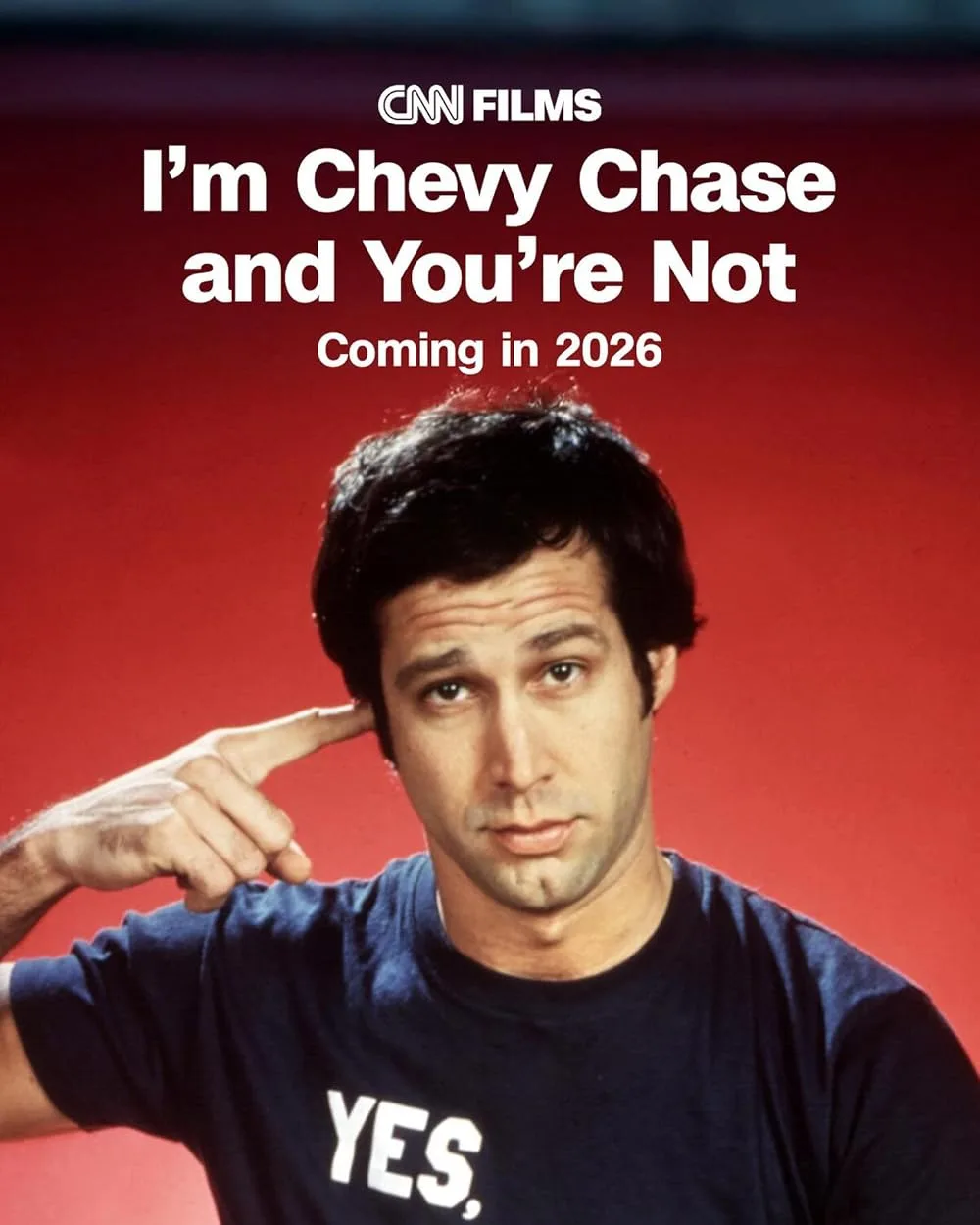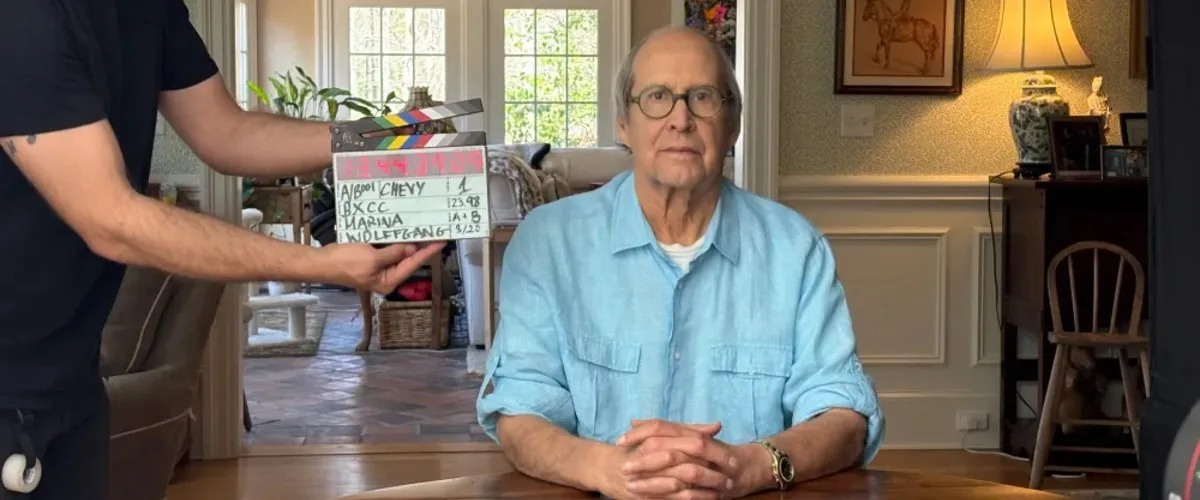
“I don’t know what to say about the people who don’t like me, except ‘f—k ‘em.” — Chevy Chase in “I’m Chevy Chase, and You’re Not.”
We are just four minutes into the engrossing CNN documentary “I’m Chevy Chase and You’re Not” when director Marina Zenovich (who is off-camera) has this exchange with her famously mercurial subject:
MZ: “I’m just trying to figure you out.”
CC: “No shit. It’s not going to be easy for you.”
MZ: “Why is it not going to be easy?”
CC: “You’re not bright enough. How’s that?”
Chase does not say this in jest; there’s no winking or warm chuckle accompanying his scathing remarks. He’s Chevy Chase, and you’re not. He’s a jackass, and you’re not. That’s been the through-line running for Chase’s persona for more than a half-century—from his sensational breakout on “Saturday Night Live” through the iconic film performances in “Caddyshack,” the “National Lampoon’s Vacation” franchise, “Fletch” and “Three Amigos,” his disastrous stint as a talk show host, and the clashes with “SNL” cast member Terry Sweeney, as well as “Community” showrunner Dan Harmon and the entire cast of the show. “I’m Chevy Chase and You’re Not” was made with Chase’s full cooperation, but this is by no means a hagiographic study of the greatly talented but clearly complicated and troubled Chase. Director Zenovich (“Roman Polanski: Wanted and Desired,” “Richard Pryor: Omit the Logic,” “Lance”) delivers a gripping, funny, insightful, and at times melancholic look at a comedy legend who is in his 80s and still can be alternately charming and irascible in the span of a New York minute.
Those closest to Chase, including his wife of more than 40 years, Jayni; his daughters, Cydney, Caley, and Emily; and his brother, Ned Chase, and his half-brother, John Cederquist, speak of Chase with love and affection. Colleagues such as Lorne Michaels, Martin Short, Dan Aykroyd and Chase’s former agent Michael Ovitz paint a more unvarnished portrait, acknowledging his shortcomings as well as his talent. (Ovitz: “Sometimes he was his own worst enemy. He would do things that were emotional or out of insecurity that he shouldn’t have done.”) Nobody involved with “Community” save director Jay Chandrasekhar (who is funny and forthcoming about his experiences with Chase) would speak on the record. Terry Sweeney also declined to participate. (Steve Martin also said no to an interview. Make of that what you will.)
With a needle drop of Steely Dan’s “My Old School” on the soundtrack, “I’m Chevy Chase…” goes back to Bard College in the mid-1960s and checks off virtually every major development in Chase’s life and career, with Zenovich regularly taking us to present day, as the cameras accompany Chase as he putters about in Bedford, NY—playing beautifully on the piano at home, visiting a local florist to pick up a lavish bouquet for Jayni, answering fan mail, playing chess and poker to keep his mind sharp after he experienced memory gaps following a five-week hospital stay and an induced coma related to a heart failure episode. Chase is almost always “on,” but there are moments of authentic vulnerability, as when he admits it was a mistake to leave “Saturday Night Live” after just one year, or when he talks about being invited to the 50th anniversary special for “SNL” but not asked to participate, not even to say, “Live from New York, it’s Saturday Night!” Says Chase: “They should have had me on that stage. It hurt.”
Yet Chase has rarely, if ever, copped to his own bad behavior through the decades. We hear audio of an interview with John Carpenter, who directed Chase in “Memoirs of an Invisible Man,” saying, “I wanted to quit the business after working with him.” Dan Aykroyd says Chase is “simultaneously talented and very dangerous.” At the Season 3 wrap party for “Community,” show creator Harmon led the cast and crew in a chant of “F— you, Chevy!”—with Chase, his wife, and daughter in attendance. Chase was later fired from “Community” amidst allegations of his having a meltdown and using the N-word. Ugly stuff.
Deep into the film, we are given personal background information that explains (but never rationalizes) the possible causes of Chase’s temperament. His stepfather was violent, and his mother had a mental illness and was physically abusive as well. Chase’s troubled upbringing was quite probably at the core of his copious cocaine abuse and his drinking, and one can see how he has resorted to sarcasm, cynicism, and sometimes downright meanness as a shield. Not that it’s excusable, but it didn’t come from nowhere. One can’t help but feel sad, and yes, sometimes infuriated, that Chevy Chase never fully figured out a way to enjoy his great success without making so many others in his circle miserable.
We do hear positive testimonials from some of Chase’s contemporaries, including “SNL” castmate Garrett Morris and “Foul Play” co-star Goldie Hawn. And we’re reminded of Chase’s enduring popularity, as we see him reciting his famous breakdown monologue from “National Lampoon’s Christmas Vacation,” to the delight of a packed house that had just viewed a screening of the enduring holiday classic some 35 years after its release. “I feel fulfilled,” Chase says, “By my standard, I’m still a movie star.”
Warts and all.