Since Brian De Palma made the horror classic “Carrie” in 1976, bestselling author Stephen King has been a Hollywood favorite for adaptations. That film, based on King’s first published novel of the same name from 1974, was followed by Tobe Hooper’s take on “Salem’s Lot” in 1979 for television and Stanley Kubrick’s “The Shining” on the big screen just one year later. By 1980, three legendary directors had adapted King’s work, cementing his place in the horror genre, onscreen as well as on the page.
And the ’80s and ’90s brought greater variety to King’s cinematic footprint, including adaptations of thrillers, science fiction novels, and even straight dramas with no fantastical elements, all of them dominating theaters and the antiquated form of the network TV miniseries. Although his work has permeated popular culture for nearly 50 years, author Stephen King’s influence continues to grow, with more film and TV shows being produced every year. He was everywhere in 2025.
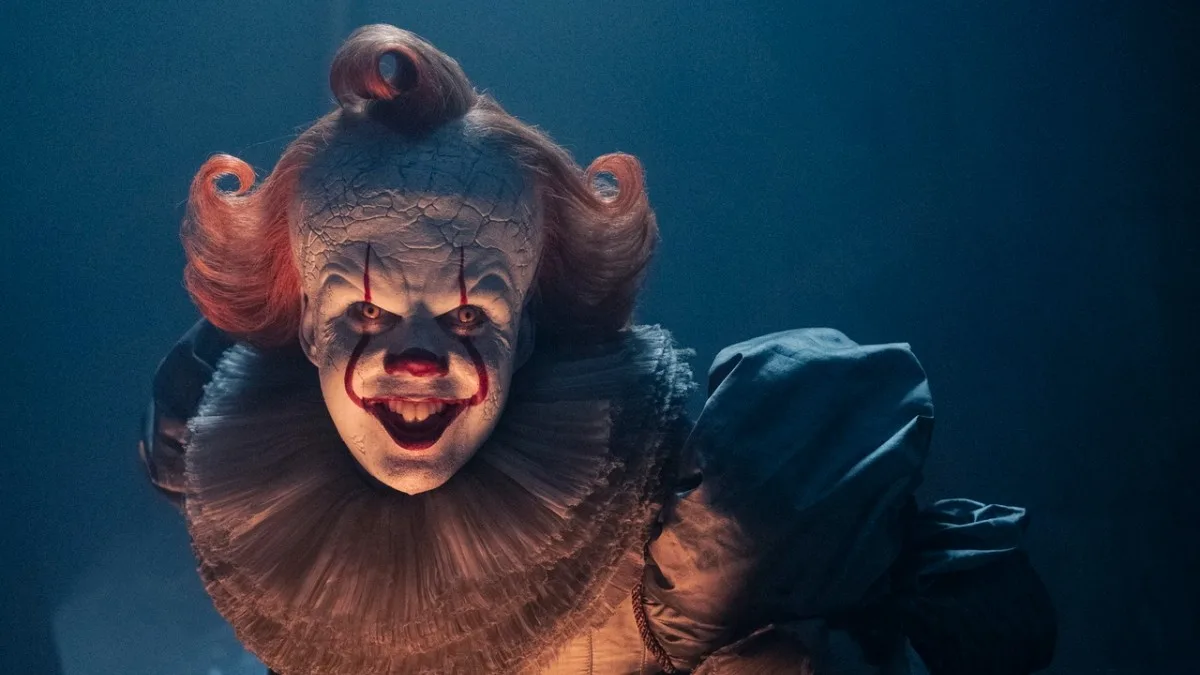
King hit a milestone in 2025: four adaptations of his work were released in theaters all in the same year. Audiences of various sizes watched Mike Flanagan’s “The Life of Chuck,” Osgood Perkins’s “The Monkey,” Francis Lawrence’s “The Long Walk,” and Edgar Wright’s “The Running Man.” Over on the small screen, “The Institute” premiered on MGM+, based on a more recent novel of the same name from 2019. HBO MAX premiered a prequel series to 2017’s “It” and 2019’s “It: Chapter 2” titled “It: Welcome to Derry,” which explores the origins of Pennywise the Dancing Clown. This is the murderous clown’s return to television after 35 years, first appearing in the 1990 “It” miniseries, played by the legendary Tim Curry. Bill Skarsgård reprises his role from the recent films, connecting them to the expanded universe of Derry, Maine.
But why the expansion at all? With a combined runtime of over 5 hours, the “It” films tell the complete story of the novel. What more is there to say? In recent years, the mad dash by studios to cash in on known IP has encouraged a renewed interest not just in adapting but in “expanding the universe” of many King novels and short stories. Though his tendency to connect themes, characters, and settings across different books and stories lends well to this era of IP-driven entertainment, there is something cynical about the need to run everything unique about his work into the ground with repetition. In total, six King adaptations were released this year, but were they any good?

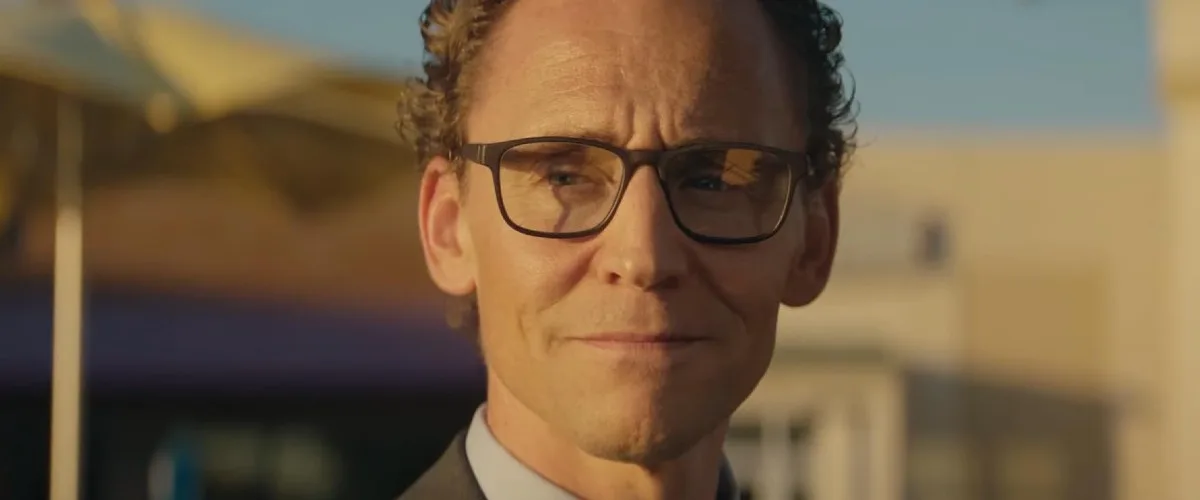
Mike Flanagan’s “The Life of Chuck” won the People’s Choice Award at the Toronto International Film Festival in 2024 and was poised to be a hit. But by the time NEON released the film this spring, any festival hype had unfortunately deflated. “The Life of Chuck” is brimming with the kind of sincerity and hopefulness that people need right now, whether they realize it or not.
Adapted from King’s 2020 short story of the same name, “The Life of Chuck” is a surprisingly upbeat, life-affirming film about a man who lives a short, thematically meaningful life. It’s a life so meaningful, in fact, that Chuck (Tom Hiddleston) has an entire world in his head. And as he’s dying, that world is ending. It’s a film teeming with thematic importance but very little action. And yet, out of all four films, it’s likely the best. Flanagan is clearly a student of King, using his work as a roadmap to create emotionally resonant, big-hearted genre fare. There’s something Capra-esque about his approach here that’s a welcome respite to the cynicism at play in the other King adaptations. Hopefully, there’s a reappraisal of the film in the not-too-distant future. It would be a shame for “The Life of Chuck” to be lost in the streaming void forever. It’s currently on Hulu.
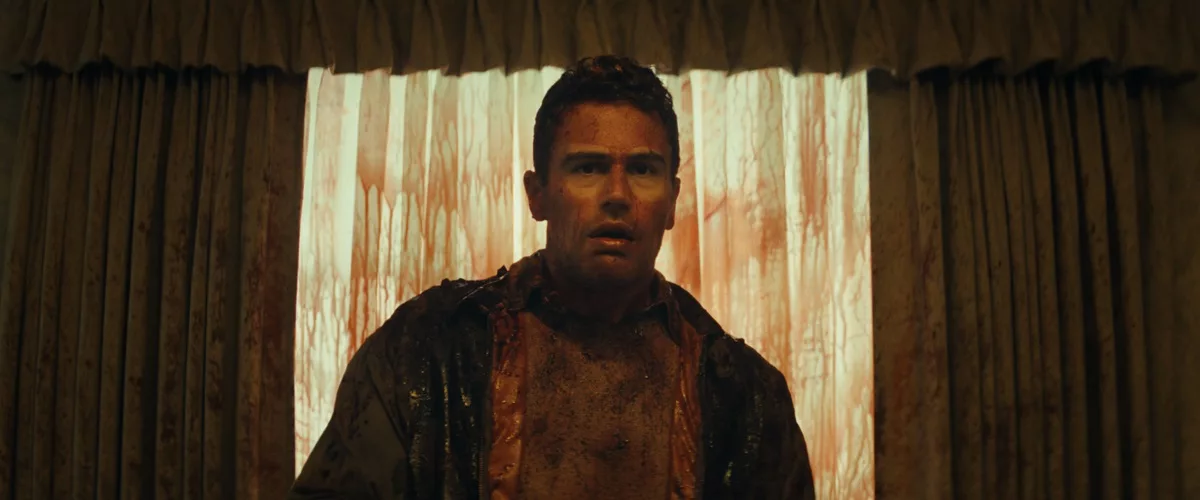
In his follow-up to “Longlegs,” Osgood Perkins adapts King’s 1980 short story “The Monkey” as a dark, gory comedy about generational family trauma. The film first follows Hal and Bill Shelburn (Christian Convery) as they deal with having a distant father (Adam Scott), a sarcastic mother (Tatiana Maslany), and a mysterious, murderous toy monkey who turns their lives upside down. In the present, the brothers (now played by Theo James) are estranged, with Hal becoming a hapless dad living apart from his teenage son Petey (Colin O’Brien). When their aunt dies a bizarre and brutal death, it becomes clear that the murderous toy monkey from their childhood has returned.
The most playful and traditional of the King adaptations this year, “The Monkey” traffics in the same tropes as those on display in the ‘Stephen King’s Greatest Hits’ album that is “Stranger Things.” Misfit kids, bullies, violence, family drama, and a morbid yet juvenile sense of humor permeate the film. With the smallest budget of any King adaptation this year, “The Monkey” is the most financially successful out of the four. But in the long run, it will probably be the film most people forget.
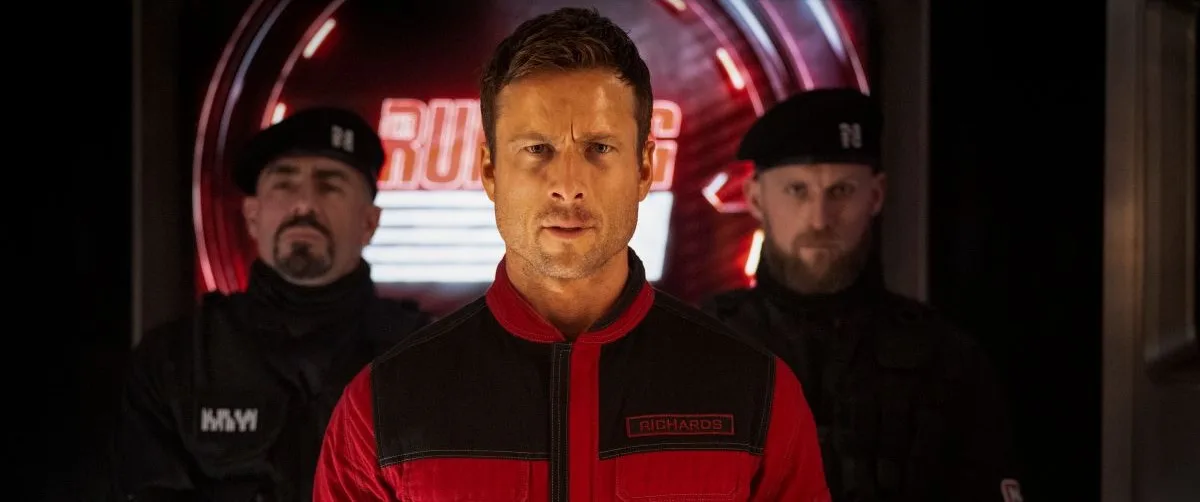
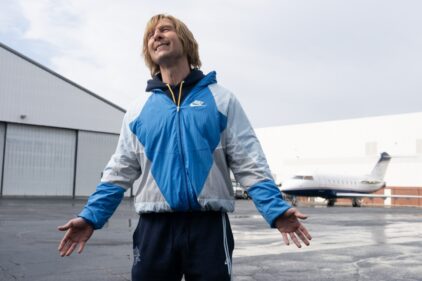
“The Running Man” is by far the glossiest of this year’s King adaptations, boasting a big movie star performance from Glen Powell as a man bubbling with rage over the state of the world. Ben (Powell) is a struggling father trying to make enough to get his wife (Jayme Lawson) and infant daughter out of poverty. Their daughter is sick, and they’re out of options. Fired from his job after advocating for his fellow workers, Ben is trapped in a world that runs on exploitation and punishes integrity. Of all the dystopias we’ve seen on the big screen, “The Running Man” is closest to our own, with a populace that would rather villainize the poor than turn their anger towards wealth inequality.
“The Running Man” is at its best when highlighting the ridiculousness of capitalist society. Unlike the 1987 film, director Edgar Wright stays close to the book with a more faithful depiction of the game show itself, mirroring modern reality television and its need to create an illusion of reality. This King-approved adaptation puts the novel’s desperate world through a funhouse mirror, playing its desperation for comedy. With the rage of the text at odds with Wright’s slick filmmaking style, “The Running Man” suffers from tonal confusion, weakening its social critique.
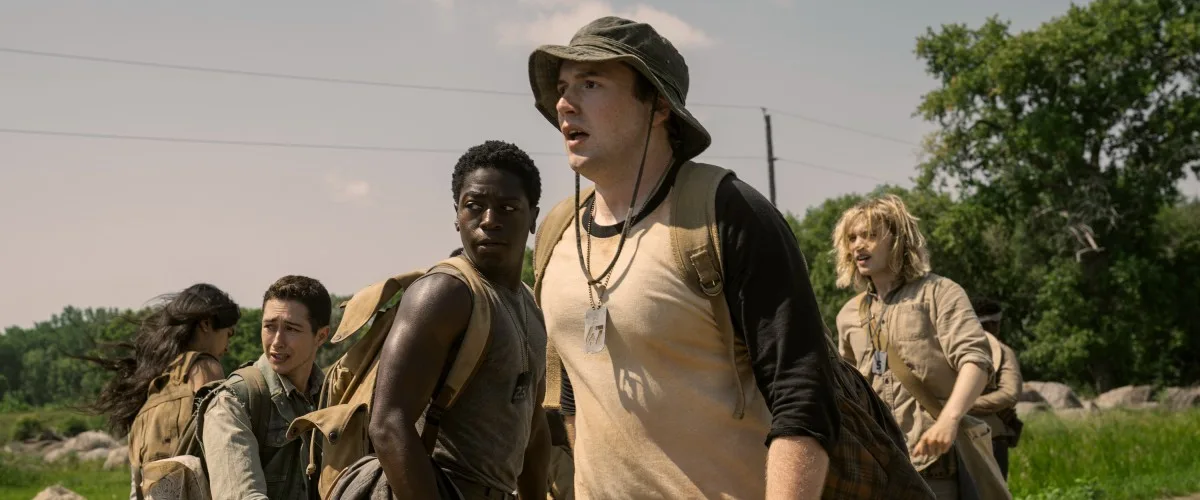
Another Bachman Book adaptation, “The Long Walk,” also falls short. Directed by Francis Lawrence, one of the leading filmmakers behind the “The Hunger Games” series, “The Long Walk” is a brutal narrative in which failure is the only option. The film, based on the first novel Stephen King ever wrote, is a dystopian story about doomed friendship and self-sacrifice in a punishing, militaristic hellscape. The film follows Ray (Cooper Hoffman) as he competes with 49 other teenage boys in a punishing competition to see who is the last one standing. Contestants have to keep walking and maintain a speed of 3 miles per hour with no stopping, not even to use the bathroom or tie their shoes. The winner is awarded money, and the totalitarian government grants one wish. Despite the stakes, Ray can’t help but make friends with the other boys, especially Pete (David Jonsson). With no supernatural means of intervention, we are forced to watch dozens of teenage boys die, shot by soldiers under the command of the Major (Mark Hamill).
Though this was King’s first long-form written work, the novel wasn’t released to the public until 1979, five years after he launched his career with Carrie. Published under his now-famous pseudonym, Richard Bachman, The Long Walk was one of the four original Bachman Books, along with Rage, Roadwork, and The Running Man. The books are angry, focusing on how modern society has left men and boys in a constant struggle, emasculated and unable to be happy or provide for their families. It’s as if King channeled all his distinctly male insecurities into those four books.
“The Long Walk” is a film about a young man who is doomed to fail because the system is rigged against him. But despite the narrative’s obvious political relevance in Trump’s America, the film itself is too simplistic to have any lasting impact. The shadow of “The Hunger Games” is simply too large to ignore.
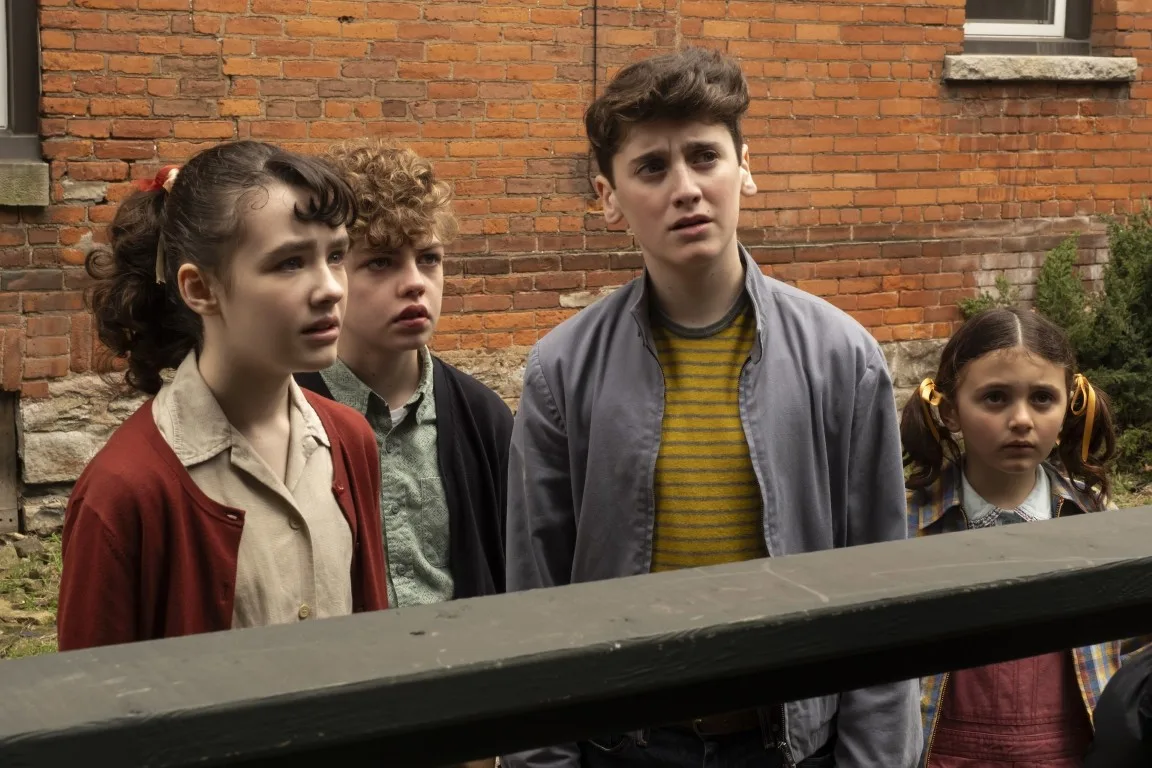
While there were two King shows that premiered this year, only one caught on. “Welcome to Derry” has been a hit for HBO, all but guaranteeing another widely-watched season. The show premiered only six years after the ending of another Stephen King Extended Universe series, Hulu’s “Castle Rock.” The budget is bigger this time around, with the series’ look working hard to live up to the visual standards of the films. With heavy CGI and saturated colors, the series feels like something otherworldly, as if the town of Derry were on another planet entirely. The season takes place in 1962, with Civil Rights and the Cold War both changing the very fabric of society. A Black military family moves to Derry, and Pennywise returns, lurking in the shadows. As children start disappearing and odd happenings overtake the town, it’s once again up to a group of misfit kids to find the monster and set things right.
Taking its cues from “Stranger Things,” the show’s primary purpose seems to be inflicting the most trauma and pain onto its young protagonists with adults who mostly don’t understand them. The few that do are lifelines in an increasingly strange and violent world. As the season progresses, the brutality of Pennywise, coupled with the violence and prejudice of the adults in Derry, becomes cartoonish. It’s as if the creators revel in the horror while giving very little thought to the fates and emotions of the characters. For the show to continue, we must become accustomed to witnessing cycles of pain, knowing that Pennywise will always come back. But after a book, a miniseries, two films, and now a series, why would we want him to? What stories are left to be told in this world?
Then again, the King Cinematic Universe shows no sign of fading, at least in the minds of Hollywood TV and film producers. Time will tell if viewers feel differently.