
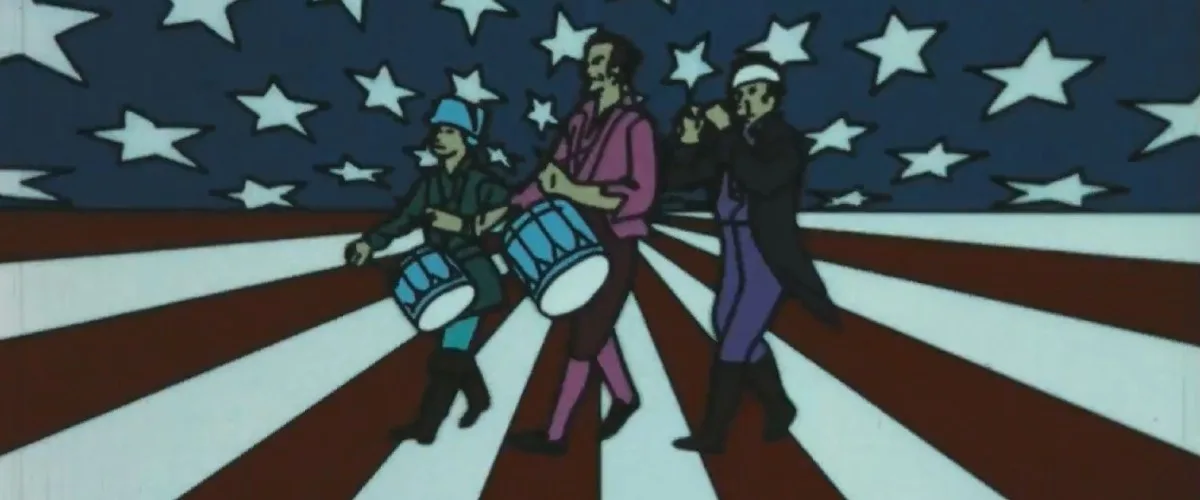
There has been a concerted effort over the years to venerate the 1970s as the last truly great period of American filmmaking, a time in which the younger artists who made up New Hollywood churned out one groundbreaking film after another, shattering the norms of conventional commercial cinema. This narrative has been presented in so many documentaries and books that anyone offering another take on the subject had better find a new angle or approach if they want any hope of standing out from the crowd.
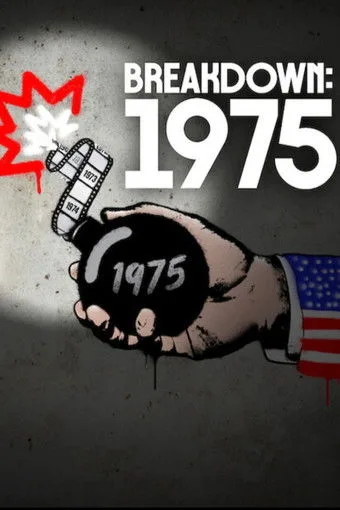
Unfortunately, the new Netflix documentary “Breakdown: 1975” never quite manages to do that, or much of anything else, really. It ends up being little more than a rambling, undisciplined clip show that misfires as both history and entertainment.
On paper, it seems promising: Director Morgan Neville establishes the fundamental conceit that the year 1975–more accurately, the period from the end of the Watergate scandal to the bicentennial celebration of 1976–was a tumultuous period in which America essentially underwent a nervous breakdown. The films made during this era, everything from the venerated classics to blaxploitation epics, served as reflections of those uneasy times. To serve as the talking heads providing commentary throughout, Neville has recruited a list of top talent that includes Martin Scorsese, Oliver Stone, Albert Brooks, Joan Tewksbury, Ellen Burstyn, Patton Oswalt, and (despite not even being a zygote during the period under discussion) Seth Rogen. Neville even has no less a figure than Jodie Foster to serve as narrator. With that combination of elements, it seems as if this film could not possibly miss, right?
As Neville establishes the film’s basic premise, it becomes interesting. But as it goes on, it becomes painfully apparent that it doesn’t really have much of anything to back it up. Yes, this period featured both world turmoil and great filmmaking, but the film never really establishes a connection between the two beyond the most apparent and facile observations. It mentions that the movies of this era were now willing to show audiences that lurking just beneath the well-appointed facade of the American Dream was a darkness that could no longer be hidden. It’s a thesis that will probably not blow the minds of too many viewers at this point.
Neville tries to distract by flitting from one topic to another, bringing up a particular aspect of the times and then introducing a couple of films that he positions as their cinematic reflections. The connections that he establishes range from the clangingly obvious (disaster films like “The Towering Inferno” exploring the chaos inspired by the bankruptcy of New York City and the energy crisis) to the dubious (like the self-actualization/improvement movement via Brian De Palma’s adaptation of “Carrie” or symbolizing the fall of Saigon through the encounter with the Black Knight in “Monty Python and the Holy Grail”).
Towards the end, Neville begins to stray off his tenuous topic by suggesting that this period of cinematic brilliance was brought to an immediate and tragic end by the emergence of Ronald Reagan, whom he seems to personally blame for, among other things, the ascendancy of feel-good blockbusters like “Rocky” and “Star Wars” and the money-grubbing studios seizing power back from the artistes.
The film is so determined to cram as many of these observations into its 92-minute runtime that none of them stick—it might have been more effective if this project had been reconceived as a long-form series. Then again, maybe not, because while it fumbles the handling of such a provocative premise, the clumsy transitions, segues, and mashups all irritate. They are ostensibly supposed to provide ironic commentary, but only serve to make it all feel like a slick version of a YouTube supercut. When the film gets to discussing “Taxi Driver,” for example, it uses the Talking Heads classic “Psycho Killer” as the background music (get it) and then presents a montage in which Travis Bickle appears to be delivering his famous “You talkin’ to me?” monologue to no less a figure than Dirty Harry. Later, it seems to be watching Howard Beale on television as he tells his viewers to go to their windows.
A film that tried to tell the story of the Seventies entirely through film clips edited to seemingly interact with each other, as Joe Dante did with the cultural detritus of the Fifties in “The Movie Orgy,” might have led to something interesting. (We see linked clips of Kim Richards getting an ice cream cone twice, innocuously in Disney’s “Escape to Witch Mountain” and tragically in John Carpenter’s “Assault on Precinct 13”). Still, as presented here, such bits are more disorienting than anything else.
“Breakdown: 1975” is not a complete washout, I suppose. It is always a pleasure hearing from the likes of Scorsese, Brooks, and Burstyn, even if their anecdotes aren’t particularly revelatory. There are a couple of amusing moments when Neville tosses in something unexpected, such as clips from the likes of “Jonathan Livingston Seagull” and “At Long Last Love,” or an interview with Charles Bronson discussing the brutality he observed in a Road Runner cartoon.
However, there are so many better analyses of American cinema in the 1970s out there that this one seems superfluous by comparison. I highly recommend Ted Demme and Richard LaGravenese’s expansive documentary “A Decade Under the Influence” and Charles Taylor’s fascinating book “Opening Wednesday At A Theater or Drive-in Near You: The Shadow Cinema of the American ‘70s.” Hell, you’ll have a better time—and perhaps learn something along the way—by watching any of the individual films that it covers. Okay, maybe not “Jonathan Livingston Seagull,” but you get the point.