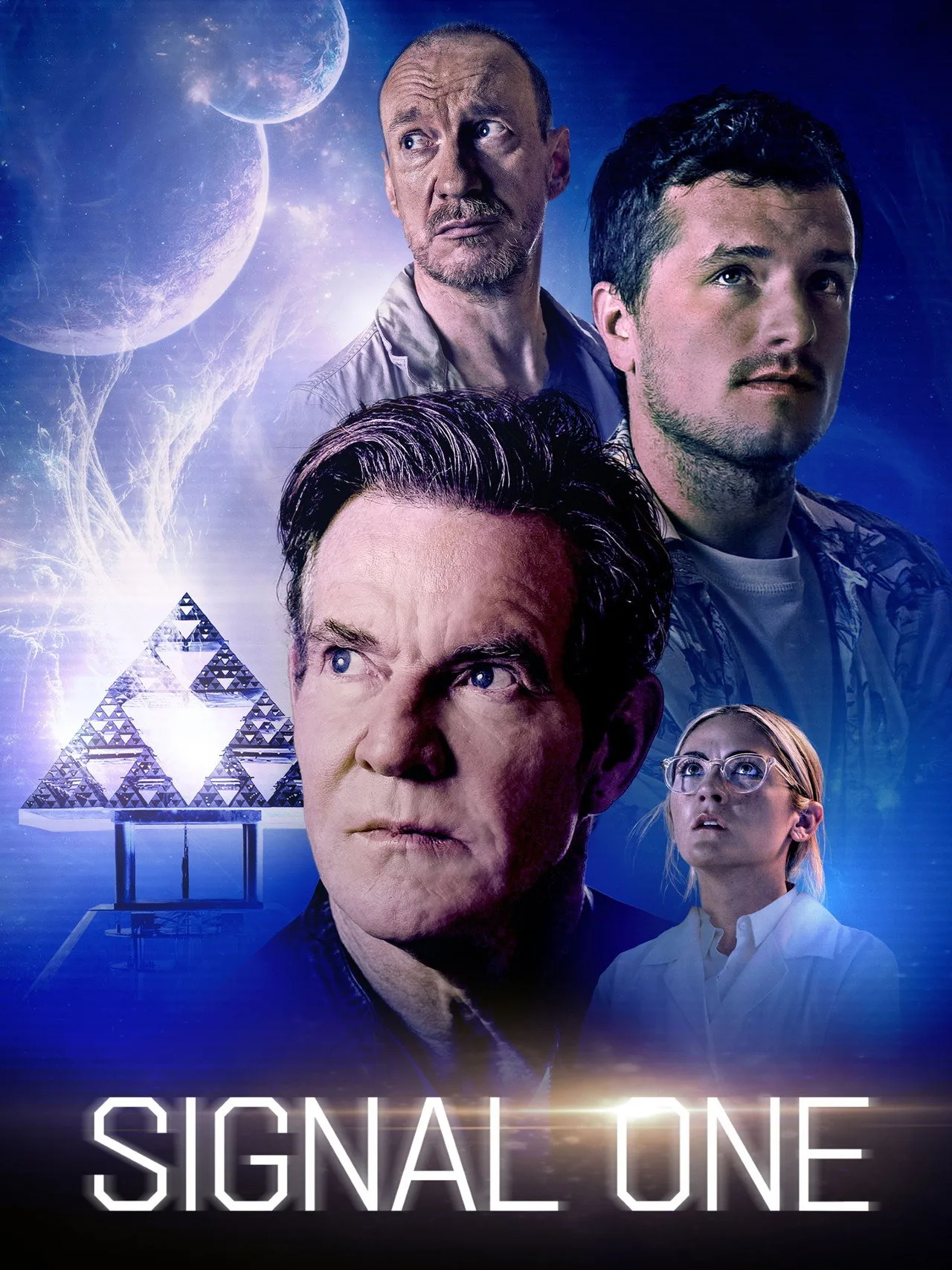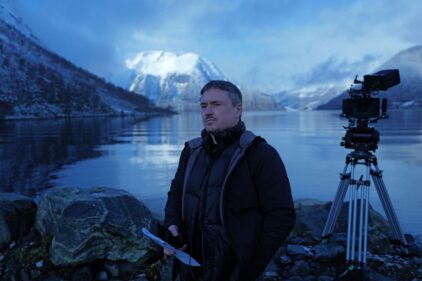

Writer-director Jonathan Sobol’s “Signal One” follows a small group of elite scientists at an island outpost in the Caribbean, working on tech that could let humans talk to aliens. It’s an idea-driven science fiction movie that respects the audience’s intelligence. Science itself is at the core of the picture, along with the ethical issues surrounding the trailblazing heroes’ use of new technology.
The central question is: if we invented a way to contact intelligent life elsewhere in the cosmos, should we use it? The reflexive answer is “Yes, of course!” But who gets to decide when it’s time to cold-call another species? And what if the beings on the other end are more “War of the Worlds” than “E.T.”?
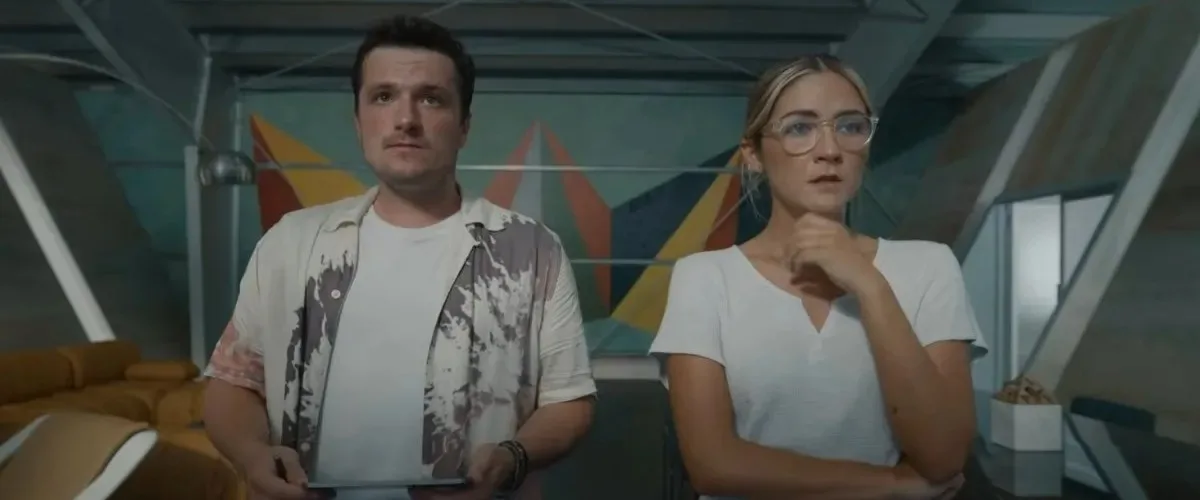
Following in the footsteps of “Contact” and “Arrival,” the film’s protagonist is a young woman, Annika (Isabelle Fuhrman), a scientist whose life has been shaped by childhood trauma. (In this movie, it’s the death of a younger sister.) She has been an astronomer and space exploration buff since childhood. While still in college, she became famous in scientific circles by devising a method to photograph dark matter. It says a lot that “Signal One” assumes that if we’re watching it, we know what dark matter is (NASA sums it up as “the invisible glue that holds the universe together”) and can keep up as the movie spins out increasingly complex scenarios.
The project has been going on for years by the time Annika joins the team. She was hired by the project’s sole funder, a billionaire named Sam Houston (Dennis Quaid). Sam has an easygoing, folksy demeanor, but is obsessed with leaving a permanent mark on history by proving that intelligent life exists elsewhere in the universe.
“You can forget about your little green men, fishing for radio waves and hunting for a needle in a haystack, because I’m here to tell you that the whole haystack is made out of needles,” Sam tells Annika, flashing that patented megawatt smile. “We’re not alone in the dark. In fact, the darkness has been our company all along.” Annika is joined by another wunderkind, the already world famous Charlie Kaminsky (Josh Hutcherson). He introduces himself as an electronics engineer, which nearly makes Annika laugh out loud. “Charlie Kaminsky saying he’s an electronics engineer is like Stephen Hawking saying he teaches math,” she says.
Sam’s project, codenamed Littlemouth, is housed in a structure that resembles a gigantic but squashed-looking air traffic control tower. Its boss is a veteran scientist named Perry (David Thewlis) who came here partly to distract himself from a tragedy of his own. Perry is a rude, mean, depressed, angry, nihilistic man. His incessant monologues would become tiresome if they weren’t written by Sobol with such musicality, and if they weren’t delivered by one of the great hyper-eloquent screen actors of our time in Thewlis, whose tirades evoke his rotten-hearted philosopher David in Mike Leigh’s monologue-driven 1993 drama “Naked.”
“Signal One” is modestly scaled and independently made, and seemingly has little in the way of a promotional budget, but it’s the kind of work that should have very long legs based solely on its merits. Expect the “memorable quotes” section of its Internet Movie Database page to fill up fast. This is a talky movie, but it’s about people who work out their theories and philosophies in spoken language, which means talk is integral to the movie’s goals, and telling and showing are equally important. And Sobol’s script is a treat for the ear, especially when Perry is in the spotlight.
His condemnations of humankind are so withering that they could be outtakes from Satan’s hateful arias in Paradise Lost. Perry calls the human species “petty, cruel, prone to self-destruction, hellbent on rage-fucking our habitat out of existence” and “a sterile intelligence, on a path with no interruption, no purpose except to spread.” He also takes a rhetorical sledgehammer to the naysayers’ position on extraterrestrial contact: that if intelligent life existed somewhere in the blackness of space, our decades of searching, primarily with radio equipment, would’ve yielded proof. “It’s like taking a little bowl of water out of the ocean and peering into it and concluding that whales don’t exist,” he says.
A longing to connect with a power beyond our understanding drives most of “Signal One,” and the tech is characterized in a way that evokes the title object in “Raiders of the Lost Ark” as a transmitter for talking to God. Sobol’s script articulates the current global dissatisfaction with existing, easily corruptible forms of government, as well as the dangers of letting institutions rot because we’ve bought into the notion that there is such a thing as a benevolent billionaire who can ride to the rescue with a checkbook. It’s a roundabout portrait of a species that has screwed up its chance at survival and is praying for a miracle.
But the movie ultimately lacks the cumulative power one might hope for. It seems to take longer to reach the ending than it should, even though the movie runs a mere 87 minutes. And although the actors are game, some of the script’s humanizing touches fall flat, so whenever one of the major characters has an epiphany or hits rock bottom, the moment doesn’t land as hard as it needs to.
Everything about “Signal One” seems to point towards a sci-fi film of operatic emotions, particularly with Perry in the mix, fuming and babbling like a David Cronenberg protagonist numbing his misery by musing about it. But Sobol plays it way cooler than that. He seems to be looking at this material with scientific detachment. That’s not an invalid approach—it’s his movie!—but it does limit the work’s impact. That major developments happen offscreen but are discussed as if we witnessed them further dulls the film’s potential to dazzle us.
Still, this movie is a labor of love with a lot to teach anyone who isn’t already fluent in communications science, quantum physics and the search for extraterrestrial life. One of the refrains in cinema discourse is that it’s unfair to expect a genre film to be wise, deep, provocative or otherwise demanding, because sometimes you just want to “turn your brain off.” You know: escapism. “Signal One” is a fantasy, but it’s more confrontational than escapist. It doesn’t want us to turn our brains off. It wants us to think.