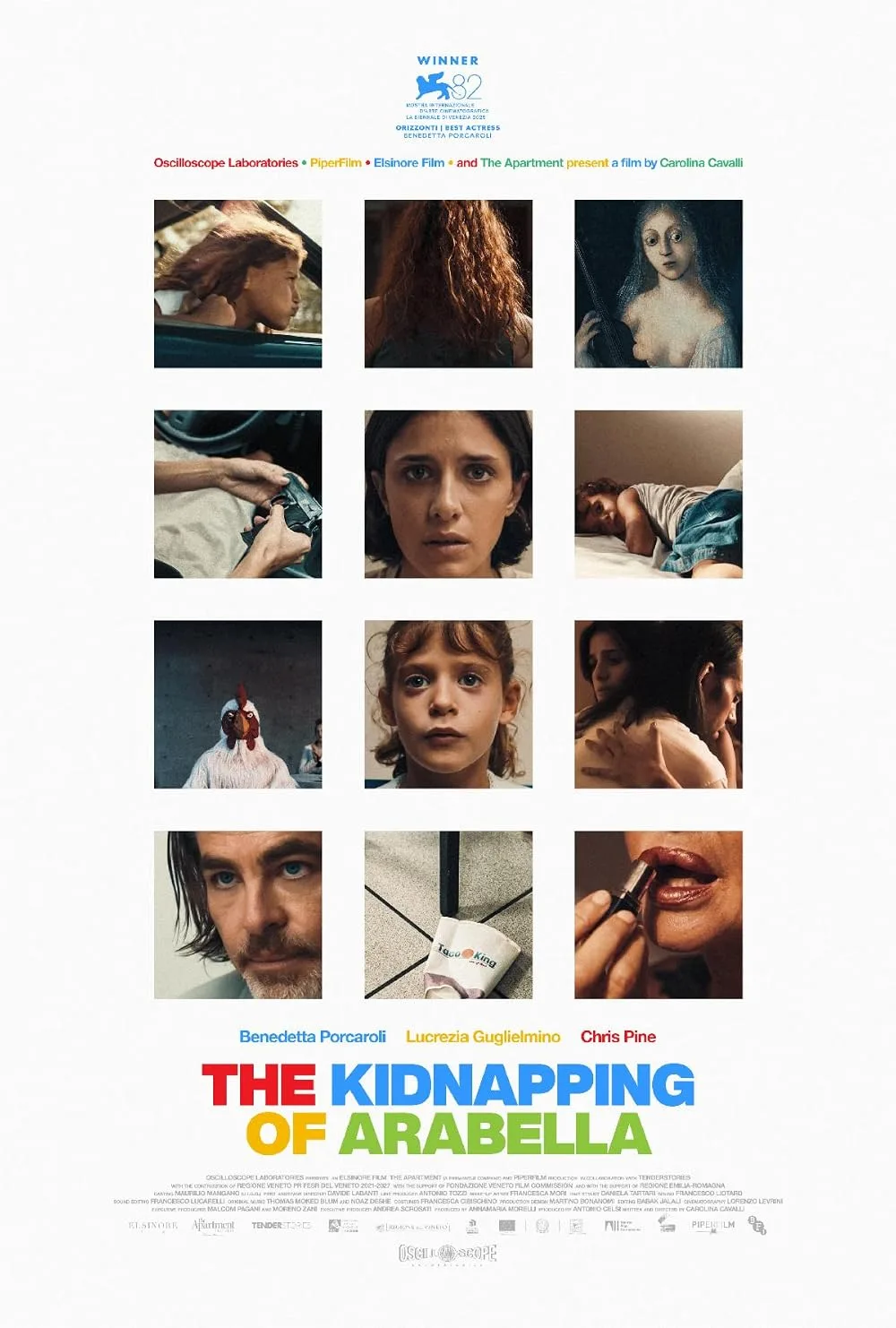
The liveliest gag of Carolina Cavalli’s sweet-natured yet increasingly serious “The Kidnapping of Arabella” arrives at its beginning. Unhappy that she has to endure a dull night amongst adults, the young, precocious Arabella (a wonderful Lucrezia Guglielmino) throws a mighty tantrum in order to not attend the celebration thrown in honor of her famous author dad, Orest D. After all, what kid wants to sit nicely at a table for several hours and get served boring food when they can go to Taco King, Arabella’s favorite restaurant? Defeated when her cries go nowhere, young Arabella joins her father begrudgingly. But that doesn’t stop her from hackling the event with frequent outbursts, hilariously yelling things like “Jonathan Franzen” and “Taco King” at random. The former is the author the cheeky kid knows her dad is most jealous of, a running joke that’s successful enough throughout the film to give us a few decent chuckles. The latter, well, where Arabella would rather be.
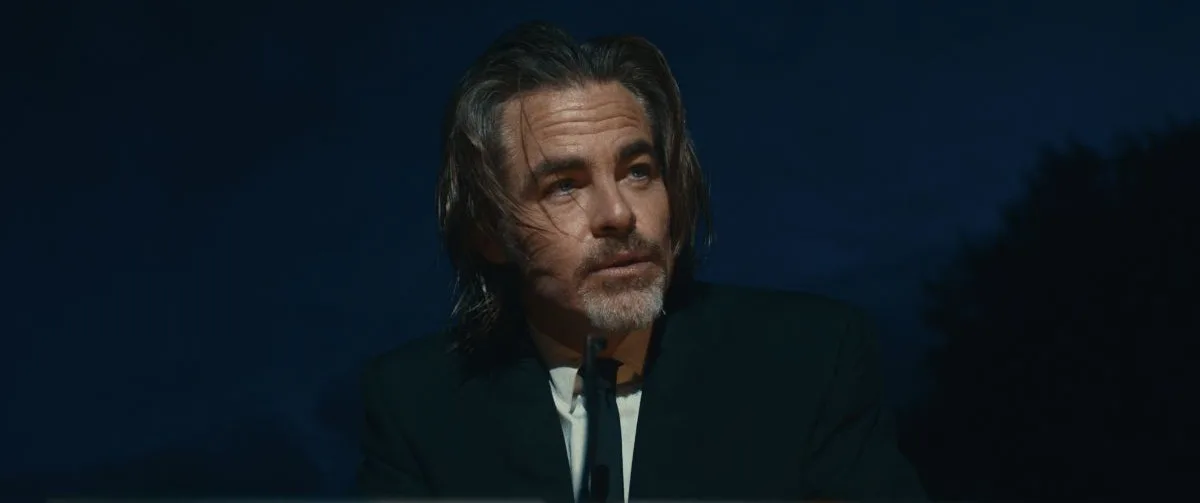
As clearly pronounced in the title, Taco King isn’t quite where Arabella ends up with her wide blue eyes and honey-colored curls. In the role of her dad, somewhat surprisingly, is a deeply pensive Chris Pine, sporting his evidently fluent Italian in this deeply Italian picture of whimsical countryside and colorful side characters, all of whom lend the picture a musicality as alluring as the beautiful language they speak. Pine’s self-absorbed Orest does what most responsible parents wouldn’t do: pay a driver to take Arabella to Taco King, so she wouldn’t sabotage his big night anymore. At the joint, the driver unsurprisingly proves to be less than reliable. He leaves Arabella alone, with the little girl soon grabbing the attention of the twentysomething Holly, wonderfully portrayed by Benedetta Porcaroli from Cavalli’s similarly themed former feature, “Amanda.”
Being the observant kid that she is, Arabella quickly realizes she can manipulate Holly into believing she is Holly’s younger self and that she needs to be saved, pronto. It’s worth mentioning here that Holly deals with a form of mental illness, the details of which the film doesn’t address with the sensitivity and gentle attention that it deserves. This, in the end, somewhat trivializes Holly’s condition when she believes Arabella’s tall tale. Yes, she ends up kidnapping the little girl, but the film tries to emphasize in more ways than one that this isn’t your typical kidnapping, when it kind of is.
Still, the movie that follows is engaging and thankfully, not exceedingly syrupy or fanciful—in that, Cavalli does a nice job of balancing the story’s mischievous elements with life’s everyday qualities. It’s almost as if the filmmaker decided to make her own “Paper Moon” by way of a gritty and down-to-earth Jim Jarmusch movie of sorts. In fact, this critic wouldn’t be surprised if Peter Bogdanovich’s 1973 classic were a required watch for the cast to properly honor its machinations. Whenever Arabella and Holly are thrown into predicaments or quarrel amongst themselves, their dynamic resembles that of Tatum O’Neal and Papa Ryan, especially when Arabella insists on getting back the gun that Holly has found in an earlier scene. (Anyone who recalls the running “Paper Moon” gag of the $200 owed to Tatum’s character Addie Loggins might make the same connection.)
Elsewhere, “The Kidnapping of Arabella” is its own thing entirely, splitting the difference between a familial story and a personal reckoning narrative. Throughout, Cavalli pokes at a variety of genres, from a dark comedy to a mild-mannered thriller. Her ambitions don’t always add up to a whole, and you do feel distracted whenever the point of view shifts to other players like a dispassionate investigator (Marco Banadei), or even Orest, a character that deserves something more significant to add to the proceedings. But we find our footing in following the main duo when Cavalli lands on them again. Throughout the two’s escapades, a wedding they have crashed to make a few bucks, one peculiar instance where they have to share a handsomely tiled shelter with a deaf goat, and an eerie border crossing with Arabella hiding in the trunk make the strongest impression with comical touches.
Also complementing the narrative and sharp production design details is the Veneto region where the film is mostly shot, a locale that accentuates both the gloomy and witty shades of Cavalli’s tale. Her resolution is predictable and isn’t entirely satisfying, but something about the sisterly chemistry between Guglielmino and Porcaroli still saves this yarn of accidental abduction gone south from ruin.