
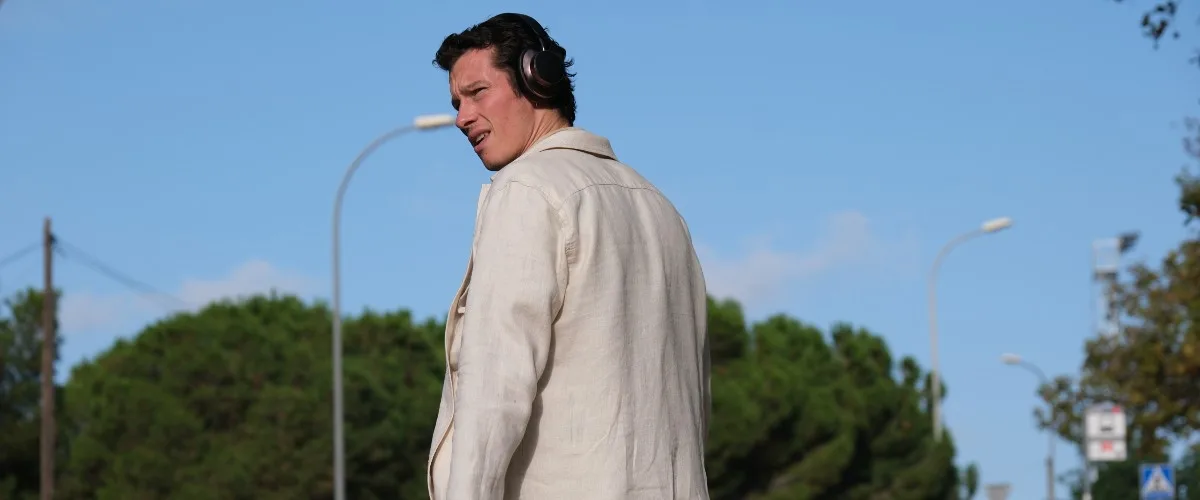
“Rosebush Pruning” is a great example of a fantastic ensemble stuck in a doomed project. It’s filled with so many people who deserved better, a crew of talented performers doing absolutely everything they can to add depth to this kiddie pool of a movie. The lesson to be taken from “Rosebush Pruning” is that what Yorgos Lanthimos does to shape this kind of absurd, exaggerated skewering of the human condition is even more difficult than you thought. A few notable acting choices and a claustrophobic visual language keep “Rosebush” from total disaster. Still, it’s one of those projects that might have actually made a bigger impression if it were even worse—as is, it’s just disposable.
Satirical screenwriter Efthimis Filippou has delivered some mesmerizing work with Lanthimos, who directed his scripts for “Dogtooth,” “Alps,” “The Lobster,” “The Killing of a Sacred Deer,” and “Kinds of Kindness.” When one thinks of Lanthimos as an auteur, much of that unforgettable style owes a great debt to the Oscar-nominated Filippou, and that’s probably what drew Callum Turner, Jamie Bell, Elle Fanning, Tracy Letts, Riley Keough, Lukas Gage, and Pamela Anderson to this study of the thorns in the stems of a rich European family.
Narrator Ed (Turner) tells us the title refers to a game he likes to play in conversation, in which he makes up colloquialisms or phrases that don’t actually mean anything, which also doubles as commentary on the story about to unfold. This is one of those movies that aims to highlight the vapid perversity of affluence by showing how tragedy can emerge when rich people fill their lives with endless nothing. In a sense, it’s also reminiscent of “Saltburn,” another provocative tale of how an insular family collapses when an outsider is introduced into its tenuous dynamic.
The outsider here is Martha (Fanning), a lovely girl who starts dating Ed’s brother Jack (Bell), the family’s eldest and most beloved son. How beloved? In ways that violate the laws of God and man. Yes, the big revelation of “Rosebush Pruning,” which could only be considered a spoiler if it wasn’t telegraphed from nearly the first family dinner in this film, is that everyone wants Jack in the biblical sense, including his brother Robert (Gage), sister Anna (Keough), and unnamed father (Letts). Since their matriarch (Anderson) was torn apart by wild wolves—a naked statue in her honor rests in the family courtyard, and the family feeds raw meat to the animals as a sort of tribute—these people have lost their tenuous grip on sanity and sexuality. And the insertion of Martha into this incestuous dynamic sends everyone spiraling in a manner that leads to multiple deaths.
Director Karim Aïnouz and Filippou play with classic themes of satire of the wealthy, highlighting their selfishness, apathy, and vapidity. Everything means the world; everything means nothing. In the film’s prologue, Ed almost instantly falls in love with someone he meets on a Spanish beach named George, adding to the impression that these people desperately need someone normal outside their family, yet can’t leave it behind. Family is poison; family is everything. Aïnouz and Filippou take the classic family drama and amp up both the incest and the opulence, but have absolutely nothing to say about any of it beyond provocation.
The truth is that “Rosebush Pruning” becomes exhausting early. Aïnouz never figures out how to modulate Filippou’s humor in a manner that makes it anything less than pretentious. All that’s left to watch is choices made by the actors, whether it’s the way Fanning deftly plays a dinner in which the family breaks down her appearance or how Anderson brings unexpected light into a dark reality. No one in “Rosebush Pruning” is bad; they’re just lost, gorgeously pushing their way through this extravagantly shot film, desperately trying to find something beautiful to hold onto.