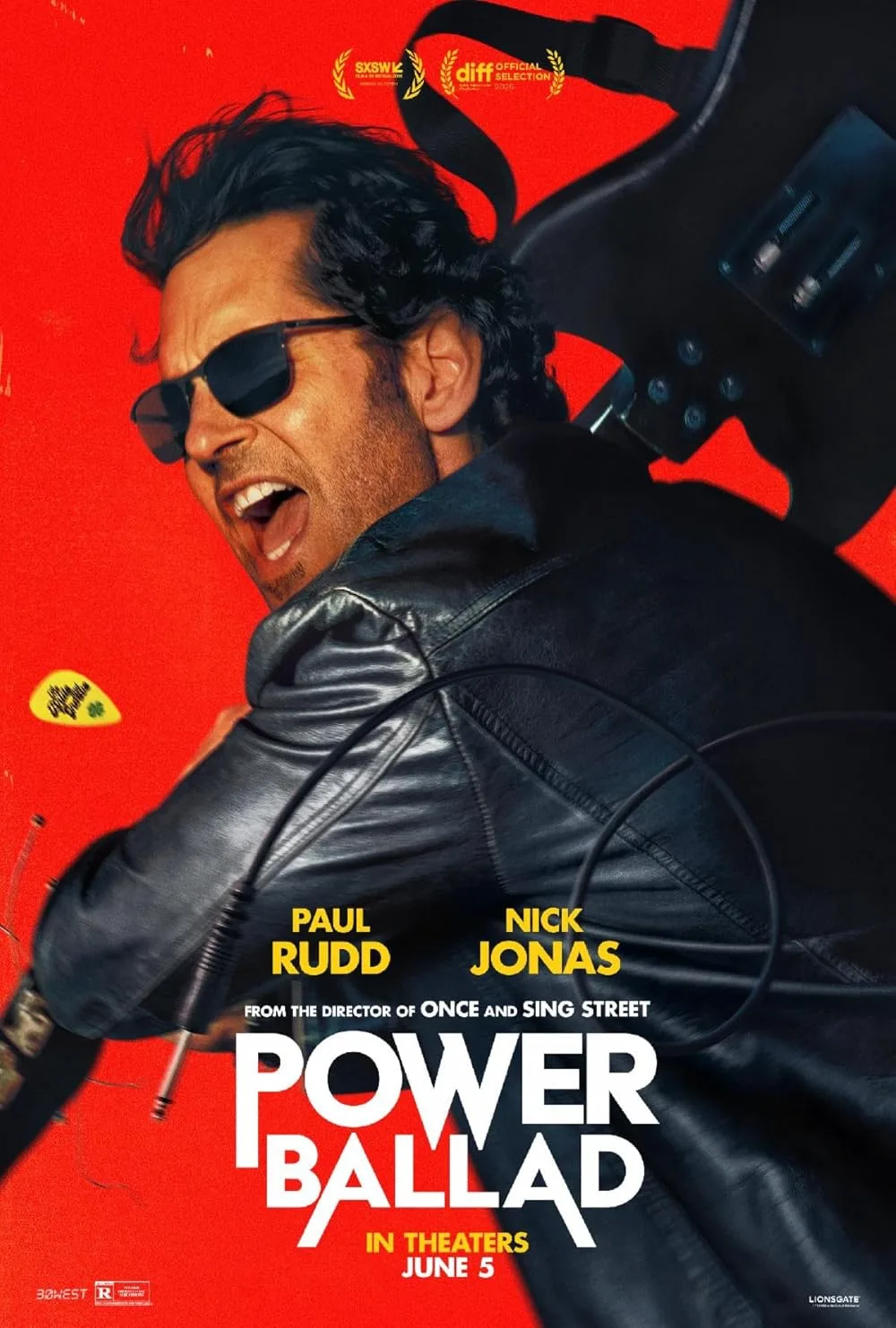
“Power Ballad” is a movie that constantly surprises you by plucking chords of hope from a heartbreaking narrative. Director John Carney is a true believer in the power of music: In its ability to connect disparate groups of people, in its reparative properties, in its cathartic power to give voice to emotions we keep buried.
Those elements are all present in some respect in “Power Ballad,” but it also introduces a new mournful stanza of questions to Carney’s musical affection: Does the intimacy of a song get lessened when it becomes digestible for the masses? How can the people with whom we think we’re kindred spirits artistically be rotten at their core? He explores these questions in a bittersweet tale that reminds us that there’s a difference between knowing lyrics in your head and treasuring a song in your heart.
A refreshing wrinkle is that while many of Carney’s protagonists focused on characters outside the music industry, clawing for a sliver of the spotlight, he nestles his characters’ drama within the business itself. It’s new territory for him, and while it could have been easy to demonize Big Music, Carney opts for a more nuanced approach, exploring how the best of artistic intentions are warped not always by people’s own selfishness, but by a system where exploitation is a way of life.
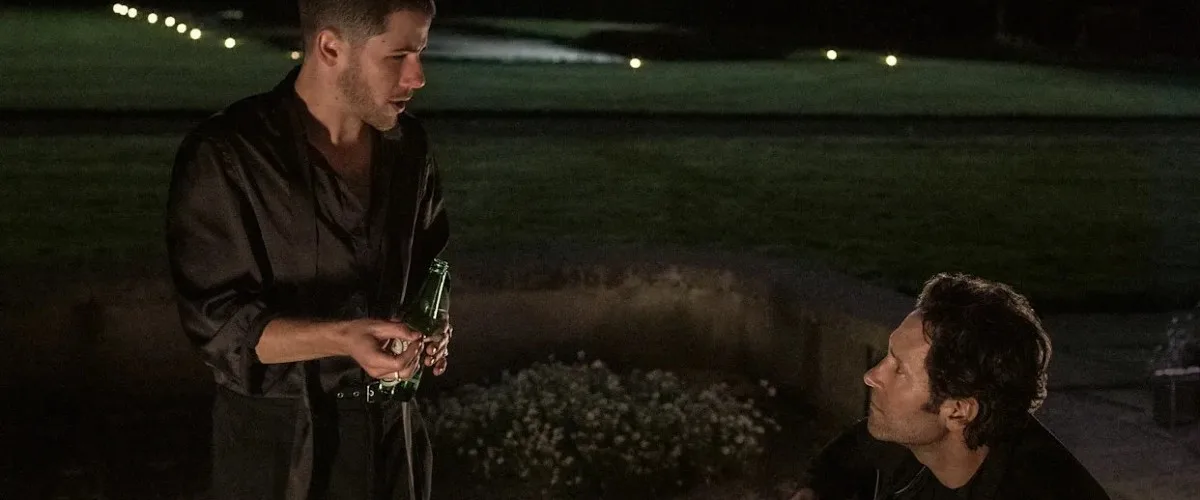
We meet Rick (Paul Rudd), an expat from America living in Ireland who makes a living as the guitarist and lead singer of a wedding band. During one of his gigs, he meets the groom’s friend, Danny (Nick Jonas), a boy-band member who has since embarked on a middling solo career. After the two perform a barn burner rendition of “I Wish,” the two steal away for a few small beers and have a jam session, trading stories and swapping song ideas. It’s worth noting how Carney and cinematographer Yaron Orbach depict this meet-cute. They’re able to capture that intimate feeling when you’ve met someone who not just understands you but also wants to build something with you.
In Danny’s comically large room (Rick and his bandmates are relegated to bunk beds in an addition to the house), there’s nothing ahead of them but ideation and potential. Orbach contrasts the two men’s tangible, vibrant hope as they riff and share stories about their families and love for music with the dimly lit emptiness of the grounds outside the mansion. Out there, dreams get bogged down in logistics, missed chances, and responsibility; not so for the rooms inside. While there, Rick plays a song he’s been tinkering with for the past couple of years to Danny.
Several months later, Danny has revitalized his career, having turned Rick’s personal song into a worldwide hit, “How to Write a Song (Without You).” Naturally, Rick bristles at having his work stolen, exacerbated by people around him who express their love for the song. Determined to get credit, he travels to Los Angeles with his best friend, Sandy (Peter McDonald), to confront Danny.
Given his theft, it would all make Danny far too easy to despise, but it’s a testament to Jonas’ skills that he can find the pathos behind the pop star’s smoulder. One aspect the film depicts so well is how fame for celebrities is an entire apparatus of soul sucking sustainability, how living just becomes one long exercise in brand management, and you replace the people who care about you with people who think they know you and who only care about your success in so far as it leads to financial success, your personal life and well being be damned. Danny isn’t bereft of life experiences, but the system has trained him to view the raw materials of his waking life solely as resources for producing more chart-topping music.
It’s in witnessing Rick and Danny’s snake and morph throughout the film that the film becomes the most thematically resonant. Are we inherently good people, and our bad moments are an anomaly? Or is it the reverse? “You were just out of context,” Rick tells Danny, in one of the film’s most devastating lines. Perhaps we’re all worse than we think, and it’s the times people see us in the good light that are the real glitches in the Matrix.
Many films focusing on a pop star often overpromise and underdeliver when they position their musicians as being world-renowned or having a smash hit song (we can’t all be Skye Riley or Oliver). Rick’s song never quite reaches the highs of “Drive It as You Stole It” or “Lost Stars,” but there’s a winning, rugged beauty to all versions in which it manifests. We only hear snippets of Danny’s pop songs, and these feel fully formed. There’s a restrained authenticity to them; they’re catchy, high energy, filled with all the bells and whistles of modern pop music, but ultimately low-calorie.
With the focus on Danny and Rick, the film’s runtime doesn’t have much bandwidth to accommodate its other arcs, which makes the ways they factor into the story more instrumental than narratively cogent. Rachel (Marcella Plunkett) and Aja (Beth Fallon) do their best in their smaller roles as Rick’s wife and daughter, respectively, but I wish the film gave them more to do than be recipients and fallout to what transpires with Rick.
After discussing the film with my friend, Chris, he mentioned that we rarely get to live out our dreams in their full or entire form. “The best we get sometimes is we get to live a version of our dreams. And if we’re lucky, the version we end up living can be better than what we thought,” he said. “Power Ballad” mourns the versions of our dreams we never get to see realized and celebrates the ones we ultimately get to live out. It’s held by an open-hearted affection for his characters, even the ones motivated by insecurity and greed, and celebrates how we’re held through life not just by our mountaintop experiences but by little moments of grace we encounter in the valley. We may think our stories and songs are written, but there’s always a new melody to discover by riffing on what’s familiar. It may not be what we want, but maybe, just maybe, it might be better.
This review was filed from the world premiere at the SXSW Film Festival. It opens on May 29, 2026.