At first glance, Three Oaks, Michigan seems like a small town from a mid-century Norman Rockwell dream of rural America. With a population of just 1,370, according to the 2020 census, a man in his sixties and a young woman in her twenties can laugh together about having the same school bus driver. It is a place where families stay for generations, and everyone knows everyone else. Indeed, pretty much everyone is related to everyone else by blood, marriage, church, civic involvement, or all of the above. And of those activities, nothing is more important than the annual Flag Day parade every June, which they claim is the biggest in the country.
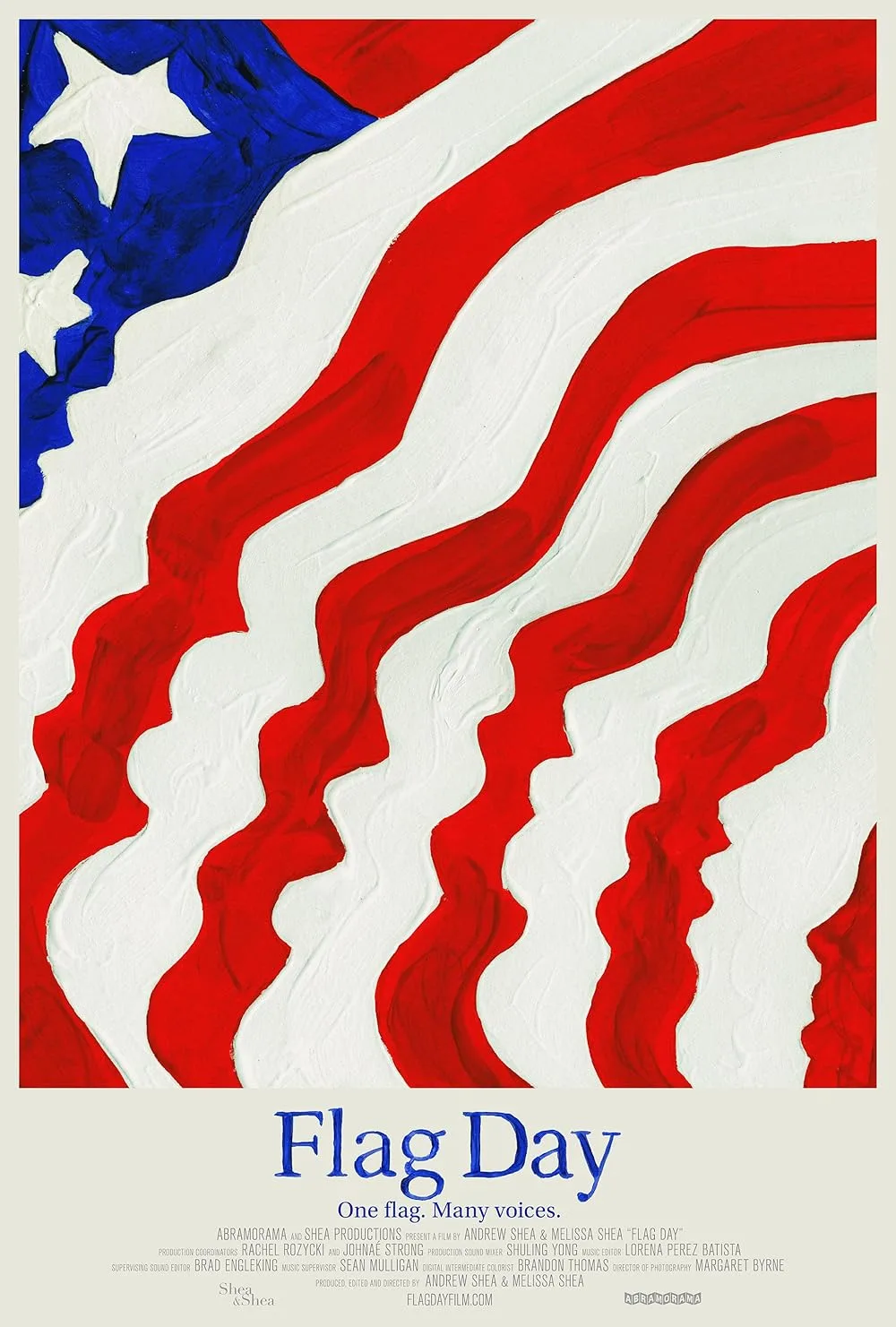
“Flag Day” is a modest but meaningful documentary about that parade, which features local beauty queens on a float with a Star Wars theme, a fleet of vintage tractors, women in sequined jackets riding horses, veterans, bagpipers, a clown, Shriners, a guy on stilts, a float from the Republican party, the kids in a local baseball team shooting water guns to soak the crowd, baton twirlers, people throwing candy, and, from the much bigger and more urban town across the border, Michigan City, Indiana’s mostly-Black young drill team called the Soul Steppers. There’s no problem getting a good seat to watch the parade; even with people coming in from other places to see it, there may be more people in the parade than watching it.
The Flag Day celebration is really a year-long commitment, with months of preparation before it and months of reflection and discussion after it. “We bleed red, white, and blue,” one participant says, and another tells us, “Three Oaks is Flag Day and Flag Day is Three Oaks.” The parade is core to the town’s identity. And the town is small enough that when a “Most Patriotic” award winner is not present at the ceremony, her mother is in the crowd and calls her to come right over so they can stage the presentation again.
Though it is filmed without commentary and they say they are committed to “observation over thesis,” without editorializing, husband-and-wife directors Andrew and Melissa Shea have a sympathetic yet discerning eye. The film has very shrewdly selected details that give us a clearer, more nuanced picture of the town, as nostalgia, cultural anthropology, a time capsule, and a metaphor. While the directors warned community members that they were not creating a commercial, it is clear they gained the trust of all the participants, who are exceptionally honest and willing to share very private moments. When the day of the parade came, the Sheas brought 11 separate crews to Three Oaks, telling them, “Don’t film the parade; film the dramas within the parade.” We see the breadth of the parade and its participants, but we also see the drama.
There are bittersweet moments that show how much the chance to pay tribute to the flag means to them. One member of the community says, with a touch of resignation, that they don’t quite feel the same sense of pride in having the largest Flag Day parade in the country after they learned from Google that not many communities have Flag Day parades. Veterans pour one out (literally) for a fallen soldier. Some aspects of the modern world have touched the rural community; people whose families have farmed for generations have had to find other jobs and call themselves “hobby farmers.”
Other aspects of the modern world have not yet touched them. The sign for free “pride flags” offered to attendees by a home décor company refers not to rainbows but to the star-spangled banner being celebrated in the parade. Older men snicker together lewdly at the prospect of seeing young women play volleyball.
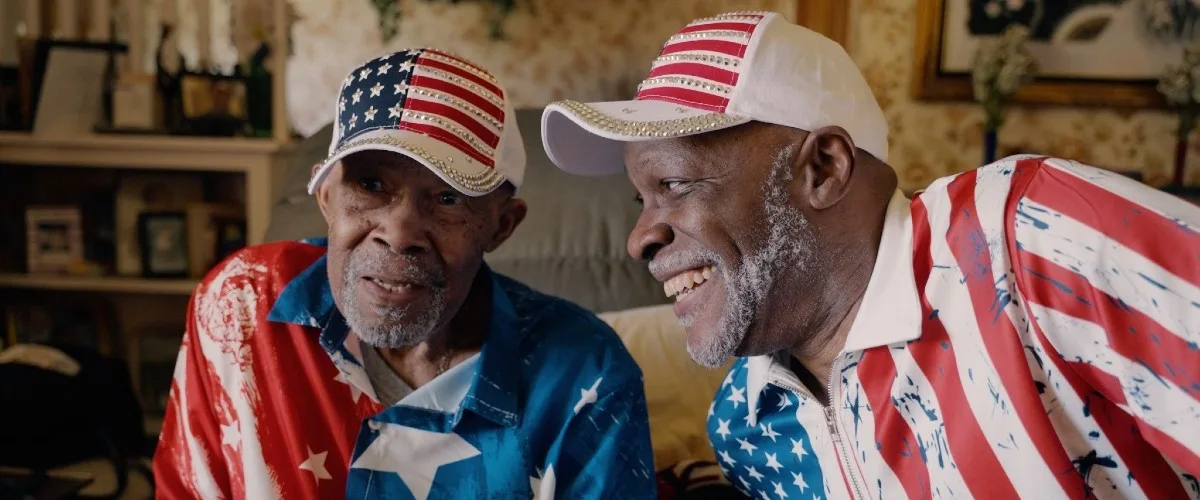
The film centers on a few key players. One is a teenage “Miss Three Oaks River Valley,” a lovely aspiring therapist who leans over patiently as her mother gently dabs makeup along her spine to cover the tattoo that runs from the nape of her neck to her waist so it won’t show when she wears her gown. Another is Albert Lee Brayboy, a frail, very elderly former Marine who worked as a skycap to support his family. His son, Albert junior, a Navy veteran, is cheerfully devoted to his father and determined to help him ride in what will be his last Flag Day parade. The South American immigrant who owns the home décor company praises the town for being inclusive, but the younger Brayboy says that while they are accepted as veterans, they are still seen as minorities. A Black candidate for sheriff hands out brochures to attendees, including a woman in a jacket decorated like a Confederate flag. Even the tractor riders make distinctions between the antiques from the two-cylinder club and the more modern versions. Like the parade itself, the event brings everyone together but keeps them in separate categories.
The Soul Steppers are in their own category, coming from out of town, led by the enthusiastic, unstoppable Lyn Isbell, one of the film’s highlights. She is demanding but supportive, explaining to one member of the group that if he finds himself on the wrong side, no one watching the parade will know it wasn’t part of the show, so he shouldn’t worry. The drill team has a room full of trophies at home, but they do not interact much with the Three Oaks residents.
While John Mellencamp’s “Small Town” on the soundtrack is too on the nose, some of the other needle drops are well chosen, especially a sweet duet version of Simon and Garfunkel’s “America,” sung by Jack & Daisy, and Jon Batiste’s “Freedom.”
“Will they make it?” the riders wonder about the vintage tractors, and it resonates as a broader question we all face: the struggle between holding on to tradition and adapting to change. While some elements of the story may seem quaint to other parts of the country, the Sheas show us that Flag Day may be Three Oaks, but Three Oaks is us.