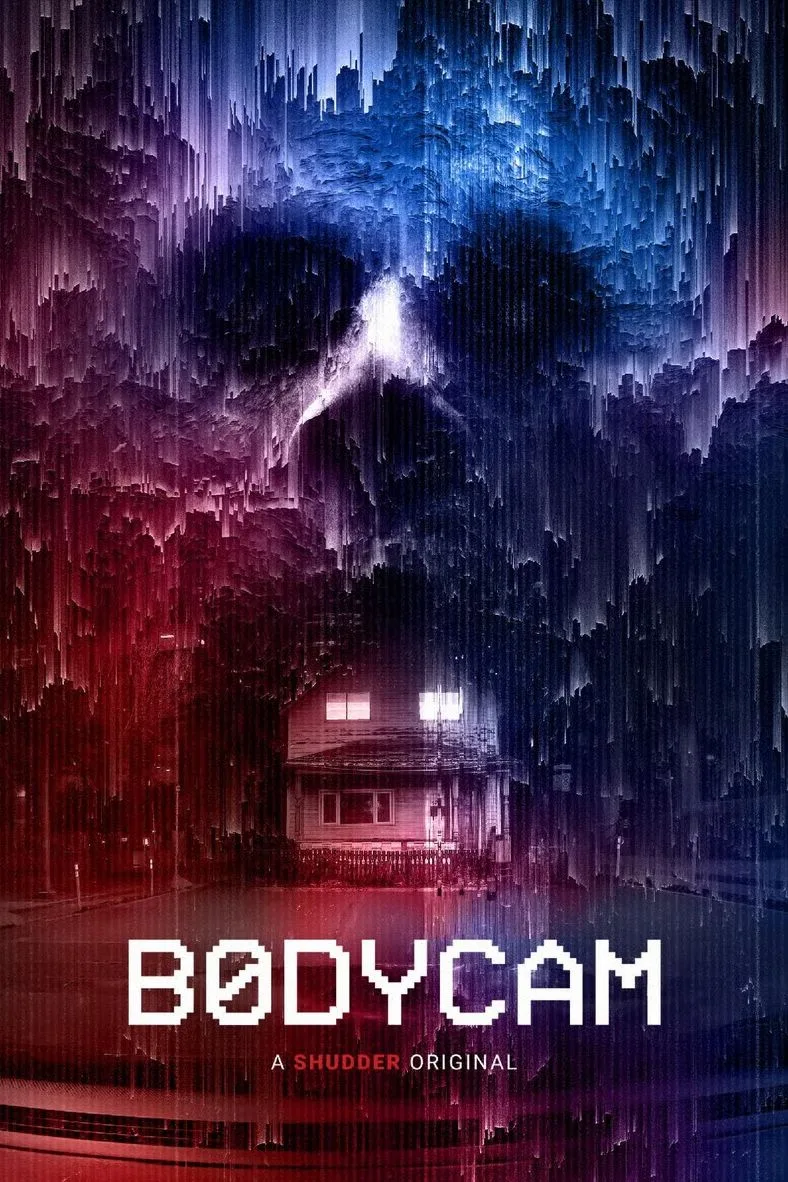

For a while, the found-footage horror thriller “Bodycam” appears to have something to say and, therefore, a better-than-average sense of how to handle its subgenre’s tropes and tics. Then, in the last 10-15 minutes, the illusion is spoiled.
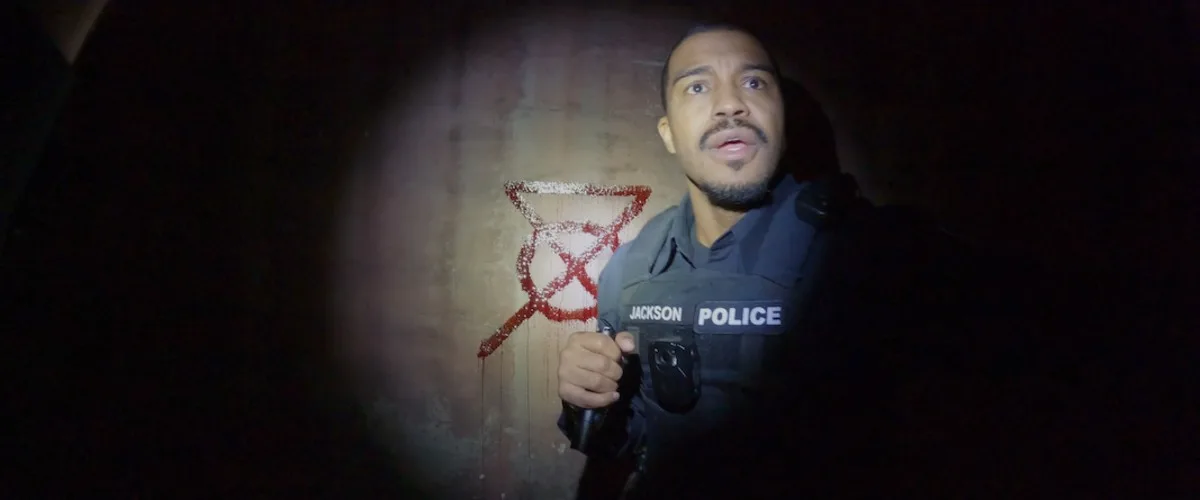
To be fair, a handful of warning signs precede the movie’s soufflé-style collapse, including at least one heated dialogue exchange between Bryce and Jackson (Sean Rogerson and Jaime M. Callica), the movie’s two antihero cop protagonists. But for the most part, “Bodycam” appears to use its forced first-person POV and harshly front-lit handheld camerawork to critique its two leads’ lack of perspective as they investigate a domestic disturbance case that goes horribly awry.
Unfortunately, while this gross and dynamic haunted chase movie coasts on a blast of carnival ride energy, it also crashes head-long into a goofy anticlimax whose both-sides finger-wagging may be more upsetting than the movie’s provocative conceit: What if a pair of cops faced an ominous reckoning when they investigate a notorious skid row neighborhood over-run by “tweakers” (Bryce’s words) and other drug abusers?
You never have to wonder what the filmmakers really think about Bryce and Jackson, given the gauntlet of horrors they have to sprint through. Bryce’s general lack of sensitivity also paints both his character and his partner’s in broad, overstated (but satisfying) strokes. Because it’s easy to believe a (white) cop might scorn a neighborhood full of “addicts and gang-bangers” and then turn on a dime to tease his (Black) partner: How does your old neighborhood look? Sadly, Jackson actually did grow up nearby. “Wasn’t always like this,” he demurs.
Bryce and Jackson find a creepy scene unfolding at the reported crime scene. A crowd of users has gathered outside, though they don’t yet notice the paid. There’s also a violent and barely intelligible couple lurking inside, and they don’t quite match the officers’ somewhat prejudiced assumptions. There’s ultimately nothing new about how “Bodycam” looks, but it’s still striking to see a horror programmer whose well-polished aesthetic—pinhole-like framing complemented by fisheye-style lens distortion and harsh floodlight-style lighting—meaningfully reflects back on its subjects.
Bryce and Jackson’s footage also seems to literally be contaminated by its contents. Some images’ grimy, brownish-yellow tint might make you rub your eyes and question your sanity/eyeglasses’ cleanliness. Sometimes there’s also something staining the lens, like flecks of realistic-looking blood. It helps that writer/director Brandon Christensen (“Still/Birth”, “Z”) has a good sense of pacing and a knack for eerie shock scares.
“Bodycam”’s most confrontational sequences also suit the movie’s effect-driven, sledgehammer style. I’m thinking specifically of two dramatically and thematically load-bearing dialogue scenes featuring Jackson’s mother Ally (Catherine Lough Haggquist), who not only reprimands her son and his partner, but also looks down on them as a class of people.
Skeptics will ultimately be proven right in fearing the worst, since “Bodycam” ultimately lands on a hollow moral relativity to justify its weak finale. Then again, the strident tone of Ally’s scenes not only suits the movie’s critical bent but also creates a fizzing dramatic tension whenever it shifts from more exploratory/dialogue-light transitional scenes and then back to explanatory dialogue scenes.
So while “Bodycam” does squander the goodwill it earns with each new and thoughtfully upsetting setup, it also keeps you hooked on the promise that Jackson and Bryce are one wrong turn away from a grim and satisfying kiss-off. Sure, it’s refreshing to see a high-concept horror cheapie with ideas that extend beyond the next jump scare. But it’s even more thrilling to be kept off-balance by the filmmakers, and for so long that you think that they might stick a treacherous landing that most experienced genre filmmakers would balk at. It’s not surprising, in other words, that “Bodycam” collapses in the end. It is remarkable that Christensen and his collaborators ran with their loaded premise as far as they did.
Case in point: In an early scene, Bryce has a short but satisfying line that says a lot about how he sees himself and his job. It’s not Shakespeare or Sam Fuller, but it is credibly blunt, so Bryce actually sounds like he thinks. He tells Jackson that a certain kind of civilian gets prejudiced as soon as “she sees the blue”: “It’s automatic.” That’s not only a great drive-by takedown of Bryce’s self-victimizing mentality, but also one that resonates more since Jackson doesn’t respond to his partner. We know that he doesn’t need to say anything, though, since “Bodycam”’s auto-critical lens already damns the world through its blinkered defenders’ eyes.