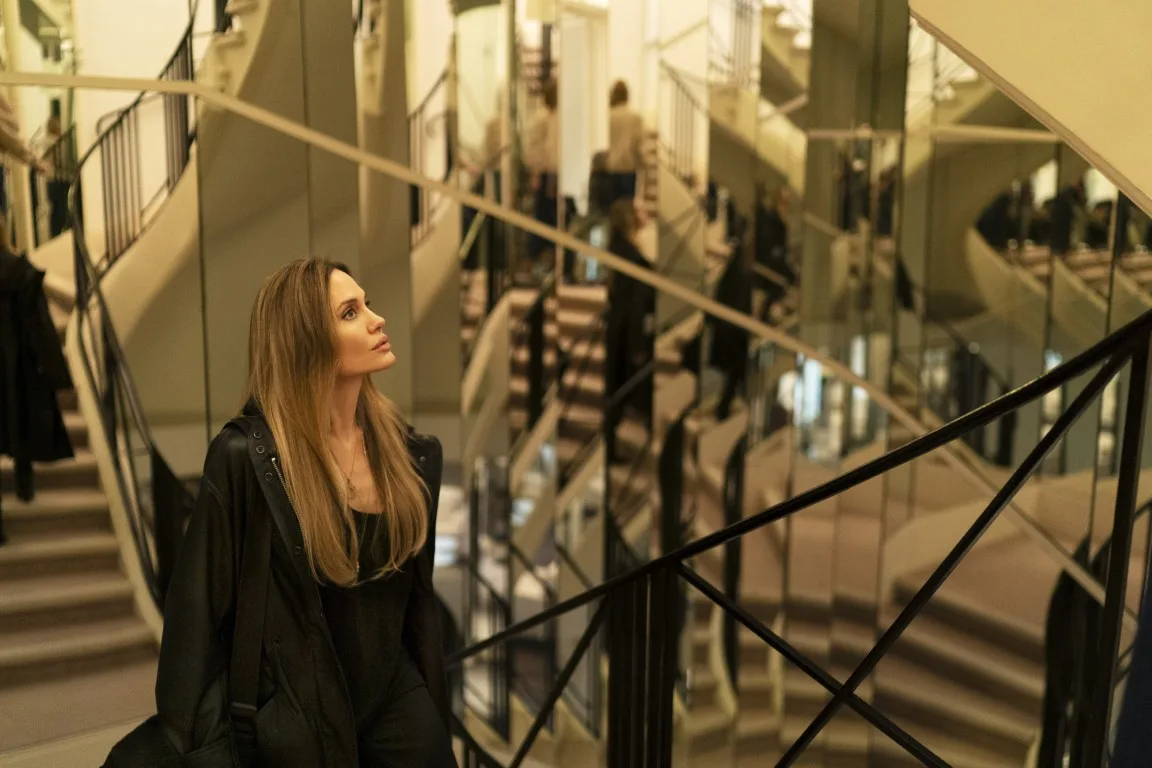
Angelina Jolie is back with one of her “most raw and vulnerable performances in years” in writer-director Alice Winocour’s incisive new drama “Couture.” Set during Paris Fashion Week, the film is both an emotive cancer drama and an insightful rumination on much of women’s invisible labor within the fashion industry.
Born in Paris, France, filmmaker Alice Winocour studied screenwriting at La Fémis before making three short films and co-writing the 2009 drama “Ordinary People” with director Vladimir Perišić. Winocour then made her directorial debut with the biopic “Augustine,” which premiered at the 2012 Cannes Film Festival as part of the Critics’ Week. Her sophomore film, the neo-noir thriller “Disorder” starring Matthias Schoenaerts and Diane Kruger, debuted at the Un Certain Regard section of the 2015 Cannes Film Festival.
That same year, “Mustang,” the Turkish drama she co-wrote with director Deniz Gamze Ergüven, was nominated for Best Foreign Language Film at the Academy Awards. Next came the Eva Green-starring astronaut drama “Proxima,” which premiered at the 2019 Toronto International Film Festival. Virginie Efira won the César Award for Best Actress for her performance in Winocour’s drama “Revoir Paris,” which premiered as part of the Directors’ Fortnight at the Cannes Film Festival in 2022.
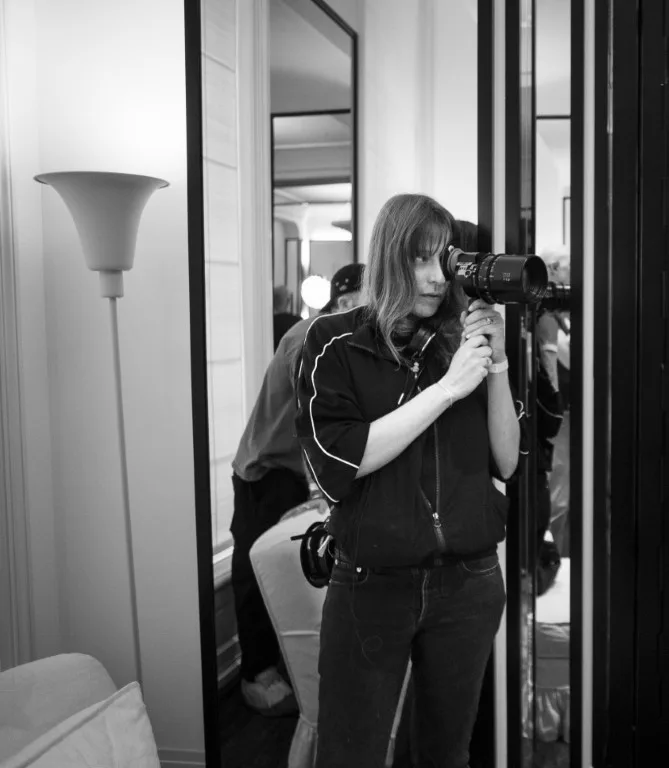
Like her previous films, her new film “Couture” focuses on the complex interior lives of women as they navigate the modern world. An ensemble drama led by the always great Jolie, the film was inspired in part by Winocour’s own brush with breast cancer. Set during Paris Fashion Week, the film follows indie horror film director Maxine (Jolie), who is diagnosed with breast cancer just as she has arrived in Paris to direct a video for a big fashion show. The film weaves together Maxine’s story with that of makeup artist and would-be writer Angèle (Ella Rumpf), fresh-faced South Sudanese model Ada (Anyier Anei), and several other women working behind the scenes to make magic during Paris Fashion Week. In this glamorous world, Winocour explores how beauty and pain so often commingle, and how women’s bodies become both a battleground and their most sacred space.
For this month’s Female Filmmakers in Focus column, RogerEbert.com spoke to Winocour over Zoom about collaborating with Jolie on such a personal subject, the politics of presenting a film about collective labor, and crafting a film filled with the kind of women not often seen on screen.
This interview has been edited for length and clarity.
Obviously, it’s a very personal story for both you and your star, Angelina Jolie. I would love to hear what that was like working together on a film that centers on an experience you both felt so deeply and personally in your real life.
It was something very emotional to work with someone who had lived through an operation on her flesh. Angelina has never had cancer because she did the preventive surgery, but she lost her mother and grandmother to the disease. So, there definitely was a special bond between the two of us, something you can’t explain with words. When you have lived something in your flesh, you know what you’re talking about.
We were very lucky; we were able to do something with our stitches, and that was the whole idea of the movie. Sharing the wounds and doing something with them. We did the film really with this kind of punk energy that Angelina also has. I love her rebellious mind and the way she behaves in life. We did it very quickly, with the sense of urgency that we had to celebrate life. And so it was a very profound and emotional experience.
Her performance is filled with so many beautiful interior moments. A lot of the film is her taking things in; there is so much emotion coming from her eyes. How do you work through a performance that’s so internal?
I think it’s very difficult. Sometimes you think actions seem more difficult, but I think the most difficult thing as an actor is showing your vulnerability or your soul. To be naked emotionally, and I mean, she’s also nude in the film, but she’s so naked emotionally, and it was a lot of trust, especially for such a big star as Angelina. There was a lot of sharing, and I’m really so grateful that she dedicated so much of herself to the movie. She’s speaking French; she’s doing so many things that were challenging to her.
Also, she’s not very comfortable with the idea of sex scenes anymore, but she did it because it was a special one; it was this idea of having sex, knowing you have cancer in your breasts, saying goodbye to your breasts before the operation, so this is the last time the character is doing this, having sex with her two breasts intact. So the film was very emotional, and she gave so much to the movie.
As you said, there’s so much of her coming on the screen. It was a lot to watch.
Sometimes she told me it’s too much. She didn’t have anything to hide behind. But I told her that’s what she’s going to show in the movie—the real Angelina behind Angelina Jolie, behind the icon, who really is.
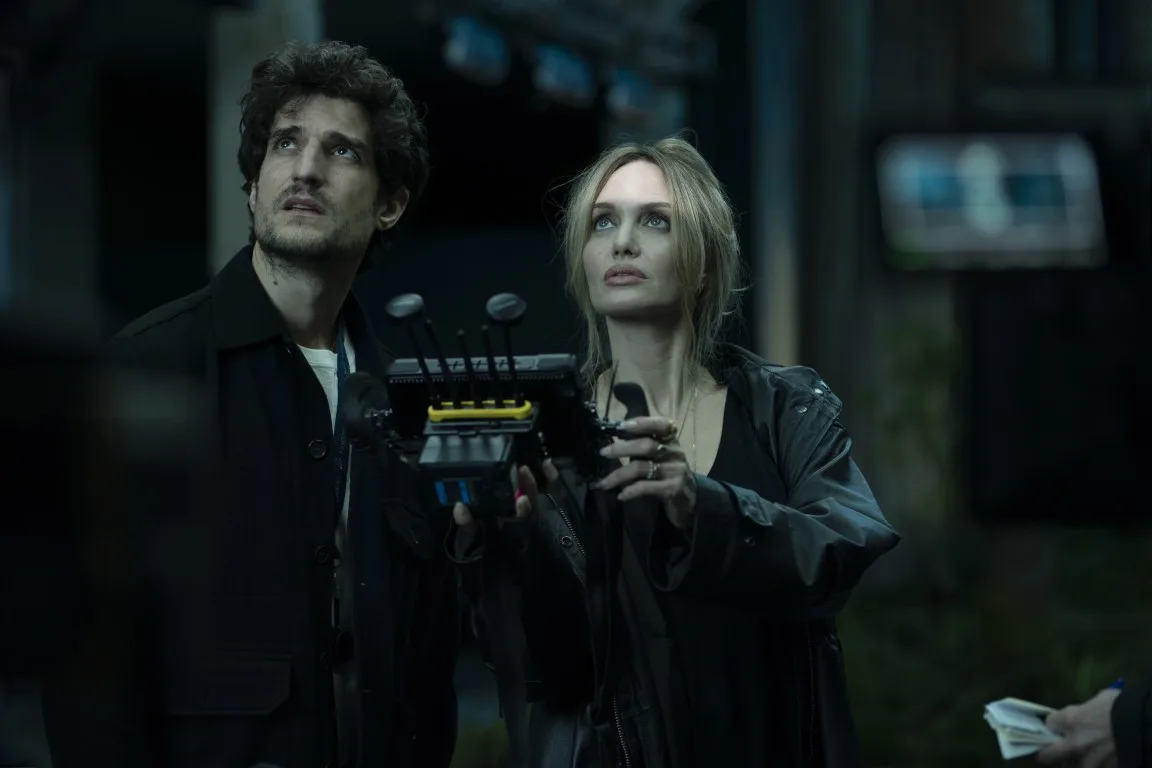
You’ve discussed that this is, in one sense, a film about labor. It’s about these women, these professionals, working in this really difficult industry. Even though it looks very glamorous on the outside, it’s a difficult industry. Could you talk a bit about crafting these characters, each representing a facet of labor in the fashion industry?
It’s a labor thing, and it’s about workers. Because I don’t think that’s what people expected with Angelina Jolie in a fashion movie. These films are always stories about artistic directors or about those on the side of power, and mostly from a male perspective, because artistic directors are mostly men. I wanted to show the real life of workers, like the seamstresses in the atelier, makeup artists, the glam team, and all these models. There are the big superstar models, but then there are the ones nobody thinks about, like fit models. While doing research, I discovered that there are so many different worlds in the industry.
It was really touching because we worked with Chanel and showed the real workers and seamstresses. They were so happy to be looked at and to be filmed for the movie. We did the screening there. It was very emotional, too, because it was with all the women in the film. Afterwards they came up to me and said, “Oh, this is our life.”
Also, we had Yulia Ratner, the Ukrainian model, who really came from Zaporizhzhia, although she was in Kyiv when I met her. She had come through Poland, escaping war to go to fashion week, and then went back to the war zone. Anyier Anei, the South Sudanese girl, also came from a war zone as well. They met in this glamorous atmosphere. I didn’t know about any of this about fashion, that there were all of those people behind the scenes. So that’s what I wanted to show.
There’s a lot of geopolitics in this film, not just labor, but also geopolitics behind the glamor.
Fashion is entering the world all the time. We live with these images of fashion; they are everywhere around us, but the world is also entering the fashion world. I also thought right now it was political to make a movie that is about a collective, not just an individual story, but a story of many women, and this idea of sharing one’s skills and empathy. I mean, in a sense, all the characters are the same character, because they’re a self-portrait, they’re all fragments of me, a woman, and all the women I was, and that I’m not anymore. A woman in her 20s, in her 30s, in her 40s, somehow it’s the same woman, but at the same time it’s all parts of life that I really saw.
It’s also the parts of life within the fashion industry that I really saw. All the girls I’ve met have had such hard lives, and they’re from different generations. So in the film, we even see this woman in her 70s, the one Maxine meets in the hospital. What is also very funny is that almost all of the women in my film were models at one point in their lives. That woman, Aurore Clément, was a model. Ella Rumpf, who plays Angèle, was not a model, but Anyier is. So it’s really different stages of a woman’s body.
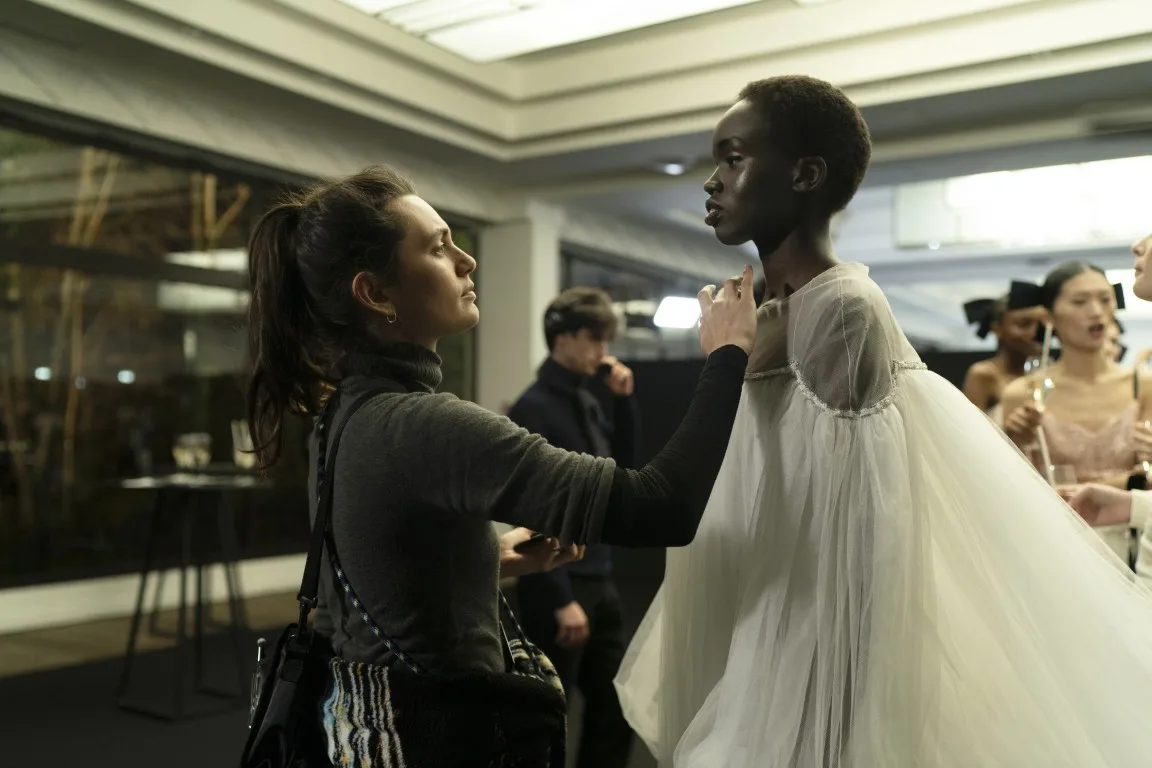
As a labor movie, obviously there are a lot of themes going on with the models – their bodies are their main asset, right? Then you have Angèle, the makeup artist, whose task is covering their scars. You have a couple of scenes where she is doing that, making their bodies look perfect, but you also see that their toes are bleeding. I’d love to hear your thoughts on how you show all this beauty, and then also the destruction and their bodies falling apart, and yet they’re propping each other up. I guess I’m interested in the combination of beauty and terror.
Yeah, it’s also about the suffering, like you see when Ada, Anyier’s character, is putting her feet on the ice because they’re aching so much. It’s a lot of pain, I think, yes, we see women suffering, but at the same time, life goes on. At first, I thought the film could have been named “Ride or Die,” you know, because it is filled with the spirit of survival and also about cancer. I think a lot of movies about cancer are very condescending. But when you are going through those experiences, I mean, life goes on. You don’t only have this question of cancer; you remain a woman with desires, with other problems, like money problems, like family problems, everything. It’s like the turmoil of life.
I thought it was interesting to represent illness as a love story, because you can fall in love with the heart, even in the midst of the harshness of disease or any hard time. I think life is complex. Beauty and death are always melded together, so I wanted to represent that in this movie.
I wanted to ask you about the male writing consultant with whom Angèle discusses her project. He says to her, “Just because something really happened doesn’t mean it’s interesting.” It’s such a horrible thing to say to someone, and so mean. All of these women are fighting to tell their stories or to challenge how they perceive them, and it felt so cutting and so real.
There’s a lot of meta in the film. Some critics would say exactly that. But it’s a real story that I wanted to see, with all of these women. The script was also inspired by comments I was given in my thirties, when I was beginning to write, from consultants like that or from people who tell you, “No, that’s not the way you should do it. You should do it another way.” In a Q&A, a guy told me it was funny that in the film most of the men who talk to women tell them what to do with their bodies, their lives, or their writing. It’s all men telling women what to do. I thought it was very true.
There are a lot of men in both those worlds.
It’s true, and so I really wanted to put the lights on the lives of women I thought I was not seeing in cinema. Also, Anyier, the South Sudanese model, I really wanted to put her on the map of cinema. There aren’t any South Sudanese stars, and yet models from there are everywhere. It’s really in fashion right now to feature girls from South Sudan. They are everywhere, in commercials and shows. So, I really wanted to know what their life was like, what their story was.
Are there any other women filmmakers whose work has inspired you or that you think readers should seek out?
There are so many, including male directors. I mean, of course, Agnès Varda was an inspiration. Kathryn Bigelow was an inspiration as well. I like directors who explode codes, who refuse assignations. Bigelow was a great inspiration for me for action movies and how to direct action. But I’m also very inspired by many male directors. I think it’s important to reaffirm that I don’t really know what it means to be a female director. Of course, being female is one aspect, but I do feel we should be more equal.
I wish that future generations will not have to answer these kinds of questions. Because you never ask men what male directors they like.