This year’s New York Film Festival has, for my money, had one of the strongest festival lineups in ages. Granted, I’ve only been able to sample a handful of titles from the week I spent huddling outside Walter Reade Theater in the pouring rain (amid a Nor’easter, no less) with all the other poor press and industry folks, burdened by the agony of getting to watch free movies early and write about them for money. But as our very own Godfrey Cheshire wrote last week, it kinda just feels like the movies are back, baby, and we might just be climbing out of the post-COVID haze.
That said, so many of the films in this lineup are carryovers from Cannes, or TIFF, or Venice, or Locarno, so we’ve already got some words down on all of those from our intrepid festival journeymen. Some highlights on my end: James Grey’s “Paper Tiger,” which feels like the ultimate punctuation of his semi-autobiographical family dramas set in the Queens of his childhood; Pawel Pawlikowski’s “Fatherland,” whose probing look at a post-WWII country struggling to reclaim its identity is a fitting twin to, of all things, “Godzilla Minus Zero”; and a dazzling 35mm screening of Ken Russell’s revived “The Devils,” with Russell’s widow, Lisi Tribble, offering a beautiful ode to her late husband at the top.
But a couple snuck through the cracks that stood out to me (for good and ill), both abstracted, subjective tales of the relationship between mankind and the world around them.
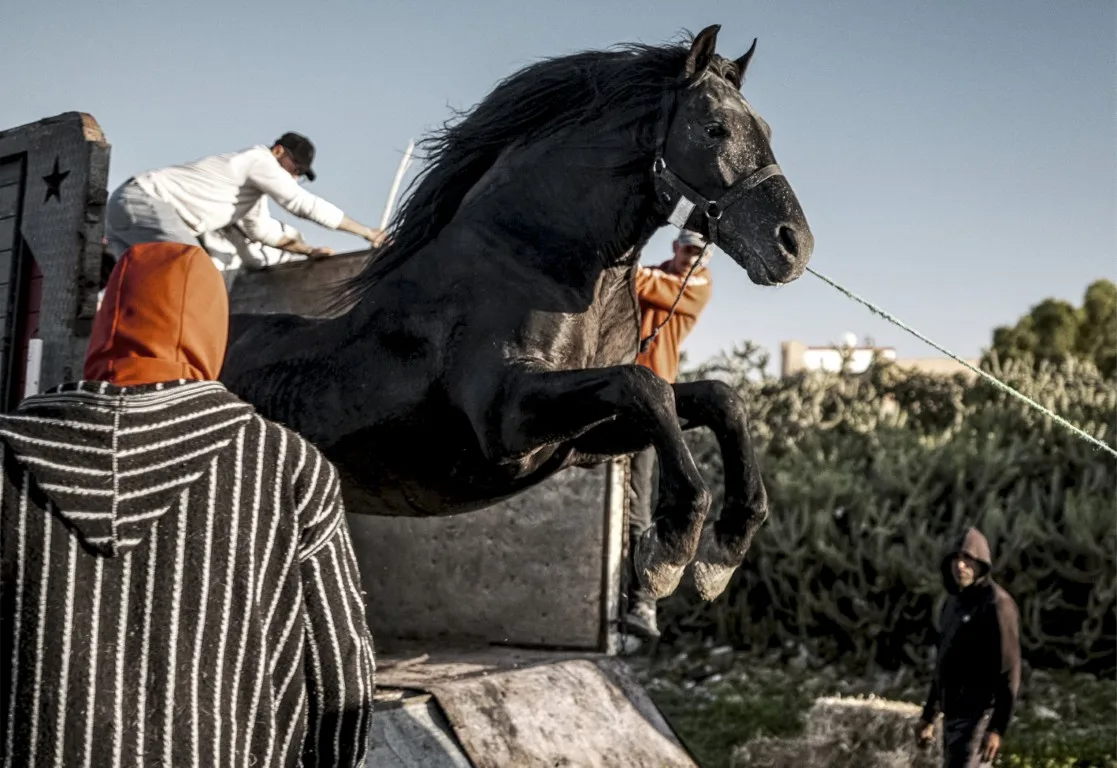
The first, and the far better example, is Tala Hadid’s mesmerizing “Bardi,” a striking look at the tradition of Tbourida, a centuries-old ritual that generations of Moroccan men from all walks of life have participated in. These bardi, or horse riders, train from childhood to master their relationships with their steeds; while the ritual is steeped in wartime tradition—the ritual feels, from the outside, like a thrilling combination of dressage and a military manual of arms, as groups race down a stretch of desert in formation, twirling and holding rifles aloft—many participants are working-class farmers and the like.
Hadid, who spent four years immersed in this fraternity of bardi in rural Morocco, immerses us in their daily routines in a style that blurs the line between documentary and fiction. We zero in on the concerns of a few characters: An older brother worrying about his younger brother’s skill with a horse, a father concerned about passing on his traditions to his children, a Moroccan girl who bristles against her culture’s resistance to her learning the craft. One boy, Walid, struggles with a recently discovered horse allergy. Nevertheless, these boys persist in their struggles: These traditions are too steeped in the masculine identity of Moroccan culture to shirk away from.
Hadid plays these dramas out with the intimacy and proximity of narrative film, but keeps her doc moving at a leisurely, meditative pace. It’s less sports doc than anthropology, as her ethereal style keeps us locked into the spiritual connection between man and beast. (Terrence Salt Lick?)
Sometimes, “Bardi” gets so relaxed in its presentation that it’s easy to lose the momentum a doc like this needs. Hadid luxuriates in close-ups of hands working food, tending to sick horses, in close-ups of the beasts’ eyes looking directly down the lens. That’s all well and good, but it can also leave us adrift when it comes to tracking the throughlines of each of our cast of characters. (Hadid imposes a kind of structure in the form of playing card-based chapters—”Knight of Swords: Courage is your master. Persevere at all costs”—but they often don’t feel like they correspond to a shift in tone or pace.)
That said, what is on screen is gorgeous and undeniable. Hadid captures some brilliant images here, not just of the Moroccan countryside, or of the beautiful horses and their ornate adornments for the actual competition, but of the thoughtful young men and women who live in this community. Rather than dismiss Tbourida as an archaic ritual performance of male aggression, Hadid sees the beauty and fellowship in the tradition. These men build healthy brotherhood with each other and through their animals; they learn to care for these beasts and, in turn, care for themselves. There’s a sense of pride these ordinary men feel in, just for a moment, riding mighty beasts side by side and taking pride in their beauty.
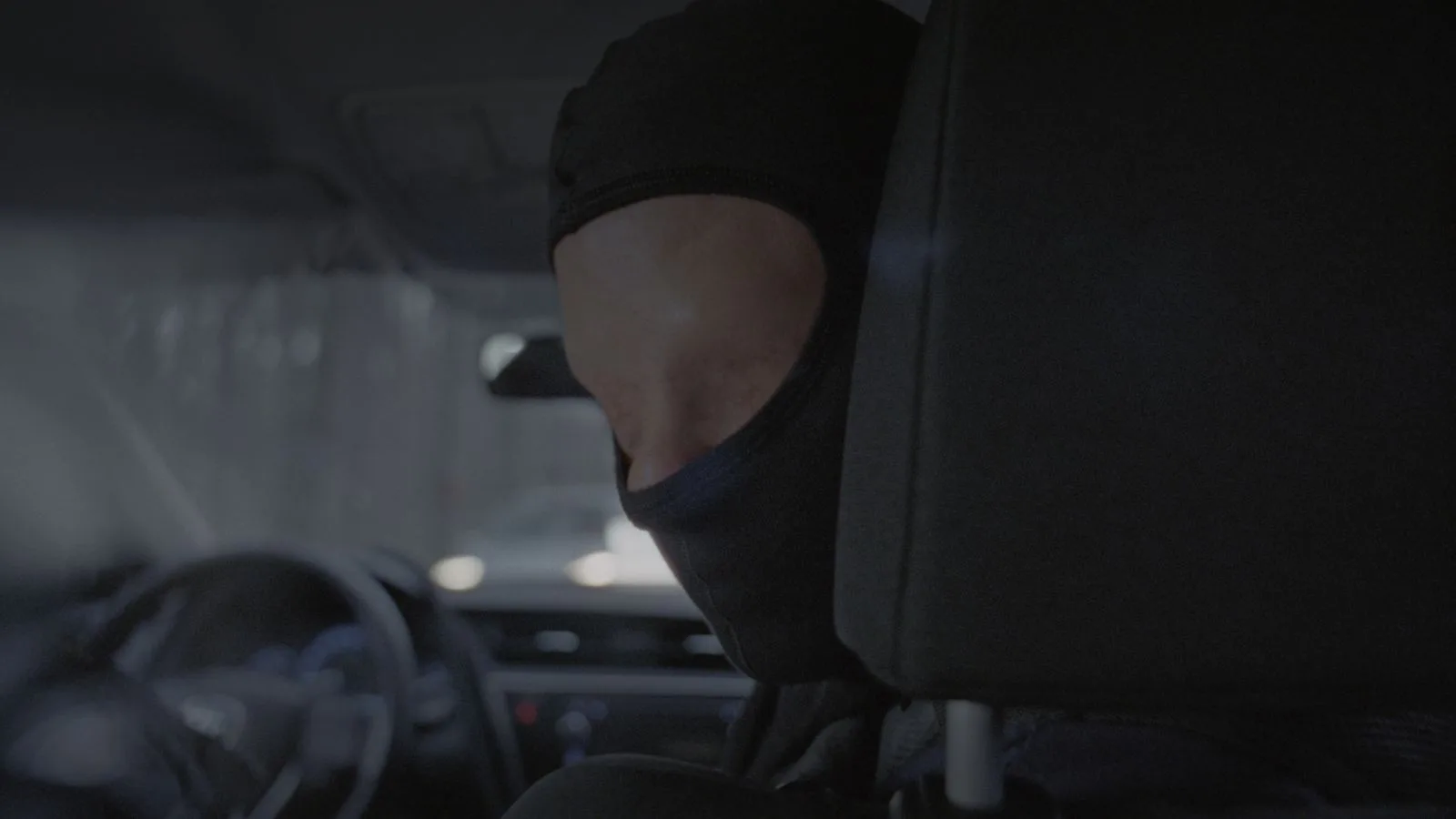
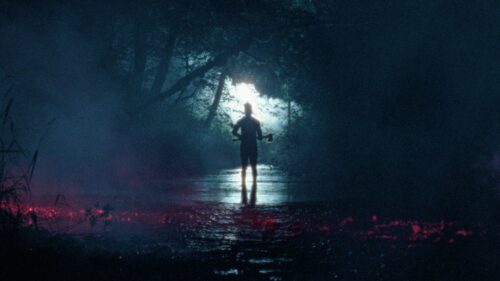
Contrast this simple grace with the deliberate vulgarity and opaqueness of Carlos Reygadas’ “Heil Jupiter!”, which finishes its first act taking a camera inside a character’s anus and, figuratively, never really escaping it for the remaining two hours. The sixth film from the acclaimed Mexican avant-garde filmmaker, “Heil Jupiter!” feels like the kind of Buñuelian provocation that aims to spark discussion through its sheer audacity, even if its ultimate points feel as dull as dishwater and just as murky to see through.
Shot across a number of continents and in many languages (including a fake version of Spanish that was fully concocted for the film), “Heil Jupiter!” spends its first minutes soaking us in flashing neon swatches of light, complete with staticky musical score, before introducing us to a foursome of two men and two women: Milu (Alexis Sánchez Alonso), Said (Alexis Said Villa de León), Lina (Neli de la Rosa), and Tzina (Flor de León), all lounging amid the crashing waves along the rocks of a sparsely populated island. It’s not long before the four are engaged in a furtive four-way sexual interlude, before the aforementioned camera shoots right up Milu’s backdoor and we’re thrown, “2001”-style, into what feels subtextually like a number of alternate dimensions in which our four characters experience maddening oppression by the state in numerous forms.
Maddening is the operative word for Reygadas’ film, which seeks for the kind of artistic abstraction folks like Andrei Tarkovsky perfected, but mostly comes across as inscrutable. Episodic segments cut us to a pair of fighter pilots shooting down a mysterious alien sound, of bodycam footage of a Polish police officer raiding Tzina’s home to try and drown her as a witch (complete with a cheering crowd), of factories where people carve up human legs with band saws. Eventually, Lina is further put on trial for witchcraft in an extended scene filmed as a multi-screen recorded courtroom procedure.
One by one, images and moods feel arresting: You get the sense that Reygadas has big things to say, or rather big things to feel, about anti-immigrant sentiment, of homophobia and transphobia (one of the film’s most arresting sights is a trans woman stripping down so a reconstructive surgeon can marvel at her body amid a request for a fourth breast augmentation), of the horrible miracle of a piglet’s birth viewed in extreme close-up. In one universe after another, various versions of our characters go through the physical and spiritual wringer, but it’s hard to find firm footing when Reygadas gets so lost in his own big ideas.
It’s tempting to grade “Heil Jupiter!” on a curve for its ambition, but at a punishing 158 minutes, these diversions feel more befuddled than profound. Plus, its emphasis on witch hunts and female sexuality is inexorably colored by the fact that Reygadas is still shaking off his own 2019 assault allegations by a former crew member on one of his productions. The director of “Post Tenebras Lux” is fond of his hazy, beveled lenses and his enigmatic provocations; this time, though, the luster is gone, replaced with bratty thumbs in the eye towards good sense and thematic cohesion.