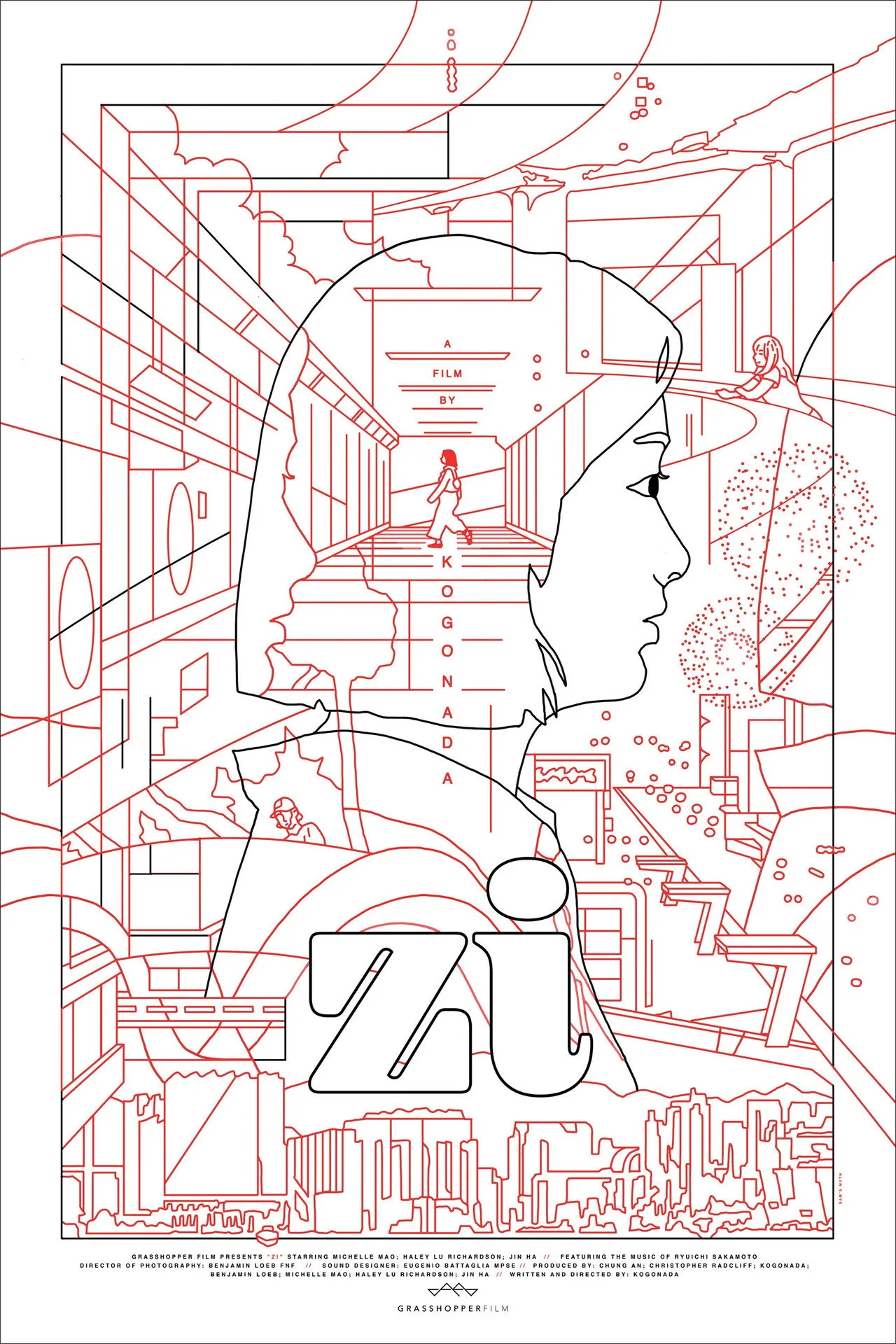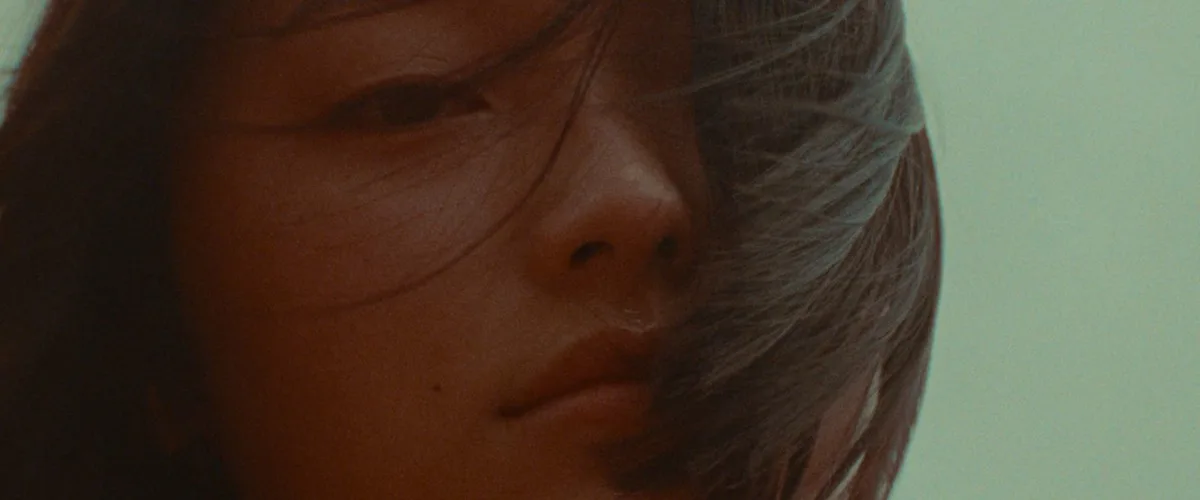
“Zi” isn’t the kind of film you can watch once. It may not even fully reveal itself on a second viewing. But its inscrutable images stay fixed in your mind. Kogonada’s latest is a feeling. It’s the mood that creeps into your psyche in the quiet of the night, the one that tugs at you while you stare out the vacant window: Surely, this all must be leading to somewhere else, someplace better? Every isolated, melancholic figure at the heart of “zi” feels it, even if, like the audience, they struggle to define it.
This is an ambitious film not because of its shape or scale, but because its creator tries to shake himself of his inhibitions. Scenes play out longer than one expects; aesthetic impulses claim importance over narrative aims; none of the characters are grounded in a familiar reality. Instead, the film, about a young woman meditatively wandering the streets of Hong Kong in search of herself, is as concerned with its protagonist as it is with its own existence.
Michelle Mao plays Zi, who learns that she may have a tumor that causes perception of time to fracture, blending the future with the present in one timeline. Eye-catching lens flares produced by cinematographer Benjamin Loeb signal visions of an older Zi ambling down a boardwalk with another woman. Are these flashes imaginary, or are we, in this film, experiencing this woman’s past as she looks back from the future? The film thrives, both narratively and aesthetically, on that indefinable perspective. As Zi traverses the streets of Hong Kong, biding time before she receives the results of a biopsy, Loeb’s handheld camera voyeuristically tracks her from behind; we often see the back of her head as people pass by on her periphery. In other moments, when she stops to contemplate, an intimate lens takes over, mapping the anxieties invading her face.
Her ruminative sojourn grows more complex through a chance meeting with Elle (Haley Lu Richardson), a sound recorder capturing the ephemeral ambiance of a city and its people. After much discussion between Zi and Elle, often while they sit on quiet public staircases, Elle comes to believe her ex-boyfriend Min (Jin Ha) might be able to help Zi. I won’t spoil how the trio fit together, but suffice it to say they all speak to loneliness and isolation, the urban as a cultural locus, the colonial history of Hong Kong, and the Asian diaspora.
In both its themes and filmmaking language—an intoxicating mix of visual flourishes and auditory detail— “zi” returns to Kogonada’s creative roots. For instance, it has far more in common with his soulful debut “Columbus,” another walking picture that tethers architecture to the spiritual, than with “A Big Bold Beautiful Journey.” The latter saw Kogonada trying to fit his artistic sensibilities into a glossier Hollywood vehicle with less-than-thrilling results. “zi” appears to reject the compromises he might’ve made on that film. Consequently, there’s a grungy spirit to “zi” that’s matched by a Hong Kong landscape composed of brutalist apartment buildings and frenzied blocks of buzzing restaurants.
Nevertheless, one could accuse “zi” of being needlessly opaque or denounce it as an experimental film whose agitated pursuits treat storytelling as secondary. And while making the film was certainly therapeutic for Kogonada, that abstract consequence doesn’t distract from the hypnotic quality of watching a person decipher their own existence in a world where such self-reflection is far too often dismissed as frivolous. That bold grasp of the indefinable, in turn, protects “zi” from becoming a disposable detour in Kogodana’s career. Instead, it’ll one day be seen as an imperative cornerstone of artistic ethos.