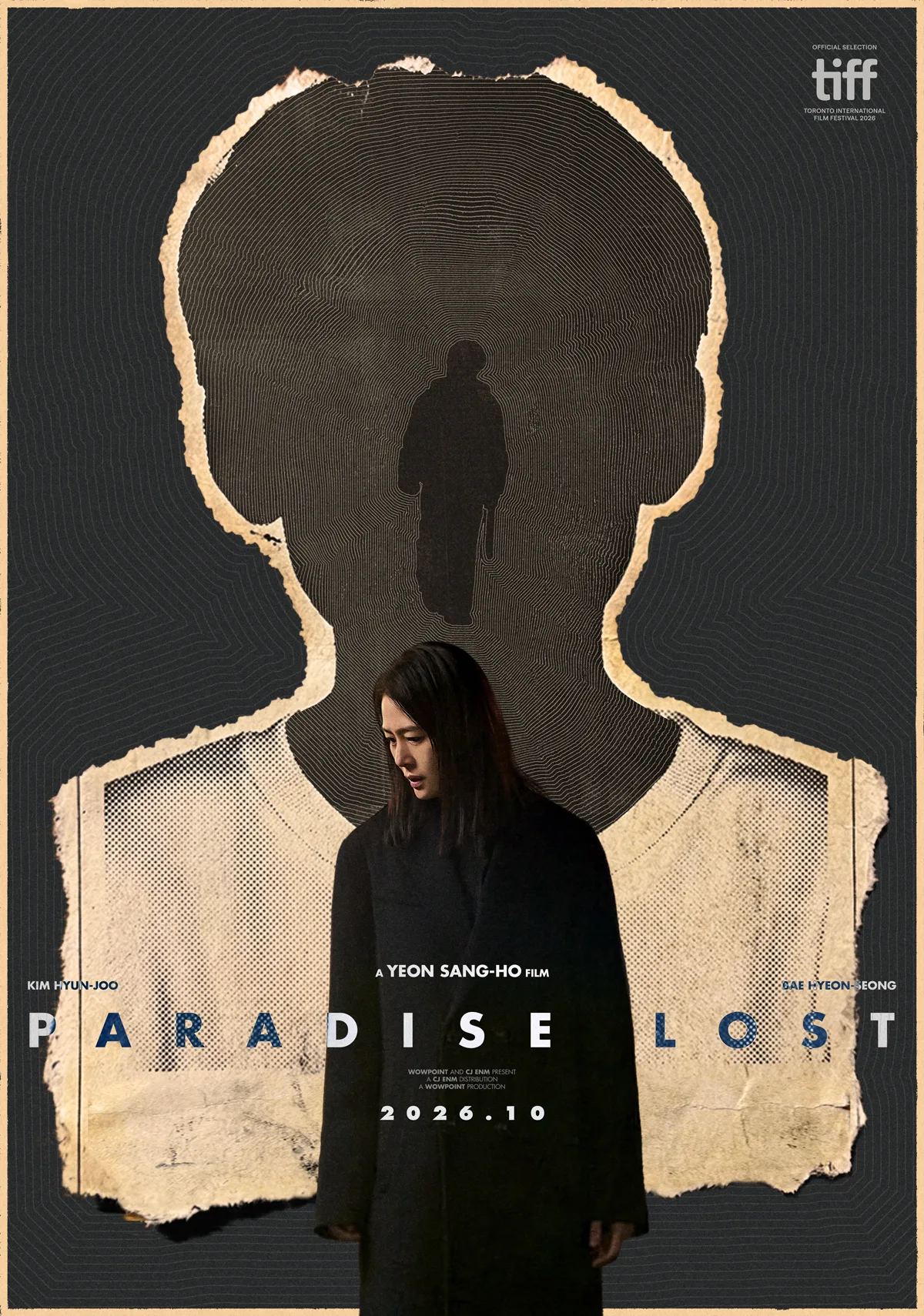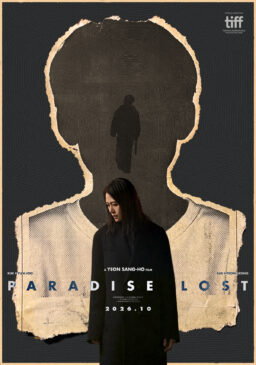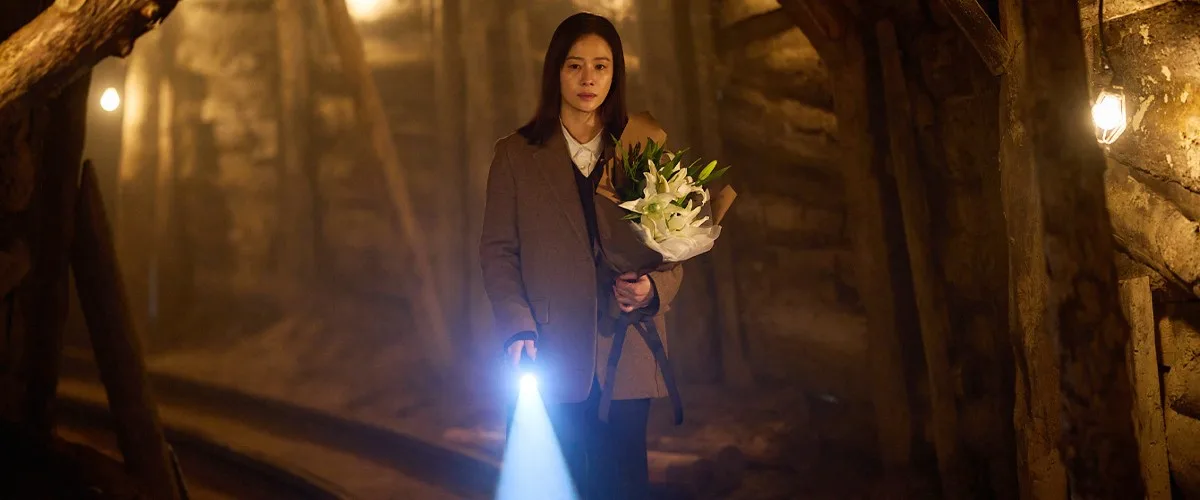
There is a moment in Yeon Sang-ho’s Paradise Lost when protagonist So-Young (Kim Hyun-joo) screams into an abandoned coal mine, and it sounds like a serrated blade scraping against rock. So-Young’s scream is impelled by a frustrated mourning, and yet there is something raw about it, a flinty sort of madness deep below the surface. The film later parallels this scene when So-Young visits another mourner.
So-Young is in mourning because her son, along with 12 other children, disappeared nine years earlier on the way to a camping trip. Many of the kids’ bodies were found days later, murdered by their bus driver, who committed suicide before the authorities could apprehend him. The few children whose bodies were not found were believed to be murdered and dumped in the nearby abandoned coal mine. The parents were beside themselves with anguish—So-Young attempted suicide by walking into the deep open mine, with its unbreathable air and precipitous turns. But they pulled her out, much to her dismay.
Seeing the parents’ grief and the small town’s inability to cope with the senseless slaughter, an AI company called TransHuman stepped in, creating the Children of Paradise project. They conducted extensive interviews with the parents to learn the best, most positive aspects of each child, then offered the bereaved parents virtual reality glasses that, once donned, showed them their child bouncing and skipping around them. The glasses were meant, theoretically, as a momentary aid to help the parents process their grief by allowing them to say goodbye to the kids taken from them so abruptly, but So-Young gets addicted.
Nine years later, So-Young still dons the glasses every morning and night, hanging out with her son, AI Sun-Woo. But when a grown Sun-Woo (Bae Hyun-Sung) appears, So-Young is disoriented, to say the least.
There is no doubt about the grown Sun-Woo’s identity; rather, the film toys with ideas of nature versus nurture. Sun-Woo’s appearance coincides with other murders and the disappearance of a neighbor’s child—is the young man responsible? Was he irrevocably changed by the trauma of being kidnapped? Or is his evil something passed down from his mother? This latter idea is more compelling in this film, driven by Kim’s simmering, teetering, unstable So-Young, torn between her beautiful AI child and the real monster he has become.
The AI Sun-Woo tells So-Young that one of the girls in Paradise will be deleted soon because her mother no longer visits her. So-Young is horrified at the prospect of Sun-Woo being deleted. She visits the girl’s mother to ask her how she could allow her child to be erased. “She’s dead,” the mother screams, again and again, wailing and sobbing.
What strikes about this scene is the molten sadness of one woman and So-Young’s steely disgust with her—nigh imperceptible, but there on Kim’s face, which remains unmoved; only her lips curl slightly at the edges. She looks away from the weeping woman and drinks from her cup of tea. This unfeelingness, telegraphed so beautifully by Kim, mirrors the grown Sun-Woo every time he turns violent: his eyes become snake-like, dark and glinting. He is his mother’s child.
“Paradise Lost” has threads of many ideas running through it, but it doesn’t handle many of them with the same deftness as it does intergenerational madness. It does present an interesting idea around AI and virtual reality, illustrating it with a beautiful image: fake flowers that the CEO of TransHuman places in a vase with real water. But the film ultimately doesn’t feel like it’s satisfyingly making up its mind about how it feels about AI, whether it is criticizing it or condoning it; that is, while the Children of Paradise are fake, the film seems to still care for their happiness within their virtual reality, seems to care as much as So-Young.
What’s more, the film presents its various other moral dilemmas with the bluntness of a thought experiment. Throughout, the grown Sun-Woo presents his mother with choices, asking whether she wants to turn him in and risk losing the AI Sun-Woo, or remain in her dream-world. These are interesting ideas, but presented in a clunky way, volleyed as if by a freshman in a first-year moral philosophy course, and never intricately considered, at least not as intricately or subtly and complexly as is the idea around both mother and son’s instability.
So-Young has always been a bit unwell, and her persistent daily visits to the virtual reality realm, though presented with understanding sympathy, also carry a sinister gleam. Even as Kim carries the woman with a composed sheen—her hair is always perfect, and her walk steady—there is a compulsiveness in her eyes, a desperation on her lips, and this unsteadiness is present in Sun-Woo, too; perhaps it primed him for a life of violence.
This grim alliance between mother and son is carried skillfully by the lead actors, who seem to understand how characteristics are carried in reflexive movements and shared intergenerationally, mutating from a steely gaze in the mother to a beady one in the son. So-Young and Sun-Woo’s madness is intuitive and inherited, presented with a meatiness that leaves the viewer considering the consequences of blood bonds long after the film ends.
“Paradise Lost” is heavy-handed at times and doesn’t give us the answers we might want about AI’s destruction of our emotional landscapes. But buoyed by two stellar performances from characters who share the same simmering madness, it is a deeply compelling film.