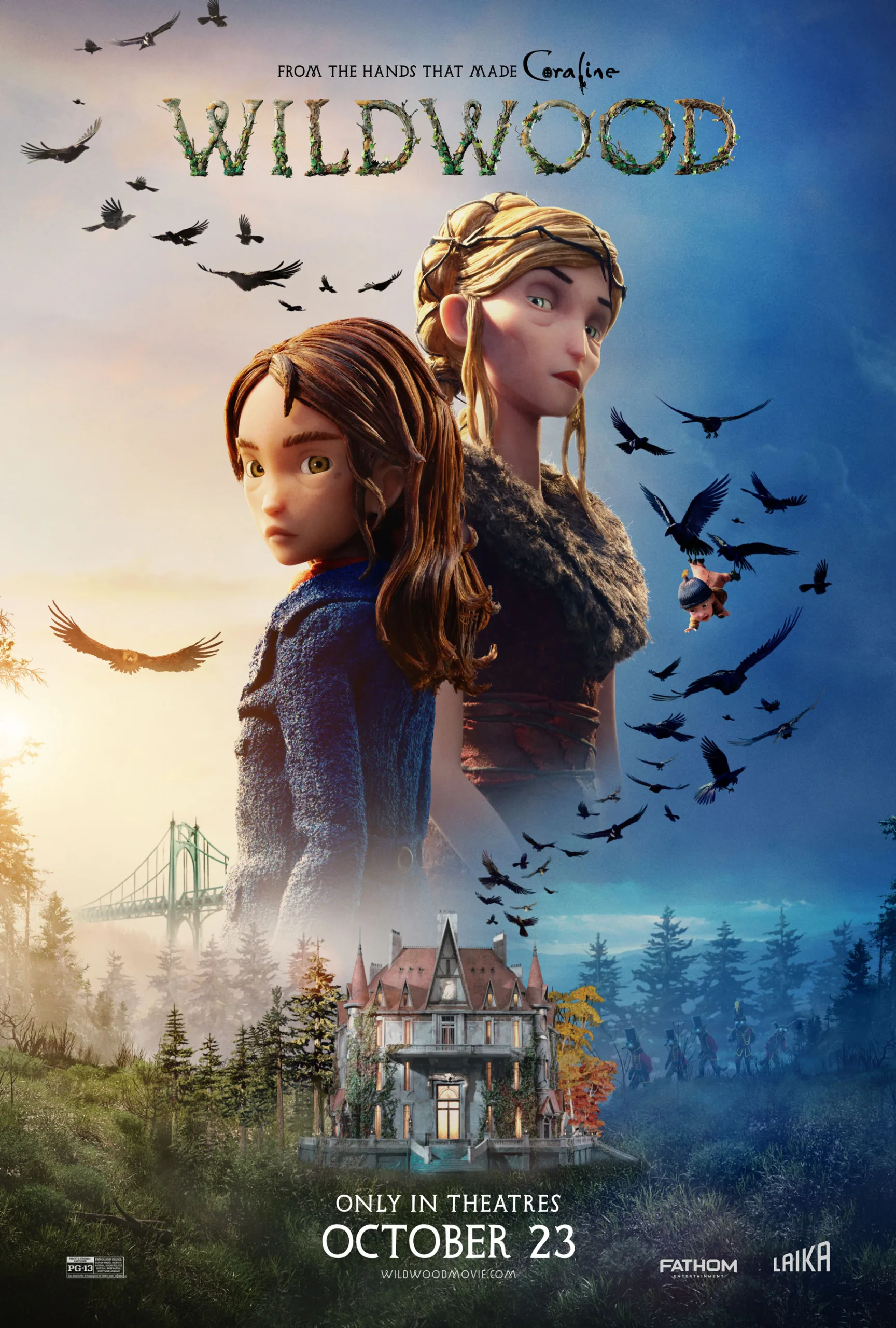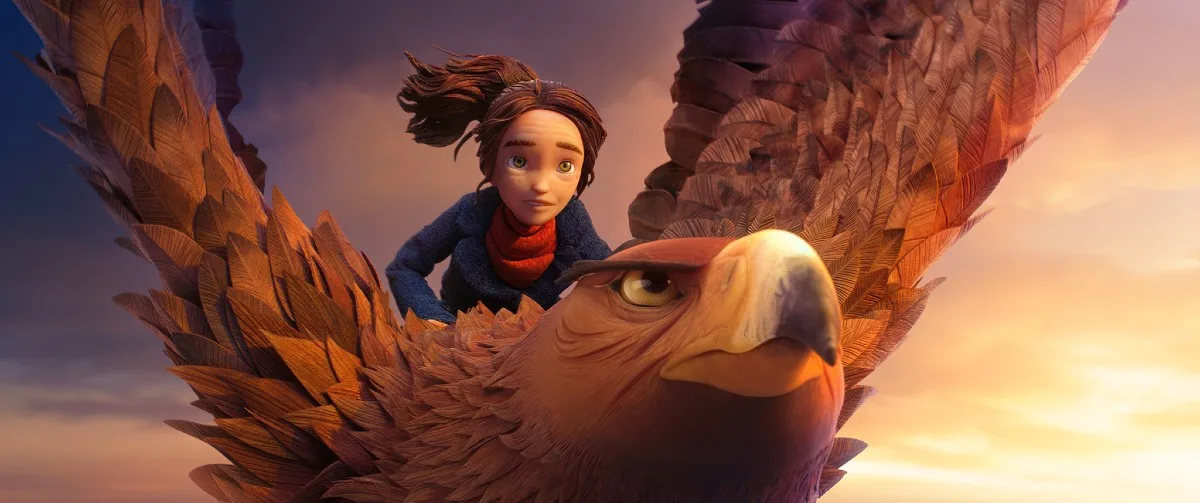
Travis Knight’s “Wildwood” is a gorgeous ode to outsiders, nature, and everything we seem to be losing as we march toward a tech-heavy future. The most ambitious stop-motion film ever made, it is the product of the artists at Laika, the company behind “Coraline,” “Paranorman,” and “Kubo and the Two Strings,” artisans who know how to tell a story in a way that has earned comparisons to Studio Ghibli and the best animators of all time.
Based on a book by Decemberists frontman Colin Meloy, there are echoes of “Princess Mononoke” and “The Lord of the Rings” in the remarkably dense “Wildwood,” a movie that thrums with so much creativity that its missteps can be forgiven by virtue of its overwhelming craft. “Wildwood” is a comedy, horror movie, coming-of-age drama, fantasy movie, and fairy tale woven into a tapestry that moves you not just for the story’s tension, but for the artistry it took to make it.
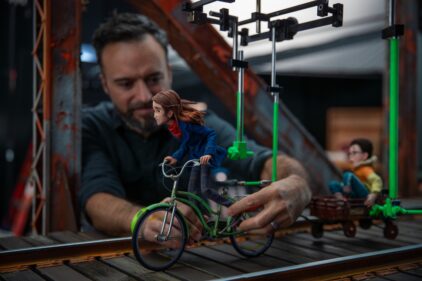
From its opening scenes, “Wildwood” looks unlike anything you’ve ever seen. Long gone are the days when Laika was just a few people in a small studio making puppets for “Coraline.” This project has been in production for 15 years and required 136 sets, 231 puppets, and thousands of shots. VFX touch-ups have enhanced the puppetry, but the stop-motion animation’s attention to detail is strikingly beautiful, from the character designs and settings to how accurately Knight and his team capture both the beauty and the oddity of the Pacific Northwest.
We meet Portland teenager Prue McKeel (Peyton Elizabeth Lee) as her parents (Jake Johnson & Maya Erskine) warn her never to take her baby brother Mac out of the house. She assumes the tales of the outside world’s dangers, especially the “Impassable Wilderness” on Portland’s outskirts, are just fearmongering, but then she watches as crows literally abduct her brother from a playground slide. Prue and a classmate named Curtis (Jacob Tremblay) chase the murderer into the woods, entering an enchanted world that they quite literally shouldn’t be able to find.
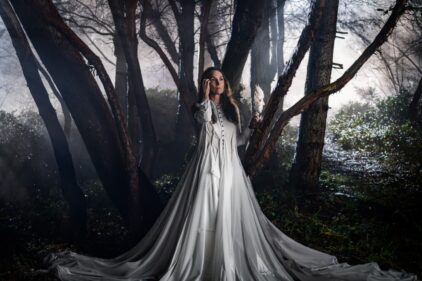
Before you know it, Prue and Curtis stumble upon a group of talking coyotes, part of an army for a violent leader named Alexandra (Carey Mulligan), a dowager governess at the heart of Mac’s kidnapping. Alexandra wants the baby boy because of a soul-shaking tragedy, the kind of thing that can drive someone mad, and it’s part of “Wildwood”’s thematic fabric: a film about how one responds to adversity. It can make you a hero even if you’re a child or a rat; it can make you a villain if you let it, especially if you’re unwilling to let the natural world take its course. “Wildwood” reminds us that life can be both cruel and wondrous; what matters is how we interact with it.
This duality shows up in one of the film’s funniest beats: Prue walks into a crowded lobby and sees humans and talking animals going about their day, saying she’s not sure whether it’s “terrifying or adorable.” “Wildwood” is both. This world has abundant beauty, often in the production design and cinematography by the legendary Caleb Deschanel, but it also contains the kind of pain family filmmakers often shelter children from.
This is a movie with tragedy, betrayal, violence, death, and even a “sunnuvabitch.” (It’s PG-13 for a reason.) Like so much of our best animation, it respects its entire audience, including what the youngest viewers can comprehend, and it frames these momentous decisions by its child protagonists with emotional truth instead of easy answers.
Voice work is strong throughout, led by Lee, Tremblay, and Mulligan, and elevated by Mahershala Ali as a Bandit King, Awkwafina as a rat, Angela Bassett as a golden eagle, Charlie Day as a coyote, Amandla Stenberg as a bandit, and many more. Jemaine Clement, Tantoo Cardinal, Tom Waits, Richard E. Grant, and Blythe Danner also made an impact in a project that clearly had no trouble getting A-list performers into a recording studio. None of the vocal work feels precious or simple; every cast member finds reality in these impossible moments.
If there’s a complaint, it’s that “Wildwood” tries to do so much in its 2-hour-plus runtime that it can feel almost exhausting. It’s got more plot than your average streaming series stretched out to ten hours, which makes it marvelously rewatchable but sometimes a bit scattered on first viewing.
While there’s something notable about a family film that believes in its young audience’s ability to unravel complex storytelling (as in “Ray Gunn“), it leads to sections of “Wildwood” that feel rushed, especially a flashback that explains Prue’s connection to the woods and the lack of development of the bandits into richer characters. It can also make it feel like not all the themes are given space to breathe. It’s also such a gorgeously designed world that the rare contemplative beats that let you appreciate it feel too infrequent.
One of the elements that makes “Wildwood” so memorable is how well it works in both the small beats and the big ones. Small choices in character and costume design are as memorable as the incredible set pieces, including a breathtaking bird chase and an epic battle straight out of “The Two Towers.” That’s the lineage of this film: Tolkien, Miyazaki, Carroll. And it earns the comparison to its influences by finding what made those projects timeless, rather than just paying homage through imitation.
“Wildwood” is Laika’s first film since 2019 (“Missing Link”) and Knight’s first with the company in a decade (since “Kubo”). It’s a reminder of how much better the animated world is when they’re an active part of it, challenging themselves and others to think differently, more ambitiously. The wilderness is only impassable if you let it be.