The trilogy that started with “WandaVision” and continued in “Agatha All Along” culminates in Marvel Television’s “VisionQuest.” And that title is more than wordplay. Like the previous seasons, this final chapter in the “WandaVision” Trilogy explores a different side of the Maximoff Family Saga, yet it follows franchise rules. How? By holding up a mirror to its main character, watching them shatter, and seeing whether they can rebuild the pieces into someone new.
“Who could it be? Believe it or not, it’s just me.”
Named for indigenous rites of passage, a vision quest is a spiritual, self-reflective tradition that typically marks the transformation from boyhood into manhood. Here, series creator Terry Matalas—and his writers’ room—guide White Vision (Paul Bettany) on a quest to go from synthezoid to personhood. Wish him luck. The obstacles are more than a notion, and Vision’s head is filled with more personalities and emotional upheaval than Riley in “Inside Out.”
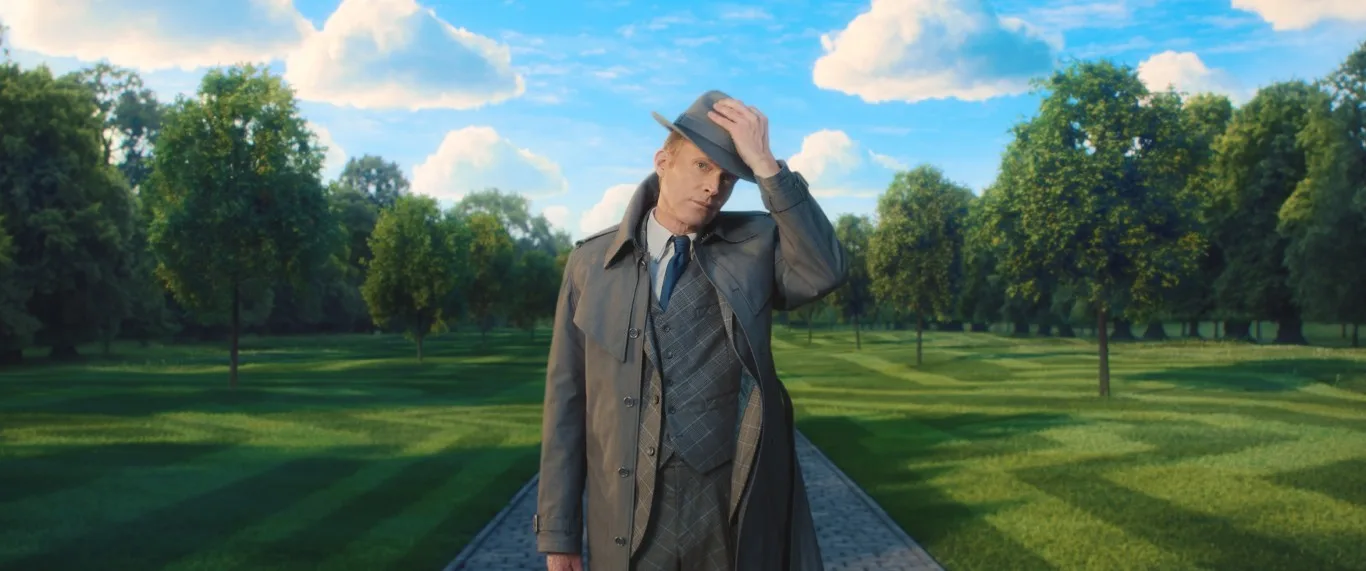
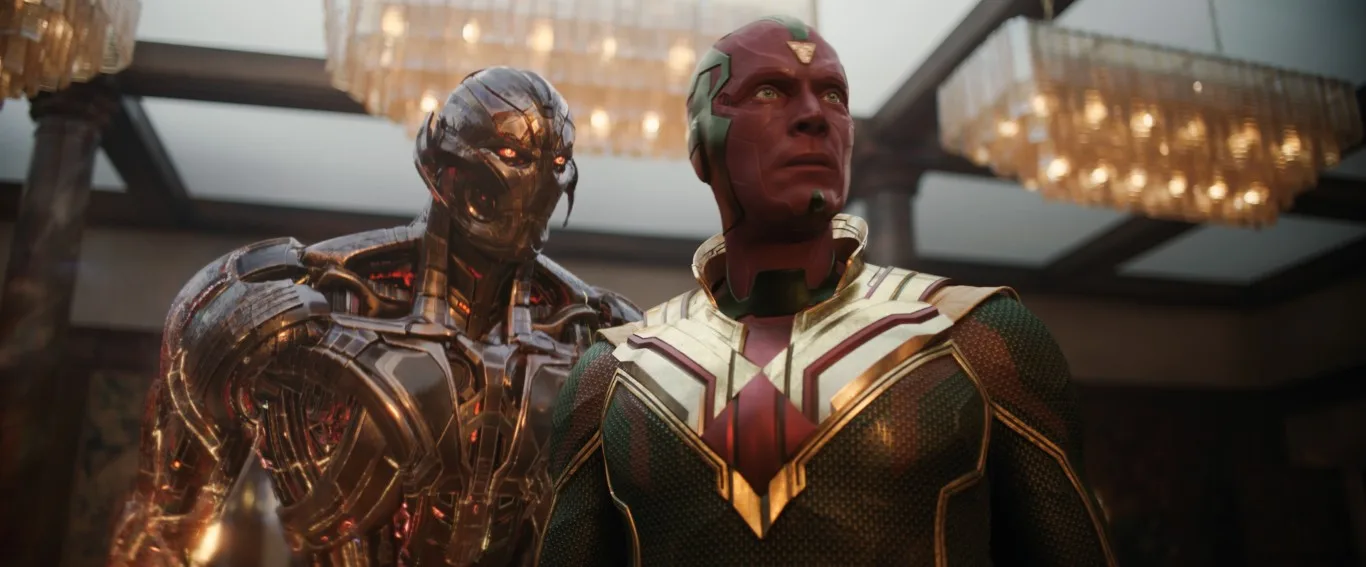
Arriving exclusively on Disney+ on October 14, we find White Vision in Edinburgh, working in a pub and trying to relearn what it means to be human-ish. The original Vision earned his humanity and died with it intact. The hexed version, resurrected by Wanda Maximoff (Elizabeth Olsen), was a husband and father. This new iteration of Vision is confused. He’s not the empathic being he used to be, but he isn’t the weapon the S.W.O.R.D. Agency (Sentient Weapon Observation and Response Division) wanted him to be. The question of who he’s become bothers him more than the antagonistic Ultron (James Spader) who lives in his attic.
“This house is architecturally and emotionally unstable.”
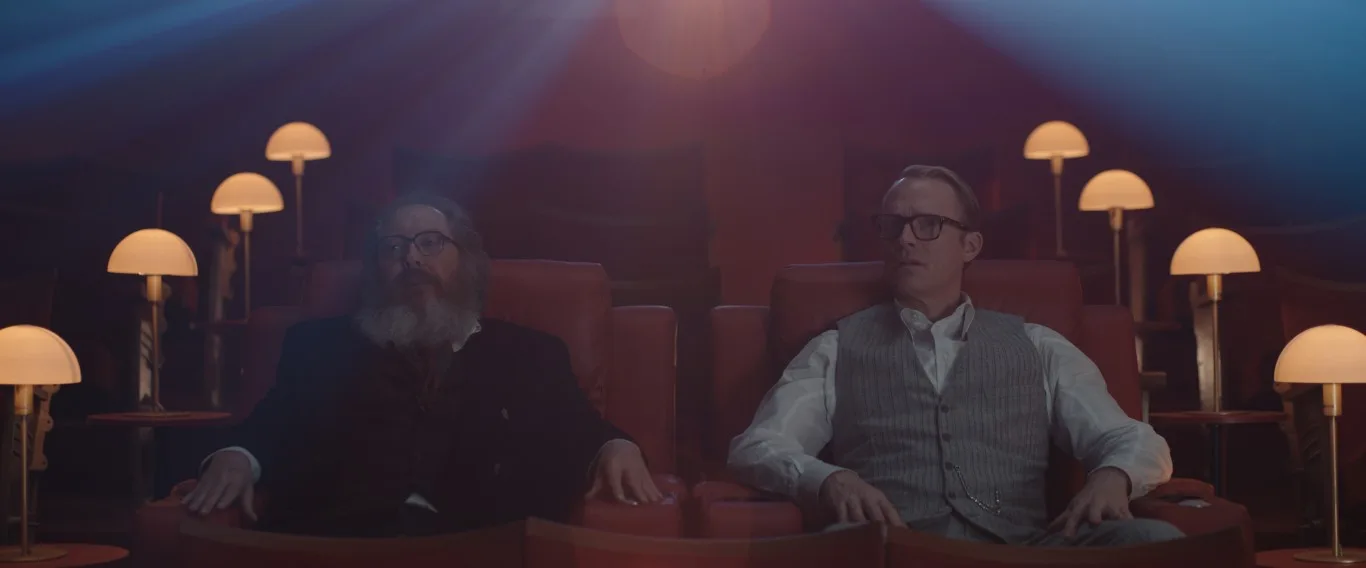
Yes, Ultron lives upstairs. Yet Vision’s home doesn’t exist in the real world. It’s a virtual reality replica of a family manor that he shares with various A.I. siblings from Tony Stark’s lab: J.A.R.V.I.S. (James D’Arcy), E.D.I.T.H. (Emily Hampshire), F.R.I.D.A.Y. (Orla Brady), D.U.M-E (Henry Lewis), U (Jonathan Sayer), and the previously mentioned big daddy Ultron. That “Inside Out” reference comes into finer focus here. They all live together in Vision’s head, helping with his daily life, while serving functions closely aligned with their original purposes. “VisionQuest” is all about family—whether fast, furious, or otherwise. That’s why I gave Ultron a patriarchal title; despite villainous tendencies that are as deadly and hilarious as ever, the MCU’s Evil Pinocchio sees himself as Vision’s father.
“When a monster has your son, don’t be the ship. Be the goddamn king.”
In a surprising reversal, White Vision doesn’t see himself as a father. In his mind—if not in his heart—those memories and that life belong to someone else. That’s bad news for Thomas Shepherd (Ruaridh Mollica), a Scottish lad who emerged from a near-death experience with Tommy Maximoff’s memories (and his speed powers). Which is why the assassin known as Paladin (Todd Stashwick) is holding him hostage.
If that sounds complex, this game of cyber cat and mercenary mouse has only begun. Or maybe that’s mercenary cat and cyber mouse. Turnabouts, twists, and callbacks come at us fast in “VisionQuest,” but even without knowledge of the “Avengers” movies or the rest of the trilogy, it’s not hard to keep up (although it’s a lot more fun when you recognize the Easter eggs). Either way, this 8-episode run is fun and funny. It’s also high-octane and deadly, while interrogating the nature of identity.
“What is grief, if not love persevering?”
“WandaVision” was a psychological sci-fi thriller, “Agatha All Along” was a paranormal portal fantasy, but “VisionQuest” is a cyberpunk family adventure with big nods to classic TV and pop-culture films, and embellished with a cake topper of a serial killer known as Butcherbird. Underpinning the action and drama, the series leans on the history of synthezoids, going back to 1939 and the Synthetic Man—the original Human Torch. Along with that touch of Marvel trivia, it mentions Tony Stark, Bruce Banner, Daredevil, Punisher, and Werewolf by Night, or possibly Man-Wolf. A lot is going on. One could call it an MCU and Marvel Comics smorgasbord, but the show takes moments to breathe. That’s when it gets philosophical: When does something synthetic become “real”? What defines family? Is a soul defined by the body it inhabits or the memories it holds?
With its delightfully retro world-building, layered banter, and performances that paint rich character arcs filled with yearning for greater meaning in a universe that questions their value, “VisionQuest” may lean too hard into its poetics. Perhaps? The storytelling operates in the slipstream of lines like “What is grief, if not love persevering?” Yet, in its earnestness, “VisionQuest” is charmingly enthralling with just enough interplay between light and darkness to make us feel it—even if it’s a little goofy at times.
One of the smartest things the creatives behind the series do parallels something the great horror writer Junji Ito does so well: they utilize our understanding of everyday objects, scenarios, and relationships to ground the fantastical in the relatable. Whether it’s sadness, science, sanity, second chances, or a good giggle, its sense of connection allows “VisionQuest” to stick the landing.
Fathers and sons, siblings and sacrifice are the lifeblood of the series, but it’s also about love in every form, including the trilogy’s penchant for epic love stories. The cast is vast; there are too many players to name, but here are a few highlights. Mollica gives us a fully 3-dimensional Thomas, rendered in mercurial shades and depth. Meanwhile, Spader and T’Nia Miller, as a new version of the comic book character Jocasta, give equally complex, emotionally complicated performances with dubious motivations. The pair could easily win Emmys for their performances, especially in Episode 6. Beyond Bettany and Spader, who live up to their calling cards, Mollica and Miller are the revelations here—bar none. Yet that praise comes with a nod to Lauren Morais’s kleptomaniac Lisa, and Hampshire’s E.D.I.T.H.
As I mentioned, this series overflows with plot and character dynamics, but revealing its secrets would spoil it. “VisionQuest” is the Vision’s identity crisis. It’s also about artificial intelligence and personhood—especially poignant topics these days. At the crossroads of science fiction and the MCU, it tackles the poetic and the philosophical while avoiding pretentiousness by leaning into cheesiness and pop-culture nostalgia.
“VisionQuest” does many things, but it’s never boring. Fans of the franchise are being rewarded. This is what happens when the MCU takes its time developing a series, and it’s a fitting finale to what “WandaVision” jump-started.
Full season screened for review. Premieres October 14th on Disney+.