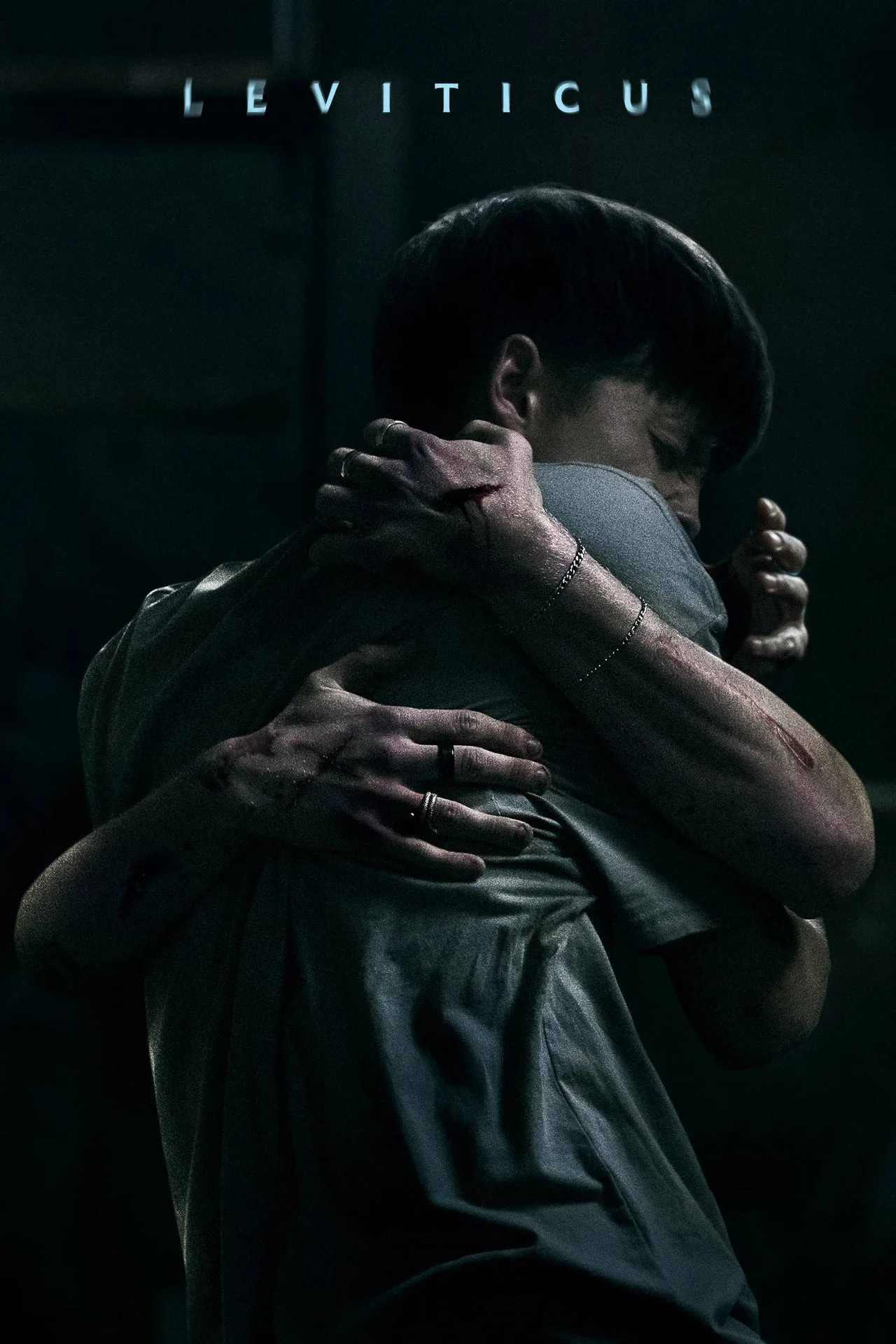
Desire and longing are states of being that tether one to what it means to be human. “Leviticus,” a romantic horror, experiments with the idea that one’s desires can become one’s worst fears.
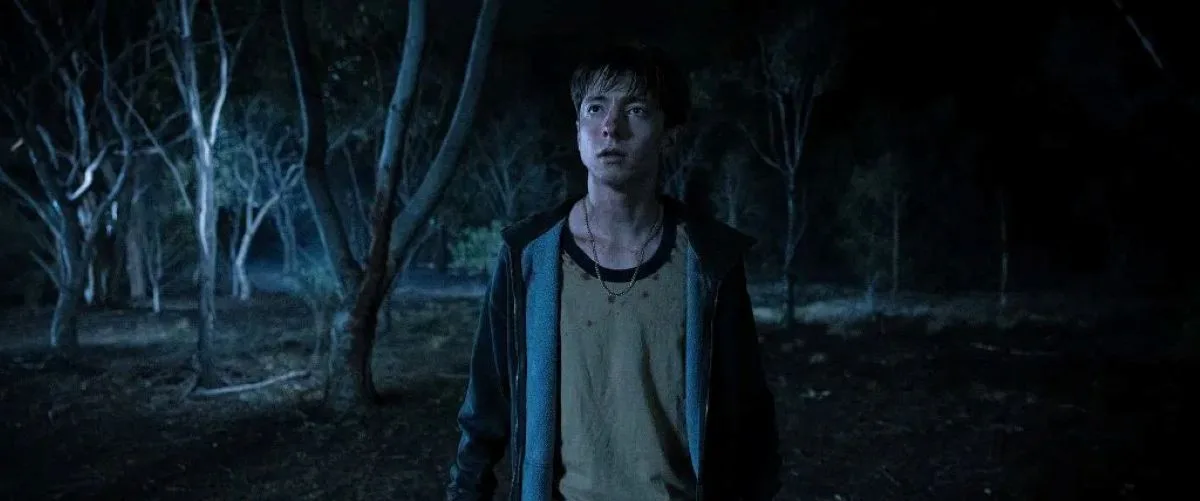
The movie follows two teenage boys, Naim (Joe Bird) and Ryan (Stacy Clausen), as they discover a mutual attraction to one another and the consequences of acting on it. In their rural, religious Australian town, it appears everyone attends the same church, making it easy for everyone to know everything about one another. Bird embodies a naïveté that perfectly personifies what it means to have an unrequited crush while navigating the complexities of maturing and understanding oneself. All the while, Naim is under the microscope of being the new kid, and there is a bit of an unexplored oddity in his dynamic with his mother (Mia Wasikowska).
The film opens with Naim and Ryan riding their bikes through open fields and to abandoned warehouses, seeing snakes in the grass along the way. Their attraction is first realized just as their roughhousing suddenly slows, yet neither pulls away, even though it’s a cold encounter. A muted filter washes over the entire movie, leeching the warmth from every moment. When Naim catches Ryan being intimate with another classmate, he’s overcome with jealousy and tattles to their pastor. In passing along an act of betrayal, Naim was not prepared for each of his classmates’ parents to pursue conducting an exorcism, equivalent to conversion therapy, to expel the boys’ impure desires.
The crisp sound of silence, right as the seance pauses, summons something sinister. Throughout the entire film, there is an emphasis on the soft sounds. In the days to follow, both Ryan and Hunter begin to act odd. The audience sees the figments of their fractured imaginations, but to Naim and others, it appears as if the two are talking to nobody. As the camera moves, smoothly shifting the perspective from omniscient to limited, it begins to blur our understanding of who and what is real, particularly as the plot progresses. A haunting hum underscores the unsettling sense of what lurks, adding complexity to a plot that is simple and straightforward.
When Naim’s mother discovers he has been lingering around Ryan, her shame in his behavior sends him into the hands of the quasi-deliverance healer (Nicholas Hope), who cursed the others. As Naim begins to endure the horrors of the shapeshifting spirit, it becomes apparent that the entity takes the form of the person they most desire. Interestingly, as this concept becomes clearer, there is a clever scene in which Ryan goes into a photo booth with someone he believes to be Naim; when the film develops, Ryan is actually sitting alone.
Realizing they’re both burdened by the same beast, Naim and Ryan attempt to find solutions to this curse. Along the way, every detail of the central conflict’s construction is spelled out. Because the spirit only appears when they are alone, the two boys stick together as much as possible, but soon they’re driven apart when Ryan learns Naim is responsible for the entire onslaught of unfortunate events. When this significant rift between the two closest characters occurs, the story loses its redeeming relationship. There is a collective fear that they will have to fight these demons alone, forever. In explicitly underscoring the main purpose of the curse, the story also loses a bit of steam—the entity has won; “it wants us to be afraid of one another,” is repeated as if that recognition will ward off forthcoming threats.
Facing their demons in solitude forces the audience to realize that we ultimately don’t know much about any of the characters. It’s as if everyone is caged to the confines of the movie; even during a brief reflective sequence of Naim and his mother’s past, little is revealed. This does not necessarily prohibit one from understanding each character’s decision, but it does limit the extent of what can be inferred. Broadly, it comes across as careless, even if that is not the intention.
Despite some faltering in fleshing out the script, it’s clear that director/writer Adrian Chiarella wants to convey the damage caused by homophobia and exclusion. While “Leviticus” mostly manifests this pain through physical harm, there is an evident mental battle in denying desires because of internalized guilt. Bird and Clausen’s performances bring an elevated energy to the premise, and their chemistry causes the overall film to come across as more romantic than horrific. After all, love wins.