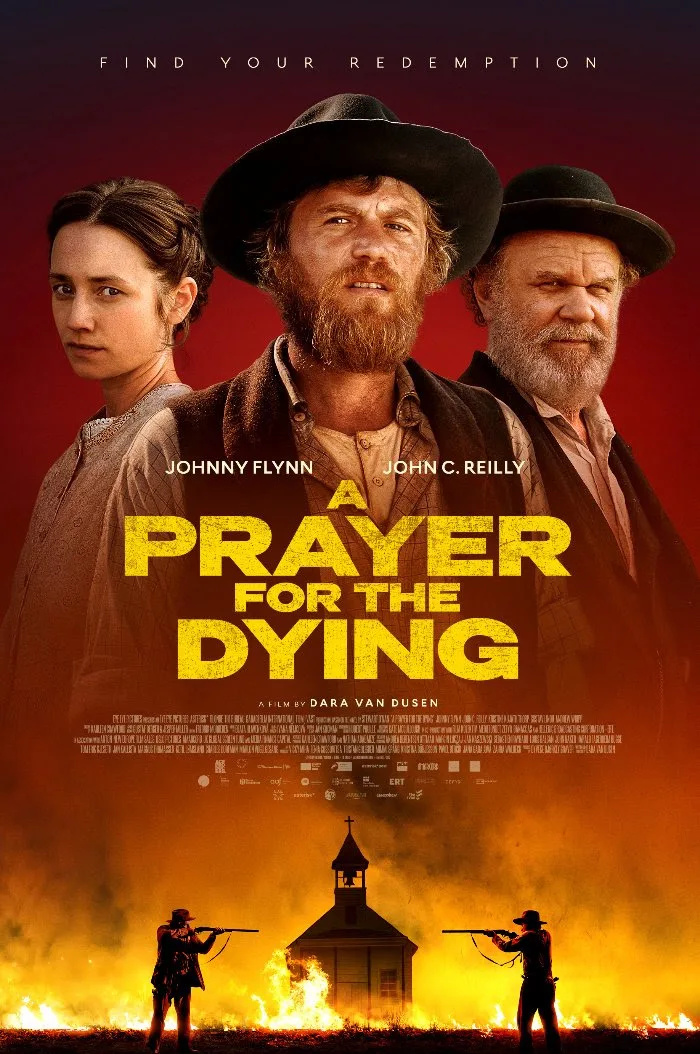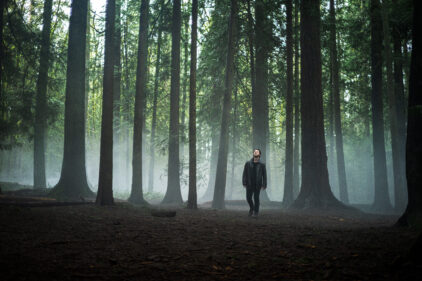

Dara Van Dusen’s “A Prayer for the Dying” is one of the bleakest Westerns ever made. Not only is it thematically and textually brutal, it’s washed in such a dust-brown color palette that you almost want to cough while you’re watching it. The overwhelming misery of Van Dusen’s film leads to some stretches that pull on the momentum, using pregnant pauses so long that you might think the film has frozen. But the destination is worth the journey as “A Prayer for the Dying” closes with some of the most memorable imagery at this year’s Fantastic Fest, a vision of a man given no options as the fires of Hell swirl around him. Sometimes, prayer just isn’t enough.
While “A Prayer for the Dying” has been in production for over a decade, and while it is based on a 1999 novel by Stewart O’Nan, it’s quite impossible to not read COVID allegories into this story of a small town beset upon by Diphtheria, which leads not only to lockdowns but battles of science vs. faith. If someone told me it was written directly as a response to the chaos and divisions of the 2020s, I would believe it.
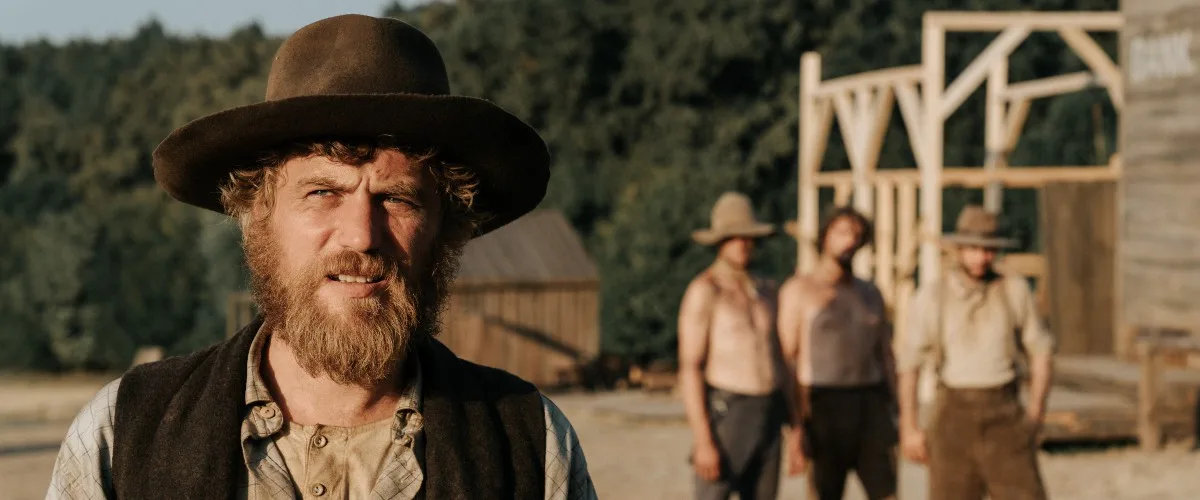
“A Prayer for the Dying” takes place in 1870s Wisconsin in a town called, believe it or not, Friendship. It will be anything but friendly for Sheriff Jacob Hansen (Johnny Flynn), who also happened to be the town priest and undertaker. He will have to fulfill all of his job duties when disease comes to Friendship. The town doctor (John C. Reilly) has immediate, unshakeable advice: Block passage in and out of town and lock it down. Jacob’s wife insists that they leave, taking their vulnerable baby daughter away from all of this, but he refuses to leave his people behind. He’ll regret that decision. As plague rolls into town, another threat surfaces on the horizon as smoke fills the air. A forest fire is headed toward these dying people in lockdown and if disease doesn’t get ‘em then the flames probably will.
To her credit, Van Dusen doesn’t soften the horrors of the plot description above. Men, women, and children die in this film in ugly, horrible ways, and it’s a movie that never shies away from the misery that covers the setting like a cloud of dust. One could read it as a commentary on the futility of prayer in that it can only do so much when the planet seems to be actively trying to kill you. It leads to a film that can be emotionally draining, and it often doesn’t quite have the cinematic depth to offset the nonstop nihilism. Even Flynn and O’Reilly seem almost in a daze, zombies in a movie that’s really about the inevitable dead.
And then Van Dusen and her cinematographer Kate McCullough get to their final act, which climaxes in a stunning sequence of shots aboard and around a train. As smoke and dirt fill the air, “A Prayer for the Dying” becomes almost Boschian, a journey into Hell on Earth that is jaw-dropping in concept and execution. There’s a version of the film that builds to this 15 minutes more eloquently, but it’s the rare time when the final act overcomes the previous two to such a degree that the flaws will fade away in memory.
It’s also impossible to shake the vision of this film as a commentary on how the world has struggled 150 years after the time in which it is set. It’s a story about a world that can’t agree on what to do quickly enough to do anything effectively. A religious leader on the edge of town has influence over the townspeople and the storytelling, while Reilly’s give his doctor a sort of resigned awareness that he’s suggesting a sort of suicidal benevolence: Lock ourselves in this petri dish of diseases to avoid it spreading to the rest of the world. Sacrifice, science, religion, disease: This may be a 1999 book set in 1870, but it’s also extremely 2026. Maybe that’s the point? Everything goes in cycles. And sometimes it takes a plague or a fire to start over again. All one can do is pray.
This review was filed from the Fantastic Film Festival. It opens on October 9, 2026.