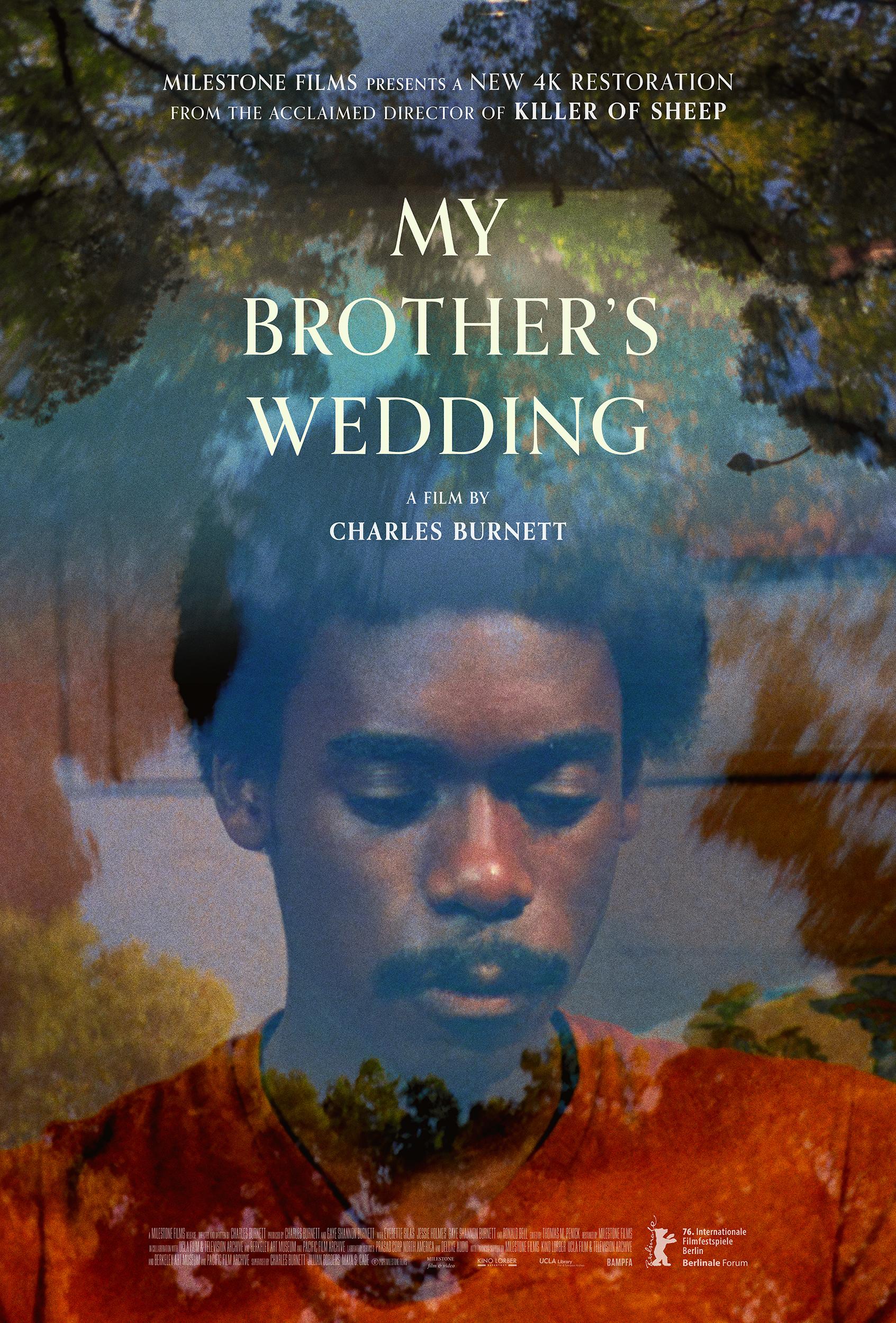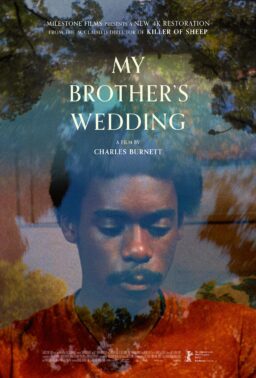

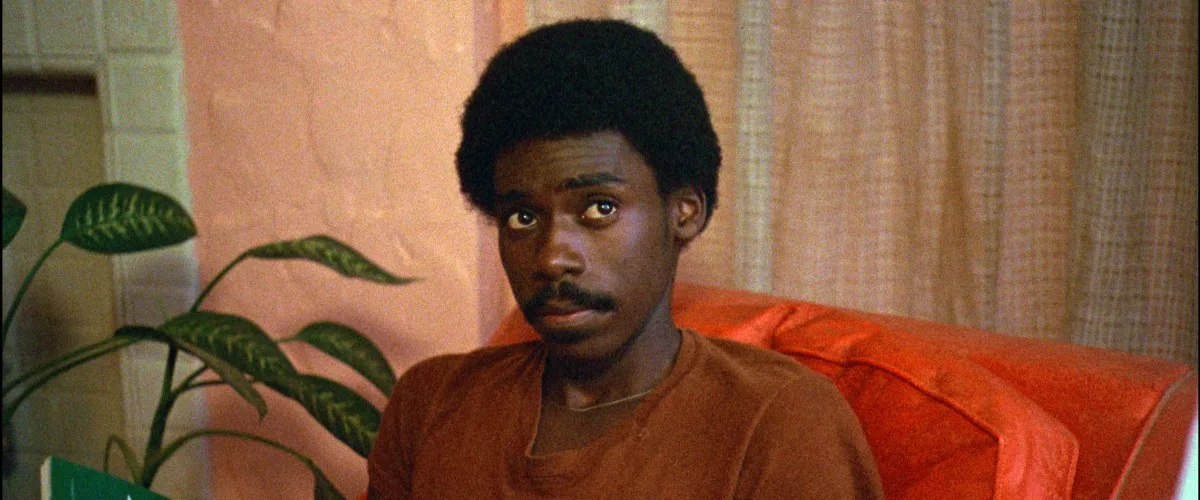
“My Brother’s Wedding” has always been an imperfect masterpiece. It’s gotten that distinction not through any fault in its acting, shooting, or storytelling. But because its director, Charles Burnett, never got to finish the version he originally envisioned.
Burnett’s follow-up to “Killer of Sheep,” itself partially defined by its tumultuous legal history, is a South Central Los Angeles-set tragicomedy about a young Black man who must choose between being the best man for his sibling’s nuptials and attending to his best friend. This modest yet critical story was ultimately taken away from Burnett by the film’s producers. They screened a rough cut at New Directors/New Films in 1983, where it received mixed reviews.
Burnett would ultimately get to complete a new version of the picture when Milestone Films acquired it, giving him the opportunity to partially restore his intent. Unfortunately, the available material Burnett could work from proved scant; no outtakes existed. Since 2007, it’s this iteration, a massaging of the mauled rough cut, that’s represented the director’s vision. Not anymore, as Milestone Films, UCLA Film & Television Archive and Berkeley Art Museum and Pacific Film Archive, with Burnett supervising and Jillian Borders and Maya Cade consulting, have made a 4K restoration that premiered at this year’s Berlinale.
Watching this revitalization of the director’s picture is like spending your entire life seeing the world in black and white and being introduced to color. It’s like an entirely different film. Hues that once looked light black now are vibrantly red; blues and greens have found their variations again, and the wallpapers and other homely objects that decorate these grounded physical locations are finally obvious to the eye again–re-establishing the vitality integral to this youth story. Seeing the film in this form is like a good polish revealing the former luster of a priceless heirloom.
“My Brother’s Wedding” is the quintessential example of Burnett’s status as a premiere intergenerational storyteller. The story depicts three waves of a Black family. The youngest is Pierce Mundy (Everett Silas), who works for his parents, Mrs. (Jessie Holmes) and Mr. Mundy (Dennis Kemper), at their dry cleaner and often cares for Big Daddy (Tim Wright) and Big Momma (Cora Lee Day), his grandparents. The film leaves it unspoken, but Pierce’s elders are part of the generation that arrived in Los Angeles through the Great Migration. Pierce and his brother Wendell (Monte Easter) represent two ends of the spectrum born from their sacrifices.
The two brothers also exemplify the kind of Black class divide that can happen within families. While Pierce is essentially a laborer, his brother went to law school and is set to marry Sonia (Gaye Shannon-Burnett). Pierce despises Sonia because he believes, and he’s not totally off-base, that Sonia and her well-to-do family of doctors look down on his family’s working-class roots. He’s openly antagonistic to Sonia, often claiming she was born with a silver spoon. Sonia can be equally cutting, deriding her future brother-in-law for being classless.
Nevertheless, for his mother’s sake, Pierce has agreed to be the best man for Sonia and Wendell’s marriage. It’s a decision that’ll have dire, unforeseen consequences when Pierce’s best friend, the troubled Soldier (Ronnie Bell), is released from prison.
Burnett is a master at conveying his characters’ thematic realities without didactic explanations of their backstories. For example, this isn’t Soldier’s first time being incarcerated. We learn this when Soldier’s mother (Sally Easter) asks Pierce to keep him out of trouble. We learn more about Soldier’s reputation when Pierce goes around asking to secure employment for his friend, with one person saying they hope Soldier never gets out of prison because he deserves to be locked up.
Considering Burnett shot “My Brother’s Wedding” in 1983, we can guess that Soldier got his nickname because he served in Vietnam and that he consequently is dealing with PTSD. None of these details directly relate to the audience, yet Burnett delivers them smoothly through impeccable writing and an acute ability to convey big emotion through small gestures.
Two moments always stick out to me when I watch “My Brother’s Wedding.” The first arises when Soldier returns home. His mother is understandably the first to embrace him; his father (Hobert Durham Jr.), who previously appeared stand-offish because he was alone and separated from his family in his few scenes, initially reaches to shake his returning son’s hand, then pulls him in for an overwhelming hug.
Anyone with older Black parents, who were a product of the 1950s, knows such affection is rare, showing how much Soldier’s family still loves and supports him. In another scene, a montage of sorts, Soldier and Pierce are hanging out when Soldier asks Pierce where all their friends have gone. Pierce doesn’t have an answer. But Burnett trusts the audience to know that the targeting of Black men in the prior decade took two forms: the draft and the heightening of the Prison Industrial Complex.
These sociopolitical undercurrents, which reflect the mood, feelings, and politics of a specific era, make “My Brother’s Wedding” such a rich document of the trials, hurts, and togetherness of Black life.
The same is true of the evocative soundtrack Burnett includes. Before “My Brother’s Wedding,” Burnett used R&B and Jazz tracks in “Killer of Sheep”; tenuous music rights kept that film relatively unseen until 2007, reflecting the spiritual weariness of Black folks enduring a low economic ceiling due to systemic racism.
In this film, the soundtrack, a mix of traditionalist hymns and soul ballads, represents the cultural pillars of these Black South Central residents. The opening, for instance, sees a Black man in a suit singing “Amazing Grace.” In the old restoration, before the color correction, his suit appeared black. In this new revitalized version, you can clearly tell he’s wearing a maroon striped suit and has several glistening gold teeth.
This scene is emblematic of the Southern roots that nourish the film’s humor and wisdom and of the imperative work accomplished in this 4K reimagining, which demonstrates how every corner of Burnett’s film is filled with symbolic characters whose presence and form offer significant meaning to the story of Black folks in Los Angeles.
Likewise, the tangible sets, such as the worn dry cleaners, and the realist performances settle us into this unique milieu with the precision of documentary filmmaking. Both strengths, of course, arise from Burnett’s creative upbringing in the LA Rebellion: a movement of UCLA students devoted to depicting palpable stories through truthful histories, settings, and people.
But he finds greater range here to exercise his narrative aims via smart location scouting and exacting casting. He found the perfect lead in Silas, whose demand for higher pay caused production delays that would see him abscond temporarily to the South to become a preacher, but whose truthfulness in the role imbues the character with a quiet tragicness that gives life to the terrible choice animating the second half of the film. Should Pierce show loyalty to his real family or his created one by either attending his brother’s wedding or his friend’s funeral?
Looking back on Burnett’s landmark film, one can see the Southern seeds that would inspire his gothic supernatural works: “To Sleep With Anger” and “The Annihilation of Fish.” One can also trace his desire to reclaim the cinematic representation of historical Black images, as seen in his later documentary subjects.
This restored version further attests to his clear proficiency with texture, color, and patterns, and to the lived reality of his subjects. Because of forces outside of Burnett’s control, “My Brother’s Wedding” will never be the movie he truly wanted. And yet, the many iterations that exist testify to Burnett’s continued reach for perfection, a pursuit that reflects the obstacles the Black creative spirit faces in the face of a tarnished American project.