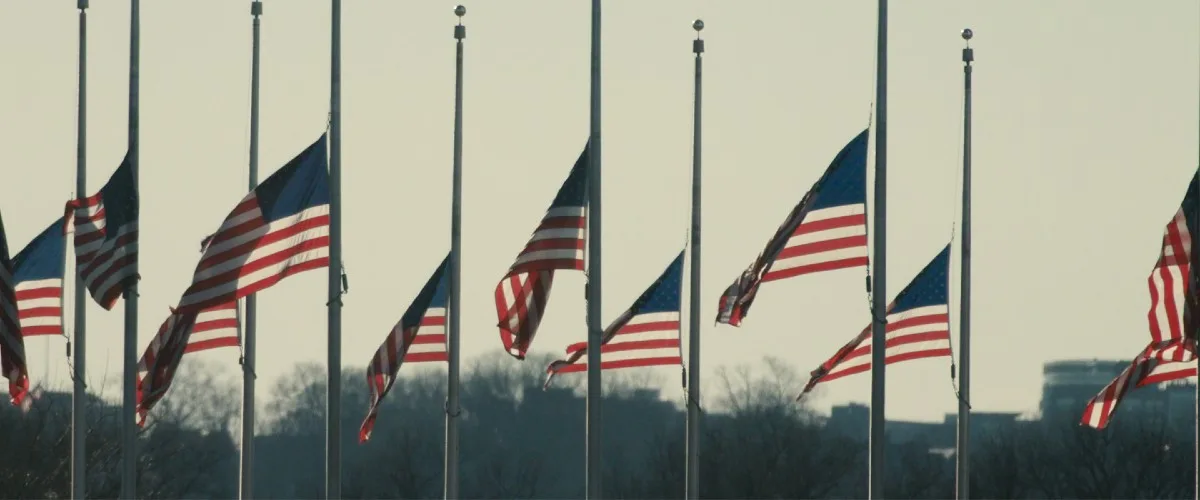
Roughly one-third of living Americans were either born after 9/11 or too young to remember one of the darkest chapters our nation has ever known. For tens of millions of younger Americans, it’s part of history, like Vietnam, Korea, and World War II.
The terrorist attacks of September 11, 2001, are among the most heavily documented events ever, but the Netflix documentary “Turning Point: Generation 9/11” takes a relatively fresh approach. With a handful of exceptions, the interview subjects were infants or toddlers 25 years ago. This isn’t about people remembering 9/11; it’s about the generation that inherited the world created by 9/11.
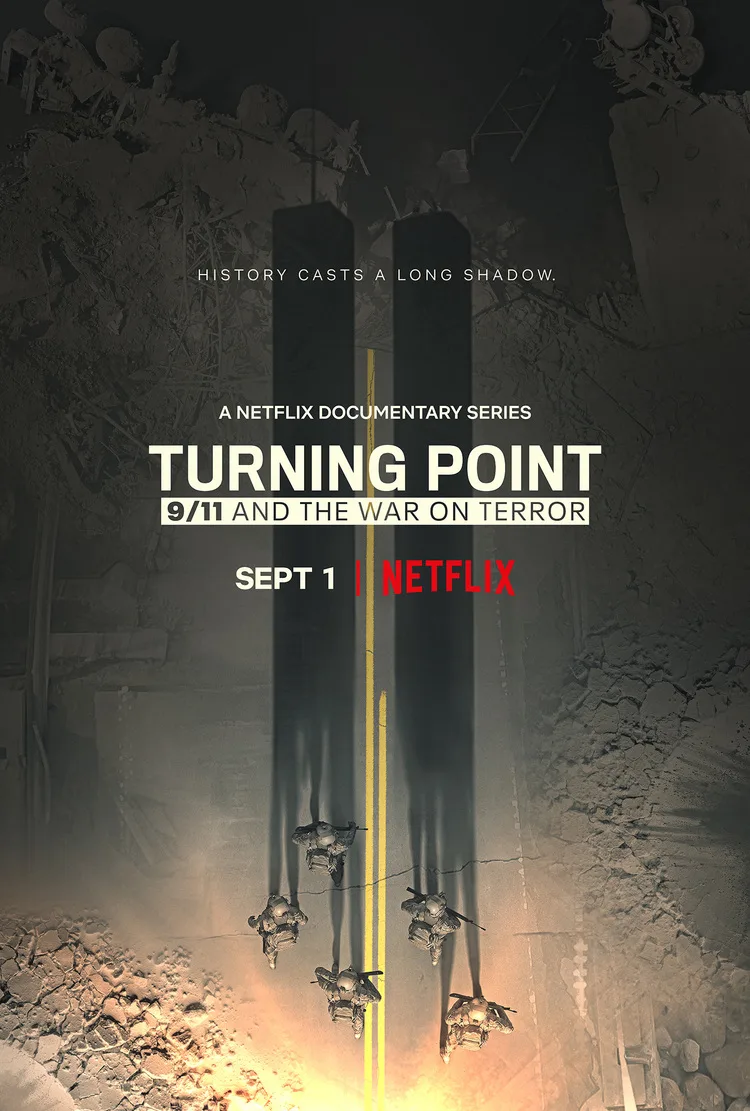
Director Brian Knappenberger is one of the best in the business, with previous works such as “We Are Legion: The Story of Hacktivists” (2012), “Scout’s Honor: The Secret Files of the Boy Scouts of America” (2023) and the five-part Netflix series “Turning Point: 9/11 and the War on Terror” (2021). This standalone documentary is essentially a follow-up to the 2021 series, establishing a through-line from 9/11 to the war in Afghanistan to the current war on terror within our own borders.
At times, the film tries to cover too much ground, packing 25 years of history into just 96 minutes. It’s most effective when we’re learning the stories of individuals who were infants, toddlers, or preschoolers on 9/11, and were profoundly impacted by that day and continue to deal with the aftershocks.
The first person we hear from is retired U.S. Marine Sgt. Michael Smoak, who was five years old and home sick from school in the care of his grandmother on 9/11. “I understood what happened, but not really why it happened,” says Smoak. From a young age, Smoak was determined to serve his country.
Later in the documentary, Smoak recounts what it was like for a 23-year-old Marine during the chaos of the evacuation at Abbey Gate in Afghanistan and having to decide who could exit the country and who would be left behind. As for the war itself, Smoak says his thoughts were, “What the hell have we been doing for 20 years?”
One of the most compelling figures in “Generation 9/11” is Jenny Pachucki, a former oral historian at the 9/11 Memorial & Museum who recorded interviews with survivors, first responders and family members. (Talk about the kind of work you can’t help but take home with you.) “When these people become real, and this event becomes personal, that’s the most powerful way to understand, ultimately, what this was and why it mattered,” says Pachucki. Among her most powerful stories is the tale of firefighters who gathered near the base of the World Trade Center just before going up, with one of them saying, “We may not live through today.”
Even though we’ve seen the news footage and amateur video from 9/11 countless times, it’s still a jolt to witness it again: the planes flying into the towers in Manhattan, the wreckage in Pennsylvania, the aftermath of the crash into the western side of the Pentagon. It’s also wrenching to hear the calls made by passengers on United Flight 93 and by people trapped in the towers who were beginning to realize that hope was gone.
Cut to the present, and we meet adult children who lost a parent that day, such as Laurel Homer, whose father, LeRoy W. Homer Jr., was first officer on United 93. “My entire life was…built around this,” says Laurel, who adds that she knows her father was a hero, “but I wish he didn’t have to be. Obviously I’m grateful that more devastation wasn’t caused, but at the same time, I still lost him.”
It’s heartbreaking to hear the stories of some of the children of victims. An Nguyen is the son of Khang Nguyen, who left South Vietnam after the fall of Saigon and worked as an electrical engineer at the Navy Command Center at the Pentagon. An calls his father’s story “the testament of the American dream.” He was just four when his dad was killed, and he recalls sitting in front of his home that day, hoping his father was coming home.
We’re also reminded that for some Americans, the way their fellow citizens looked at them and treated them changed instantly. Mohammad Razvi, who grew up in Little Pakistan in Brooklyn, says, “I was living the American dream…I never felt my identity was negative…[until] the attacks happened.” Razvi recalls Italian-American co-workers asking him, “How could your people do this?” His response: “These are not my people.”
The closing sequences in “Generation 9/11” are compelling, with a focus on Operation Allies Refuge and the American military personnel who were plunged into a chaotic and dangerous situation, as well as the sometimes-deplorable tactics of ICE agents in America’s own backyard. It’s journalistically solid and provocative, but there’s simply not enough time to cover so many angles of the 9/11 fallout in a single documentary. The film shines brightest when we hear the stories of the children of that day who are now young adults, still processing everything that happened—and living in the world that 9/11 helped create.