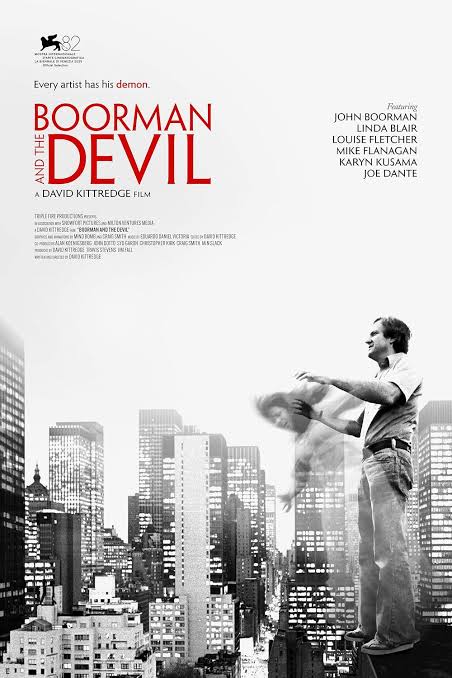

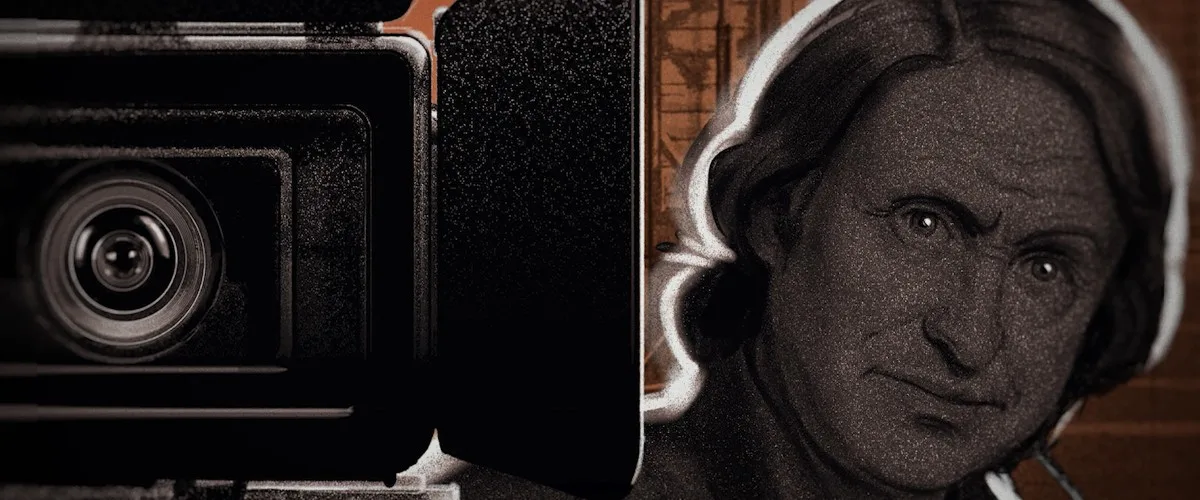
David Kitteridge’s “Boorman and the Devil” makes a convincing case that the film world would be better off if we had more risk takers like Sir John Boorman, even if they made the worst movie of all time. There’s a saying that you can learn more from failure than you can from success, but Kitteridge’s film takes that idea a step further by almost suggesting that you can’t have the latter without the former. Real artists take the kind of risks that will ultimately lead to occasional failure, and the most daring filmmakers in history are the ones who truly make an impact.
John Boorman was undeniably daring. How else could one describe putting Sean Connery in the “Zardoz” mankini? And say what you will about the ultimate quality of “Exorcist II: The Heretic,” you can’t call it lazy or uninspired. It is a crazy movie, one that Martin Scorsese notoriously preferred to the original, and a film that almost aggressively repudiates the expectations of people who loved the William Friedkin masterpiece. Kitteridge delivers a relatively straightforward but consistently entertaining doc on the harried making of the 1977 film that arguably shifted the way Hollywood makes sequels by teaching them that audiences really just want more of the same. It’s a Satanic lesson.
The greatest gift to Kitteridge’s production is the participation of Boorman himself, who charmingly details every challenging aspect of a film shoot that nearly killed him. It turns out that Boorman actually saw “The Heretic” as a response to the first film, almost a correction to what he saw as child torture—his film would almost rescue Linda Blair’s Regan, making her the hero instead of a repeated victim. Working from an ambitious script by William Goodhart, Boorman was excited by the concept of a metaphysical horror film, one that plays with human consciousness as much as classic variations of mankind being tempted by the devil.
Issues with “The Heretic” started right from the beginning. Boorman wanted to reunite with “Deliverance” star Jon Voight for the lead and even went to Christopher Walken and Jack Nicholson when Voight passed. They ended up with Richard Burton, a legend to be sure but someone who wasn’t exactly bringing his A game at this phase of his career. The Burton anecdotes in “Boorman and the Devil” are wonderful, but they all speak to one of the main issues with “Exorcist II”: A flat, unengaged lead performance. Burton checked out from the beginning, faking illness through much of the first readthrough and needing his lines fed to him on set.
The rest of the cast can be appraised much more positively. Blair gives her all to this new, mature version of Regan, and the actress speaks almost warmly about her experiences on the film. The great Louise Fletcher laughs a bit more openly at the film’s failures, but she also speaks about having few regrets. The most interesting creator interviewed in the film, other than Boorman, is Rospo Pallenberg, who basically admits to revising and making up the film as it went along, especially after Boorman was hospitalized by San Joaquin Valley fever during production. Some of the film’s most incoherent aspects seem to trace back to Pallenberg’s contributions. I’m not saying “The Heretic” was ever going to be perfect, but there’s something to the fact that when Boorman recut the film after its initial reception—yes, while it was already in theaters—it was widely considered to be improved. It feels like a film that got away from this undeniably accomplished director whose original ambition sent it in so many directions that no one could get a grip on it when he left.
To detail this cinematic saga even further, Kitteridge interviewed some of the best film critics working today, including great work from our very own Simon Abrams, and the truly brilliant Stephanie Zacharek and Bilge Ebiri. It may be a bit biased for a film critic to praise friends and colleagues, but it’s so nice to see smart, insightful commentary from some of the best in our business in a film like this—it elevates what could have been too inside baseball or could have even been too focused on fan response. (It’s also worth disclosing that there’s a hysterical clip in the film of Friedkin telling the story of the first screening of “Exorcist II” shot at the inaugural edition of the Chicago Critics Film Festival, which I produce.)
Friedkin hated “Exorcist II: The Heretic,” yet even he would appreciate what really matters about “Boorman and the Devil.” Both William Friedkin and John Boorman were filmmakers who took risks. One ended up with a horror masterpiece considered among the best films ever made; one ended up with a disaster often listed on compilations of the most hated flicks of all time. While the end result was drastically different, the starting point remains the same: Auteurs willing to challenge what’s expected of a Hollywood production. We’d all be better off with more people like them.