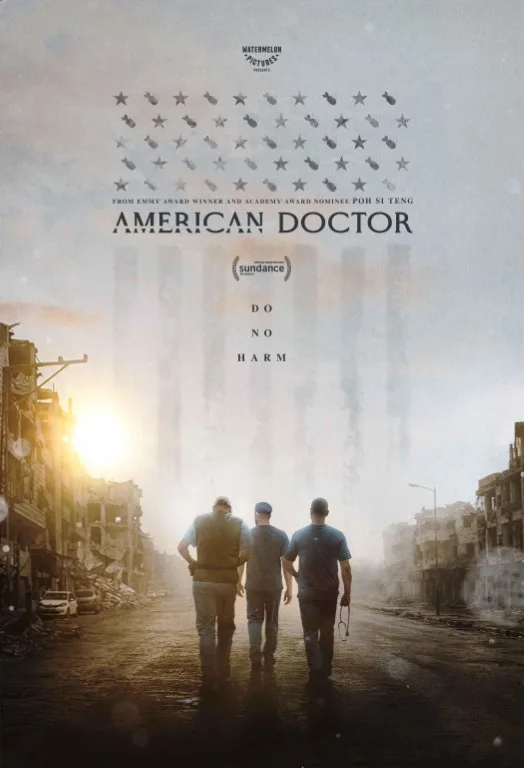

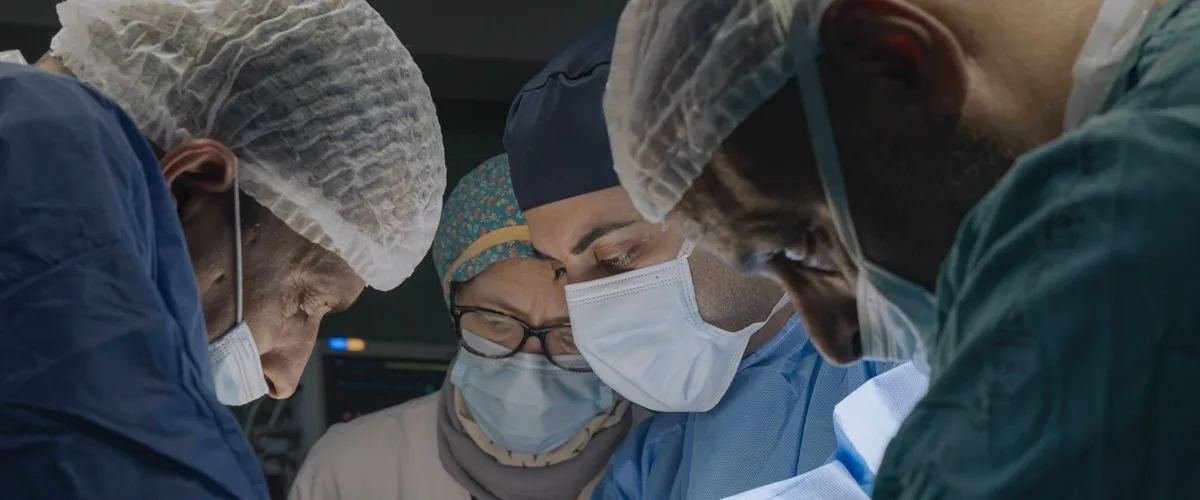
In the opening minutes of “American Doctor,” filmmaker Poh Si Teng sits with Dr. Mark Perlmutter, a Jewish-American surgeon (one of three medical professionals this film will track), over photos of mutilated children obliterated and terrorized by Israeli weapons fire amid the War on Gaza. Teng, who has produced video docs for the New York Times in the past (this is her feature debut), suggests she may pixelate or blur the devastating gore in the photos. To preserve their dignity, she says. Fire fills Perlmutter’s eyes as he protests. “Israel took away their dignity. You’re not dignifying them by not showing that.”
“You pixelate this, that’s journalistic malpractice.”
It’s a lesson that she seems to have taken to heart, as the ensuing ninety minutes of “American Doctor” refuse to flinch from the atrocities. It’s an infuriating, unflinching look at the heartbreaking genocide occurring in Palestine, and the medical and moral responsibility that healthcare workers feel to stave off so much mass death. More than a portrait of boots-on-the-ground bravery, it’s a testament to the ideological righteousness of figures brave enough to see the violence happening and do something about it, political opposition be damned.
Centered on the work happening in Khan Younis’s Nasser Hospital (a building that the closing minutes will show us was blown up by Israeli missiles) during a brief ceasefire in March of 2025, “American Doctor” homes in on the work and lives of three American doctors-turned-activists: The aforementioned Dr. Perlmutter, Zoroastrian physician Dr. Feroze Sidhwa, and Muslim surgeon Dr. Thaer Ahmad from Chicago. These are three figures who come from distinct backgrounds, geographical and racial and religious, but who share one distinct goal: To help save lives.
Perlmutter and Sidhwa manage to successfully ship out to Gaza to serve their shifts at Nasser; Ahmad, for cagey reasons relating to Israel’s revocation of his travel approval the night before his flight, has to stay behind in Jordan. Nonetheless, through their eyes we see them fight for Palestinian lives on two different stages—the surgical theater and the court of public opinion. While scrubbed in, their fight is simple: Save the life in front of you, typically a battered or bloodied child whose body has been brutalized by Israeli bombs. These moments feel immediate and unflinching, but there’s a moral simplicity that makes the virtue of their work most clear. There, they bond and laugh with their Palestinian nurses and medical professionals, as well as other international doctors coming to do the simple work of helping where aid is needed.
The thornier, more infuriating, and undeniably more frustrating stretches come when our subjects, Sidhwa and Perlmutter in particular, wrestle with the information war unfolding around them, their stint in Gaza, and the war itself. We see them bristle at CNN interviews that ask them to answer for IDF propaganda lines like secret tunnels under Gazan hospitals (which, they protest, do not exist; the only footage anyone has ever shown is CGI recreations, emptily asserted as proof) and conference calls where pro-Israel voices cry out that “Judaism is Zionism.” Sidhwa is the more measured of the two, using facts as surgically as he would a scalpel. Perlmutter, recognizing his white Jewishness affords him a privilege and protection his compatriots lack, is far more blunt. “Do you think there’s benefit in spanking the media like I did?” he asks Sidhwa at one point. (Ahmad, being Palestinian himself, is restricted to appearances at Palestinian conferences and reading out death threats on his social media; he has the most silenced voice of all of them.)
Teng’s approach is simple and observational, but occasionally teeters toward the didactic in ways that overstate the already compelling footage on display. The use of music here especially grates; there’s no need to lacquer sad-sounding strings over shots of bombed-out Gazan cities, or the exhumed former mass grave sites from previous air strikes. For much of the film, the cries of Gazan children, or the impassioned pleas of our doctors, sing its message clearly enough.
In two months, it will have been three years since the War in Gaza started, with no hope of a true ceasefire in sight. In keeping with our crisis fatigue, it’s easy to see how people have moved on, or let their eyes glaze over, to the war crimes still happening in that region. “American Doctor” is a potent reminder that, no, children are still being bombed, and a population is being ethnically cleansed, and it’s long past time for the violence to end. And if it won’t end, then at least the bravest of us can go in and try to stop the bleeding.