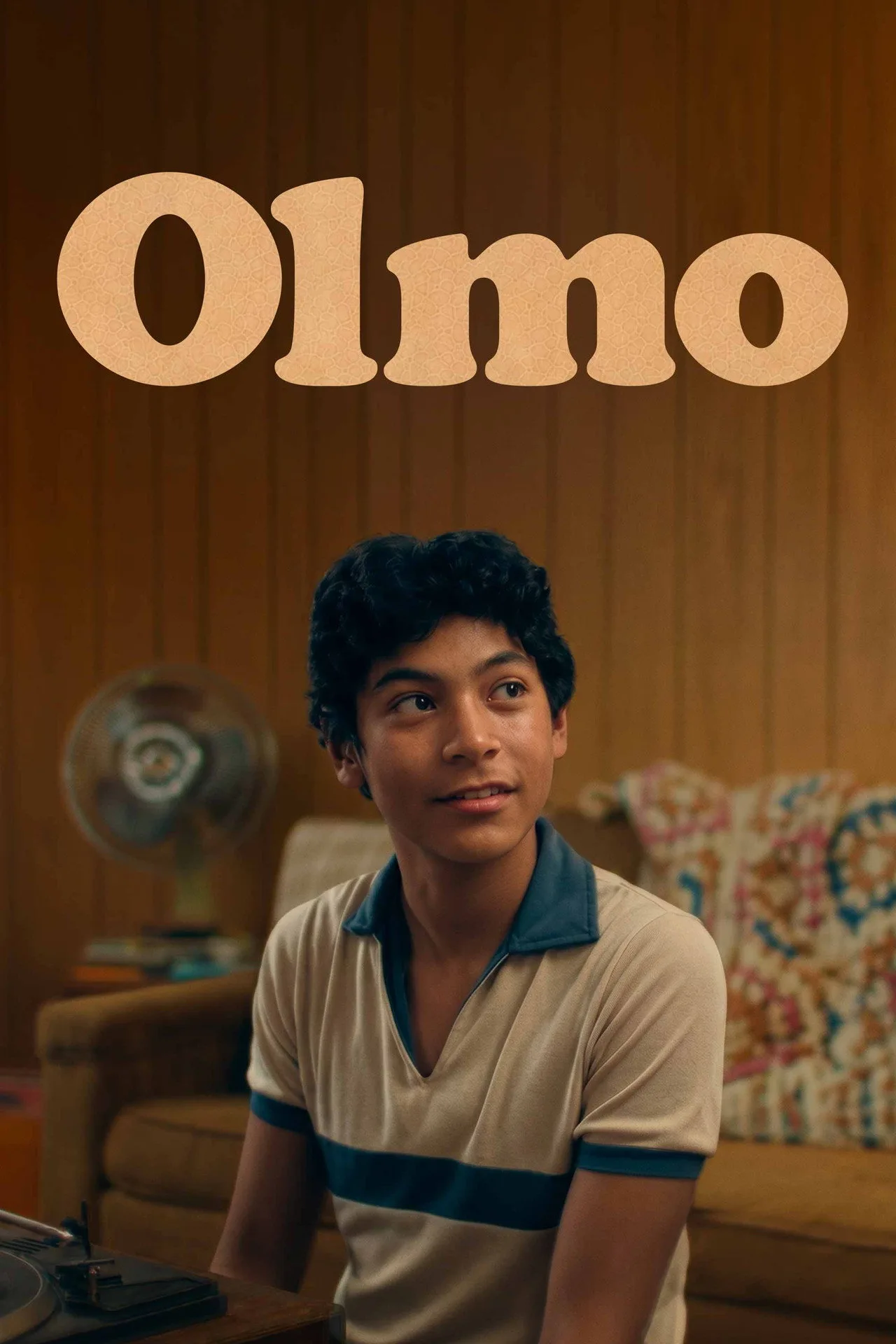
Teendom might as well be defined by misplaced priorities. Parties, crushes, and friendships are of the utmost importance, while things like family and responsibilities tend to push to the periphery. But it is itself a privilege to be able to fully embrace this era of experimental freedom. Some kids get a looser leash. Olmo (Aivan Uttapa), the namesake of Fernando Eimbcke’s film, much to his indignation, is not one of those kids.
The year is 1979 in a Mexican-American New Mexico town. Olmo’s father, Nestor (Gustavo Sanchez Parra), is bedridden by way of multiple sclerosis, while his mother works double shifts at a local restaurant in an attempt to catch up on their thrice-delayed rent payment. This leaves Olmo and his chain-smoking older sister, Ana (Rosa Armendariz), in a constant back-and-forth argument over whose turn it is to take care of him. They bicker over it as if debating taking out the trash or doing the dishes, treating their father’s care like a chore. Meanwhile, Nestor is left lying there, hearing it all, and waiting for someone to relent so that he can relieve himself, be turned over in bed, or fed.
Scenes such as these are hard to watch for obvious reasons, but at the same time, there’s a treatment in the writing and performance that is in part forgiving: Olmo and Ana are not particularly malicious. They’re brimming with angst and laziness indicative of most teens, throwing attitude their parents way like many of us likely did, but here, with more sympathetic circumstances. Chores are the thief of teen liberation, and when tasked with responsibilities above his maturity level, Olmo struggles to rise to the task and grow up a bit faster, juggling living out his own adolescence while inhabiting a somewhat inverted parent-child relationship.
He desires little more than the attention of his neighbor, Nina (Melanie Frometa), a slightly older, much more social teen girl, and the companionship of his best friend, Miguel (Diego Olmedo). This latter relationship, a tender, empathetic bromance, anchors the film just as much as the familial fraughtness, with each teetering the tone of “Olmo” between youthful, loyal compassion and impatient, doting responsibility. In simple terms, Miguel is a sweetheart (and Olmedo, a scenestealer). He’s obsessively proud of his new pair of oxblood boots; he’s the literal masked sidekick to Olmo, billowing his cape from the backseat of his mother’s shoddy car while the two play superheroes; and he’s the rooftop-climber who adjusts the TV antennae so that Nestor can watch the fights. He’s the patient and caring foil to Olmo’s more harried acts of rebellion (which in fairness, are masks of their own).
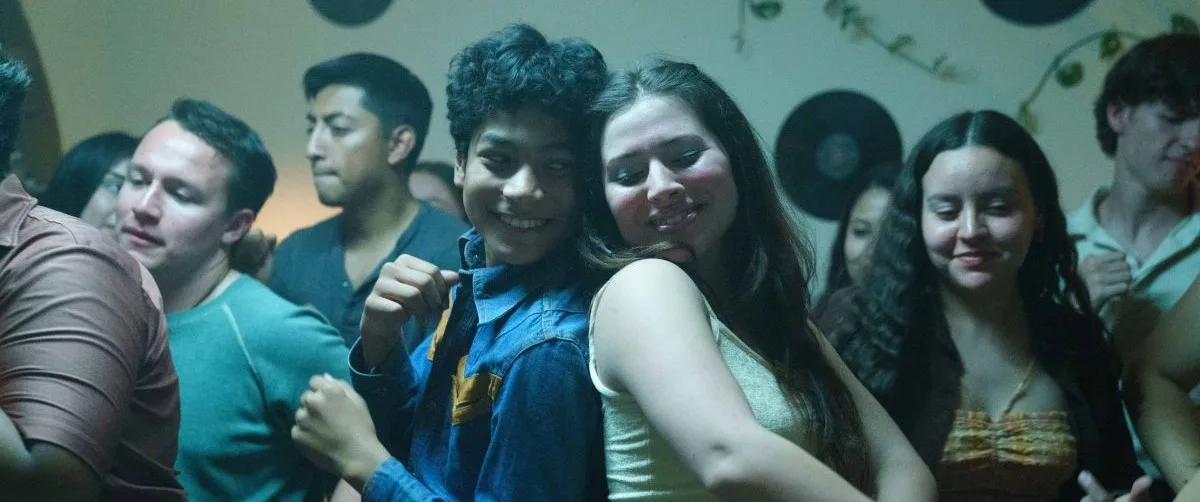
When an opportunity arises for Olmo to party with Nina, she only asks for one thing: for the duo to bring a stereo. So ensues a semi-“Superbad” style plot, where the friends must endure a list of escapades to make it to the party and get Olmo his shot at the girl. Yet unlike its structural predecessor, this film’s tribulations, while marked by a degree of chaos, trade gnarly, crude humor for skill tests and troubling misunderstandings that provide a level of existential clarity to its lead. Whether entering an at-home wake instead of the intended kickback or enduring Nestor’s painstaking tutorial on turntable restoration, each speedbump to the soiree culminates in a syllabus on patience and priorities while bringing both the friends, and eventually, the family closer together (however shakily these lessons are received).
Yet even as Eimbcke’s film turns its focus on these more delicate teachings and circumstances, a handful of moments truly embody both the glee and cringe of early teendom, such as a rehearsal (and eventual performance) to the soundtrack of “Saturday Night Fever” or the hapless awkwardness of an almost-first sexual experience. Authenticity is the greatest strength of “Olmo,” although it is sometimes a crutch to the film’s meandering pace.
Miguel and Olmo’s friendship takes center stage with a host of sincerity and tangibility at its back, but the inciting dynamic feels fairly forgotten throughout the midst of the film’s runtime. Nestor is the expositional factor of “Olmo” without being provided more thorough exposure. At times, his frustrations regarding his own immobility and vulnerability are hinted at, but for the most part, his helplessness is not only surface but monolithic.
The chronic illness is rendered opaquely, and largely through the lens of the burdensome approaches of Olmo and Ana. Only fleetingly do we receive a fresh breath in its depiction, and by then, the credits are a minute or so from rolling. So while the eponym makes clear the focus of the film, it doesn’t save a desire for more Nestor. However, the lasting impact of “Olmo” is our own nostalgia, the remembrances of what we once perceived as dire straits and the evolutions of what we now value.