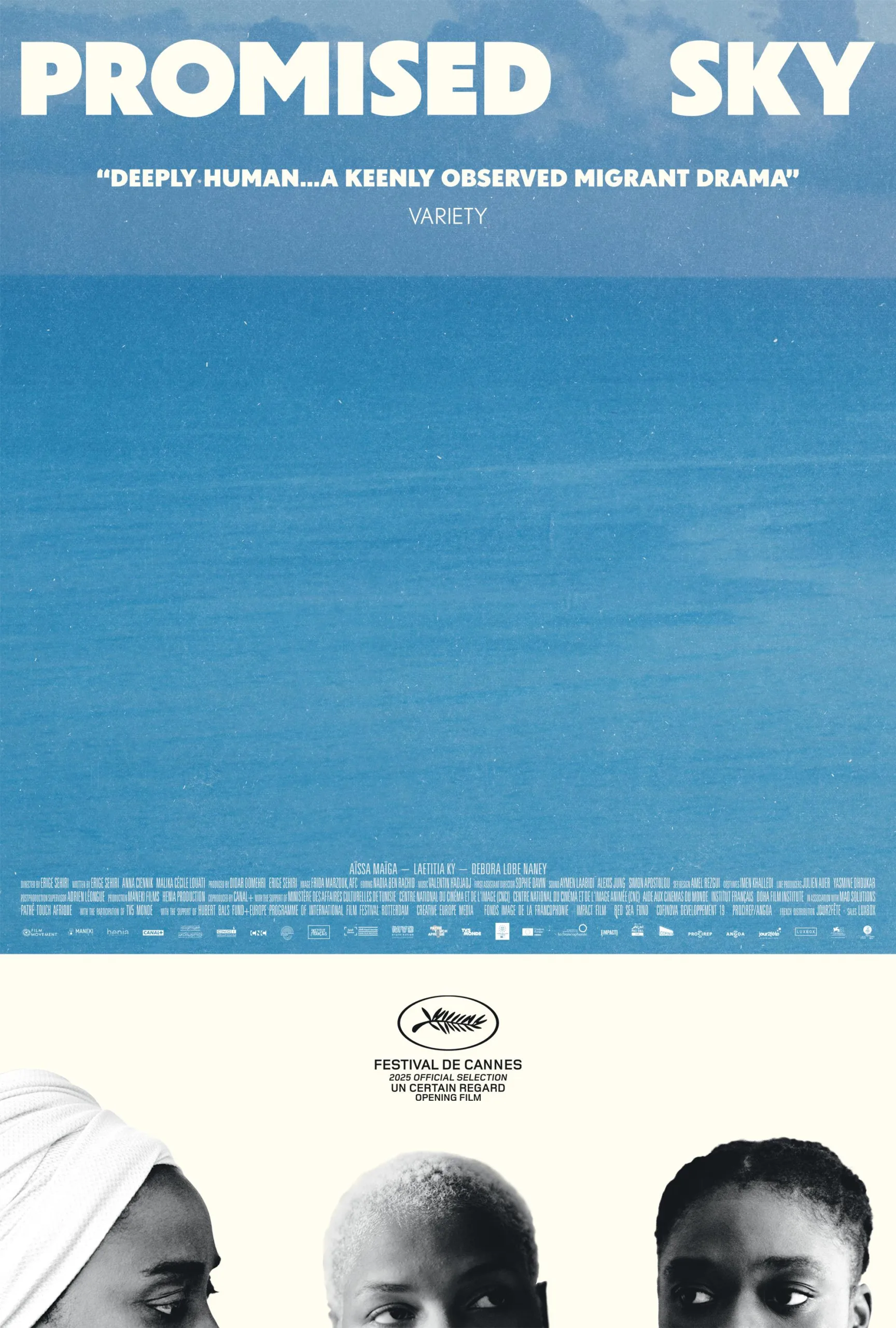
One of the first, and most striking, images in Erige Sehiri‘s “Promised Sky” comes right at the beginning: A trio of Ivorian women, all of different generations, huddled around a bathtub. They clean and scrub and inquire about the child sitting there, a young immigrant girl named Kenza (Estelle Kenza Dogbo) who miraculously survived a shipwreck and is all alone. They ask her what happened; as a child, she barely understands who she is, let alone how she got there. We never really learn the details, and neither do these women. They just know that Kenza needs to be cared for and protected, as all children of God do.
That sense of community solidarity and immigrant resilience weaves through the fabric of Sehiri’s quiet, observational drama, which tells the story of a tight-knit group of Black immigrant women trying to survive and make ends meet amid Tunisia’s unwelcoming immigration environment. A French-Tunisian filmmaker herself (and a former journalist), Sehiri builds on the concerns she’s raised in her prior works in her second narrative feature. Her camera moves with the free-wheeling naturalism of documentary (as in the short docs and first full-length doc, “Railway Men,” that marked her early career); like her first narrative feature, “Under the Fig Trees,” “Promised Sky” immerses itself in the solidarity and mutual aid within a group of women trying to understand and relate to each other in most curious circumstances.
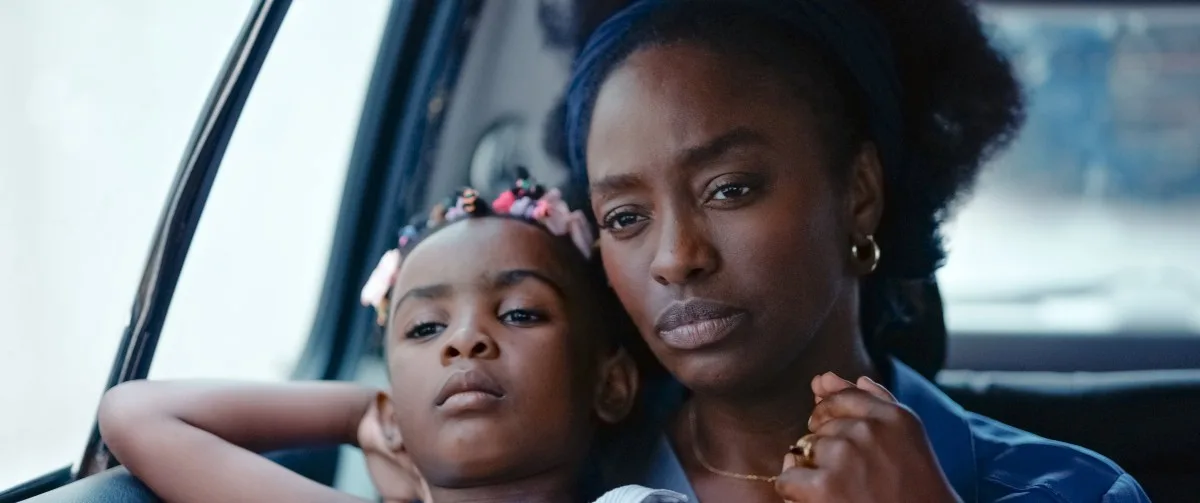
While Kenza serves as a potent symbol for the kind of dignity and innocence the Ivorian immigrant community wants to protect, she’s largely pushed to the sidelines, kept symbolic more than vividly involved. Instead, “Promised Sky” flits airily between the lives of the three women whose care she finds herself under. First, there’s Marie (Aïssa Maïga), a former journalist and pastor who opens up her home to host sermons and sing songs of worship (at the risk of losing her lease); also living with her are Naney (Deborah Lobe Naney), a young mother who hustles the streets of Tunisia and misses her daughter, who still lives overseas, and her niece, Jolie (Laetitia Ky), who perhaps foolishly depends on her student visa to guarantee her residency in the country. They are French speakers in an Arabic-speaking country, dark-skinned where the residents are light; they live in a nation in the grip of draconian crackdowns on immigration, and the line between safety and deportation grows ever thinner.
Rather than usher these women through a tidy, beat-by-beat narrative, Sehiri prefers to weave through these women’s lives and the little dramas that unfold in a looser, more experiential mode. Cinematographer Frida Marzouk coats the world in hazy, cold blues, stripping it of color save for these women’s skin—fitting, since that feature is what both brings these women solidarity and places a target on their backs. Their battlefields are arguments over logistics, over paperwork, of squabbling with landlords about leases and immigration officers over the validity of their visas. Even Kenza, the most innocent of them, is an enormous land mine waiting to go off: Would it be better to hand her over to the authorities? Or keep her within a community that loves and cares for her, but can’t keep her safe?
These questions and more sit at the heart of Sehiri’s world, keenly observed and rendered by each of its performances. Maïga is a portrait of dignity, her agony coming from the responsibility she places on herself to build this community, and the toll it takes on her. “You can’t forget that you live in a world with laws and rules,” Marie’s friend Noa (Touré Blamassi) warns her, as he asks her whether her care for Kenza is for the sake of the child or for her own sense of responsibility. Ky sells Jolie’s frustration at the lack of protection her documentation lends her in the face of open discrimination, and Naney’s vulnerability as a mother with a dream deferred is heart-rending (particularly in a late-film monologue that opens up all of the frustrations these immigrant women have been silently suffering through: “When will I reap the fruit of my perseverance?”).
“Promised Sky” is a film of episodes, of little slices of daily life that highlight the emotional struggles these women go through. Naney’s birthday passes bittersweetly, as her Tunisian friend, Foued (Foued Zaazaa), does his level best to lift her spirits, only to find that even his generosity has limits. Marie fights with her landlord to maintain and fix up the place, but he seems to know that he can get away with ignoring her because, well, what other option does she have? In one scene, we hear that Tunisians make the same claims about Ivorian immigrants eating cats that, well, American audiences might find familiar. When an entire nation seems allergic to your presence, existing there is an unrelenting struggle. They fight one battle after another to maintain their dignity and personhood, leaning on each other when they can but also recognizing that solidarity can only take you so far.
Often, “Promised Sky”‘s lyrical flow gets in its own way, as the gossamer treatment of time and narrative structure keeps you at a curious distance from the characters we see on screen. But then, Sehiri will lock in to one of many sustained close-ups of the faces in the room: All Black, mostly women, determined and vulnerable and human. They might be talking to someone whose face Sehiri refuses to show, like Naney’s child over a Zoom call, or an immigration official. Sometimes, she’ll just flip through one face after another of Ivorian immigrants lost in worship; singing together, eyes closed in spiritual comfort. Sehiri understands the power of the camera to capture the soul of a person in their visage, especially in such emotionally and politically turbulent times.