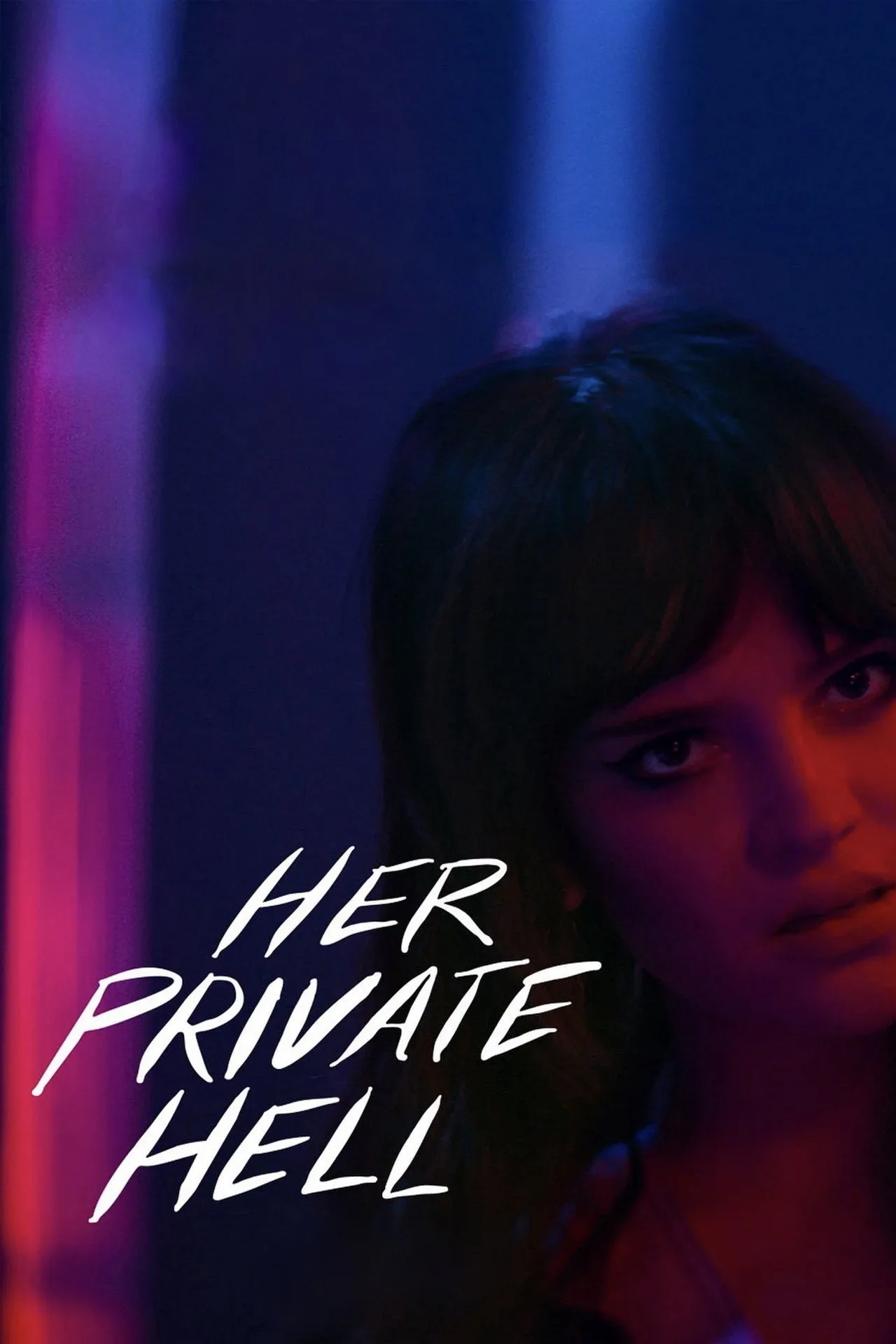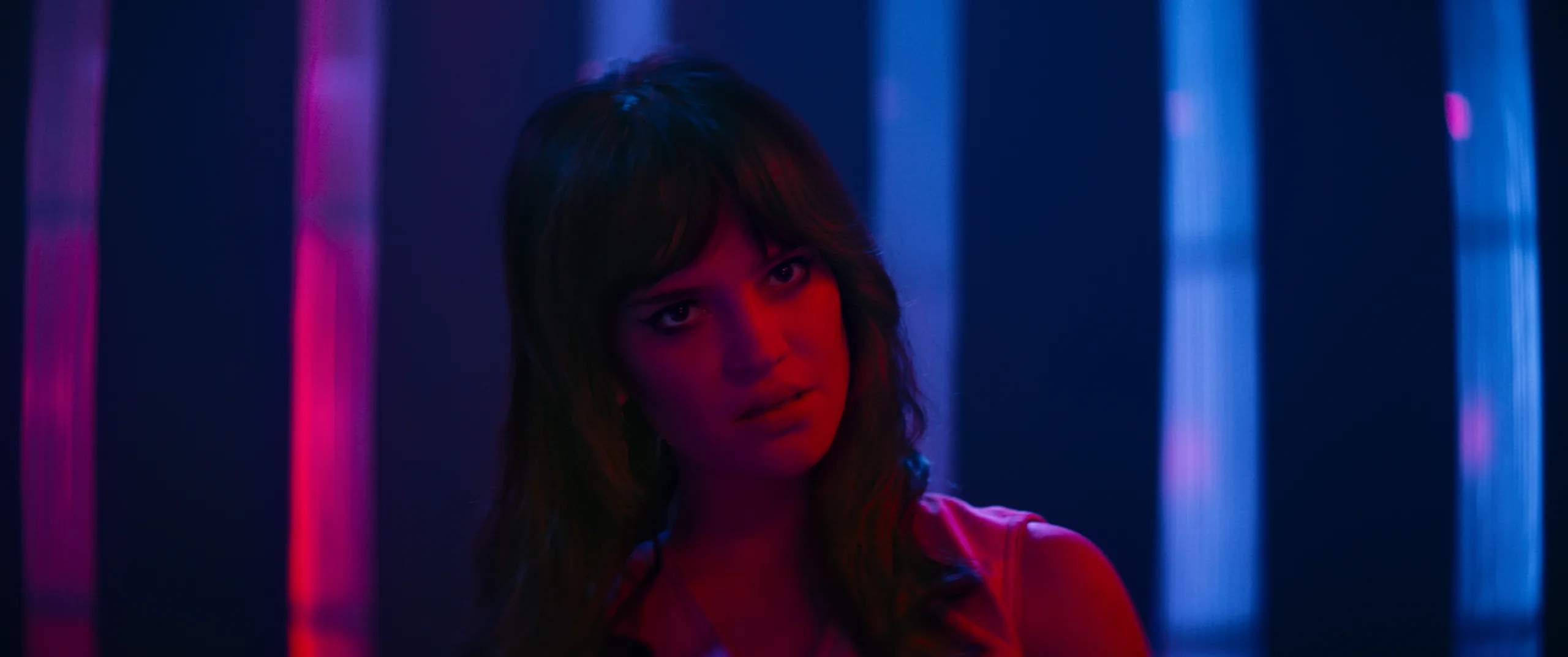
Sex, violence, neon, and leather: Nicolas Winding Refn is back. A decade after his last feature film, “The Neon Demon,” the divisive filmmaker returned to Cannes this year with “Her Private Hell,” a pastiche of imagery that NWR has deployed more effectively at other times in his career. It’s no exaggeration to say that much of “HPH” plays like a “Refn’s Greatest Hits” with a leather-clad hero (and villain), model-beautiful women, a complex mother figure, and inspiration from both Giallo and Samurai cinema.
While this all sounds exciting for those of us who have admired Refn’s provocations in the past, they’ve never felt as hollowly pretentious as this one. The imagery that felt daring at times in his career now feels a bit too past its sell-by date, in part because he can’t find the strength of visual language that he did in works like “Drive” and “Only God Forgives,” making a film that looks a lot more like his TV productions. Ultimately, “Her Private Hell” feels like someone trying to rekindle a fire that went out years ago, unable to find the flame.
“Her Private Hell” opens with one of its most striking shots, setting up a futuristic world that looks like a perfume commercial that one might watch in “Blade Runner.” The tops of skyscrapers peek out over an oppressive mist, one that’s directly referenced as dangerous by an actress named Elle (Sophie Thatcher) as she returns home to one of its monuments to excess. She meets a young woman in the empty lobby named Hunter (Kristine Froseth), who she takes up to her lavish apartment, essentially making her a part of her extravagantly dressed entourage, and introducing her to Elle’s stepmother Dominique (Havana Rose Liu).
In Refn’s vision, all of the women are immaculately beautiful and most of the men are leather-clad urban samurai, including Elle’s father Johnny Thunders (Dougray Scott), and a villain known only as Leather Man, a figure who has been going around and literally ripping people apart. He might quite literally be the Devil, as in the one with a capital letter.
Into this sci-fi hellscape drops a soldier named Private K (Charles Melton), a driven man in search of his daughter. If Elle is the Elle Fanning character from “Neon Demon,” Melton is playing the archetype sketched by Ryan Gosling in his collaborations with Refn: A beautiful, stoic face intent on heroism at any cost. “Her Private Hell” alternates between heavily stylized scenes in which the gorgeous people around Elle speak in poetic non-sequiturs (or, in the scene likely to be meme-d, speak “wolf” to one another) and ones in which Private K punches people with brass knuckles or pops out their eyes with swords. Once again, it’s Refn working with alternating visions of sex and violence, trying to connect the filmic beauty in both.
And sometimes he does. There are sequences in “Her Private Hell” that remind one why Refn gained such a vocal fan base, times when his execution matches his vision, but they’re depressingly few and far between. More often than in any of his other films, Refn loses his way on this trip to the underworld, choosing languid posturing over creative curiosity. It’s almost like he doesn’t have the courage of his vision as much as he used to, worn down by years of making commercials and TV series that dulled an acumen that once felt so sharp.
Part of the problem is that Refn doesn’t have the team he once did, tapping Magnus Nordenhorf Jønck to shoot this one. The cinematographer behind Refn’s episodic “Copenhagen Cowboy” just doesn’t have the stylistic ambition needed for this project, often underlighting sequences and failing to find the right composition in others. The design elements on all levels, usually a strength of Refn’s, feel under-considered. Even the costume design, such a key part of his legacy with projects like “Drive” and “Neon Demon,” feels more like an imitation than a vision. If Refn’s work is a hypnotic mood more than a traditional narrative, the tech elements fail to hypnotize this time in truly impactful ways.
Well, all but one. Refn and his producers hired a legend to compose the score: Pino Donaggio. The man behind the accompaniments for multiple classic films by Brian De Palma and Dario Argento, understood the assignment, bringing his sweeping, haunting melodies to the entire film. It’s no exaggeration to say that Donaggio’s work here as important as Cliff Martinez’s perfect score for “Drive.” It becomes a character in the film, and, in this case, it’s the MVP by a long shot. When the imagery feels shallow and the performers get lost in Refn’s obtuse dialogue, Donaggio’s score holds your attention.
Although even it can backfire in that Donaggio’s efforts remind one of his legacy, and the great films held within it that one could be watching instead. So much of “Her Private Hell” has this effect: An echo of something better. Say what you will about Refn’s worst work, he often felt like a visionary instead of a replicator. Maybe Hell is discovering that there’s nothing new to say.
This review was filed from the world premiere at the Cannes Film Festival on May 19. It opens on July 24.