From its mesmerizing opening credits, set to a plaintive cover of R.E.M.’s “Nightswimming,” Jane Schoenbrun’s “Teenage Sex and Death at Camp Miasma” is playing with the memory of horror fans, and how they can hold a series so close that they’re “not sure all these people understand.” As the names of the cast and crew scroll, images of memorabilia from a fictional slasher franchise crowd the screen, including standard items like VHS tapes, newspaper ads, toys, and other paraphernalia. The parallels to the “Friday the 13th” universe are blatantly glorious, including nods to how a sequel in this made-up series failed when it took its slasher to Manhattan. Schoenbrun never hides from the milieu they’re both satirizing and lovingly homaging, using the aesthetics of characters like Jason Voorhees and Michael Myers to craft a heady, wildly ambitious commentary on identity and obsession.
It’s a film that owes equal debts to “Sunset Blvd.” and “Jason X,” which means it’s pretty special. Some will ding it for repeating a few themes of the admittedly superior “I Saw the TV Glow” regarding how pop culture can shape identity, but this one has a different edge in its willingness to be downright silly. The most telling word in its title might be “Camp.”
It’s also clearly deeply autobiographical. Hannah Einbinder (doing her best work outside of “Hacks”) plays Kris, a filmmaker who broke through at Sundance (where Schoenbrun’s “We’re All Going to the World’s Fair” and “I Saw the TV Glow” premiered) with a film that was described as “Psycho” from the perspective of the shower curtain. She’s now being given the keys to a “zombie IP,” the “Little Death” franchise, a riff on Jason Voorhees, complete with a fictional camp called Miasma and a villain who wears what looks like sort of a ceiling air conditioning vent on their head but with an opening that also often shows their eyes in a manner that gives it a feeling of peeking through a projector window. That’s just one of roughly a hundred things that fans of this film will unpack in a meta commentary way that rewards repeat viewing.
We see a lot of the film-within-a-film that started this franchise, which Kris has been asked to resurrect, and it’s a gloriously heightened homage to the slasher genre, complete with geysers of blood, multiple decapitations, and some truly unhinged needle drops. (There’s one during a massacre that will forever change the way I hear that song. I could give you a thousand guesses, and you wouldn’t get it.) Most importantly, Kris loved the Camp Miasma franchise and its villain, connecting most with the female lead, especially in a sexual moment that led to a memorable kill. Much like in “TV Glow,” Schoenbrun comments on how people can be shaped by pop culture. In this case, it’s a filmmaker who has been given a chance not just to pay homage to a franchise that mattered to her, but to really explore how it has impacted the way she uses both her voice and her body.
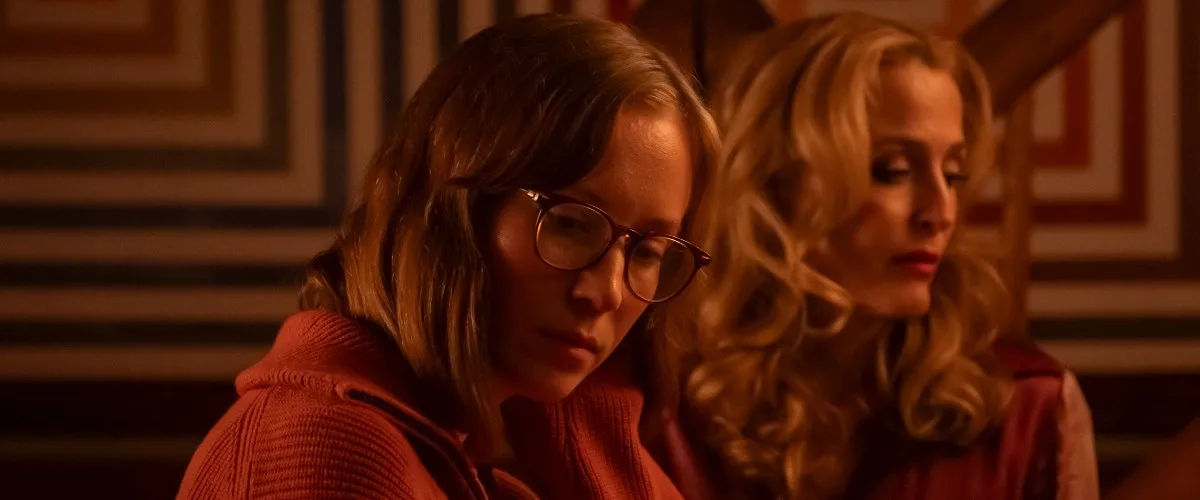
That exploration leads Kris to Billy Presley, played by Gillian Anderson in a truly glorious Norma Desmond performance. The star of the first of a dozen or so Camp Miasma films, Presley now lives in isolation at Camp Trivoli, where the first film was shot. Most of “TSADACM” is a twisted two-hander, with Kris trying to figure out not only whether Billy can play a role in her reboot, à la Jamie Lee Curtis in the “Halloween” reboots, but also what makes her tick and why she matters so much to this filmmaker. Anderson is mesmerizing, giving Presley an air of earned mystery but never pretension.
On the first night Kris is there, she buys fried chicken, and they get high. Schoenbrun adores surrounding both of them with candy bags and wrappers, the bright colors of things like gummy candies and Sweet Tarts. This is a poppy confection, but it’s candy shot through with sexuality and gore.
After one viewing, it’s not clear that all the dots connect in “Teenage Sex” as they did in the more deliberate “TV Glow,” but the films almost come from different genres, despite their similar themes about forming identity through pop culture, even the problematic kind. The first Camp Miasma film has been reappraised as unwoke in the movie’s universe, particularly in how its villain was portrayed as a girl one day and a boy the next.
The gender identity themes in this one aren’t as prominent as “TV Glow,” but they’re undeniably woven into the fabric of Schoenbrun’s vision, one that posits how pop culture, especially horror, can blur those lines in which not just genders can be obliterated but death and desire can exist in the same space. It’s not an accident that the villain of the Camp Miasma franchise is called “Little Death,” or “La petite mort,” a phrase often associated with an orgasm.
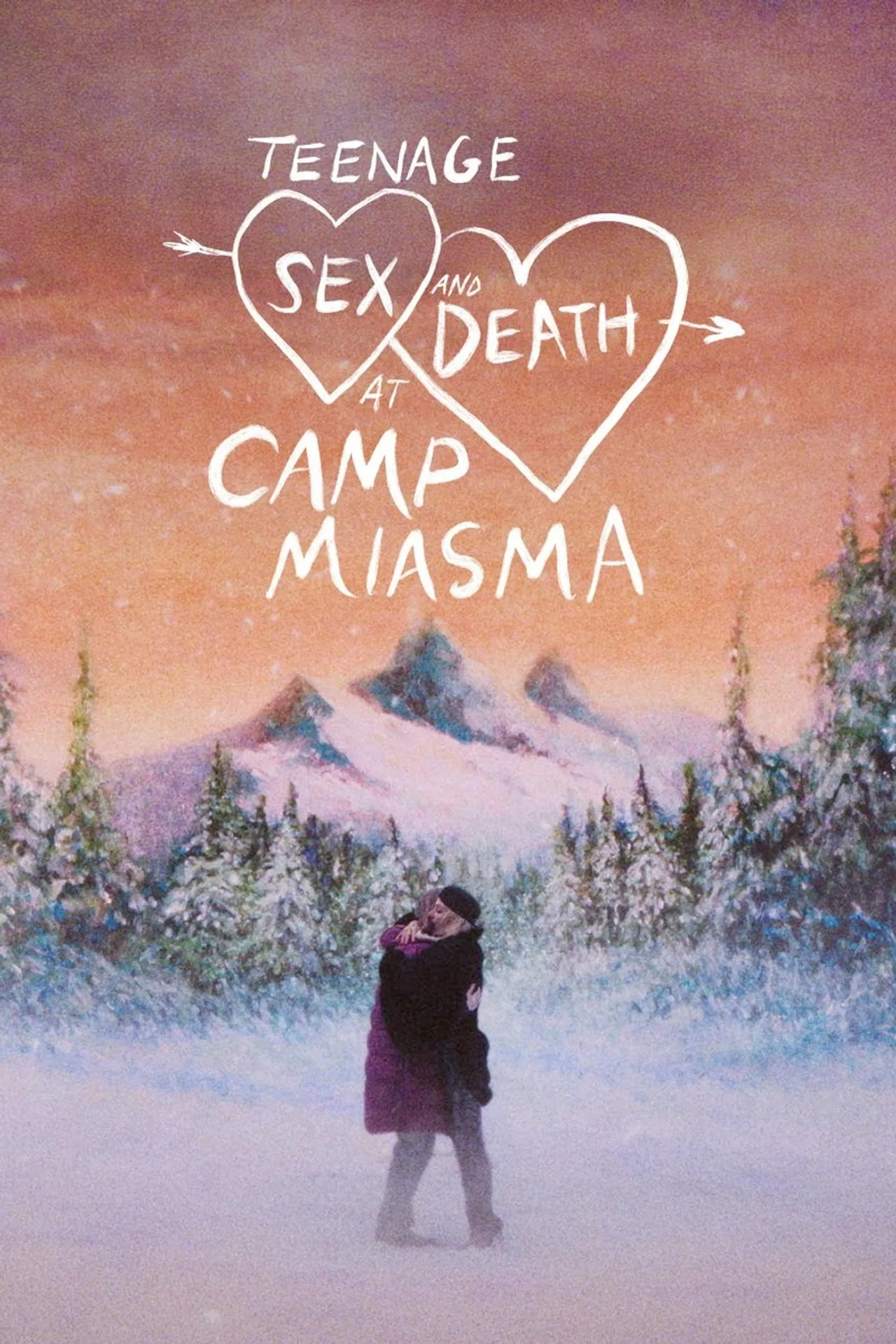
Schoenbrun again reveals a remarkable eye for inspired visuals, too, finding some incredibly playful images with their third film. Some of the backdrops at Camp Trivoli purposefully look like matte paintings, and the film has a consistently vibrant, almost heightened color palette, whether it’s sprays of red blood or the white snow that falls around Billy’s cabin in the woods. Eric Yue’s cinematography keeps the film buoyant instead of the dreariness that could have dominated a slasher homage, while Alex G’s score is inspired. And the casting is marvelous, from Sarah Sherman as Kris’ agent to small roles played by Dylan Baker, Jasmin Savoy Brown, Jack Haven, Zach Cherry, and, almost as if stepped in from the set of “Mulholland Dr.” to make the Lynch-to-Schoenbrun parallels even more heightened, Patrick Fischler.
Way back in 2024, Schoenbrun described their next film as “Portrait of a Lady on Fire” set in a “Friday the 13th” sequel. It’s one of the most insane ideas for a movie in years, and the fact that all of the pieces might not fit snugly together in that truly bananas logline almost feels like a feature more than a bug. Our favorite slasher movies are often a little rough around the edges, a little unhinged, and a little inconsistent. And very few of them are this wildly entertaining.
This review was filed from the premiere at the Cannes Film Festival on May 13. It opens on August 7th.